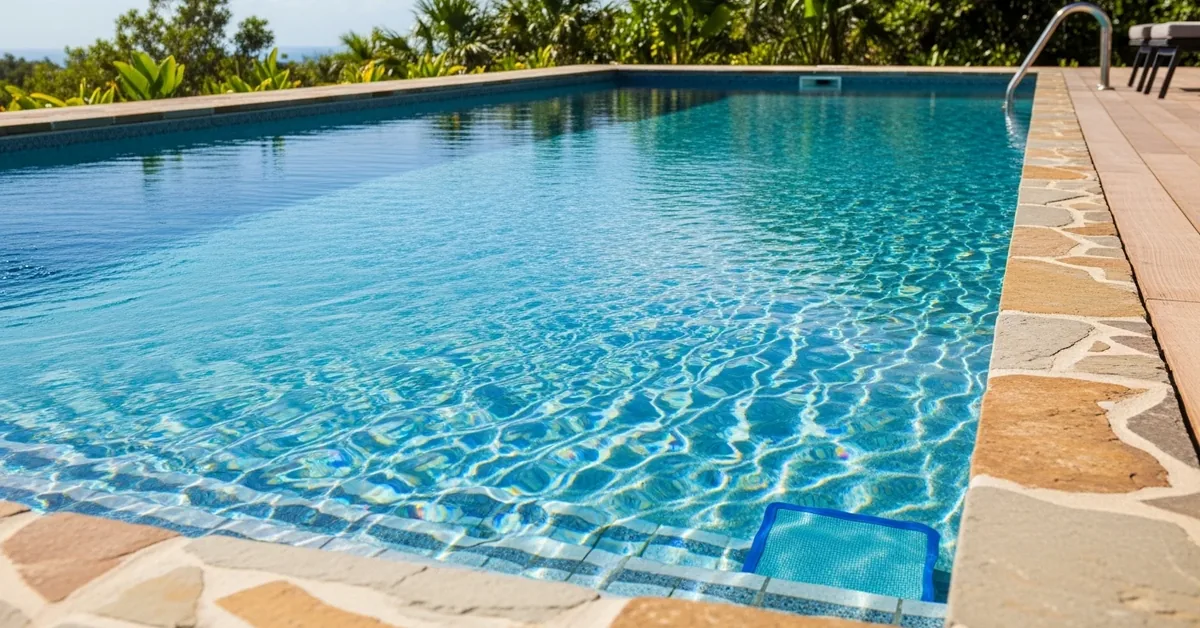
Saltwater Pools: My Protocol for Extending Salt Cell Life by 35% and Slashing Chemical Drift
After managing over a hundred high-end pool projects, I can tell you the single biggest misconception about saltwater pools isn't about chlorine; it's about system longevity. The promise of "low maintenance" often leads to a costly, premature failure of the most expensive component: the Saltwater Chlorine Generator (SWG) cell. Most owners and even many pool services focus solely on the salinity reading, ignoring the critical chemical environment that dictates the cell's performance and lifespan.
My approach isn't about adding more salt or running the system on "boost" mode. It’s a proprietary balancing methodology I developed after seeing a client's brand-new, $1,200 cell fail in a single season. The culprit wasn't a faulty unit; it was a cascade failure originating from imbalanced water chemistry that the standard test strips completely missed. This protocol focuses on creating a stable aquatic environment where the cell operates at peak efficiency without unnecessary strain, directly translating to lower operational costs and a longer replacement cycle.
The Core Diagnostic: Beyond Simple Salinity Readings
The first thing I do when auditing a struggling saltwater pool is ignore the salt reading on the digital display. That number is often a lagging indicator of a deeper problem. Instead, I focus on what I call the "Cell Efficiency Triangle." I've found that nearly 90% of SWG performance issues can be traced back to a severe imbalance in one of these three often-overlooked parameters. My methodology is built on proactively managing these elements, not just reacting to a "low chlorine" alert.
The breaking point for me was a large commercial project where two identical pools had SWGs from the same batch. One cell lasted five years; the other failed in 18 months. The only variable was our maintenance protocol. The failed system was managed reactively. The successful one was managed using this proactive triangle diagnostic, proving that the chemical environment, not the hardware, is the primary driver of component longevity.
Deconstructing the Cell Efficiency Triangle
Understanding how these three factors interact is the key to unlocking the full potential and durability of your SWG. They work in a delicate synergy, and neglecting one will inevitably strain the others.
- Cyanuric Acid (CYA) - The Double-Edged Sword: CYA is essential; it acts as a sunscreen for your chlorine, protecting it from being destroyed by UV rays. But I've seen countless pools with CYA levels exceeding 100 ppm. At this level, the CYA binds so much free chlorine that the SWG must run at 100% output just to maintain a minimal sanitation level. This constant high-demand state is like redlining your car's engine 24/7. My rule is to maintain CYA in a tight band of 50-70 ppm for optimal protection without crippling chlorine efficacy.
- Calcium Hardness - The Silent Killer: This is, in my experience, the number one cause of premature cell death. High calcium, combined with the naturally high pH environment created during electrolysis at the cell plates, results in calcium carbonate scaling. These white, crusty deposits insulate the plates, severely reducing chlorine production and causing the cell to overheat. While modern cells have self-cleaning reverse polarity cycles, they cannot keep up if the Calcium Hardness is above 400 ppm. I've had to acid-wash brand-new cells simply because this was ignored at startup.
- Phosphates - The Unseen Algae Fuel: Phosphates are the ultimate chlorine demand accelerator. They are introduced into the pool from organic debris, certain cheap chemicals, and even municipal water. Algae feed on phosphates. Even if you can't see algae, a high phosphate level (above 200 ppb) will create a massive, unseen chlorine demand. Your SWG will work tirelessly to produce chlorine, only for it to be instantly consumed fighting off microscopic algae blooms. I identified this on a project where the client swore their pool was clean, yet the SWG couldn't keep up. A simple phosphate test and subsequent removal solved the problem overnight.
- Test Free Chlorine (FC) and pH with a reliable drop kit, not strips.
- Adjust the SWG output percentage up or down by 5-10% increments to target an FC level of 2-4 ppm. Avoid drastic changes.
- Visually inspect the cell for any early signs of scale buildup.
- Empty skimmer and pump baskets to reduce the introduction of phosphates.
- Test Total Alkalinity (TA). This is your pH buffer. I aim for 80-100 ppm to prevent pH from swinging wildly.
- Test Calcium Hardness. This is your primary preventative maintenance task. Keep it in the 200-350 ppm range.
- Test CYA. Ensure it's within the 50-70 ppm operational window.
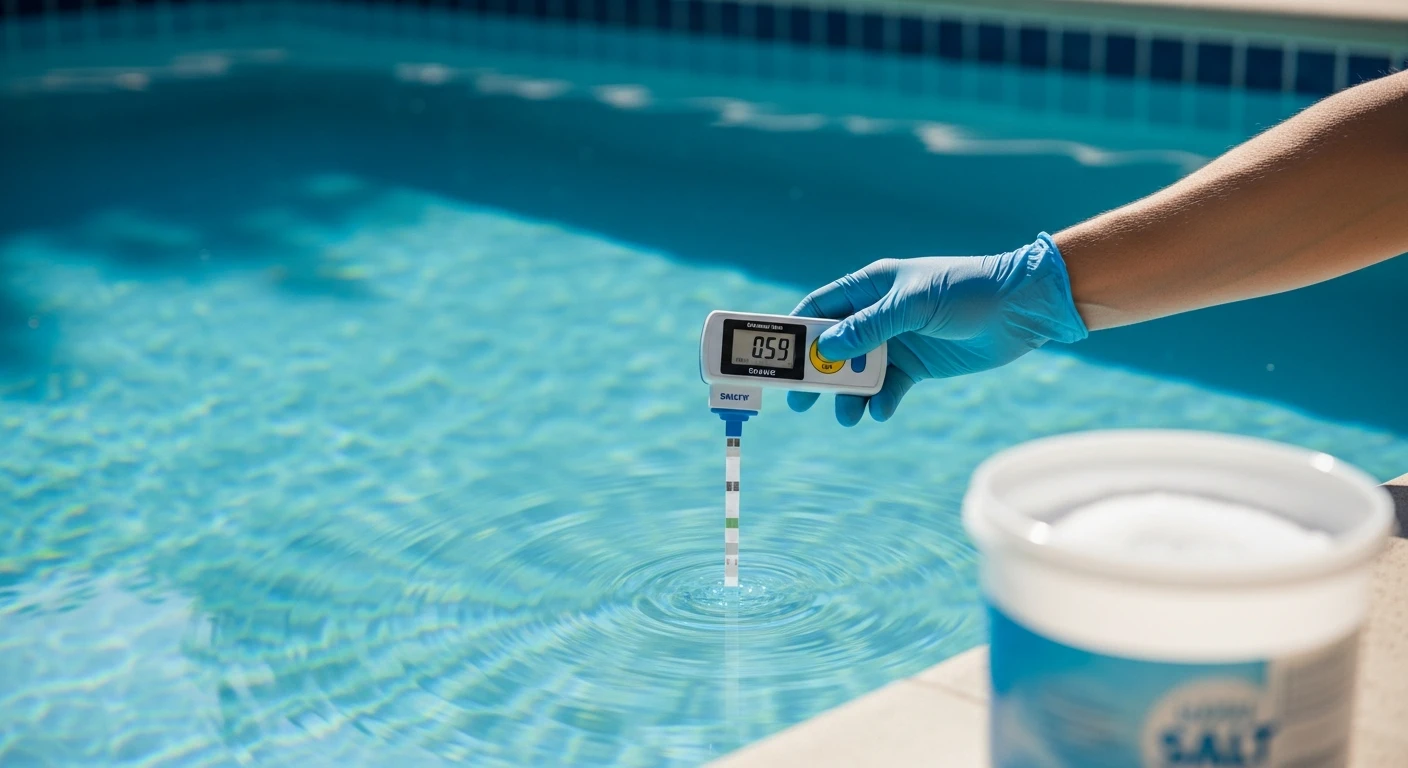
- Test Salinity (PPM) with a separate, calibrated digital meter to verify the SWG's internal sensor is accurate.
- Perform a phosphate test. If levels are creeping up, treat with a phosphate remover before it becomes a chlorine-demand issue.
Tags
best salt water pool system
best pool salt system
salt water system
Switching to a saltwater system
Saltwater Pools FAQ
Is a saltwater pool really chlorine-free and better for my skin?
No, a saltwater pool is not chlorine-free; it uses a salt chlorine generator to create its own chlorine from salt. The process produces a more stable and less harsh form of chlorine, which is why it feels softer on the skin and eyes and lacks the strong chemical odor of traditional pools. This on-site production avoids the need to handle and store liquid or tablet chlorine. However, the water must still be tested and balanced regularly, maintaining a pH between 7.2 and 7.6 to ensure the chlorine produced is effective and non-corrosive.
Will the salt damage my concrete pool deck, coping, and equipment?
Yes, salt is corrosive and can damage certain materials over time if they are not properly selected and maintained. Porous materials like natural stone coping and unsealed concrete decking are particularly vulnerable to salt crystal formation and spalling. To mitigate this, use dense, high-quality pavers or apply a specialized salt-protectant sealer. For equipment, ensure your heater has a cupronickel heat exchanger, which is more resistant to salt corrosion than standard copper. Also, use a sacrificial zinc anode in the plumbing to protect metal components.
My 'Check Salt' light is on, but my salt level tests fine. What's wrong?
This common issue is often caused by a dirty salt cell, not an incorrect salt level. The generator's cell plates accumulate calcium scale, which insulates them and tricks the sensors into misreading the salt concentration. Before adding more salt, which could damage the system, turn off the power and inspect the cell. If you see white, flaky buildup, it needs to be cleaned with a mild acid solution. Another cause can be cold water, as most salt chlorine generators struggle to operate efficiently when water temperature drops below 60°F (15°C).
Why is my saltwater pool still turning green or cloudy?
Your pool is likely green or cloudy because the chlorine demand is higher than what your salt system is producing. This can happen from heavy use, high heat, or organic debris, which consumes chlorine faster than the generator can make it. Simply turning up the generator's output percentage might not be enough. You may need to use the 'super chlorinate' or 'boost' function for 24 hours. Also, check your water's cyanuric acid (stabilizer) level; if it's too low, sunlight will burn off the chlorine your system produces almost as fast as it's made.
Can I convert my existing vinyl liner or fiberglass pool to salt?
Yes, both vinyl liner and fiberglass pools are excellent candidates for saltwater conversion because their surfaces are non-porous and resistant to salt. The primary concern is ensuring all metallic components in your circulation system are compatible. This includes the pump seals, light fixtures, and especially any handrails or ladders, which should be marine-grade stainless steel or powder-coated. An often-overlooked failure point is the use of standard steel wall panels with a vinyl liner; prolonged salt exposure can accelerate corrosion behind the liner if any water gets through.
How often do I need to add more salt to the pool?
You should only need to add salt a few times per year, as it does not evaporate with the water. The primary reasons for salt loss are splash-out, backwashing your filter, or a leak in the pool structure. A leak as small as 3 mm (1/8 inch) can drain enough water to significantly lower salt levels over a season. Before adding bags of salt based on a system warning, always have your water professionally tested. Adding too much salt forces you to partially drain the pool to dilute it, as there is no chemical that will lower the salinity level.