Solar Pool Heaters Pinellas County: Achieving an 8-12°F Temperature Gain with Correct Flow Rate Calibration
As a solar thermal specialist, I've spent years auditing pool heating systems across Pinellas County, and the most common failure I see isn't panel degradation or leaks—it's a fundamental misunderstanding of thermal dynamics. Homeowners from the historic homes in Old Northeast St. Pete to the sprawling properties in East Lake invest in solar panels only to find their pool is barely warmer. The issue almost always traces back to an improperly calibrated flow rate, which completely neutralizes the system's potential, regardless of how many panels are on the roof. My entire approach is built on correcting this single, critical performance metric. A properly engineered system in our sun-drenched climate should deliver a consistent 8-12°F temperature increase, effectively extending the swimming season from early March through late November. Forget generic online calculators; the unique combination of high humidity, roof pitch variations, and wind exposure from the Gulf requires a site-specific calculation. This is where I moved beyond standard industry practice to develop a more precise diagnostic model.My Diagnostic Framework for Pinellas Solar Sizing
The standard advice is to match the solar collector area to 50-100% of the pool's surface area. This is a dangerously incomplete formula. My methodology starts with a Thermal Demand Audit, which I created after seeing a perfectly "sized" system in a Clearwater Beach canal home fail to perform due to constant wind cooling. The standard FSEC sizing guide is a baseline, but it doesn't adequately account for local Pinellas microclimates. My framework focuses on two key performance indicators ignored by most installers: Total Dynamic Head (TDH) and the resulting Gallons Per Minute (GPM) at the collectors. A variable-speed pump set to a generic "solar" speed often can't overcome the head pressure of a two-story roof, leading to water moving too slowly or too quickly through the panels. If the flow is too slow, the water gets hot, but the volume is too low to heat the entire pool. If it's too fast, there isn't enough dwell time for effective heat transfer. Both scenarios result in a failed investment.Beyond FSEC: Calculating True Thermal Demand
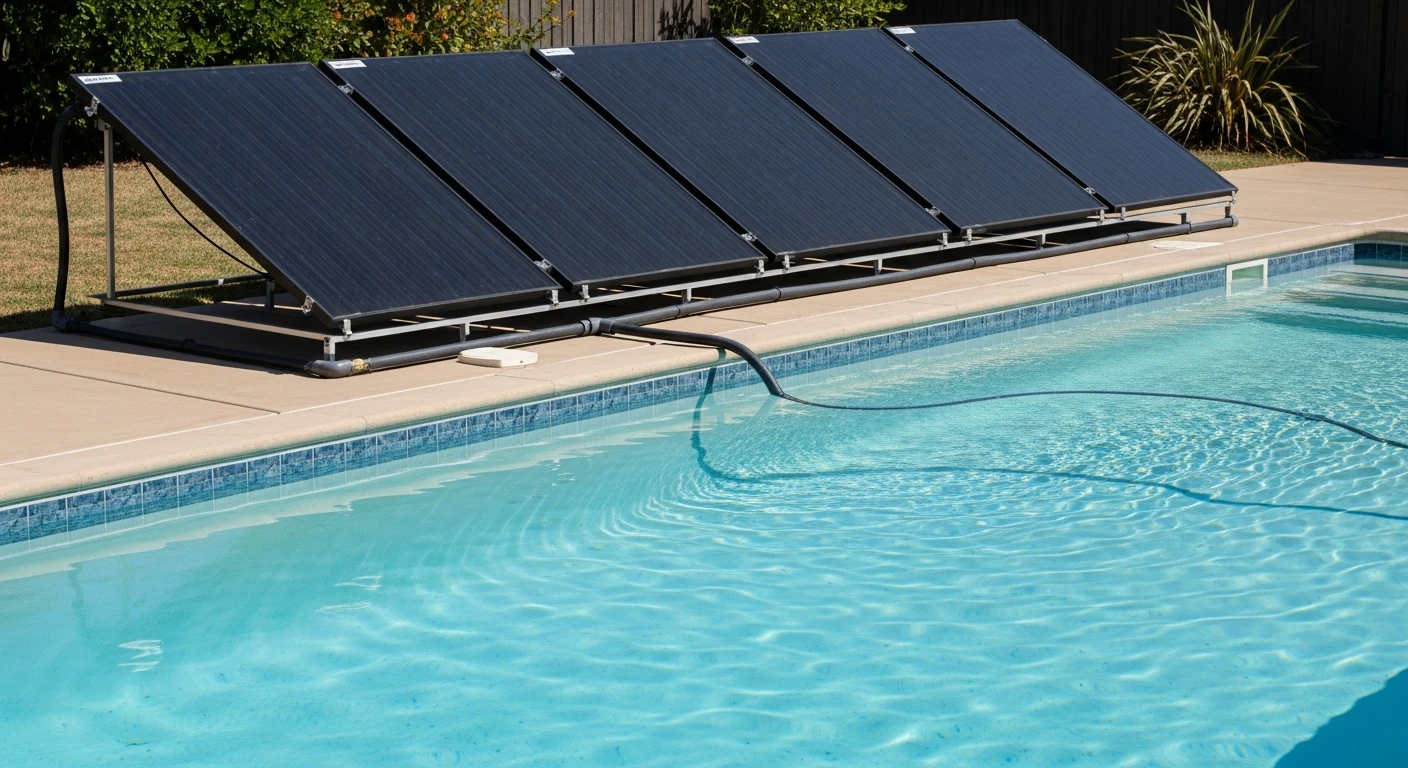
The core of my technical deep-dive is calculating the precise GPM needed to achieve the optimal Delta-T (the temperature difference between water entering and leaving the collectors). For the black polypropylene panels typically used here, the sweet spot is a 4-6°F Delta-T. To determine this, I analyze three factors:- System Backpressure: I measure the pressure (in PSI) with the solar valve on and off. A significant jump reveals flow restrictions, often from improperly installed check valves or excessive 90-degree plumbing bends. On a project in Dunedin, I discovered a 12 PSI increase that was cutting the flow rate in half.
- Azimuth and Tilt Optimization: A true south-facing roof is rare. I calculate the efficiency loss for non-optimal orientations (common in the gridded layouts of St. Petersburg) and compensate by adjusting the target GPM. A 20-degree deviation from true south might require a 5-8% increase in flow to achieve the same thermal absorption.
- Environmental Loss Factors: I assign a multiplier based on local conditions. A waterfront home in Tierra Verde with no windbreak has a much higher heat loss coefficient than a sheltered pool in a Seminole subdivision. This directly impacts the required daily runtime and thermal energy input.
The Implementation Protocol for Maximum Heat Transfer
Once the diagnostics are complete, implementation is a matter of precision. My process ensures every component works in synergy, not against each other. It’s a sequence I perfected after having to completely re-plumb a new installation in Palm Harbor that was losing 30% of its efficiency to poor hydraulics.- Pump Calibration: The first step is to program the variable-speed pump. I don't use preset speeds. I manually adjust the RPMs while measuring the flow with a clamp-on flow meter to hit the exact GPM target calculated in the audit. This is the single most important step.
- Valve Actuator and Sensor Placement: The solar controller's sensors must be placed correctly. The roof sensor needs to be installed directly on the panel header, not just near it. The water sensor must be on the pipe *after* the pump but *before* the filter to get an accurate reading of the pool's base temperature.
- Check Valve Verification: I insist on using a high-flow, low-restriction check valve. A cheap, spring-loaded valve can add significant backpressure. I verify the cracking pressure of the valve to ensure it’s not impeding the flow required for the system.
- Vacuum Breaker Installation: Especially for two-story homes in Pinellas, a vacuum relief valve is non-negotiable. This ensures the panels drain properly when the system shuts off, preventing stagnation and potential winter damage, however rare that may be. It's a critical longevity component.
Precision Tuning for Delta-T and System Longevity
After the physical installation, the final 20% of the work is fine-tuning. I let the system run for a full solar day and log the temperature data. I'm looking for that consistent 4-6°F Delta-T during peak sun hours (10 a.m. to 4 p.m.). If it’s too high, I slightly increase the pump RPMs; if it’s too low, I decrease them. This micro-adjustment phase ensures the system is operating at peak thermal efficiency for that specific property. Furthermore, given the salt-laden air along the Gulf beaches from Treasure Island to Indian Shores, I exclusively use 316 stainless steel mounting hardware. Using anything less, like the 304-grade steel some installers use to cut costs, is a recipe for rust and failure within five years. Protecting the collector material itself with a UV-rated protectant every few years can also extend its life by 25% or more in our intense Florida sun. With your system properly calibrated, have you considered how your pool's chemistry, specifically its Total Dissolved Solids (TDS) level, might be impacting long-term heat exchanger efficiency?Written by

Tags
pool warmer solar
pool solar panels
swimming pool solar panels
pool solar installation
Solar Pool Heaters in Pinellas FL FAQ
What is a solar pool heater?
A solar pool heater is a device that uses the sun's energy to heat your pool water, providing a cost-effective and eco-friendly alternative to traditional pool heating methods.
How does a solar pool heater work?
A solar pool heater works by circulating pool water through a network of tubes filled with a special fluid that absorbs the sun's heat. The heated fluid is then pumped back into the pool, warming the water.
What are the benefits of using a solar pool heater?
Solar pool heaters offer several benefits, including reduced energy costs, a lower carbon footprint, and a longer lifespan for your pool equipment. They also provide a safe and chemical-free heating solution.
Can I install a solar pool heater myself?
While it is possible to install a solar pool heater yourself, it is recommended to hire a professional to ensure proper installation and to ensure that your system is working efficiently and safely.
How long does it take to install a solar pool heater?
The installation process typically takes several hours to a few days, depending on the size of your pool and the complexity of the installation.
How much does a solar pool heater cost?
The cost of a solar pool heater varies depending on the size of your pool, the type of system, and the installation costs. However, on average, a solar pool heater can pay for itself in just a few years through energy savings.
Will a solar pool heater work in cold weather?
While solar pool heaters can still work in cold weather, their efficiency may be reduced. It is recommended to use a pool cover or other heat retention methods to help keep the pool warm during cold weather.
How often do I need to maintain my solar pool heater?
Regular maintenance is important to ensure your solar pool heater is working efficiently and safely. This includes checking and cleaning the system, checking for leaks, and performing routine inspections.
Can I use a solar pool heater with my existing pool equipment?
In most cases, yes. Solar pool heaters can be designed to work with your existing pool equipment and plumbing. However, it is recommended to consult with a professional to ensure compatibility.
What is the warranty on a solar pool heater?
The warranty on a solar pool heater varies depending on the manufacturer and the type of system. Typically, solar pool heaters come with a 5-10 year warranty on the system and a 5-10 year warranty on the components.
Can I get a tax credit or incentive for installing a solar pool heater?
Yes, many governments offer tax credits or incentives for installing solar pool heaters as part of their efforts to promote renewable energy and reduce energy consumption.