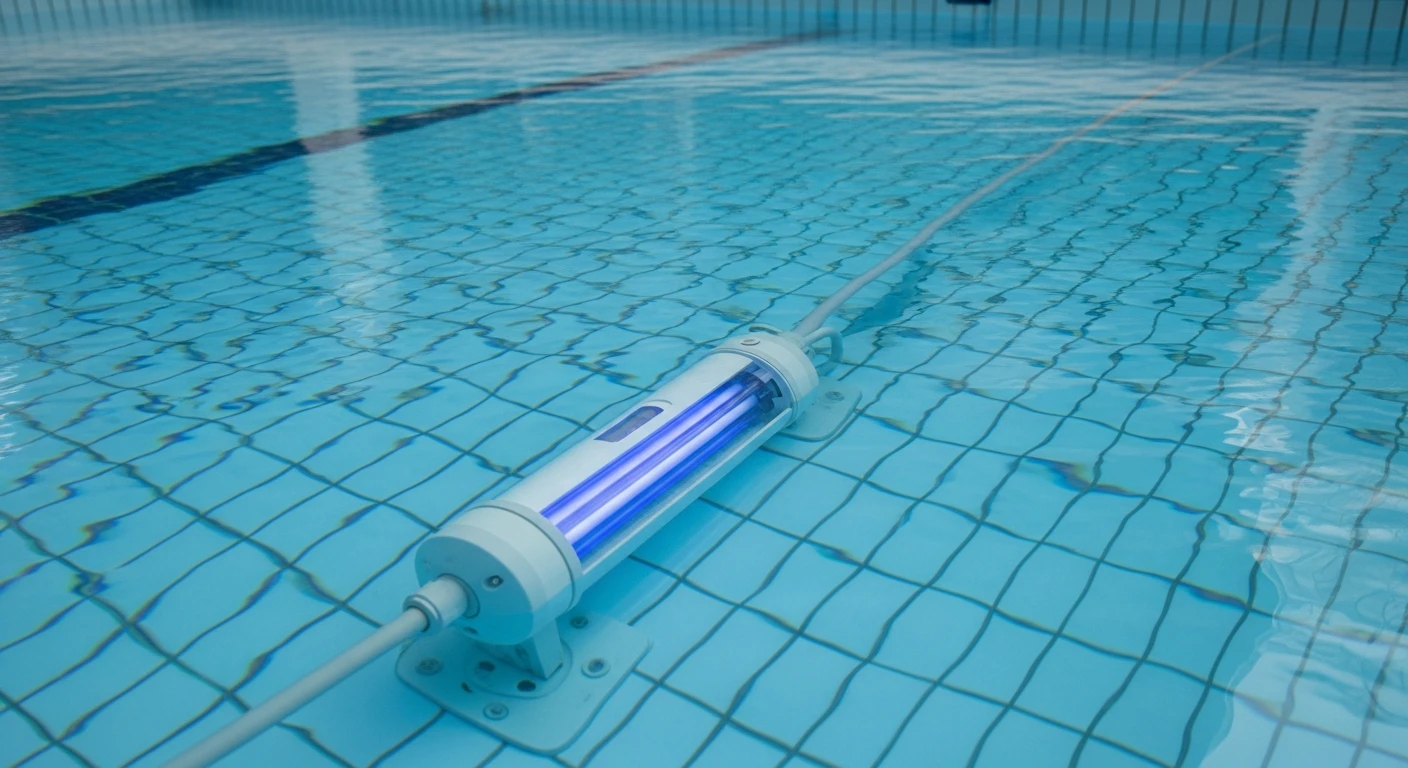
Most Advanced Oxidation Process (AOP) implementations fail to achieve their target contaminant degradation rates not because of a flaw in the core chemistry, but due to a fundamental misunderstanding of the water matrix itself. I’ve seen multi-million dollar systems underperform by over 30% simply because the design focused exclusively on oxidant dosage while completely ignoring the competing reactions that consume the valuable hydroxyl radicals before they can do their job. This is the single most critical, yet commonly overlooked, variable in AOP design.
My entire approach is built on reversing this paradigm. Instead of just pushing more reagents into the system, my methodology quantifies and mitigates what I call the "scavenger load" of the influent. By systematically neutralizing these interfering compounds first, I can often achieve a 50-100% increase in radical efficiency, which translates directly into lower operational costs and more reliable compliance with discharge limits.
The Scavenger Demand Index: My Diagnostic ProtocolYears ago, I was brought in to troubleshoot a large-scale groundwater remediation project using a Fenton-based AOP. The system was designed by the book, yet it consistently failed to reduce the target contaminant, MTBE, to below the required threshold. The operator's solution was to keep increasing the hydrogen peroxide dose, which paradoxically made the results worse. The error was in their diagnosis; the problem wasn't a lack of oxidant, but an excess of bicarbonate alkalinity in the groundwater.
This experience led me to develop my proprietary diagnostic framework: the Scavenger Demand Index (SDI). It’s not a single measurement, but a multi-faceted analytical protocol I use before any pilot testing begins. It’s designed to create a detailed "profile" of all the non-target species in the water that will compete for the hydroxyl radical (•OH). Ignoring this profile is like trying to navigate without a map; you’ll burn a lot of fuel and probably won't reach your destination.
Quantifying Radical Scavenging: The Technical Deep DiveThe SDI is rooted in quantifying the reaction kinetics of common scavengers. The hydroxyl radical is incredibly powerful but non-selective. It will react with the first thing it encounters. Bicarbonate (HCO₃⁻) and carbonate (CO₃²⁻) ions are notorious scavengers, reacting with •OH to form the far less reactive carbonate radical. In that failed project I mentioned, every two hydroxyl radicals intended for MTBE were being consumed by bicarbonate. We were essentially just oxidizing cheap minerals.
Another critical factor, especially in H₂O₂/UV systems, is the "overdosing paradox." Hydrogen peroxide itself can act as a scavenger of hydroxyl radicals at high concentrations. Many operators, seeing poor performance, simply increase the H₂O₂ feed rate, pushing the system further into an inefficient state. My SDI analysis includes bench-scale tests specifically to identify this crossover point. We also heavily analyze UV Transmittance (UVT) at the target wavelength (typically 254 nm). Dissolved organic matter or suspended solids that reduce UVT don't just block light; they effectively starve the reaction of the energy it needs to initiate oxidation.
AOP Implementation: The Radical Yield Optimization ProtocolOnce the Scavenger Demand Index is established, I move to implementation using a phased approach I call the Radical Yield Optimization Protocol. This ensures we're treating the water, not just the symptoms of a poorly understood matrix. It's a systematic process to maximize the formation and utilization of hydroxyl radicals.
- Matrix Pre-Conditioning: This is the most crucial step. Based on the SDI, we implement a targeted pre-treatment step. For high alkalinity, this often involves a controlled acidification stage to convert bicarbonate to CO₂, which is then stripped from the water. For high turbidity or dissolved organics, a pre-coagulation or filtration step might be necessary to improve UVT.
- AOP System Selection & Calibration: Only after pre-conditioning do I run bench-scale tests to select and calibrate the AOP. If the water has high chloride, for example, I might lean away from a standard UV/Ozone process to avoid forming chlorinated byproducts. We calibrate for the optimal reagent ratio (e.g., Fe²⁺:H₂O₂) on the pre-conditioned water, not the raw influent. This single change can cut chemical consumption by 25-40%.
- Reactor Dosing and Control Logic: We install and program the dosing systems to maintain the calibrated ratio. This means using real-time sensors, like an ORP (Oxidation-Reduction Potential) probe, to modulate chemical feeds. A static dosing rate is a recipe for inefficiency as influent quality fluctuates.
- Quenching and Polishing: I design the system with a defined post-AOP quenching step. After the target contact time, the reaction must be stopped, typically by raising the pH to precipitate out any residual iron from a Fenton process or by adding a mild reducing agent. This prevents the formation of undesirable disinfection byproducts downstream.
Achieving peak performance is about continuous, small adjustments. For a UV/H₂O₂ system, my personal quality standard is to never let the UVT of the water entering the reactor drop by more than 5% from the design specification without triggering an alarm and an upstream process review. A small drop in UVT has a logarithmic impact on the effective radical generation rate.
In Fenton or photo-Fenton systems, the game is all about managing the Fe²⁺/Fe³⁺ equilibrium. I’ve seen systems fail because the pH control was sloppy, allowing the pH to drift above 4.0, which causes the active Fe²⁺ catalyst to precipitate out as inactive Fe³⁺ hydroxide sludge. My standard is to maintain pH within a tight band of ±0.1 units from the setpoint. This level of precision is not an optional extra; it is the difference between a functional system and a chemical sinkhole.
Instead of asking 'How much peroxide should I add?', what happens when you start by asking 'What is my water's inherent hydroxyl radical scavenging rate and how can I reduce it by 50% before adding a single drop of oxidant?'