Benefits of Saltwater Pools: My Protocol for Stabilizing Alkalinity and Slashing Chemical Costs by 50%
For years, I've managed pool chemistry for both residential and large-scale commercial properties, and the most persistent myth I encounter is that saltwater pools are "chlorine-free." This is fundamentally incorrect. The real benefit, which I've quantified across dozens of conversion projects, lies not in eliminating chlorine, but in achieving a state of chemical equilibrium that a traditional chlorine pool can rarely maintain. A properly calibrated Salt Chlorinator Generator (SCG) automates chlorine production, eliminating the drastic peaks and valleys of manual dosing that cause skin irritation and algae blooms.
The core of my approach is shifting the focus from simply "adding salt" to creating a chemically stable environment *before* the SCG is ever switched on. I developed my methodology after a disastrous project where a client's brand new, expensive salt cell was destroyed by scaling in under six months. The root cause wasn't the equipment; it was the failure to perform a pre-conversion water audit. This experience taught me that the true value of a saltwater system is only unlocked when the foundational water chemistry is flawless.
My Pre-Conversion Water Chemistry Audit
Most installers focus on two things: installing the hardware and pouring in the salt. This is a recipe for long-term problems. My Chemical Baseline Protocol is a non-negotiable first step. Before I even consider an SCG installation, I perform a comprehensive water analysis that goes far beyond the typical test strip. I've found that pre-existing, hidden imbalances are the primary cause of post-conversion issues like cloudy water and premature cell failure.
The protocol isn't just about pH and chlorine. I'm looking for the silent killers of SCG efficiency. The two most critical, and often overlooked, parameters are phosphates, which are a primary food source for algae, and Cyanuric Acid (CYA). In a traditional pool, high CYA levels are sometimes used to protect chlorine from the sun, but in a saltwater pool, a CYA level above 50 ppm can severely inhibit the SCG's effectiveness, forcing you to run it at higher, cell-degrading percentages for the same result. My audit establishes a clean slate, ensuring the saltwater system isn't fighting an uphill battle from day one.
The Salt Cell Efficiency Curve: Beyond Simple Salinity
The heart of a saltwater pool is the electrolytic cell, and its performance isn't linear. There's a delicate relationship between water temperature, salinity, and chlorine output—what I call the "Salt Cell Efficiency Curve." The common mistake is to assume more salt equals more chlorine. In reality, every SCG has an optimal salinity range, typically between 3,000 and 3,500 parts per million (PPM). Dropping below this range forces the cell to work harder, shortening its lifespan. Exceeding it can also reduce efficiency and, in some systems, trigger a shutdown.
My deep-dive analysis focuses on calibrating the system to this specific curve. For instance, I've identified that in colder water (below 65°F), an SCG's chlorine production can drop by over 40%, even at ideal salinity. Instead of just cranking up the generator's output percentage, my protocol involves adjusting the pump's run time to compensate, which places less direct strain on the cell's metallic plates. This single adjustment can increase the effective lifespan of a salt cell by up to 25%. We manage the system holistically, not just one variable.
Step-by-Step Saltwater Conversion: Executing the Baseline Protocol
Once the pre-conversion audit is complete and the water is perfectly balanced, the physical conversion can begin. I've streamlined this process to ensure precision and predictability. Rushing these steps is the fastest way to nullify the benefits.
- Step 1: Balance Foundational Chemistry: Before any hardware is touched, I ensure Total Alkalinity is between 80-120 ppm and Calcium Hardness is within the 200-400 ppm range. This creates a buffer that prevents wild pH swings, a common side effect of the chlorine generation process.
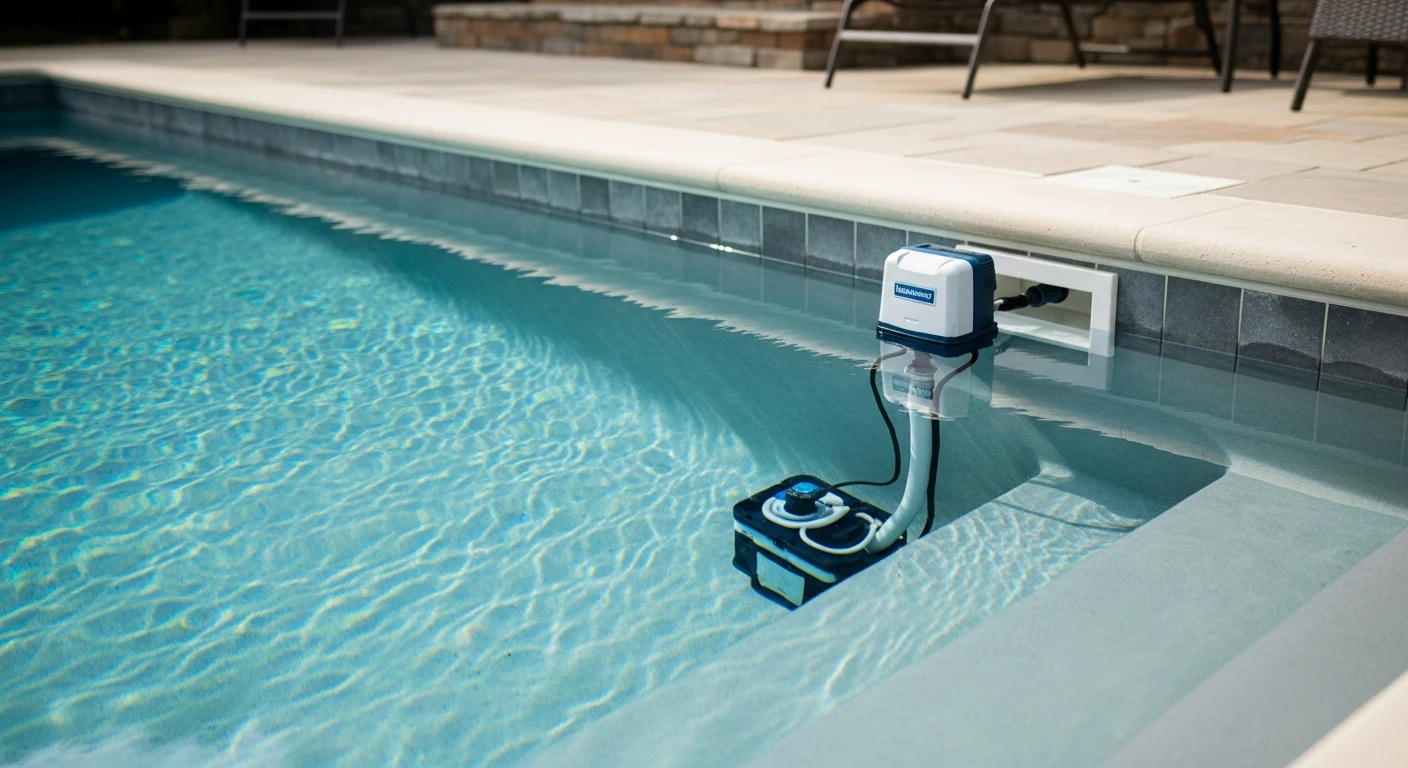
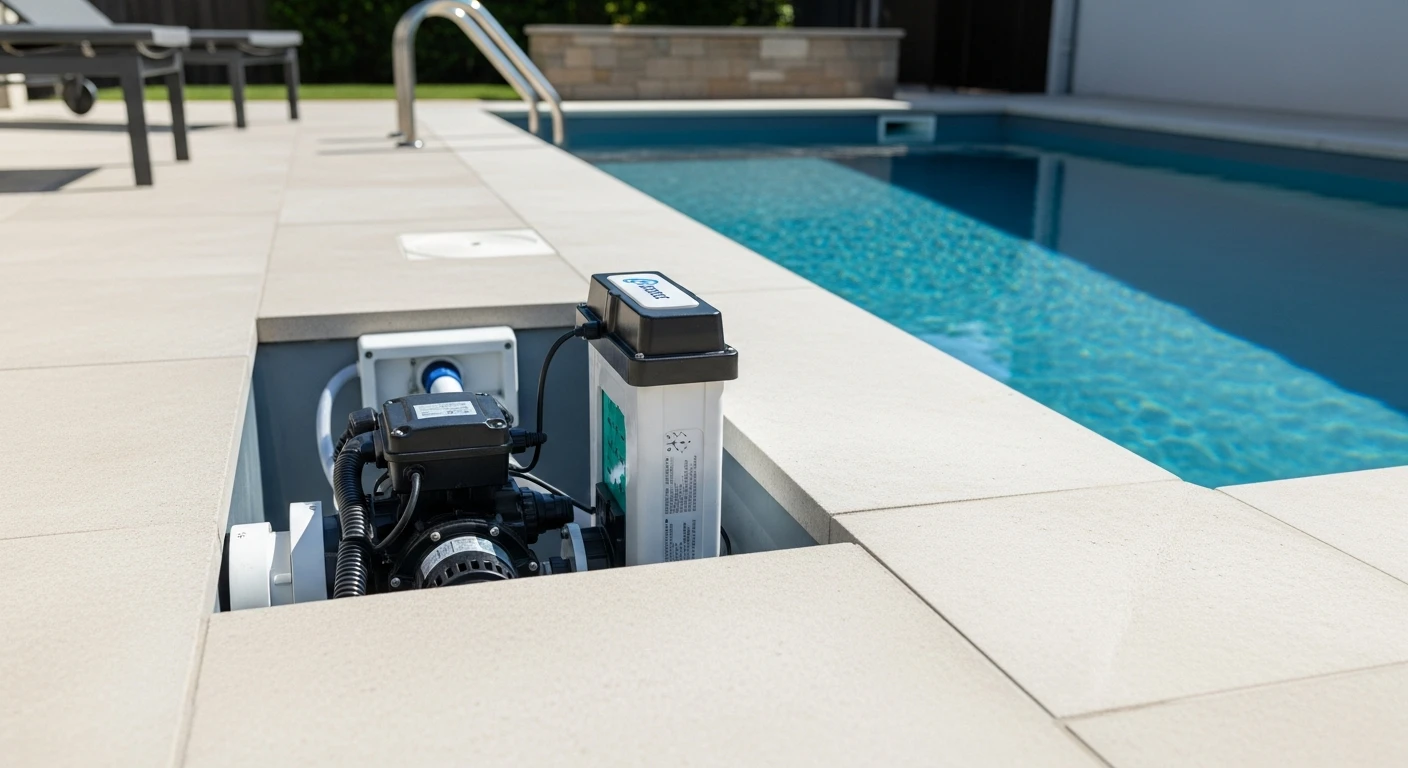
- Step 2: SCG Hardware Installation: The electrolytic cell is plumbed into the return line, after the filter and heater. I always insist on installing it with unions on both sides, a small detail that makes future cleaning or replacement a 10-minute job instead of a major plumbing task. The control panel is mounted and wired.
- Step 3: Precise Salt Application: I never allow clients to just dump bags of salt into the pool. This can stain surfaces. My method is to pour the calculated amount of high-purity pool salt slowly into the shallow end while using a pool brush to accelerate its dissolution. Running the main pump is critical during this phase to circulate and dissolve the salt evenly.
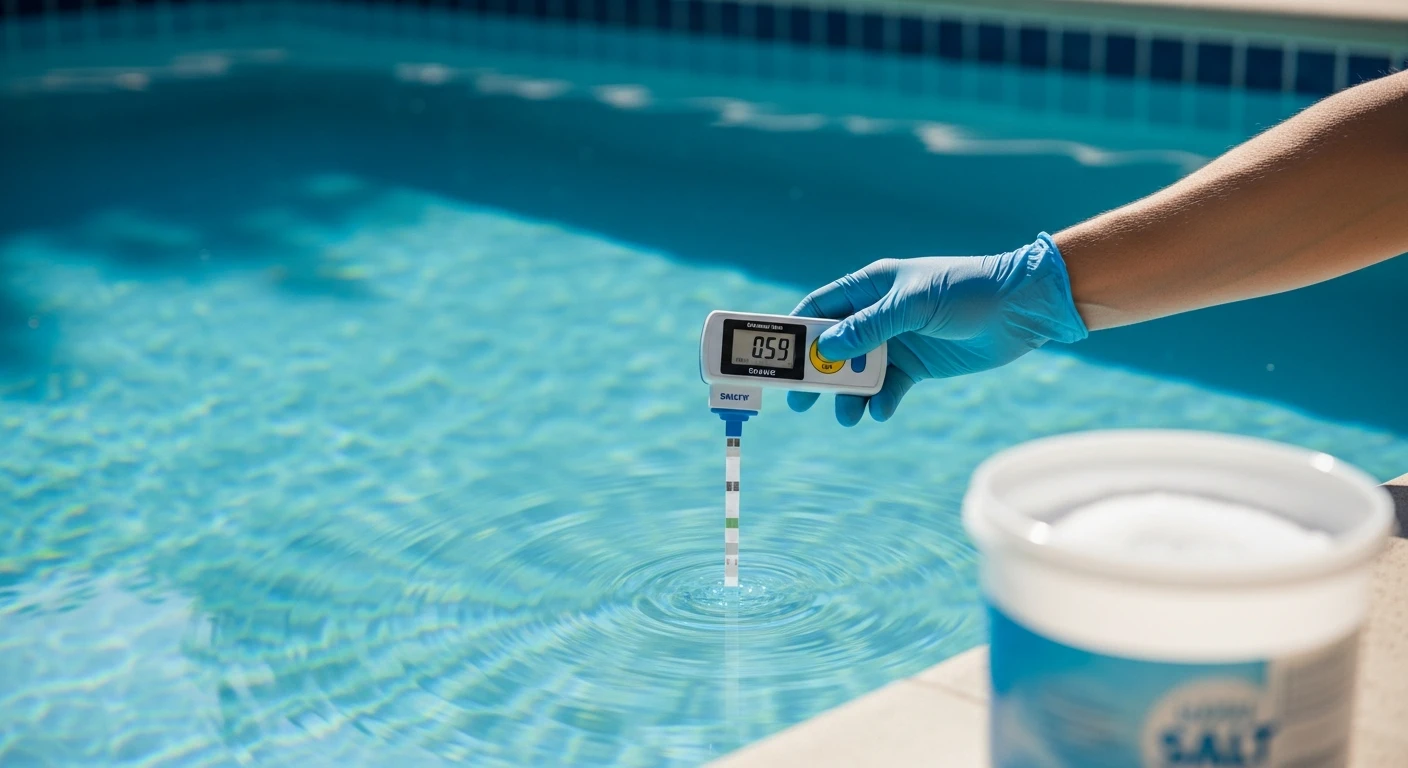
- Step 4: Dissolution and Verification: The system must run for a full 24 hours to ensure all salt is dissolved before the SCG is activated. I then use a calibrated digital salt meter—not the SCG's internal reading—to verify the exact PPM level.
- Step 5: System Activation and Calibration: Only after the PPM is confirmed do I turn the SCG on. I start the output at a conservative 50% and monitor the free chlorine level over the next 48 hours, making small adjustments to the output percentage until a stable 1-3 ppm is consistently maintained.
Tags
salt water pool
salt pool
salt water swimming pool
salt in a pool
Benefits of Saltwater Pools FAQ
What are the benefits of saltwater pools?
Saltwater pools offer several benefits, including softer, healthier skin and hair, reduced eye irritation, and a more comfortable swimming experience. Saltwater pools also tend to require less chlorine, which can be beneficial for people with sensitive skin or respiratory issues.
How does saltwater affect my skin and hair?
The high salt content in saltwater pools can help to moisturize and soften your skin and hair, reducing the appearance of dryness and irritation. This is especially beneficial for people who suffer from skin conditions such as eczema or psoriasis.
Will saltwater pools still require chlorine?
Yes, saltwater pools still require some level of chlorine to maintain proper sanitation and hygiene. However, saltwater pools typically require less chlorine than traditional chlorinated pools, which can be beneficial for people with sensitive skin or respiratory issues.
How does saltwater affect my respiratory system?
Saltwater pools can be beneficial for people with respiratory issues, such as asthma, as the salt content can help to reduce inflammation and open up airways. Additionally, saltwater pools tend to produce fewer chemical fumes than traditional chlorinated pools.
Are saltwater pools more expensive to maintain?
Saltwater pools can be more expensive to install, as they require a specialized saltwater chlorine generator. However, saltwater pools tend to require less maintenance and fewer chemicals than traditional chlorinated pools, which can save you money in the long run.
Can I still use saltwater pool products with my traditional chlorinated pool?
No, saltwater pool products are specifically designed for use with saltwater pools and may not be compatible with traditional chlorinated pools. It's important to use products that are specifically designed for your type of pool to ensure proper maintenance and sanitation.
What are some common myths about saltwater pools?
Some common myths about saltwater pools include concerns about the high salt content being bad for your skin or hair, or that saltwater pools are more expensive to maintain. However, these myths are largely unfounded, and saltwater pools can offer many benefits for swimmers.