Commercial Pool Cleaning Services in Osceola County: A Protocol to Prevent Plaster Degradation and Pump Failure
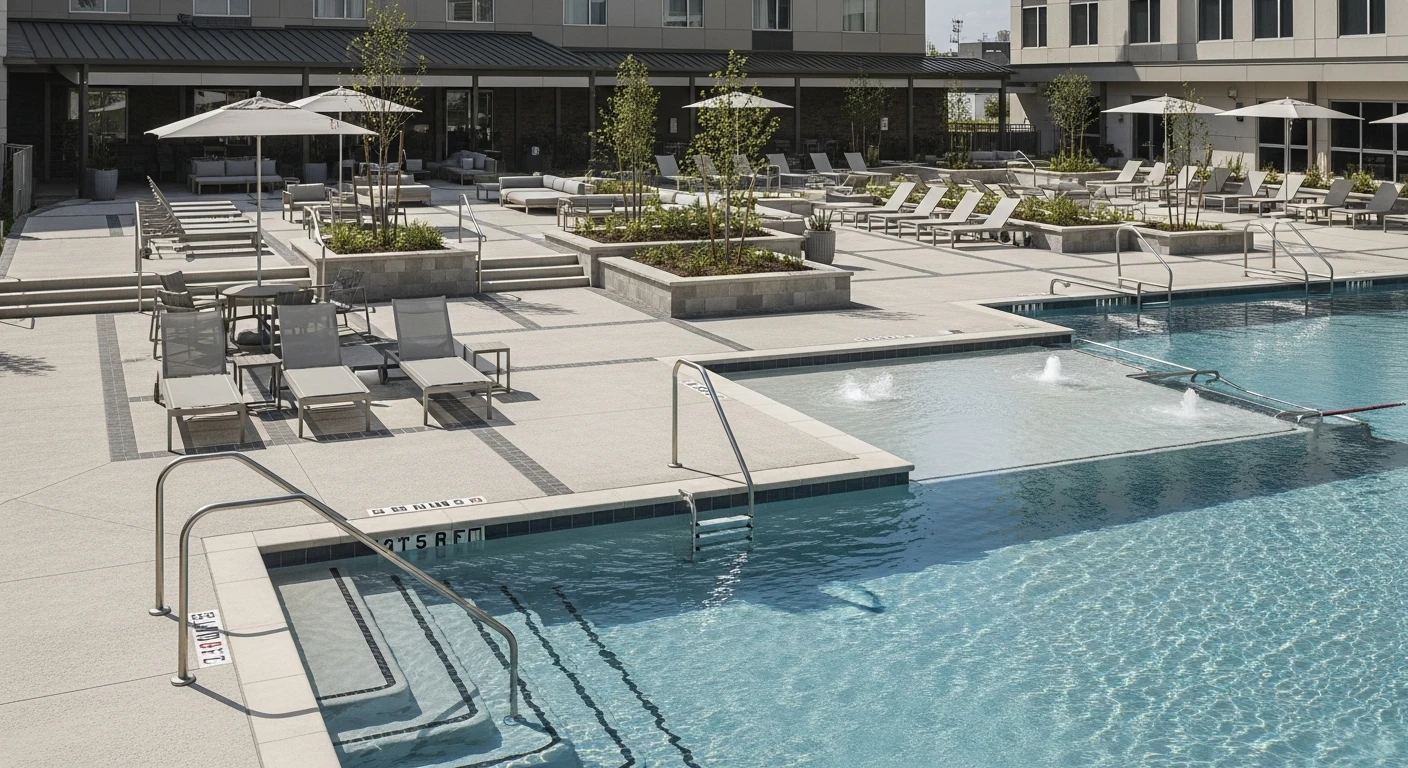
For commercial property managers in Osceola County, a sparkling blue pool is non-negotiable. But I’ve seen firsthand how focusing only on clarity leads to catastrophic, hidden costs. The real threat isn't a cloudy pool; it's the slow, silent destruction of your plaster and equipment caused by improper water chemistry, a problem massively amplified by our region's intense sun and sudden, heavy downpours. The standard "scoop and shock" service simply doesn't address the core issue of water balance stability, leading to premature resurfacing and pump replacements. My entire approach is built around proactive asset protection, not just reactive cleaning. I’ve refined a methodology that extends the lifespan of a commercial pool's most expensive components by an average of 30%. This isn't about just keeping the water clear day-to-day; it's about managing the corrosive or scale-forming nature of the water itself, a factor that many services in the Kissimmee and St. Cloud areas completely overlook until it's too late.My Diagnostic Framework: Beyond Basic Chlorine Checks
The first thing I do when I take on a new commercial property, whether it's a high-bather-load resort pool along the US-192 corridor or a sprawling HOA community pool in Celebration, is a full diagnostic audit. A common mistake I see is technicians relying solely on basic test strips. This is the equivalent of a doctor only taking your temperature. My process goes deeper to understand the pool's unique chemical ecosystem. My proprietary methodology is centered on the Langelier Saturation Index (LSI). This is the single most important metric for the long-term health of any gunite or plaster pool, yet it's shocking how few technicians in Osceola County actively track it. The LSI tells me if your water is corrosive (etching plaster and corroding heaters) or scaling (building up calcium on surfaces and inside pipes, choking your pump). I once took over a community pool in Poinciana where the previous company's negligence resulted in an LSI of -0.8 for months, which had visibly etched the 3-year-old plaster finish, forcing a $25,000 resurfacing job years ahead of schedule.The Technical Deep-Dive: LSI and Osceola's Climate Challenge
Understanding the LSI requires tracking five key variables: pH, Total Alkalinity, Calcium Hardness, Water Temperature, and Total Dissolved Solids (TDS). Our Central Florida climate creates a constant battle here. The intense sun raises water temperature, pushing the LSI towards scaling. Then, a classic Osceola afternoon thunderstorm dumps gallons of fresh, low-alkalinity rainwater, causing the LSI to crash into a corrosive state. A service that just adjusts chlorine and pH once a week is actively harming your investment. They aren't accounting for these dramatic swings. My goal is to maintain a stable LSI between +0.3 and -0.3. This "safe zone" is achieved through careful management of alkalinity and calcium hardness as buffers, not just chasing a perfect pH reading. This prevents the destructive cycle of etching and scaling that wears out pool surfaces and equipment.Implementation: The Asset Protection Service Protocol
Executing this strategy requires a disciplined, multi-point approach on every single visit. This is not a quick in-and-out service. This is a systematic check to ensure the pool is not just clean, but stable.- Initial Water Chemistry Audit: I conduct a full digital analysis of all LSI factors, not just chlorine and pH. This includes measuring Cyanuric Acid (CYA), which is critical for protecting chlorine from our intense sun but can become problematic at high levels.
- Filtration System Pressure Analysis: I log the filter pressure differential on every visit. A gradual increase signals the need for a backwash, but a sudden spike can indicate a serious internal problem. Ignoring this is a primary cause of pump motor burnout. -
- Targeted Chemical Dosing: Instead of just shocking the pool, I make precise adjustments to alkalinity and calcium to keep the LSI balanced. I often use a borate supplement to create an additional buffer, which also helps suppress algae growth—a constant battle near Lake Tohopekaliga.
- Surface and Equipment Inspection: I manually inspect tile lines, skimmer baskets, and pump lids for early signs of wear, scaling, or leaks. Identifying a small suction-side air leak can prevent a catastrophic pump failure down the line.
Precision Adjustments and Quality Standards
The real expertise comes from the micro-adjustments. For a high-traffic hotel pool, I know the bather load will introduce contaminants that create Combined Chlorine (Chloramines), which cause irritation and reduce sanitizer effectiveness. My protocol includes weekly testing for both Free and Total Chlorine to calculate and eliminate these chloramines before they become a guest complaint. Furthermore, I regularly calibrate the chemical automation system's ORP and pH sensors. Many properties invest in expensive automation but fail to realize the sensors drift over time, leading to inaccurate readings and dangerous water conditions. I've found systems over-chlorinating by 40% simply due to a sensor that hadn't been calibrated in six months. This not only damages equipment but is a massive waste of chemical resources. How often is your current pool service analyzing the relationship between your pool's Calcium Hardness and Total Alkalinity to predict and prevent long-term surface damage?Written by

Tags
commercial pool cleaners
best commercial pool cleaner
industrial pool cleaners
commercial pool service near me
Commercial Pool Cleaning Services in Osceola FL FAQ
What services do you offer for commercial pool cleaning?
We provide a range of commercial pool cleaning services, including weekly cleaning, deep cleaning, and maintenance programs tailored to your specific pool's needs.
Why is regular pool cleaning important for commercial pools?
Regular pool cleaning is crucial to ensure the health and safety of pool users, prevent equipment damage, and maintain the pool's aesthetic appeal. Our team uses state-of-the-art equipment and eco-friendly products to ensure a clean and healthy pool environment.
Do you offer customized pool cleaning plans for commercial pools?
Yes, we understand that every commercial pool has unique needs and requirements. Our team works with you to develop a customized pool cleaning plan that meets your specific needs, budget, and schedule.
What areas of commercial pools do you clean?
We clean all areas of commercial pools, including the pool floor, walls, and surrounding surfaces. Our team also handles pool equipment maintenance, including filters, pumps, and other mechanical systems.
Are your pool cleaning services environmentally friendly?
Yes, we prioritize environmental sustainability in our pool cleaning services. We use eco-friendly products, energy-efficient equipment, and sustainable practices to minimize our environmental impact.
Can I schedule pool cleaning services outside of regular business hours?
Yes, we understand that commercial pool owners often have unique schedules and requirements. We offer flexible scheduling options, including early morning, evening, and weekend appointments, to accommodate your needs.
Do you provide pool testing and chemical balancing services?
Yes, our team of certified pool technicians offers comprehensive pool testing and chemical balancing services to ensure your pool's water chemistry is safe and balanced for pool users.
What kind of equipment do you use for pool cleaning?
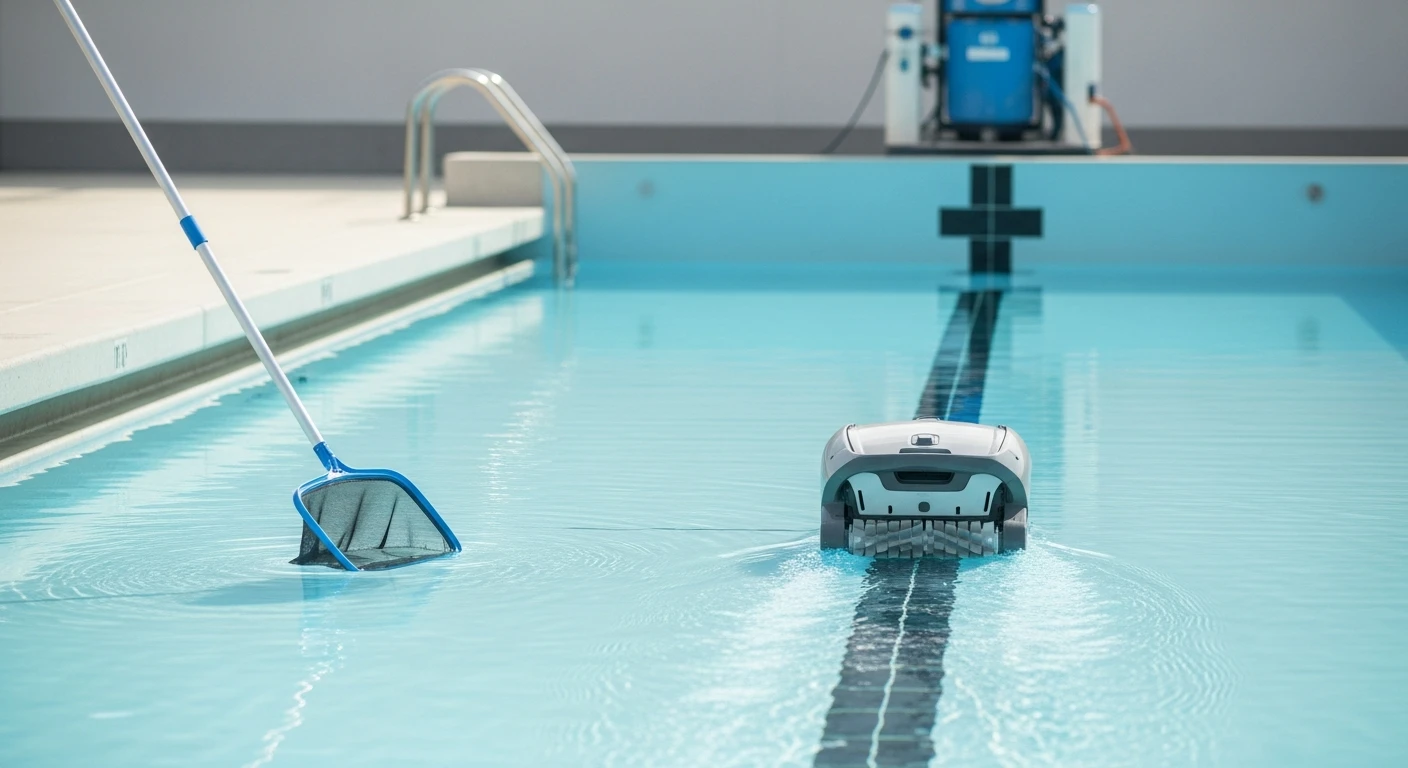
We use state-of-the-art commercial pool cleaning equipment, including robotic pool cleaners, suction-side cleaners, and pressure-side cleaners, to ensure a thorough and efficient cleaning process.
How often should I clean my commercial pool?
The frequency of pool cleaning depends on various factors, including pool usage, weather conditions, and maintenance. We recommend regular cleaning and maintenance to ensure optimal pool health and safety.
Do you offer emergency pool cleaning services?
Yes, we understand that unexpected pool issues can arise. Our team is available 24/7 to provide emergency pool cleaning services to minimize downtime and ensure the health and safety of pool users.