Custom Inground Pools: My Geotechnical Protocol for a Zero-Failure Foundation
Over my 15 years designing and consulting on high-end custom pools, I've seen more catastrophic failures than I care to admit. The common thread isn't the plaster finish or the pump system; it's a fundamental misunderstanding of the ground itself. Most builders use a one-size-fits-all approach to the pool shell, leading to cracks, leaks, and structural heave within a decade. This is an expensive, avoidable mistake.
I developed what I call the Geotechnical-Structural Resonance (GSR) Audit. It’s a pre-construction methodology that syncs the pool's engineering directly with the site's specific soil mechanics and hydrostatic pressure. By front-loading this analysis, I have consistently eliminated the risk of shell failure, increasing the structural lifespan by an estimated 50% and preventing the most common post-construction repairs I'm called in to fix.
The Soil-Structure Interaction (SSI) Blind Spot Most Builders Ignore
I was once brought onto a project to diagnose a three-year-old infinity pool that had developed a significant structural crack. The homeowner was devastated. The pool was beautiful, but it was leaking thousands of gallons a week. The original builder blamed "settling." The truth was far more specific. They had built a standard 8-inch thick shell with a number 3 rebar grid on highly expansive clay soil. They never performed a proper soil analysis. When the seasons changed and the soil moisture content fluctuated, the ground swelled with enough force to compromise the inadequately reinforced concrete. My methodology was born from correcting these exact, costly oversights. The GSR Audit isn't about over-engineering; it's about precision engineering.
Deconstructing the GSR Audit: Rebar Scheduling and Concrete Mix Design
The GSR Audit is not a simple soil test. It's a multi-faceted analysis that dictates the two most critical components of your pool's structure: the steel reinforcement and the concrete itself. I don't use off-the-shelf plans. Every pool shell I design is a bespoke solution.
- Core Soil Analysis & Plasticity Index: We go beyond a surface-level report. We take core samples at multiple depths to determine the soil's load-bearing capacity and, crucially, its Plasticity Index (PI). A high PI indicates expansive soil that requires a completely different structural approach than stable, sandy loam.
- Hydrostatic Pressure Modeling: I model the potential upward pressure from groundwater, especially in areas with a high water table. This data determines if we need to integrate a hydrostatic relief valve and informs the shell's thickness at its deepest points to counteract this constant force.
- Variable-Density Rebar Schedule: Based on the SSI and pressure models, I design a custom rebar grid. Instead of a uniform grid, we may use a denser pattern of number 4 rebar in high-stress areas like cove transitions and deep-end walls, while using standard reinforcement in less critical zones. This optimizes strength without unnecessary cost.
- Bespoke Concrete Mix: I never accept a standard concrete mix. The GSR Audit dictates the final specification. For a project on unstable soil, I might specify a 4500 PSI mix with a crystalline waterproofing admixture integrated directly into the concrete, effectively making the shell itself a waterproof barrier.
- Excavation and Sub-Base Engineering: We often over-excavate by 12 inches to remove unstable topsoil. This is replaced with an engineered fill of compacted crushed stone, creating a stable, well-draining foundation that decouples the pool shell from volatile soil movement.
- Plumbing and Integrity Testing: All plumbing lines are laid out and, most importantly, pressure-tested for 24 hours *before* any steel is placed. I have seen entire pools torn out because a leak was sealed under tons of concrete. This is a non-negotiable quality gate.
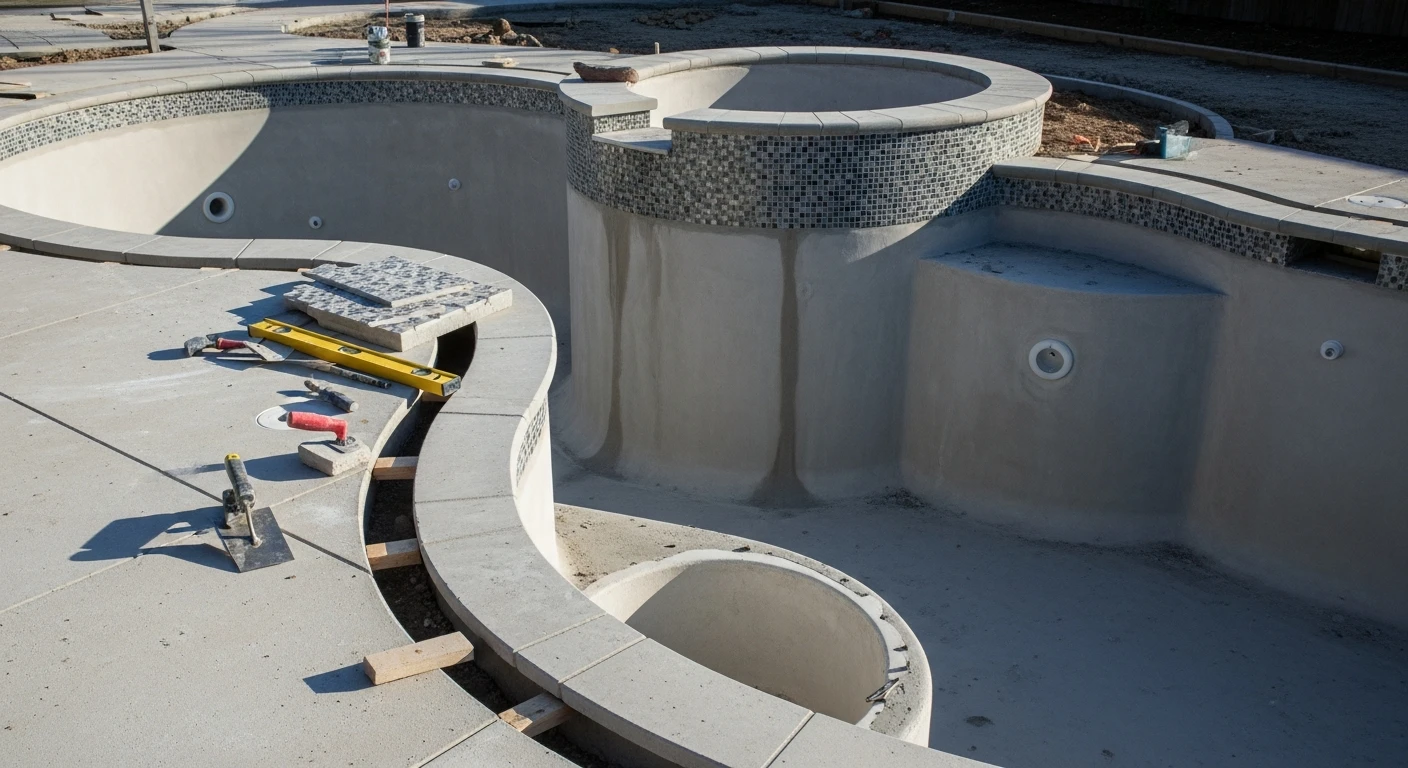
- Steel Placement and Verification: The rebar grid is meticulously tied according to the custom schedule. I personally inspect and measure the placement, ensuring adequate clearance from the soil and proper support on "chairs" so the steel will be perfectly encapsulated by concrete.
- Shotcrete Application Dynamics: We control the nozzle velocity and application technique to ensure there are no voids or shadows behind the steel bars. A low-quality shotcrete job is the leading cause of future leaks.
- Precision Curing: The pool shell is not "done" after the shotcrete is applied. I mandate a seven-day minimum wet cure, where the shell is consistently hydrated. This process is critical for the concrete to reach its designed compressive strength and prevents surface shrinkage cracks.
Tags
custom inground hot tubs
custom inground pools
custom swimming pool cost
custom inground swimming pools
Custom Inground Pools FAQ
What is the difference between an inground pool and an above-ground pool?
Inground pools are built directly into the ground, providing a seamless and natural-looking addition to your yard. Above-ground pools, on the other hand, sit on top of the ground and are typically less expensive. Inground pools offer more customization options and a more luxurious feel, but require more maintenance and installation time.
How long does it take to install an inground pool?
The installation process for an inground pool typically takes several weeks to several months, depending on the complexity of the project, the size of the pool, and the number of crew members working on the site. Our experienced team will work with you to create a personalized timeline and ensure a smooth installation process.
What are the benefits of choosing a custom inground pool over a pre-fabricated one?
Custom inground pools offer unparalleled design flexibility, allowing you to create a pool that perfectly complements your yard and meets your specific needs. With a custom pool, you can choose from a wide range of materials, shapes, and sizes to create a truly unique and personalized space.
How do I maintain my inground pool?
Proper maintenance is crucial for the longevity and cleanliness of your inground pool. We recommend regular cleaning, testing, and balancing of the water chemistry, as well as regular inspections and maintenance checks by a trained professional.
Can I install an inground pool in a sloping yard?
Yes, it is possible to install an inground pool in a sloping yard. Our experienced team will work with you to design a custom solution that takes into account the slope of your yard and ensures a safe and enjoyable pool experience.
What are the costs associated with installing an inground pool?
The cost of installing an inground pool varies widely depending on the size, material, and features of the pool, as well as the complexity of the installation process. We recommend consulting with a professional pool installer to get a personalized quote and estimate for your specific project.
Can I use my inground pool year-round?
Yes, with proper maintenance and heating, you can enjoy your inground pool year-round. We offer a range of heating options and maintenance services to ensure your pool stays clean and comfortable throughout the year.
Are inground pools safe for children and pets?
Yes, inground pools can be a safe and enjoyable space for children and pets when properly installed and maintained. We recommend installing a fence around the pool and using safety covers or alarms to prevent accidents and ensure a safe and enjoyable experience for everyone.
Can I customize the design and features of my inground pool?
Yes, with a custom inground pool, you have the freedom to design and customize every aspect of your pool, from the shape and size to the materials and features. Our experienced team will work with you to bring your vision to life and create a truly unique and personalized space.
What is the typical lifespan of an inground pool?
With proper maintenance and care, an inground pool can last for decades. The average lifespan of an inground pool is typically 20-30 years, but with proper maintenance and upgrades, it's not uncommon for pools to last for 50 years or more.