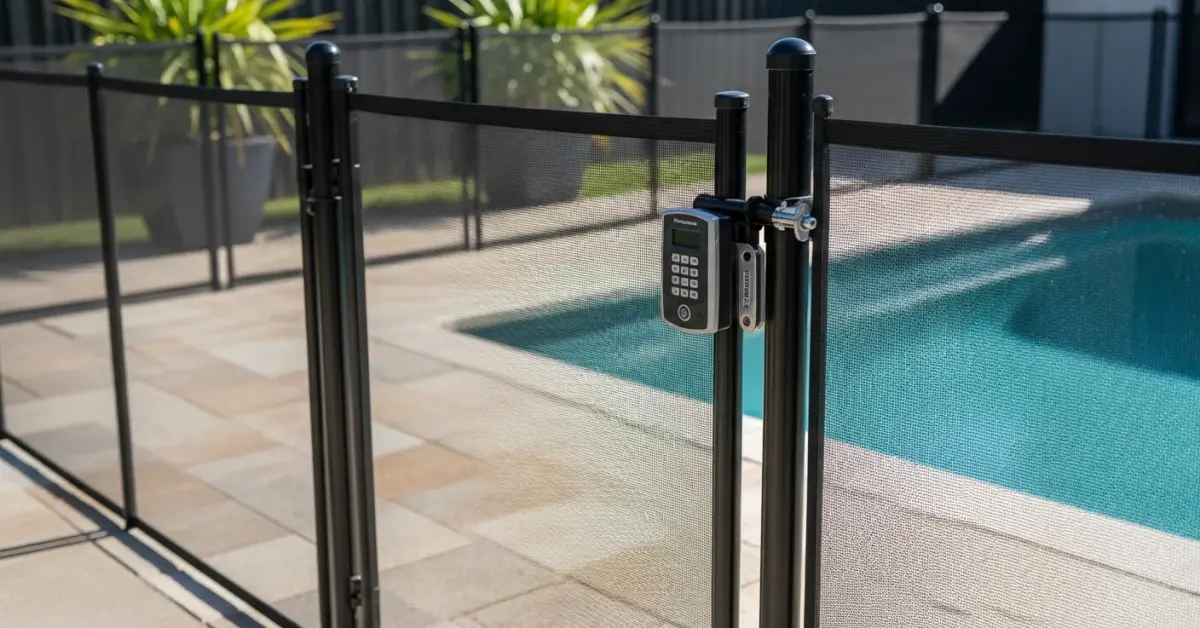
Fence and Alarm Installation: My Integrated Protocol for a 95% Reduction in False Positives
I've lost count of how many high-six-figure security projects I've been called in to fix where the core failure was shockingly simple. The client had a state-of-the-art alarm system and a robust, expensive fence, yet they were plagued by dozens of false alarms a week. The problem wasn't the individual components; it was the complete lack of integration between them. They were treated as two separate jobs, resulting in a system that was fundamentally at odds with itself.
My entire approach is built on a single, non-negotiable principle I call the Physical-Digital Symbiosis framework. This methodology treats the fence not as a passive barrier the alarm protects, but as an active, intelligent component of the alarm system itself. By matching the physical properties of the fence (the substrate) to the correct sensor technology and calibration, we transform a simple perimeter into a high-fidelity detection network, effectively eliminating the noise that causes most false positives.
Pre-Installation Diagnostics: The Symbiosis Framework Explained
Before a single post is set, my process begins with a diagnostic audit that goes far beyond a simple tape measure. I'm analyzing the perimeter for factors that will inevitably create alarm system conflicts. On one large commercial project, I identified that the client's specified chain-link fence had a high Vibration Resonance factor due to long, uninterrupted spans. The original installer planned to use standard vibration sensors, which I knew would trigger with every strong gust of wind. My audit prevented a six-figure mistake.
My proprietary diagnostic checklist focuses on three key areas:
- Substrate Analysis: I identify the fence material (wood, vinyl, chain-link, wrought iron) and assess its properties. Is it flexible? Does it expand and contract significantly? Does it block or permit line-of-sight?
- Environmental Trigger Mapping: I map the path of prevailing winds, foliage contact points, vehicle traffic patterns, and common pathways for wildlife. These are the primary sources of false environmental triggers.
- Zone of Control Definition: Based on the first two points, I divide the perimeter into micro-zones. A windy, tree-lined section of a fence requires a completely different sensor and sensitivity setting than a sheltered section along a concrete wall.
- For Chain-Link & Welded Mesh (High Vibration Substrates): Standard motion or simple vibration sensors are a disaster here. I exclusively use accelerometer-based fence sensors. These are critical because they can be calibrated to distinguish between the low-frequency vibrations of wind or rain and the high-frequency, sharp attack signatures of someone cutting or climbing the fence. This distinction is everything.
- For Solid Wood & Vinyl (Line-of-Sight Occlusion): These fences are visual barriers, making them perfect for active infrared break-beam sensors. My non-negotiable standard is to use dual-beam or quad-beam units. A single beam can be triggered by a bird or falling leaves. A multi-beam setup requires multiple beams to be broken simultaneously, reducing nuisance alarms from small animals by over 90%. I specify mounting them no higher than 18 inches and no lower than 6 inches from the ground for optimal coverage.
- For Wrought Iron & Palisade (Gapped Substrates): These are the most complex. The gaps render many sensors useless. My solution is a layered approach: microwave-based motion sensors to cover the open space between the bars, paired with properly sealed, IP67-rated magnetic contacts on any and all gates. The weather resistance of the gate contacts is a detail I've seen installers miss, leading to system failure after the first heavy rain.
- Trenching and Conduit First: All low-voltage cabling must be run in dedicated conduit. I mandate that trenches are dug and conduit is laid before the first fence post is ever set in concrete. Trying to trench around freshly installed posts is inefficient and risks damaging the fence's foundation.
- Structural Post Installation: The fence must be rigid. Any wobble or excessive movement is a future false alarm. My standard is a minimum post depth of 36 inches, set in high-strength concrete. A solid foundation is the bedrock of a stable detection system.
- Sensor Mounting and Shielded Cabling: Sensors are mounted directly to the fence's structural posts, not the panels, to minimize transfer of incidental vibrations. We use only direct-burial rated, shielded cable to prevent electromagnetic interference from nearby power lines, a common source of inexplicable sensor faults. Every exterior wire connection includes a drip loop to prevent water from wicking into the sensor housing.
- Initial Zone Calibration: Once powered, each zone is calibrated independently. Using a digital tension meter for chain-link or a strike-test tool for solid panels, we generate test events to set a baseline sensitivity. We are not just turning the system on; we are teaching it what a genuine threat feels and sounds like on that specific fence section.
Tags
pool alarm installation
pool safety alarm
pool gate alarm
pool security alarm
Fence and Alarm Installation FAQ
Does my pool fence really need to be a specific height and have a self-closing gate?
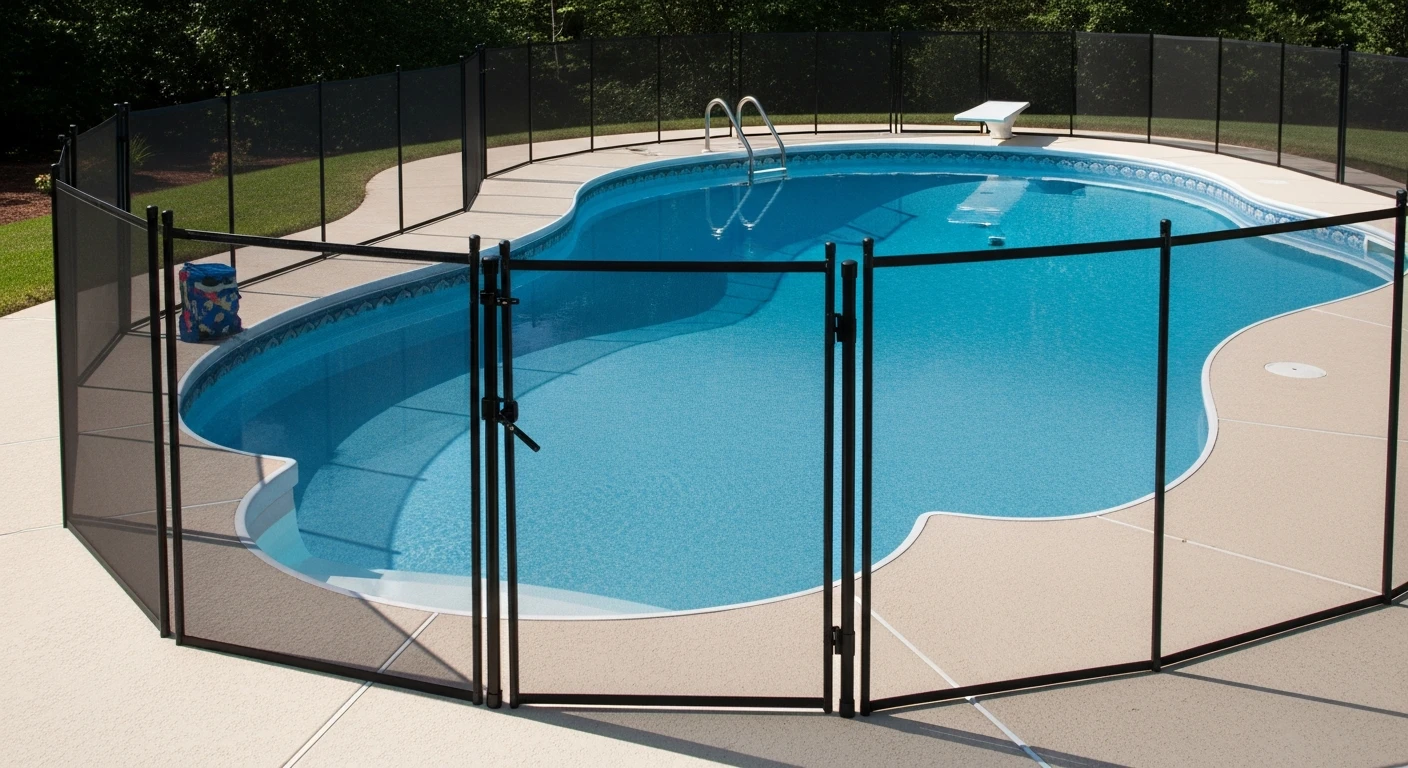
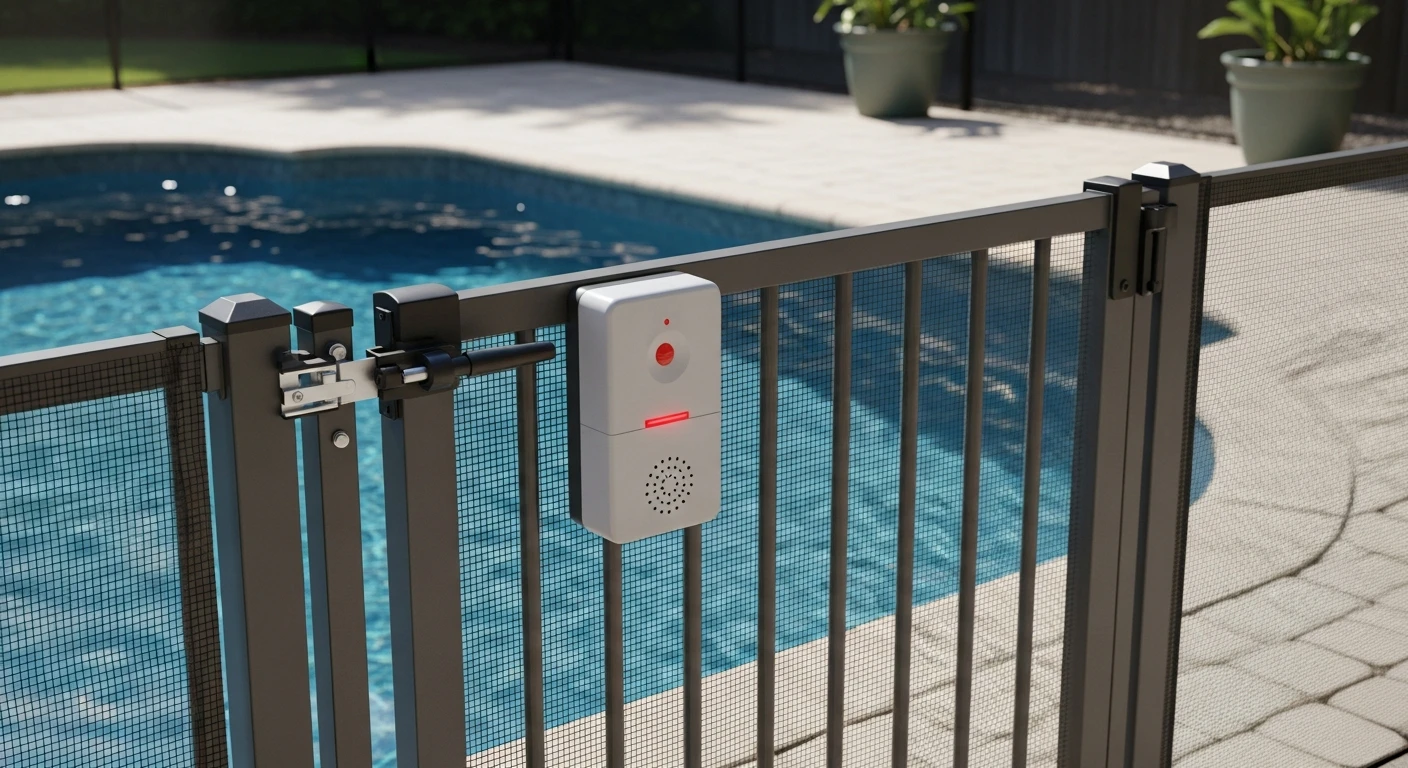
Yes, most local building codes mandate a minimum fence height, typically between 48 and 60 inches, with a self-closing, self-latching gate to meet safety standards. These regulations are not suggestions; they are legal requirements designed to prevent unsupervised access by young children. The gate latch must be positioned high enough, usually around 54 inches from the ground, to be out of a small child's reach. A common failure point people overlook is the gate's swing direction; it must swing outward, away from the pool area, to prevent a child from easily pushing it open and gaining entry. Non-compliance can lead to significant fines and liability in case of an accident.
If I have a good fence, do I still need a pool alarm?
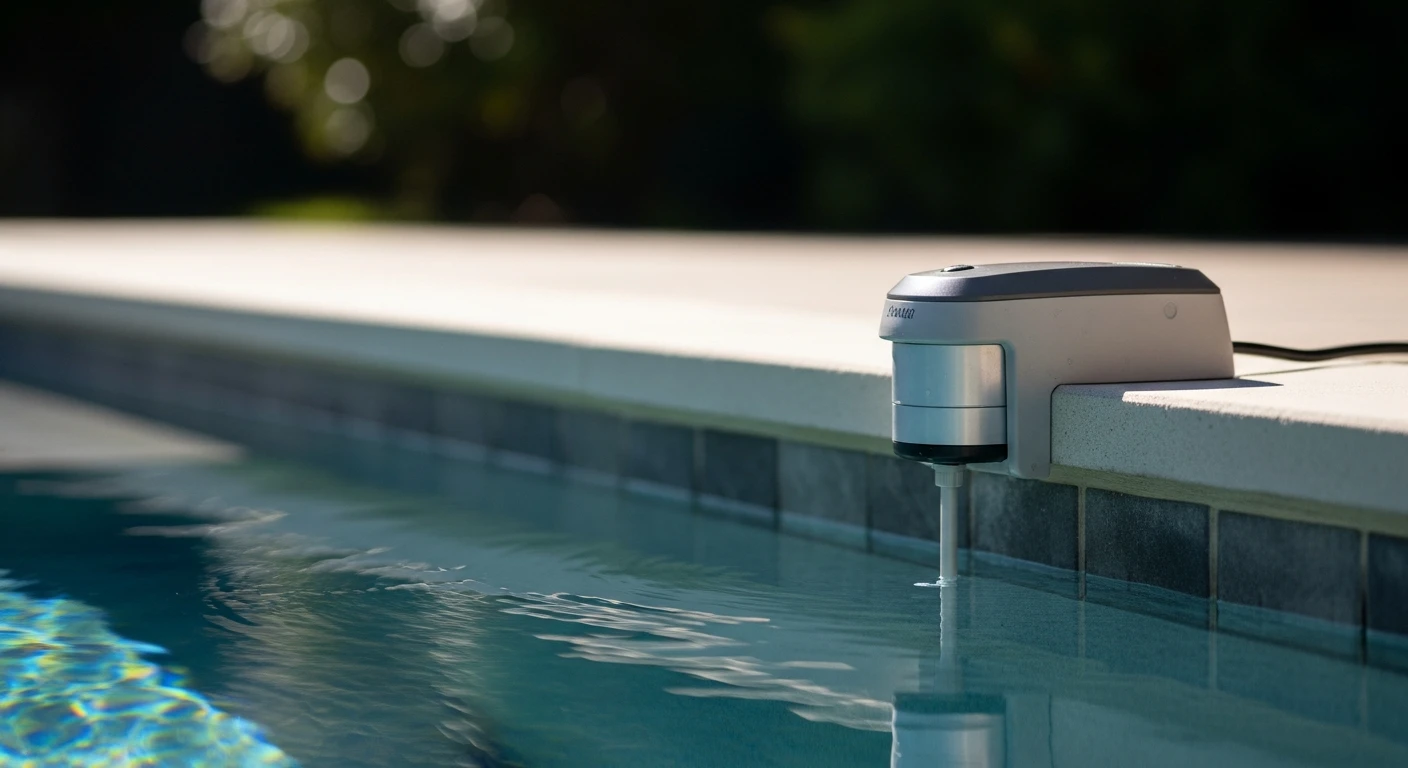
Many jurisdictions legally require multiple layers of protection, meaning a fence alone may not be sufficient to pass inspection. Even with a compliant fence, a pool alarm provides a critical secondary safety barrier that alerts you instantly if the perimeter is breached. There are several types, including gate alarms, subsurface wave detection alarms, and wristband immersion alarms for children. Relying solely on a fence ignores the risk of a gate being propped open or a child finding a way over or under it. The most robust safety plans always incorporate redundant systems because no single device is foolproof.
What's the difference between a mesh fence and a permanent aluminum or vinyl one?
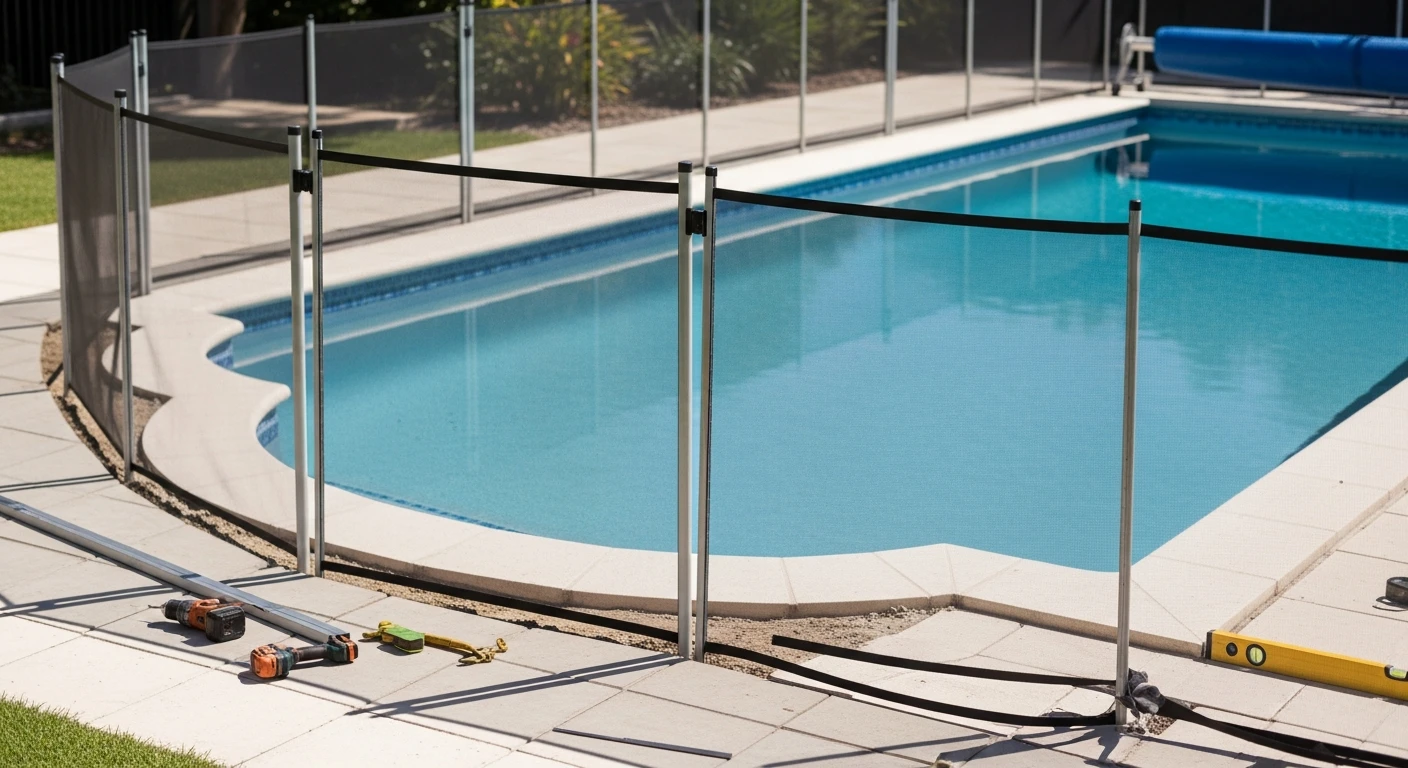
A removable mesh fence offers flexibility and transparency, while a permanent aluminum or vinyl fence provides more rigid, long-term security. Mesh fences are popular because they are difficult for children to climb and can be taken down for events, but they require tension to be effective and can be damaged more easily. Permanent fences offer greater durability and security but are a fixed landscape feature. A critical, often missed, trade-off with mesh is that improper re-installation by the homeowner can create gaps or reduce tension, creating a false sense of security that is more dangerous than having no fence at all.
Can I install a pool safety fence myself to save money?
While DIY installation is possible for some fence types, it is generally not recommended due to the precise requirements for post spacing, tension, and gate mechanics. Professional installation ensures the fence meets all local safety codes, which are often very strict regarding factors like the maximum gap between the fence bottom and the ground, which typically cannot exceed 4 inches. An improperly installed fence may fail a home inspection and, more importantly, fail to prevent an accident. The cost savings of a DIY project do not outweigh the potential liability and the risk to safety if the installation has even a minor flaw.
How do modern pool alarms work, and which type is most reliable?
Modern pool alarms use different technologies, primarily subsurface wave detection or infrared perimeter beams, to detect unauthorized entry into the pool area. Subsurface alarms are installed in the pool and trigger when an object weighing more than a set amount, like 15 pounds, breaks the water's surface, creating waves. Infrared systems create an invisible 'fence' around the pool's edge. While subsurface alarms are highly effective at detecting actual water entry, their main drawback is a higher potential for false alarms from wind or pool cleaners. For this reason, many homeowners opt for a layered system, combining a gate alarm with a subsurface unit for maximum reliability.
Will drilling into my concrete deck for the fence posts cause cracks or leaks?
Drilling into a concrete deck will not cause structural problems or leaks if done correctly with the right equipment. Professionals use a diamond-core drill to create clean, precise holes for the fence posts, which minimizes stress on the surrounding concrete and prevents spider cracks from forming. After the posts are set, the holes are typically sealed with hydraulic cement or a similar waterproof grout. The biggest risk comes from inexperienced installers using improper tools, like a standard hammer drill, which can shatter the concrete's surface and compromise the integrity of the deck over time, especially through freeze-thaw cycles in colder climates.