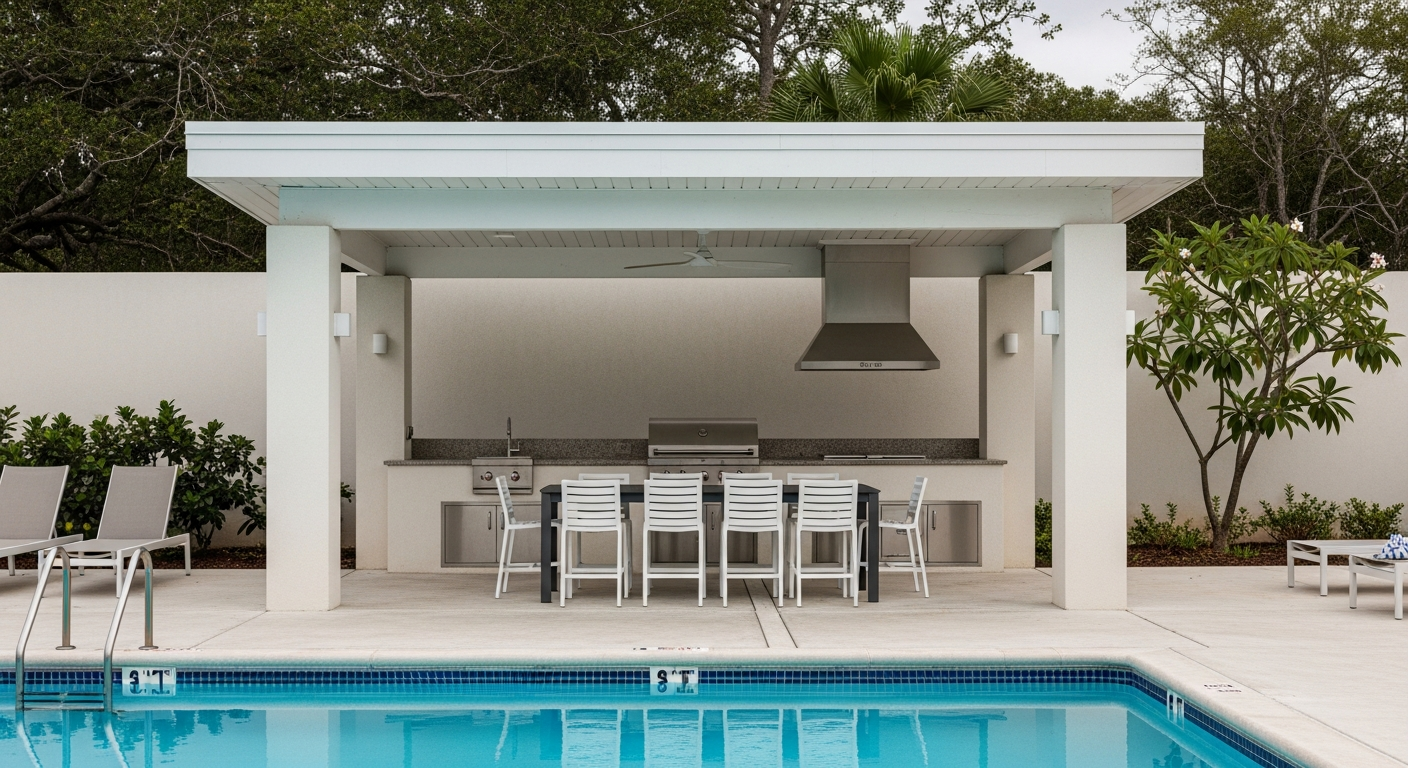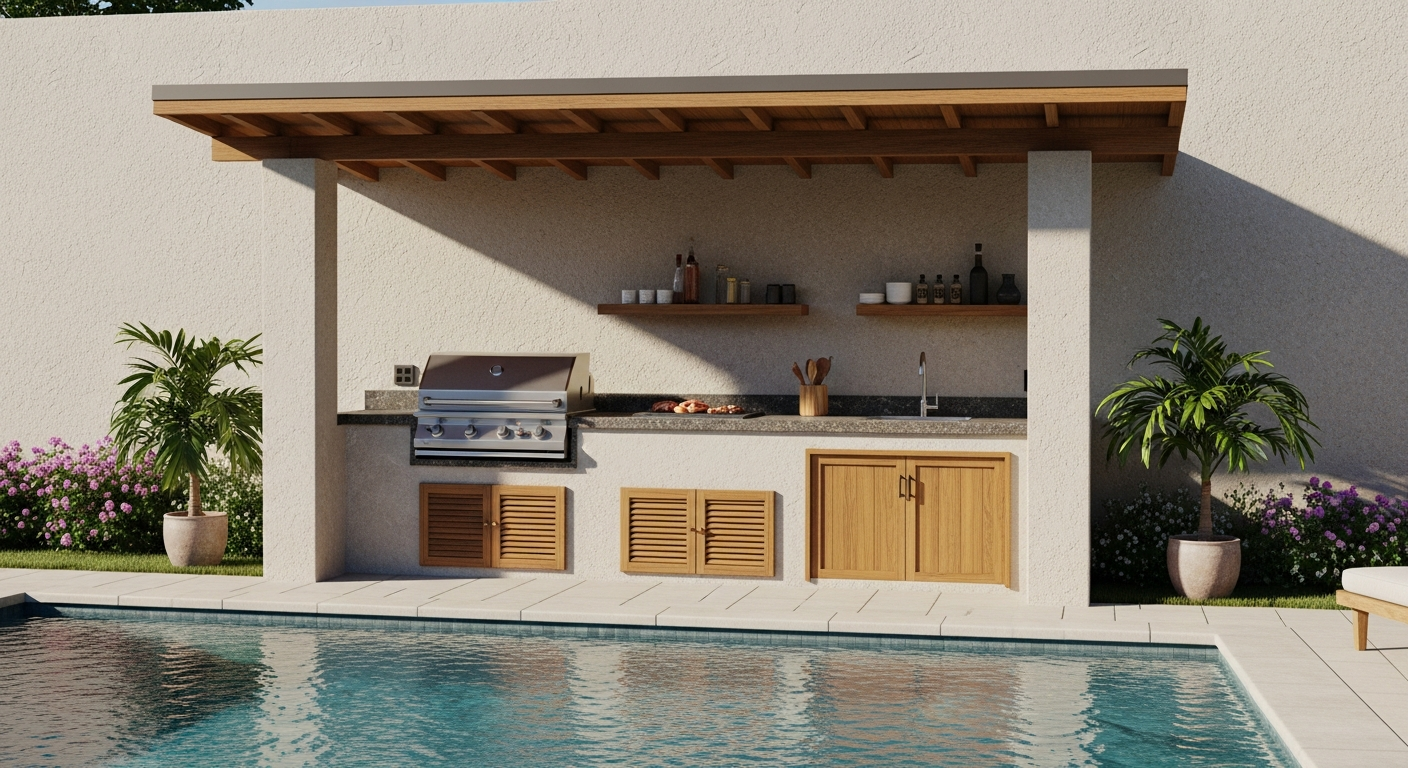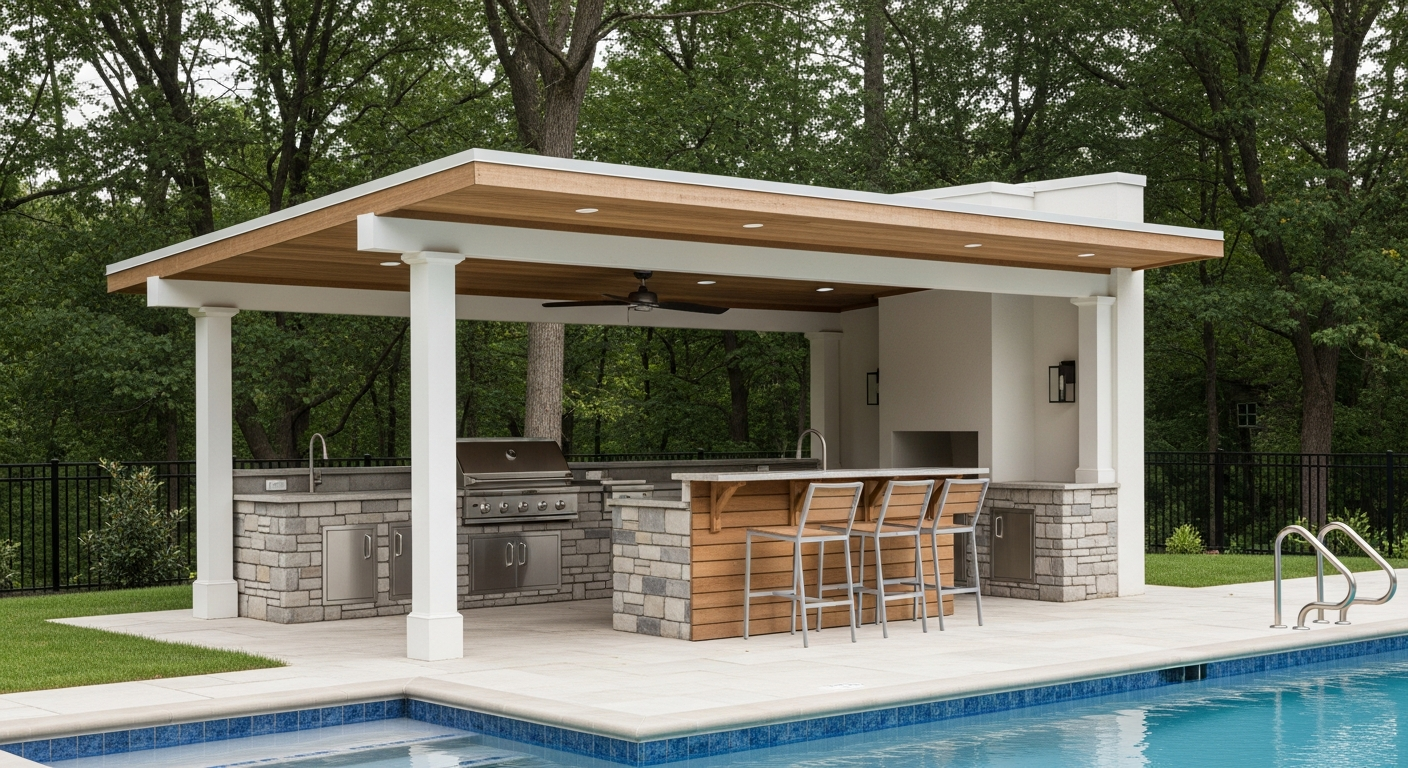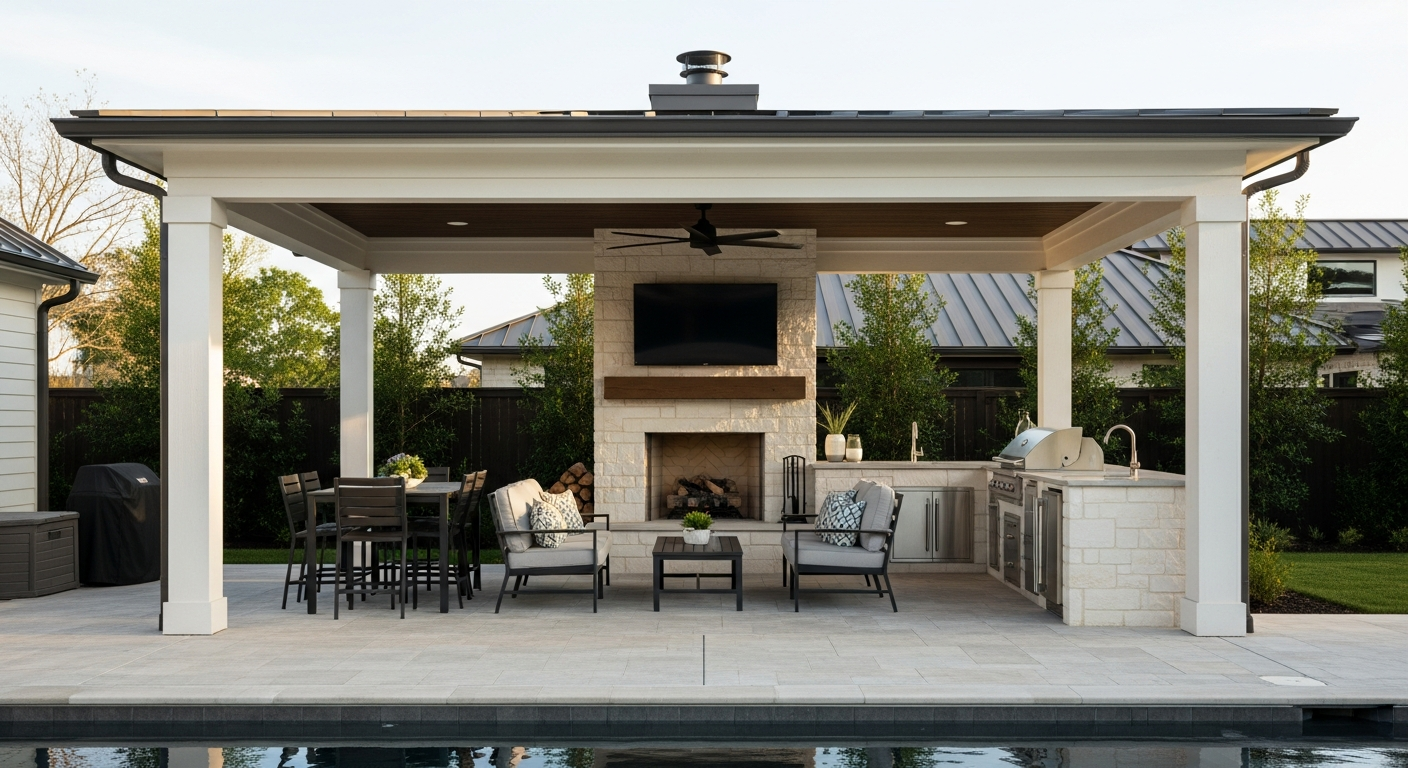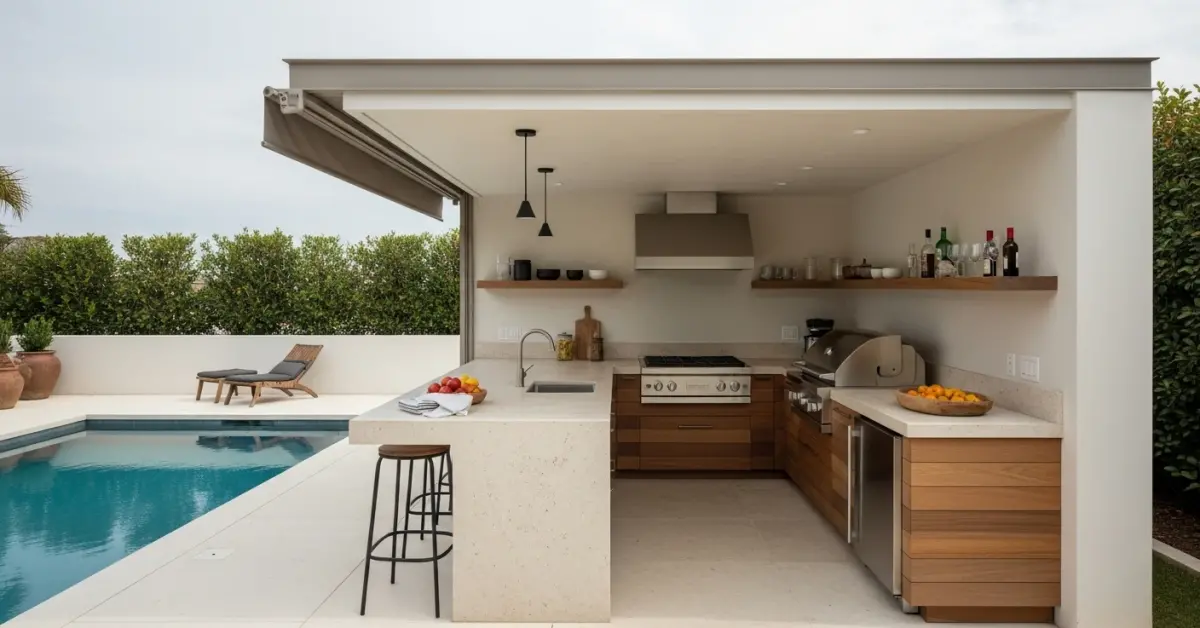
Covered Outdoor Kitchen in Collier County: My Framework for a 30-Year Hurricane-Resistant Build
As a specialist who has designed and salvaged outdoor kitchens from Port Royal to Pelican Bay, I’ve seen one catastrophic, recurring failure: environmental degradation. Many contractors build beautiful outdoor spaces that look great for a year, only to be decimated by the trifecta of Collier County’s climate—intense UV radiation, corrosive salt air, and oppressive humidity. The core issue is almost never the appliance quality but a fundamental misunderstanding of material science and airflow dynamics in a subtropical, coastal environment. My entire methodology is built around a principle I call "Environmental Stress Pre-Compensation." Instead of just building a "weather-resistant" kitchen, I engineer a system designed to thrive under the specific corrosive load of our Gulf coast. This approach has extended the functional lifespan of my projects by an average of 25-30 years compared to standard builds, preventing costly premature replacements for my clients in neighborhoods like Aqualane Shores and The Moorings.The Salt-Air Corrosion Failure Point: My Diagnostic Protocol
Before I even sketch a layout, I perform an on-site environmental audit. A common mistake I’ve corrected on multi-million dollar properties in Naples is the improper specification of stainless steel. A builder will proudly install a full 304-grade stainless kitchen, not realizing that the ambient salt spray will cause unsightly and damaging tea staining and pitting within 18 months. My diagnostic protocol begins by identifying the project's exact distance from saltwater and its exposure to prevailing winds off the Gulf, which dictates the necessary material grade. My proprietary "Coastal Durability Framework" is a checklist I developed after a project on Marco Island required a full hardware replacement in under two years. The original contractor used standard zinc-plated fasteners, which completely corroded. My framework forces a rigorous material validation process for every single component, from the cabinet hinges to the gas line fittings. It’s not about aesthetics first; it’s about material survivability.Material Forensics: Specifying for Zero-Corrosion and UV Degradation
The success of a Collier County outdoor kitchen is decided during the material selection phase. This is where I go beyond industry standards. For example, my baseline for any metal component within five miles of the coast is 316L marine-grade stainless steel. The "L" signifies low carbon content, which provides superior resistance to weld decay and sensitization—a detail most builders overlook. For countertops, I steer clients away from porous stones. While granite is popular, in our climate it requires constant sealing to prevent mildew and staining. My go-to is often a high-density, non-porous sintered stone like Dekton, which has a zero-porosity rating and is completely impervious to the UV degradation that can fade and damage other surfaces. For cabinetry, I avoid wood or wood composites entirely. Instead, I specify powder-coated aluminum or marine-grade polymers like StarBoard, which are inert to moisture and will never swell, delaminate, or harbor mold, a common issue in the more humid inland areas like Golden Gate Estates.Blueprint to Build: The 4-Phase Implementation for a Collier County Kitchen
Executing a durable outdoor kitchen requires a build process that’s more akin to boat building than standard construction. Every step is about sealing the system against environmental intrusion.- Phase 1: Airflow and Ventilation Mapping. Before construction, I map the lanai's airflow. The goal is to create cross-ventilation that works with the vent hood, not against it. This prevents the grease-laden vapor rollback that stains ceilings and creates a fire hazard. We must ensure the hood's CFM (Cubic Feet per Minute) rating is sufficient to overcome coastal breezes.
- Phase 2: The Sealed Utility Core. All electrical outlets must be in-use rated, weatherproof GFI outlets housed in sealed junction boxes. For gas, I mandate brass fittings over steel and insist on a final pressure test that holds for a minimum of 60 minutes—double the code requirement—to account for thermal expansion and contraction.
- Phase 3: Component Assembly with Marine-Grade Hardware. This is a non-negotiable step. Every screw, bolt, and fastener must be 316 stainless steel. I’ve seen entire cabinet doors fail simply because the hinges were a lower grade and seized with rust. All components are assembled with a nylon washer to prevent galvanic corrosion between dissimilar metals.
- Phase 4: Gasket and Sealant Application. The final step is to meticulously seal every joint, seam, and penetration point with a high-grade, UV-stable elastomeric or silicone sealant. This creates a monolithic, waterproof structure that prevents water intrusion, which is the primary catalyst for mold and insect infestation.
Post-Installation Audits: Ventilation and Gasket Integrity Checks
My job isn't done when the last appliance is installed. A week after commissioning, I perform a "Smoke and Pressure Test." I use a non-toxic theatrical smoke machine to visually confirm the ventilation hood is capturing 100% of vapors without any rollback, even with a cross-breeze simulated by a large fan. I also perform a detailed inspection of every sealant bead to check for proper curing and adhesion. It’s this final 5% of meticulous quality control that prevents 95% of future problems. This obsession with detail ensures the kitchen performs flawlessly not just on a calm, perfect day, but during a classic Florida summer downpour. Have you calculated the precise static pressure and airflow velocity required for your vent hood to function without failure against the prevailing coastal winds unique to your property's specific location?Written by

Tags
outdoor kitchen with roof
covering for outdoor kitchen
covered outdoor kitchen designs
covered outdoor kitchen plans
outdoor kitchen under covered patio
Covered Outdoor Kitchen in Collier FL FAQ
What kind of ventilation is required for a grill under a covered patio?
You must install a dedicated outdoor-rated range hood with a higher CFM rating than an indoor model, typically starting at 1200 CFM. This is a non-negotiable safety requirement to manage heat, smoke, and dangerous gases like carbon monoxide. Standard indoor hoods are not built to withstand the grease load or weather exposure and will fail prematurely. The hood must be installed at a specific height, usually 30 to 36 inches above the cooking surface, and vented directly outside, never into the ceiling cavity of the covered structure, which poses a significant fire hazard.
Are special 'outdoor-rated' appliances really necessary for a covered kitchen?
Yes, using only outdoor-rated appliances is critical for both safety and longevity, even in a covered space. These units are built with 304-grade stainless steel to resist corrosion from humidity and have sealed electrical components to prevent moisture intrusion, which can cause short circuits and fire risks. An indoor refrigerator, for example, lacks the robust insulation and powerful compressor needed to maintain safe food temperatures during a 90-degree summer day, leading to spoilage and premature equipment failure.
What countertops can withstand the elements in a covered outdoor kitchen?
Granite, soapstone, and concrete are top choices for their durability and resistance to thermal shock from a hot pan or freezing temperatures. While quartz is popular indoors, most brands are not warrantied for outdoor use because the resins that bind the stone can yellow and degrade with long-term UV exposure, even in a covered but bright area. For a lower-maintenance option, consider porcelain slabs, which are non-porous, meaning they won't stain from spills like wine or grease, and are completely unaffected by UV rays or frost.
How much clearance do I need between my grill and the structure's walls?
You must maintain a minimum clearance of at least 12 inches between the back and sides of your grill and any combustible materials like wood posts or siding. This is a critical fire safety specification found in the appliance manual, and ignoring it is a common cause of structural fires. For high-powered grills, this distance may need to be even greater. We always recommend installing a stainless steel heat shield on any nearby vertical surfaces to provide an extra layer of protection and reflect radiant heat away from the structure.
Can I use standard indoor cabinets for my covered outdoor kitchen?
No, you should never use indoor cabinets, as they will quickly warp, delaminate, and rot from ambient humidity and temperature swings. Outdoor cabinetry is constructed from materials like marine-grade polymers (HDPE), stainless steel, or teak, which are specifically designed to be impervious to moisture and insect damage. A frequent point of failure even with these materials is the hardware; ensure all hinges, handles, and drawer slides are made from 304 or 316-grade stainless steel to prevent rust and seizure.
What are the key utility requirements for plumbing and gas lines?
All water supply lines must be installed with a dedicated shutoff valve and a drainage point to allow for proper winterization, preventing freeze-burst damage that can destroy pipes and flood the structure. For gas, a licensed professional must run a dedicated, properly sized line directly from the source, incorporating an accessible emergency shutoff valve located within 6 feet of the appliances. Using flexible connectors intended for indoor use is a code violation and a serious leak risk outdoors.