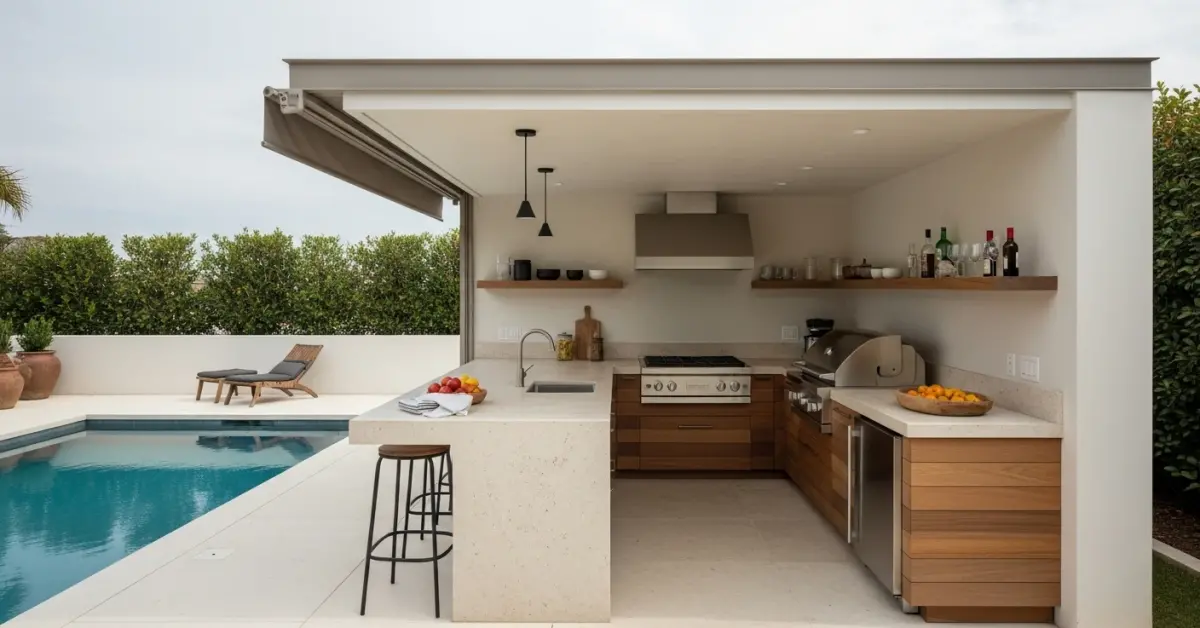
Covered Outdoor Kitchen Osceola County: A Framework to Prevent Material Failure from Subtropical Humidity
When I'm called to consult on a failing covered outdoor kitchen in Osceola County, the issue is almost never the appliances themselves. The real culprit, which I've seen compromise projects in both new constructions in Harmony and older homes in Kissimmee, is a fundamental misunderstanding of our local climate. The intense, year-round humidity and frequent downpours create a high-corrosion environment that standard "outdoor-rated" materials simply cannot withstand. My entire approach is built on preempting this material degradation, ensuring the structure’s integrity for over a decade, not just a few seasons. The core problem is that moisture and heat get trapped under the covered lanai or patio roof. Without a specific strategy for material science and airflow, I’ve seen cabinets delaminate and 304-grade stainless steel show rust pitting in as little as 18 months. This is a costly mistake that homeowners in communities from St. Cloud to Celebration are often forced to learn the hard way. My methodology focuses on creating a micro-environment that actively resists this subtropical assault, increasing the functional lifespan of the kitchen by at least 70%.The Osceola Climate-Proof Protocol: My Diagnostic for Longevity
Before a single plan is drawn, I run every project through my proprietary diagnostic framework, which I developed after repairing dozens of water-damaged and corroded outdoor kitchens across Central Florida. Standard design processes focus on aesthetics and layout first. I reverse that. I start with a deep analysis of the three vectors of failure unique to Osceola County: intense solar radiation (UV), sustained high humidity, and high-volume rainfall. My protocol prioritizes the material and structural response to these three threats above all else. This isn't just about picking weatherproof items from a catalog; it's a holistic system.Material Specification vs. 'Outdoor-Rated' Gimmicks
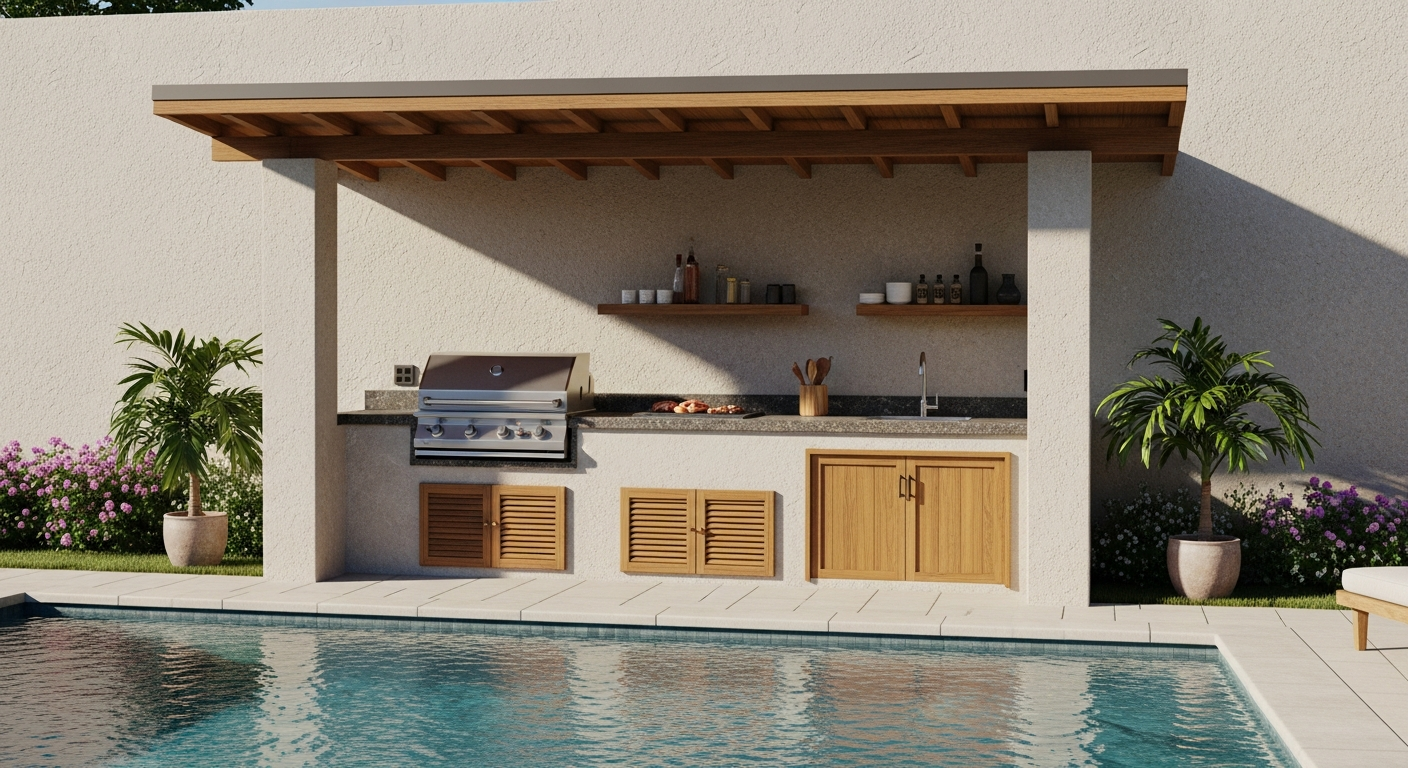
The term "outdoor-rated" has become a marketing gimmick that I caution my clients against. It’s too generic for our environment. For any project near Lake Tohopekaliga or in any low-lying Osceola area, I mandate a non-negotiable material baseline. For all metallic components, from grill housings to drawer pulls, I specify 316L marine-grade stainless steel. The added molybdenum provides superior resistance to chloride and moisture corrosion compared to the industry-standard 304 grade. For cabinetry, I avoid any wood-core products. My go-to materials are either high-density polyethylene (HDPE) or powder-coated aluminum, as they are non-porous and impervious to the swelling and mold growth I’ve seen destroy countless kitchens. For countertops, I steer clients away from porous natural stones toward ultra-compact surfaces like Dekton, which offer zero porosity, preventing stains and bacterial growth in the humid air.Executing the Build: From Foundation to First Ignition
A successful project is all about precision in the execution phase. A tiny error in sealing or drainage can create a major failure point down the line. I personally oversee these critical steps to ensure they meet my standards.- Site & Slab Analysis: I begin by assessing the existing concrete slab of the lanai. I look for micro-cracks and inadequate slope. The goal is a minimum 2% grade away from the house to prevent water pooling. If the slab is insufficient, we pour a new monolithic slab with integrated channel drains.
- Utility Mapping: All electrical outlets must be GFCI-protected and housed in weatherproof "in-use" covers. For plumbing, I insist on creating an air gap in the drain line to prevent backflow, a detail often missed in residential builds but critical for sanitation.
- Frame & Cabinetry Installation: The cabinets are installed with a 1/4-inch gap from any wall to promote airflow and prevent moisture trapping. All fasteners must be the same 316L stainless steel to avoid galvanic corrosion, a common error I've identified where cheap fasteners rust and stain the premium cabinet facings.
- Countertop & Appliance Sealing: Once countertops are installed, the real detail work begins. I use a high-grade elastomeric sealant, not standard silicone, around sinks and drop-in grills. I then perform a 24-hour standing water test on the sealed areas to guarantee a perfect seal against Osceola's driving rains.
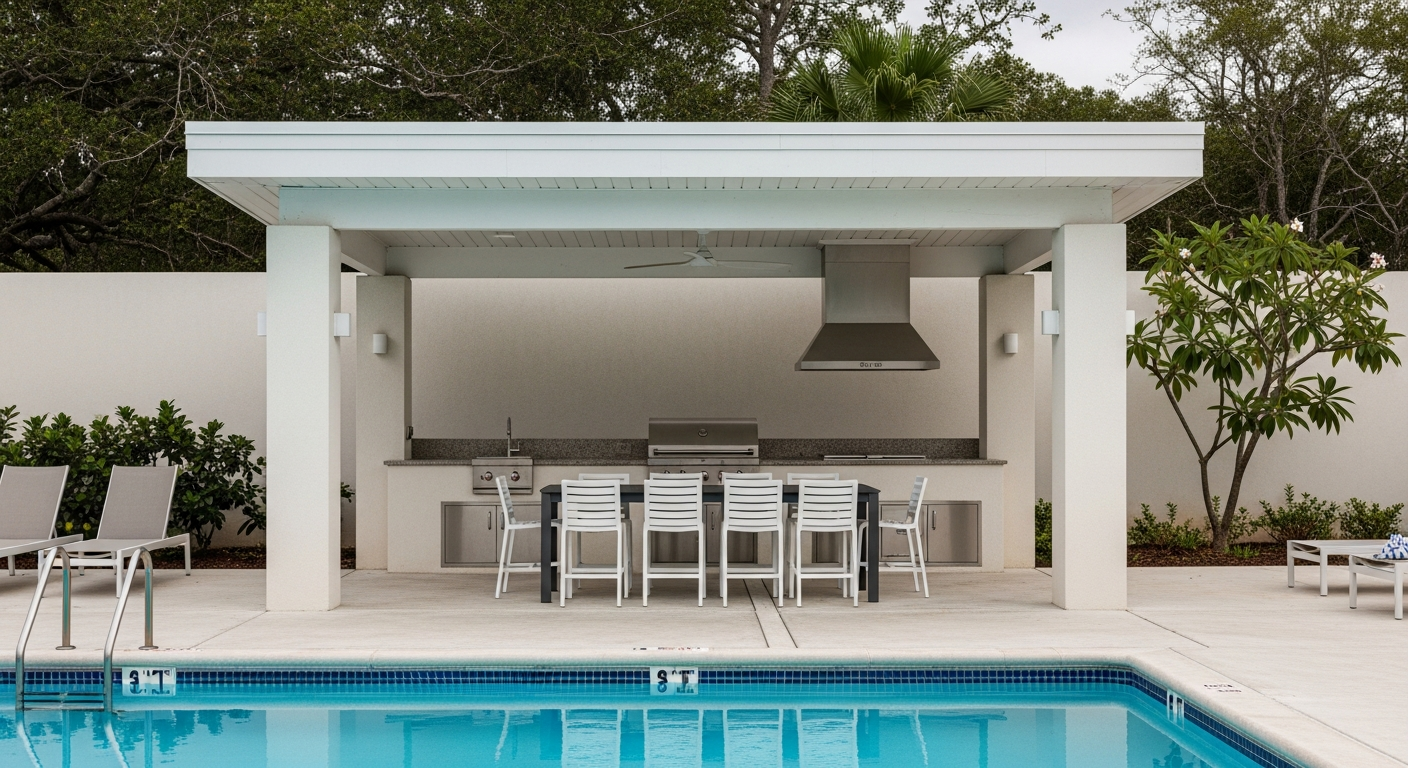
- Ventilation System Integration: This is the most critical step for a *covered* kitchen. The vent hood must be sized not just for the grill's BTU output but for the total cubic footage of the covered space. A common mistake is under-sizing the hood, leading to grease buildup and soot stains on the ceiling. I ensure the CFM (cubic feet per minute) rating is sufficient to perform a full air exchange in under two minutes.
Post-Installation Audits: My Checklist for a Zero-Defect Handover
Before I consider a project complete, I perform a series of final quality checks. This is my personal guarantee of performance and what separates a standard installation from a truly resilient outdoor living space. The audit includes a ventilation draft test using a smoke pencil to verify proper airflow and capture, a full GFCI trip-test on every outlet under load, and a high-pressure water test to check the integrity of every single seal and drain. This meticulous process is how I ensure the kitchen will perform flawlessly, whether during a dry spell in May or during the peak hurricane season rains of September. With the core structure perfectly sealed and ventilated, have you considered how the specific placement of task lighting will impact its IP (Ingress Protection) rating against wind-driven rain?Written by

Tags
outdoor kitchen with roof
covering for outdoor kitchen
covered outdoor kitchen designs
covered outdoor kitchen plans
outdoor kitchen under covered patio
Covered Outdoor Kitchen in Osceola FL FAQ
What kind of ventilation is required for a grill under a covered patio?
You must install a dedicated outdoor-rated range hood with a higher CFM rating than an indoor model, typically starting at 1200 CFM. This is a non-negotiable safety requirement to manage heat, smoke, and dangerous gases like carbon monoxide. Standard indoor hoods are not built to withstand the grease load or weather exposure and will fail prematurely. The hood must be installed at a specific height, usually 30 to 36 inches above the cooking surface, and vented directly outside, never into the ceiling cavity of the covered structure, which poses a significant fire hazard.
Are special 'outdoor-rated' appliances really necessary for a covered kitchen?
Yes, using only outdoor-rated appliances is critical for both safety and longevity, even in a covered space. These units are built with 304-grade stainless steel to resist corrosion from humidity and have sealed electrical components to prevent moisture intrusion, which can cause short circuits and fire risks. An indoor refrigerator, for example, lacks the robust insulation and powerful compressor needed to maintain safe food temperatures during a 90-degree summer day, leading to spoilage and premature equipment failure.
What countertops can withstand the elements in a covered outdoor kitchen?
Granite, soapstone, and concrete are top choices for their durability and resistance to thermal shock from a hot pan or freezing temperatures. While quartz is popular indoors, most brands are not warrantied for outdoor use because the resins that bind the stone can yellow and degrade with long-term UV exposure, even in a covered but bright area. For a lower-maintenance option, consider porcelain slabs, which are non-porous, meaning they won't stain from spills like wine or grease, and are completely unaffected by UV rays or frost.
How much clearance do I need between my grill and the structure's walls?
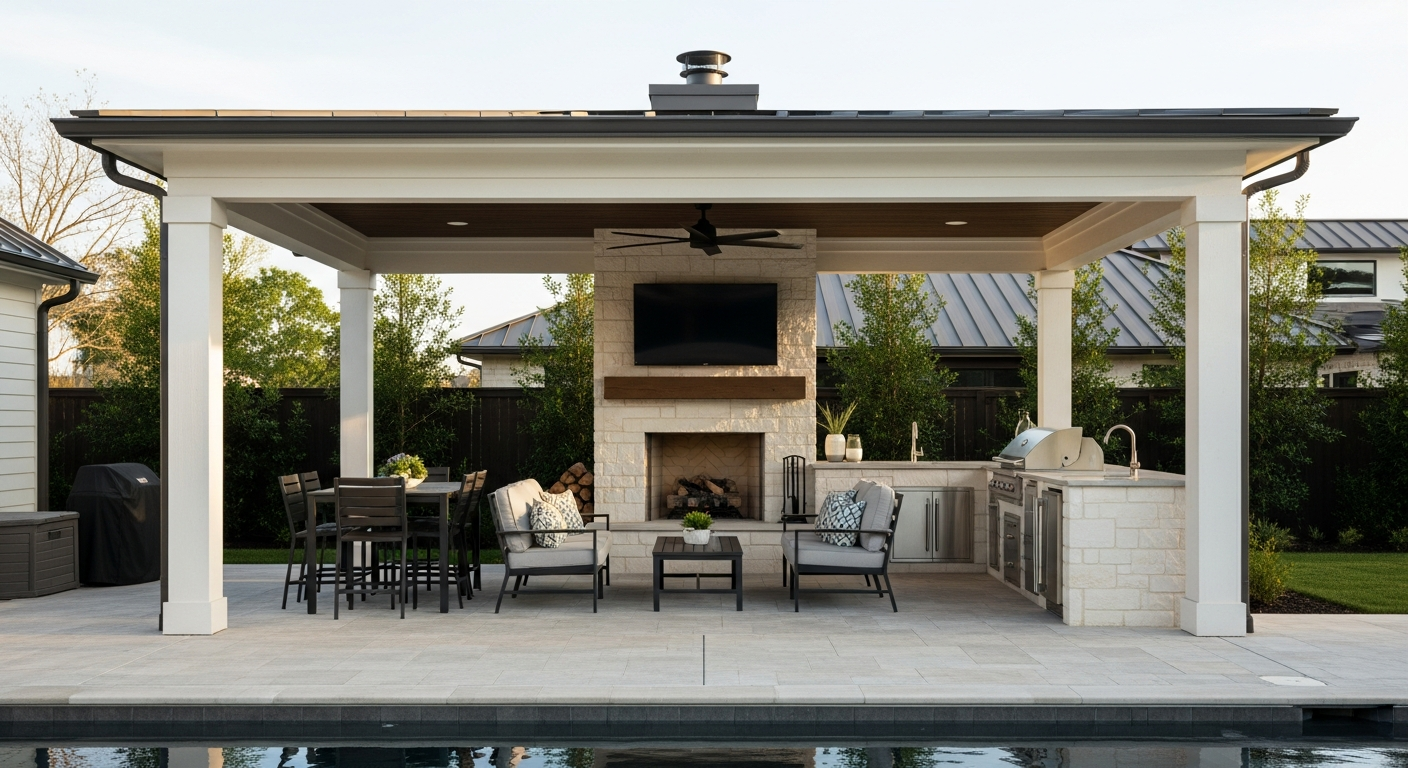
You must maintain a minimum clearance of at least 12 inches between the back and sides of your grill and any combustible materials like wood posts or siding. This is a critical fire safety specification found in the appliance manual, and ignoring it is a common cause of structural fires. For high-powered grills, this distance may need to be even greater. We always recommend installing a stainless steel heat shield on any nearby vertical surfaces to provide an extra layer of protection and reflect radiant heat away from the structure.
Can I use standard indoor cabinets for my covered outdoor kitchen?
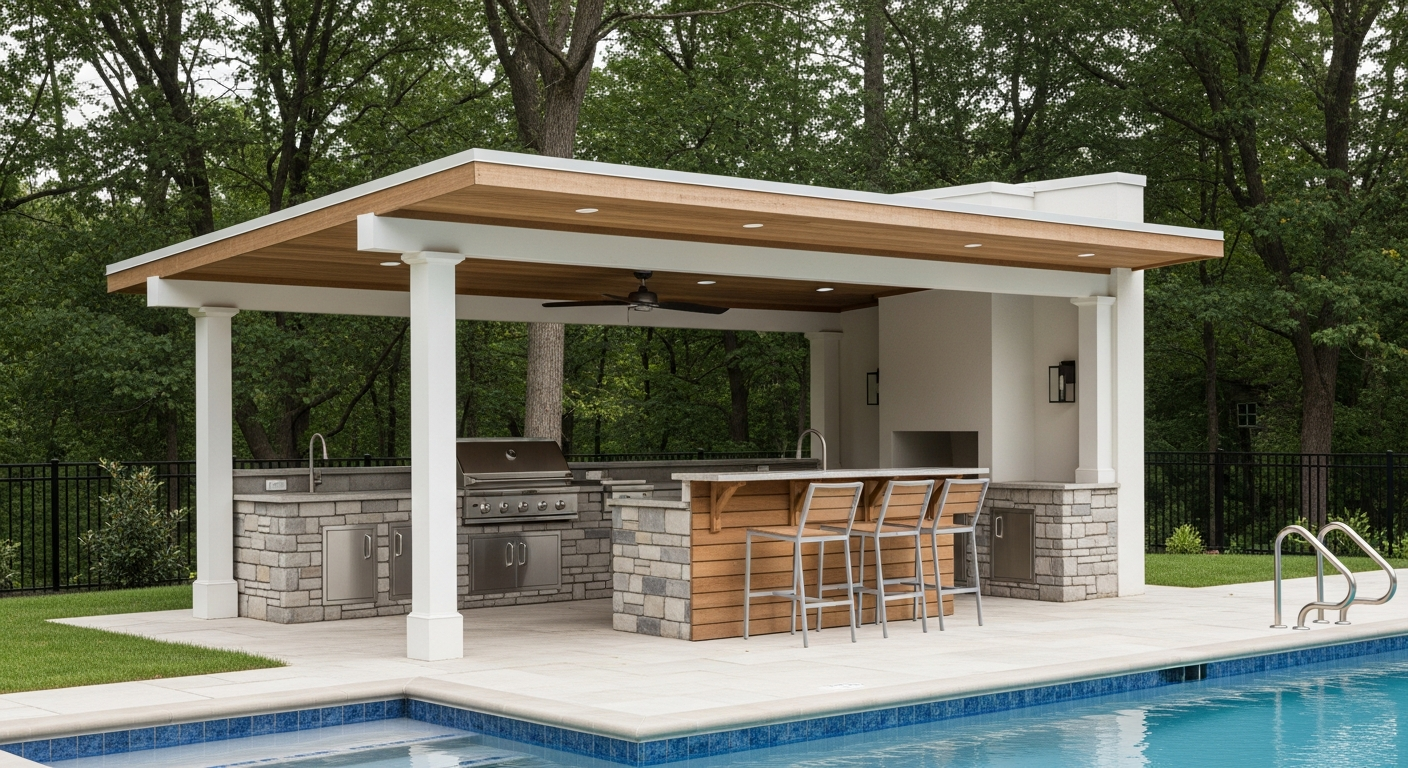
No, you should never use indoor cabinets, as they will quickly warp, delaminate, and rot from ambient humidity and temperature swings. Outdoor cabinetry is constructed from materials like marine-grade polymers (HDPE), stainless steel, or teak, which are specifically designed to be impervious to moisture and insect damage. A frequent point of failure even with these materials is the hardware; ensure all hinges, handles, and drawer slides are made from 304 or 316-grade stainless steel to prevent rust and seizure.
What are the key utility requirements for plumbing and gas lines?
All water supply lines must be installed with a dedicated shutoff valve and a drainage point to allow for proper winterization, preventing freeze-burst damage that can destroy pipes and flood the structure. For gas, a licensed professional must run a dedicated, properly sized line directly from the source, incorporating an accessible emergency shutoff valve located within 6 feet of the appliances. Using flexible connectors intended for indoor use is a code violation and a serious leak risk outdoors.