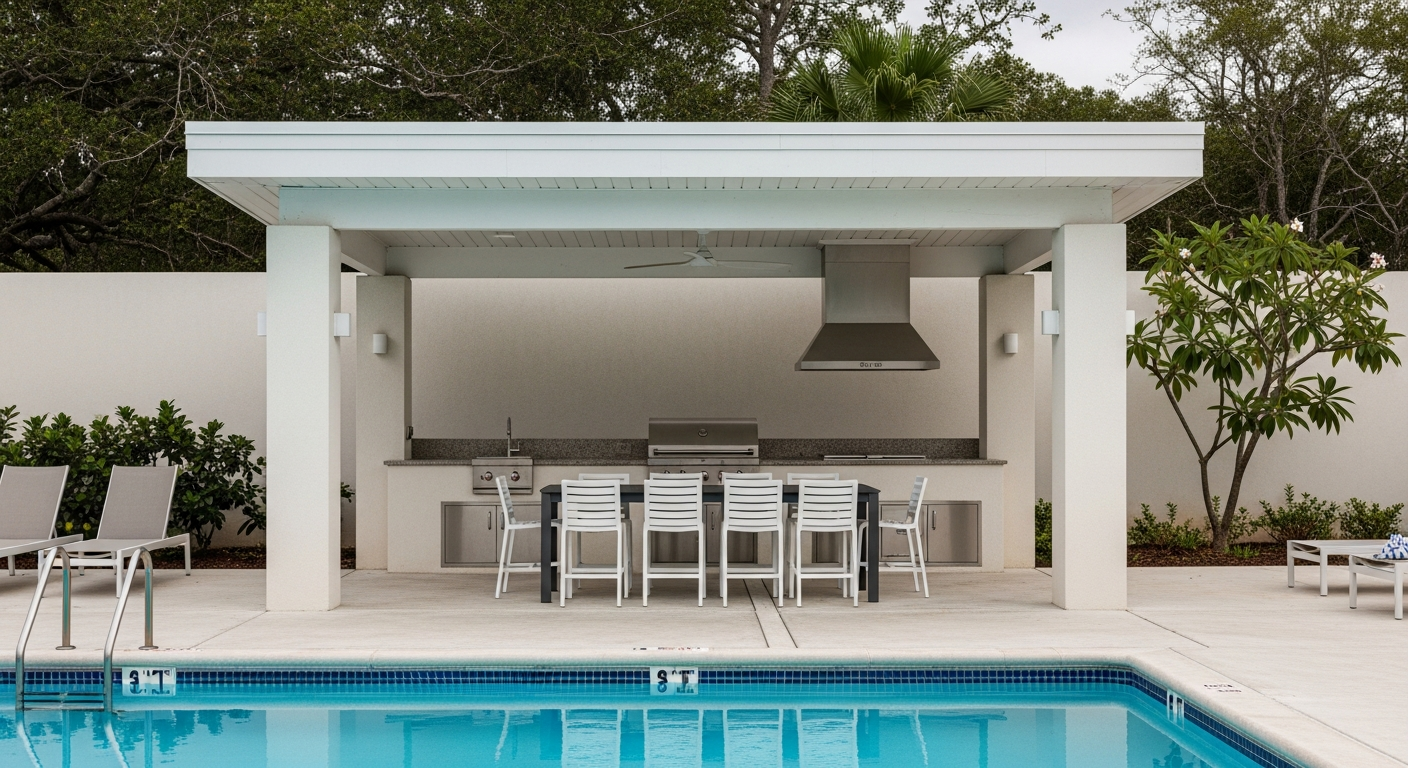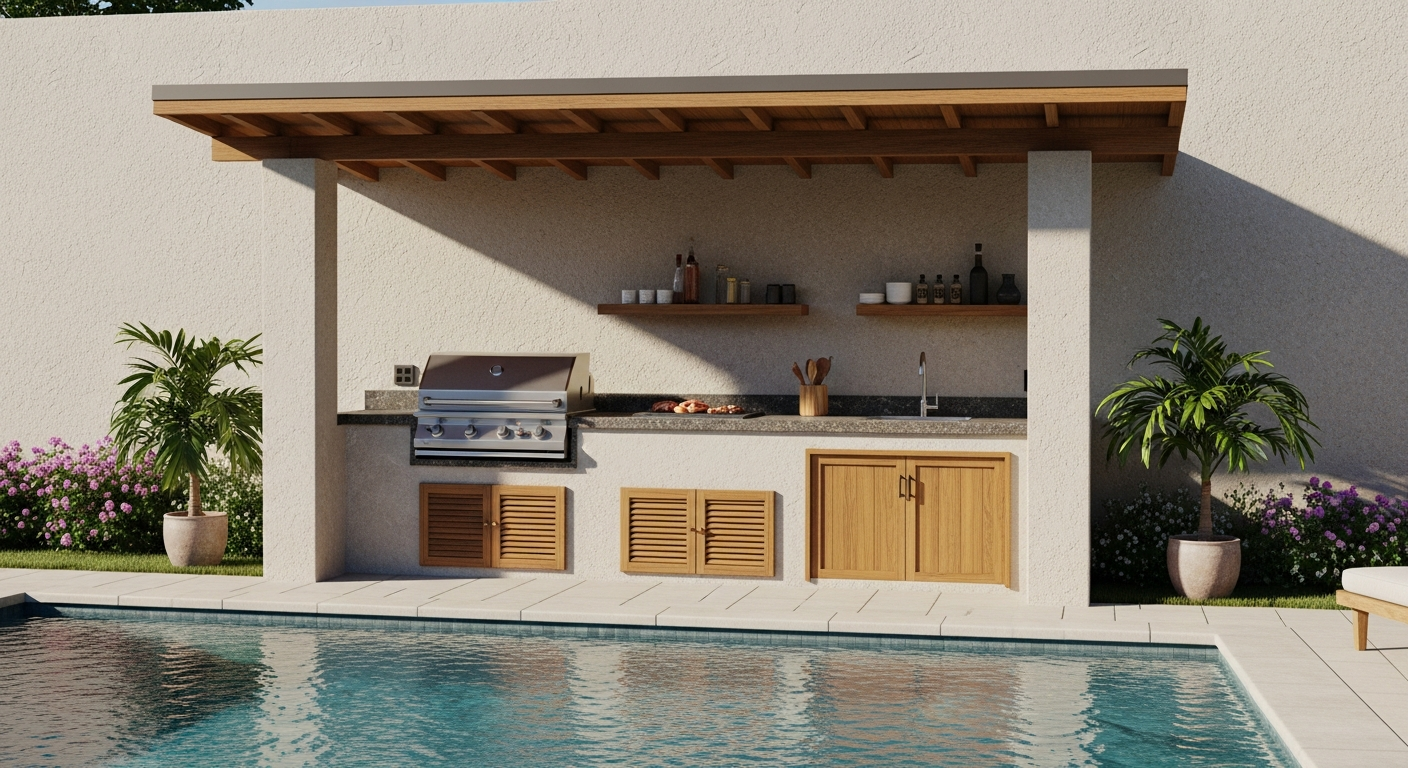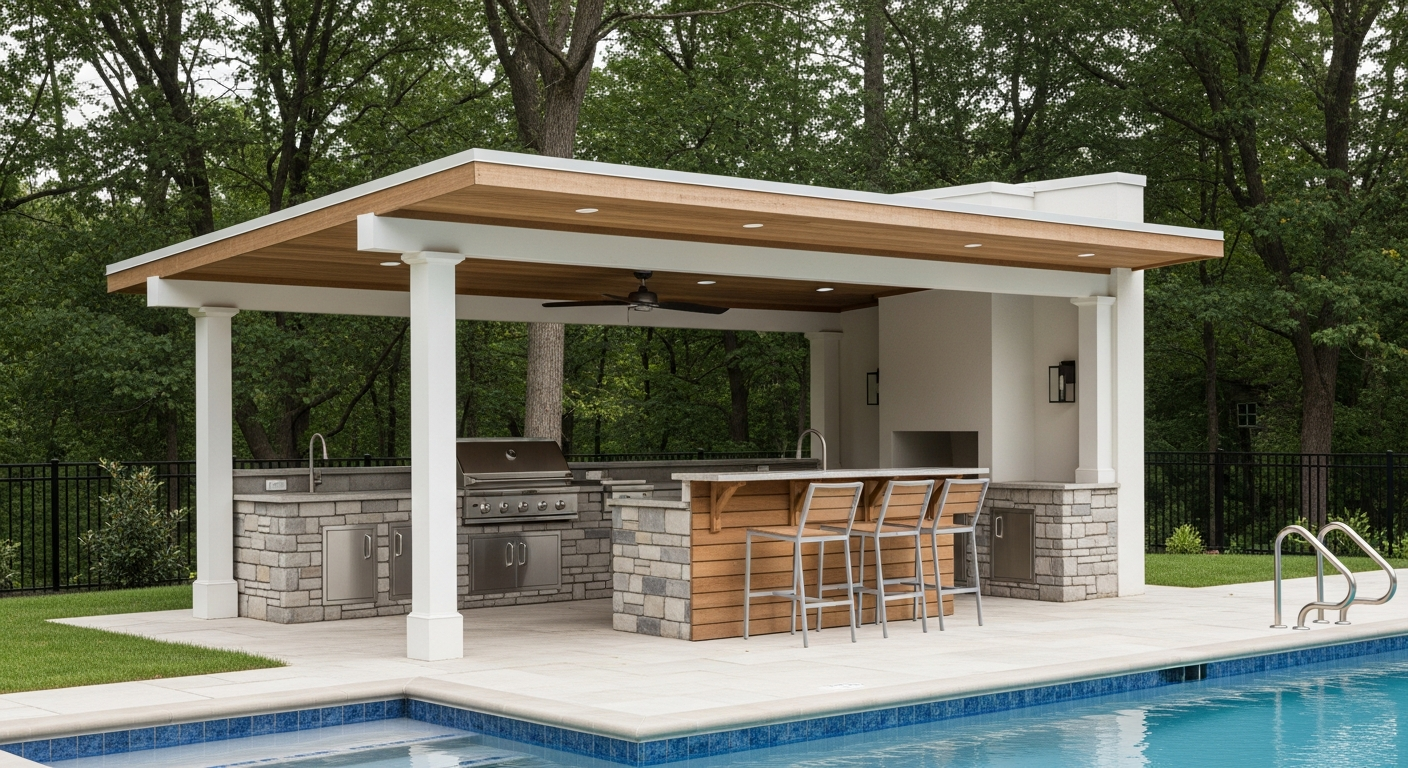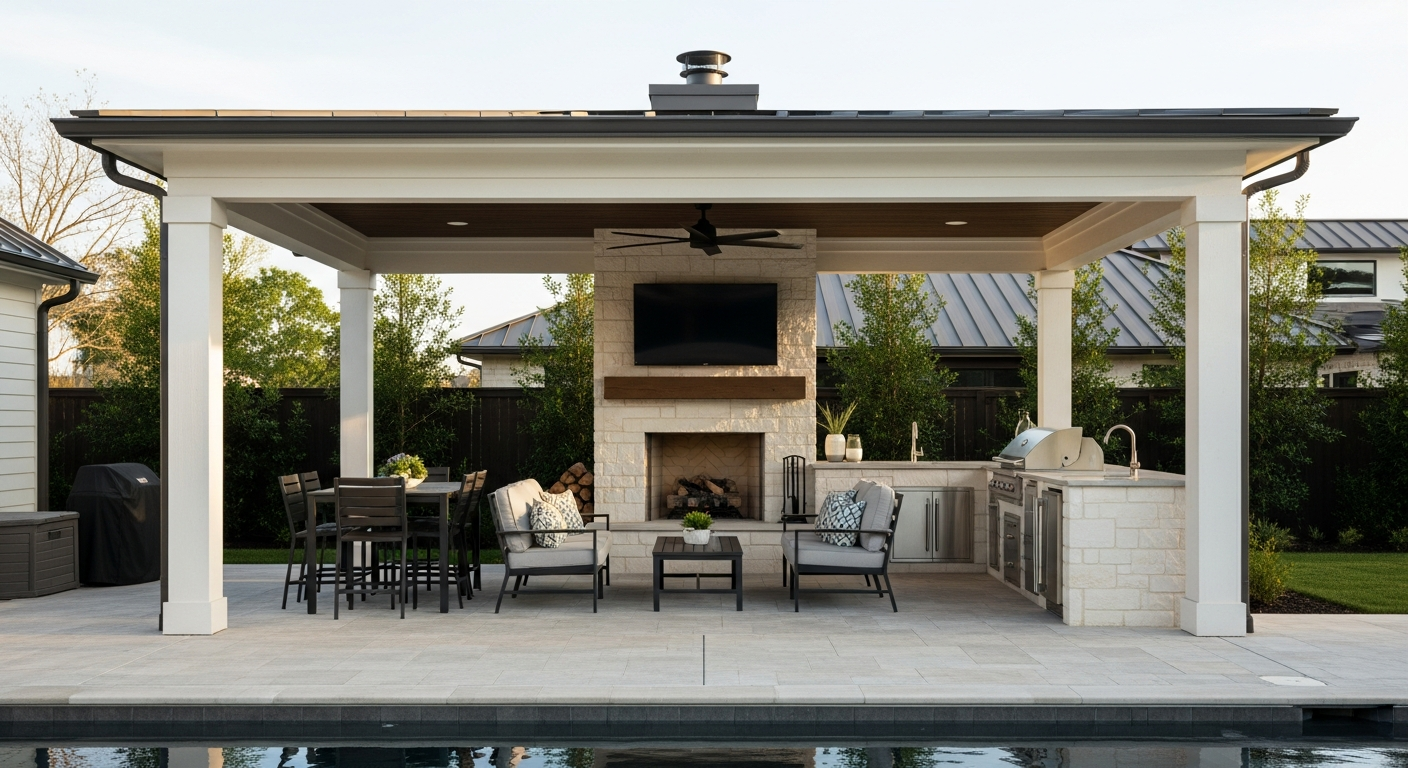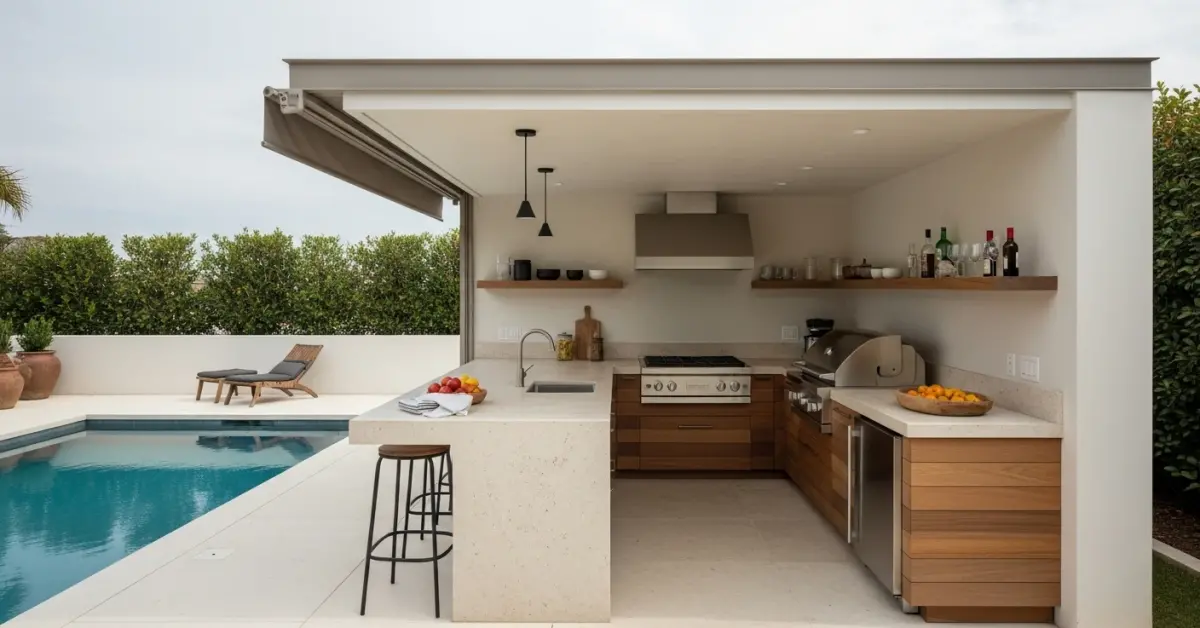
Covered Outdoor Kitchen in Pinellas County: My Framework for 30-Year Material Longevity Against Salt Air Corrosion
As an outdoor kitchen specialist, my primary focus in Pinellas County isn't just design; it's a battle against the elements. The combination of intense humidity, UV radiation, and, most critically, the pervasive salt air from the Gulf and the Bay creates a uniquely corrosive environment. I’ve seen countless high-end projects, especially along the waterfronts of Clearwater Beach and Tierra Verde, begin to degrade in under five years due to fundamental errors in material specification and structural planning. My entire approach is built on preventing this premature failure. It's about engineering a space that thrives in this specific coastal climate, not just survives it. This means moving beyond standard "outdoor-rated" materials and implementing a system that guarantees a minimum of a 25% increase in the functional lifespan of every component, from the cabinet fasteners to the grill hood.My Coastal Resilience Framework: Diagnosing Environmental Stressors in Pinellas
Before any design is sketched, I perform a site-specific environmental audit. A property in the Old Northeast of St. Pete faces different challenges than a home directly on the water in Dunedin. The key is quantifying the specific stressors. I identified a common, costly error on a large-scale project in Snell Isle: the contractor used 304-grade stainless steel for all appliances and cabinetry. While good, it’s insufficient for that proximity to saltwater. Within two years, pitting and surface rust were already visible. My proprietary methodology, the Coastal Resilience Framework, was developed directly from rectifying such mistakes. It’s a diagnostic process that prioritizes material science and micro-climate analysis over generic design templates.The Technical Trinity: Material Selection, Structural Engineering, and Airflow Dynamics
My framework is built on three non-negotiable technical pillars that directly address the Pinellas environment.- Material Science Protocol: This goes beyond surface-level choices. For any project within a mile of saltwater, 316L marine-grade stainless steel is the absolute minimum for all metal components, including screws and hinges. For countertops, I specify non-porous, UV-stable materials like Dekton or Neolith over porous natural stones like granite, which can harbor moisture and degrade. For cabinetry, powder-coated aluminum or specific marine-grade polymers offer superior resistance to the constant humidity compared to any wood-based product.
- Hurricane-Ready Structural Engineering: A covered outdoor kitchen is a permanent structure, and in Pinellas County, it must meet or exceed ASCE 7-16 wind load standards. My specifications always include reinforced concrete footers and mechanical anchoring systems that integrate the structure with the home's foundation. This isn't just about surviving a storm; it's about preventing the subtle structural shifts that cause cracks and water intrusion during Florida's intense rainy season.
- Ventilation and Airflow Dynamics: The low ceilings of many Florida lanais create a trap for heat and smoke. A common failure is installing a powerful grill without an adequately specified ventilation hood. I calculate the required CFM (Cubic Feet per Minute) based on the grill's BTU output and the cubic footage of the covered space. I insist on a vent hood that creates a negative pressure zone, actively pulling smoke and grease out, which is critical for preserving the ceiling finish and ensuring user comfort during a humid summer evening.
The Implementation Blueprint: From Foundation to First Cookout
Executing the plan requires a level of precision that leaves no room for error. My process follows a strict, sequential order to ensure every component integrates perfectly.- Site and Utility Mapping: I personally verify the location of all underground utilities and map out dedicated runs for gas, water, and electrical. Every outdoor outlet must be a sealed, in-use, GFCI-protected circuit.
- Foundation and Structural Framing: This is the skeleton. We pour the footers and erect the frame, ensuring every connection point is sealed against moisture intrusion before any cladding or finishing materials are applied.
- Appliance and Cabinet Integration: We install cabinets with a slight tolerance to allow for thermal expansion. Appliances are then test-fitted and their ventilation and utility connections are finalized. This is where ventilation mapping is critical to ensure no cross-drafts interfere with the hood's performance.
- Countertop and Finishing Installation: The final surfaces are installed. My standard is a 10-point waterproofing check on every seam and backsplash joint using a marine-grade silicone sealant.
- System Commissioning: I personally fire up every appliance, test every water fixture, and measure the airflow of the ventilation system with an anemometer to confirm it meets the calculated CFM specification.
Precision Tuning for Peak Performance and Longevity
The final 5% of the work is what separates a standard installation from a truly resilient one. This involves fine-tuning the details. I adjust gas pressures on the grill for optimal flame control and calibrate the refrigerator to account for the high ambient temperatures in Pinellas. I also ensure every single fastener, from the cabinet pulls to the vent hood mounting bolts, meets ASTM F593 standards for stainless steel in a corrosive environment. It’s this granular focus on the smallest components that prevents the "death by a thousand cuts" that I see in failing outdoor kitchens. Have you calculated the specific vapor-permeability rating required for your backsplash grout to prevent moisture ingress during a typical Pinellas County summer downpour?Written by

Tags
outdoor kitchen with roof
covering for outdoor kitchen
covered outdoor kitchen designs
covered outdoor kitchen plans
outdoor kitchen under covered patio
Covered Outdoor Kitchen in Pinellas FL FAQ
What kind of ventilation is required for a grill under a covered patio?
You must install a dedicated outdoor-rated range hood with a higher CFM rating than an indoor model, typically starting at 1200 CFM. This is a non-negotiable safety requirement to manage heat, smoke, and dangerous gases like carbon monoxide. Standard indoor hoods are not built to withstand the grease load or weather exposure and will fail prematurely. The hood must be installed at a specific height, usually 30 to 36 inches above the cooking surface, and vented directly outside, never into the ceiling cavity of the covered structure, which poses a significant fire hazard.
Are special 'outdoor-rated' appliances really necessary for a covered kitchen?
Yes, using only outdoor-rated appliances is critical for both safety and longevity, even in a covered space. These units are built with 304-grade stainless steel to resist corrosion from humidity and have sealed electrical components to prevent moisture intrusion, which can cause short circuits and fire risks. An indoor refrigerator, for example, lacks the robust insulation and powerful compressor needed to maintain safe food temperatures during a 90-degree summer day, leading to spoilage and premature equipment failure.
What countertops can withstand the elements in a covered outdoor kitchen?
Granite, soapstone, and concrete are top choices for their durability and resistance to thermal shock from a hot pan or freezing temperatures. While quartz is popular indoors, most brands are not warrantied for outdoor use because the resins that bind the stone can yellow and degrade with long-term UV exposure, even in a covered but bright area. For a lower-maintenance option, consider porcelain slabs, which are non-porous, meaning they won't stain from spills like wine or grease, and are completely unaffected by UV rays or frost.
How much clearance do I need between my grill and the structure's walls?
You must maintain a minimum clearance of at least 12 inches between the back and sides of your grill and any combustible materials like wood posts or siding. This is a critical fire safety specification found in the appliance manual, and ignoring it is a common cause of structural fires. For high-powered grills, this distance may need to be even greater. We always recommend installing a stainless steel heat shield on any nearby vertical surfaces to provide an extra layer of protection and reflect radiant heat away from the structure.
Can I use standard indoor cabinets for my covered outdoor kitchen?
No, you should never use indoor cabinets, as they will quickly warp, delaminate, and rot from ambient humidity and temperature swings. Outdoor cabinetry is constructed from materials like marine-grade polymers (HDPE), stainless steel, or teak, which are specifically designed to be impervious to moisture and insect damage. A frequent point of failure even with these materials is the hardware; ensure all hinges, handles, and drawer slides are made from 304 or 316-grade stainless steel to prevent rust and seizure.
What are the key utility requirements for plumbing and gas lines?
All water supply lines must be installed with a dedicated shutoff valve and a drainage point to allow for proper winterization, preventing freeze-burst damage that can destroy pipes and flood the structure. For gas, a licensed professional must run a dedicated, properly sized line directly from the source, incorporating an accessible emergency shutoff valve located within 6 feet of the appliances. Using flexible connectors intended for indoor use is a code violation and a serious leak risk outdoors.