Custom Outdoor BBQ Grills Osceola County: My Material Science Protocol for a 20-Year Lifespan
I’ve seen too many high-end outdoor kitchens in Kissimmee and St. Cloud fail in under five years. The core issue isn't the grill brand; it’s a fundamental misunderstanding of Osceola County’s aggressive climate. The combination of intense UV radiation, high humidity, and airborne contaminants from pools creates a uniquely corrosive environment that standard-issue stainless steel simply cannot withstand. My entire approach is built on mitigating this reality from the ground up.
My protocol moves beyond aesthetics and focuses entirely on material science and construction integrity to prevent the most common failure points I'm called to fix: rusted-out frames, seized fasteners, and pitted grill hoods. The goal isn’t just a beautiful outdoor BBQ; it’s an asset that performs flawlessly and resists degradation for decades, even on a screened-in lanai in Celebration where humidity gets trapped.
My Diagnostic Framework for Osceola's Corrosive Climate
Before I even discuss burner types or countertop finishes, my first step is a site-specific corrosion risk assessment. A grill island near a saltwater pool in a Harmony residence faces a different set of challenges than one in a more inland property. My proprietary method, the Humid-Zone Durability Framework, analyzes micro-environmental factors. I’ve seen projects fail because the builder used generic 304-grade stainless steel, which is highly susceptible to the chloride-induced pitting that is rampant here. My diagnostics focus on identifying these invisible threats before a single piece of material is ordered.
Material Specification: Beyond Standard Stainless Steel
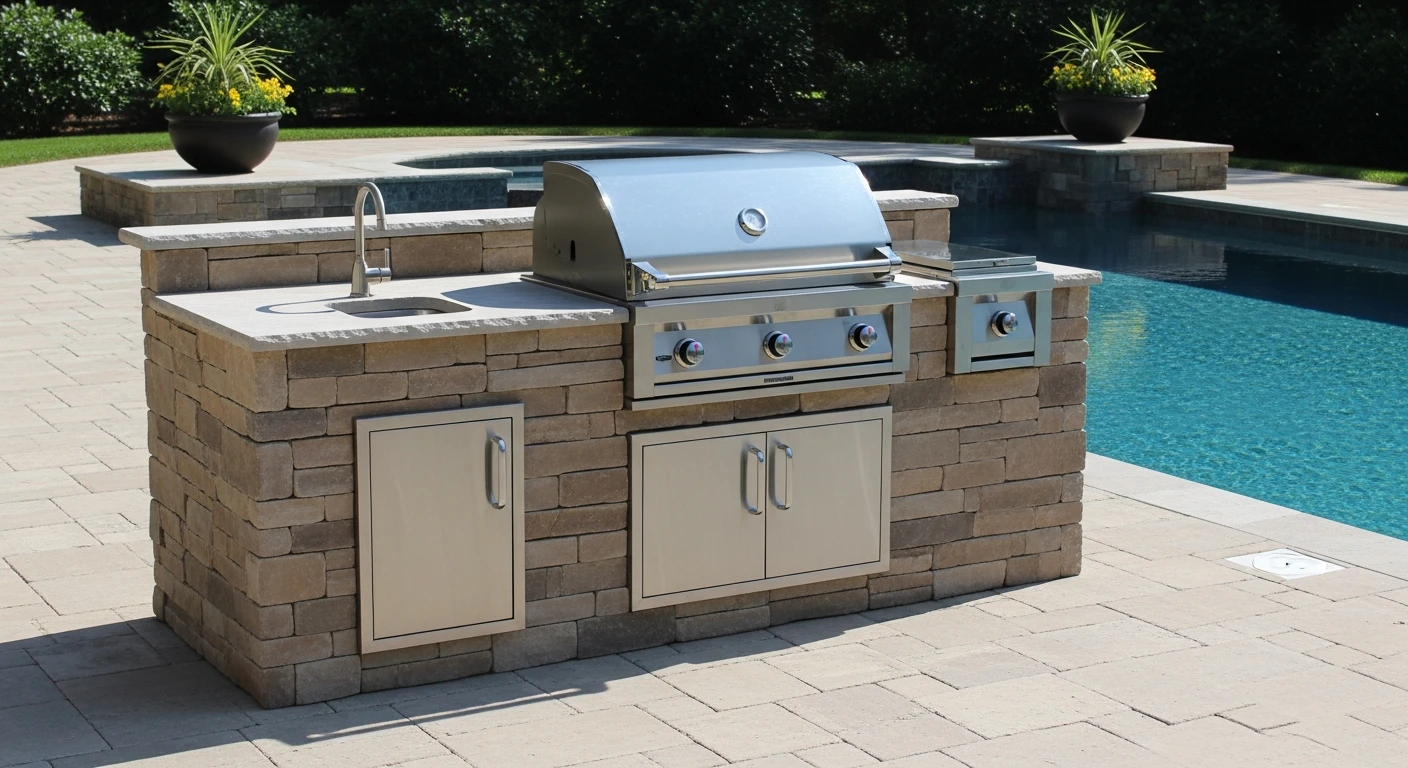
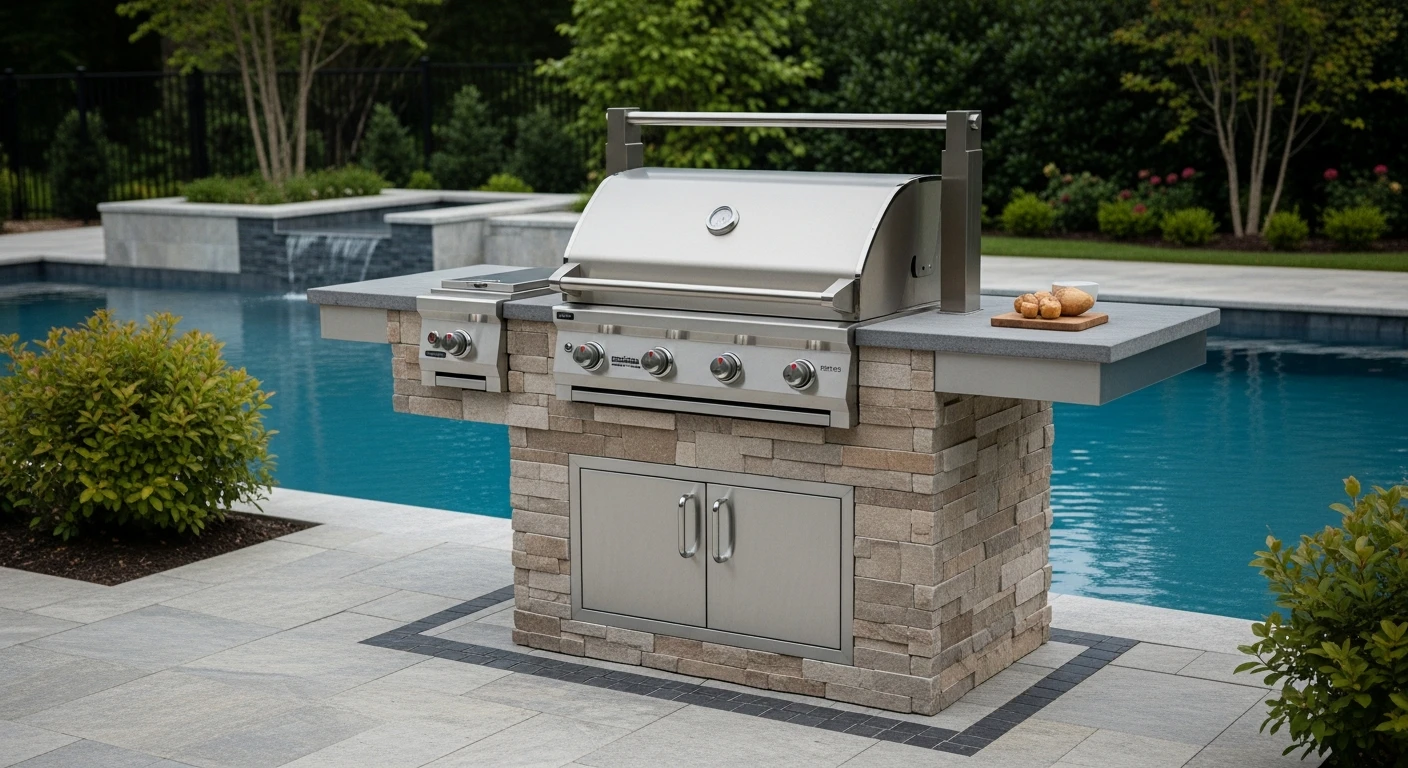
This is where the real value is created. The most common mistake I encounter is a "one-size-fits-all" approach to materials. For any project in Osceola County, I have a non-negotiable baseline. The grill head, access doors, and all exposed hardware must be 316-grade marine stainless steel. While it carries a 15-20% cost premium over the more common 304-grade, its molybdenum content provides superior resistance to corrosion from salt and chlorine. For the internal island frame, I exclusively use either welded 6061-T6 aluminum tubing or 304 stainless steel studs—never galvanized steel, which I’ve seen disintegrate into rust dust inside a stone-clad island after just a few years of exposure to trapped moisture.
The Build & Installation Protocol: A Step-by-Step Breakdown
A flawless installation is as critical as the materials themselves. Over the years, I've refined my process to eliminate weak points that other builders introduce without realizing it. This isn't just assembly; it's a systematic process of fortification against Osceola’s climate.
- Foundation and Framing: The build starts on a properly cured concrete slab. The frame is then constructed with mechanical fasteners, and every single weld point on a stainless frame is treated with a passivating acid gel. This is a crucial step I developed after seeing rust bloom specifically from untreated welds. The gel chemically restores the chromium oxide layer that gives stainless steel its protective qualities.
- Insulation and Ventilation: Every grill head is installed with a dedicated insulated jacket specified by the manufacturer. More importantly, I engineer cross-flow ventilation into the island itself—typically two vents low on one side and two high on the opposite. This prevents heat and moisture buildup, protecting sensitive electronics and preventing the countertop from cracking, a costly error I had to rectify on a large project in Reunion.
- Component Sealing: Every cutout for doors, drawers, and side burners is sealed with a high-temperature silicone bead before the component is installed. This prevents moisture from seeping into the island's interior, which is the primary catalyst for frame corrosion and mold growth.
Precision Tuning for Peak Performance and Longevity
The final 10% of the work is what guarantees a 20-year lifespan. Once the structure is complete, I focus on the finer details that prevent long-term issues. I perform a full burner and gas pressure calibration to ensure even heating and efficient fuel consumption, which can fluctuate with Florida’s barometric pressure changes. For ultimate protection in the most demanding environments, such as near the coast or adjacent to a pool, I will install a small, hidden zinc sacrificial anode bonded to the frame. It's a technique borrowed from the marine industry that directs all corrosive electrical activity to a single, replaceable component, effectively preserving the entire stainless steel structure.
Given that most corrosion in outdoor kitchens begins at the microscopic level, have you considered how the galvanic potential between your grill fasteners and the structural frame is silently compromising the integrity of your investment?