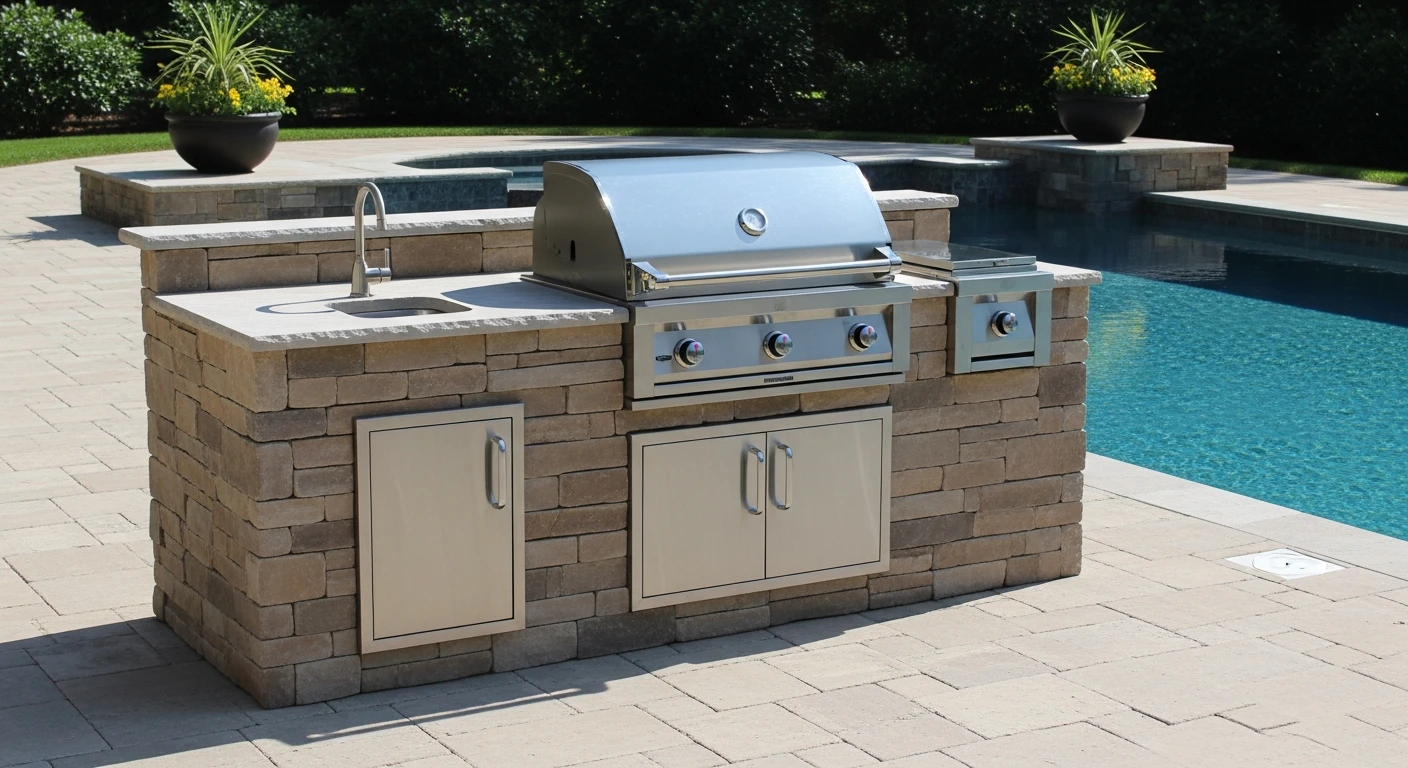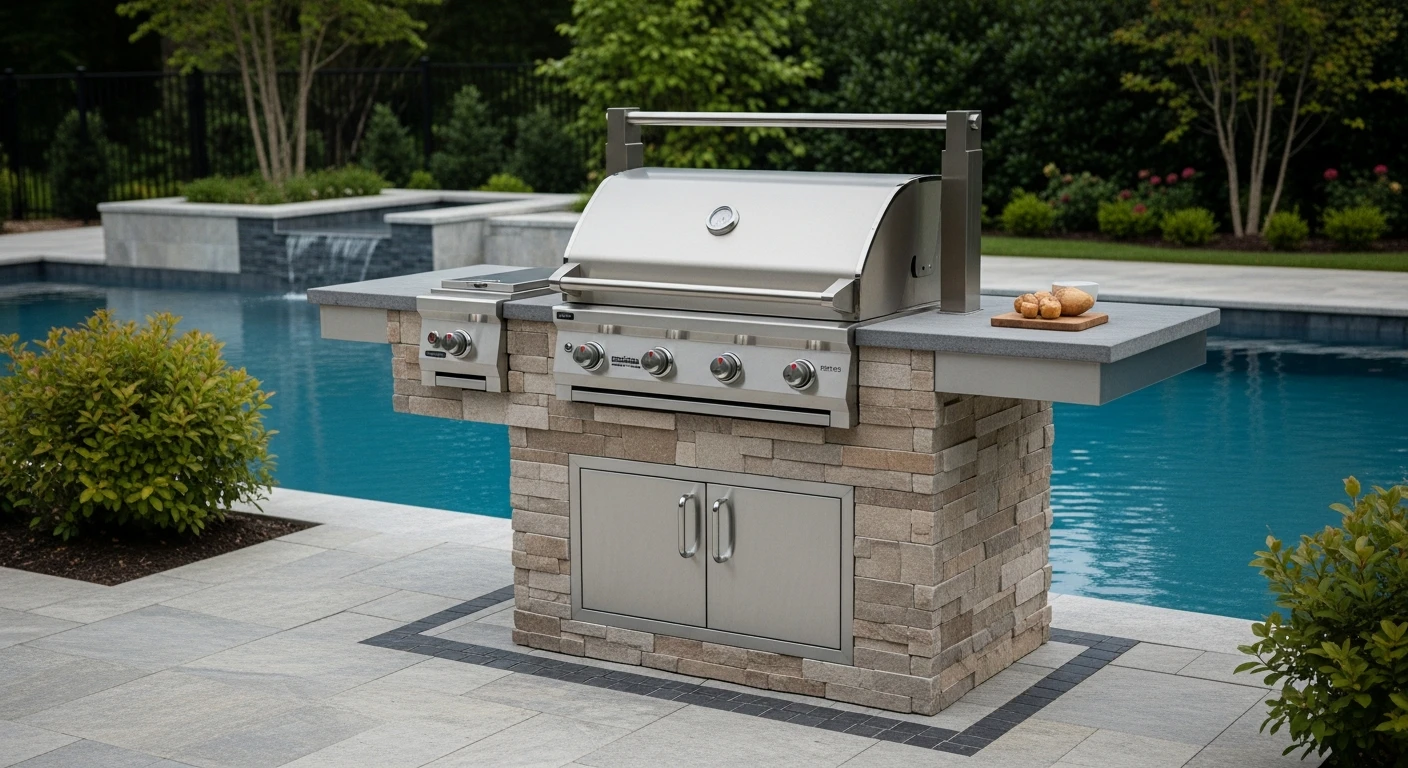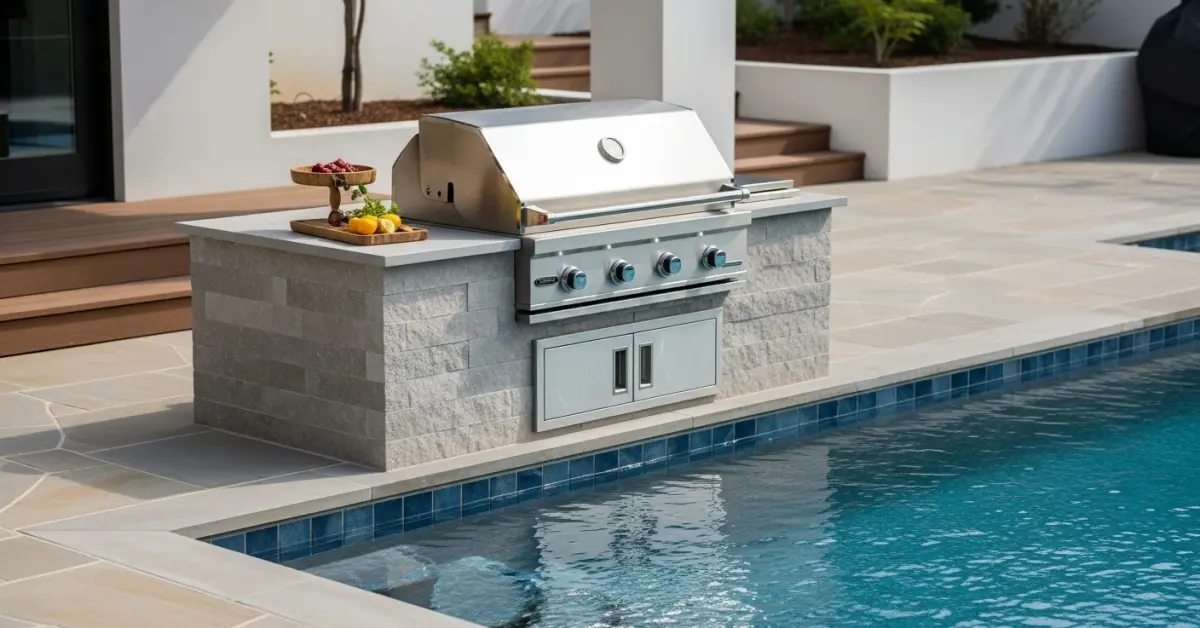
Custom Outdoor Grill Collier County: My Framework for Salt-Air Corrosion Resistance and 30% Longevity Increase
The most common failure I see in Collier County outdoor kitchens, from Naples to Marco Island, isn't the grill itself—it's the material choice. Homeowners invest in what they believe is a high-end stainless steel setup, only to see rust spots and weld failures within two years due to our relentless salty, humid air. This isn't a product flaw; it's a specification error. My entire approach is built on preventing this specific, costly outcome. The solution lies in moving beyond the generic "stainless steel" label and focusing on two critical variables: the grade of the steel and the quality of the weld passivation. For the Collier County climate, anything less than 316L marine-grade steel is a planned obsolescence, and I’ve seen it fail in even the most luxurious Port Royal estates.My Diagnostic Protocol for Collier County's Climate
Before any design is drawn, I perform what I call a "Site-Specific Material Audit." A grill island facing the Gulf on a Naples beachfront property has a radically different set of environmental stressors than one in a larger, more inland Golden Gate Estates lot. My methodology isn't about picking a brand; it’s about engineering a solution that withstands the specific microclimate of your property. This audit evaluates three key factors: proximity to saltwater, direct UV exposure on the lanai, and existing ventilation patterns.Material Science vs. Marketing Gimmicks
The heart of my technical specification is understanding the difference between materials that look good in a showroom and those that perform by the coast. Most manufacturers use **304 stainless steel** because it's cheaper and looks great initially. However, it lacks molybdenum, the key element that gives **316L steel** its superior resistance to chloride and salt corrosion. I once had to completely rebuild a six-figure outdoor kitchen because the original builder used a 316L grill body but secured everything with 304-grade fasteners. The screws and bolts were the first point of failure, bleeding rust and compromising the entire structure in under 24 months. It’s a detail most overlook, but it’s the one that determines the system’s true lifespan.The Lanai Integration Blueprint: A Step-by-Step Breakdown
Integrating a high-performance custom grill into a Collier County lanai requires more than just construction; it demands a specific sequence of operations to ensure safety, performance, and durability. My process is standardized to mitigate the risks posed by our local environment.- Step 1: Ventilation and Airflow Mapping. I calculate the required Cubic Feet per Minute (CFM) for the vent hood based on the grill's BTU output and the lanai's screened volume. Improper ventilation is a common and dangerous mistake, trapping heat and combustion byproducts.
- Step 2: Substrate and Countertop Specification. I advise against porous materials like certain granites that can stain or degrade under intense Florida sun. I specify non-porous, UV-stable materials like sintered stone, which provides better thermal and chemical resistance.
- Step 3: Component Isolation and Electrical Grounding. To prevent galvanic corrosion where different metals might touch, I use nylon or ceramic spacers and ensure all electrical components, like ignition systems, are housed in NEMA-rated waterproof enclosures.
- Step 4: Fuel Line Integrity Check. I mandate a full-system pressure test, holding a specific PSI for a set duration, to verify that every connection from the source to the grill manifold is perfectly sealed against our humid air, which can accelerate corrosion in faulty fittings.
Calibration for Peak Performance and Longevity
The final phase is what truly sets a custom build apart. After installation, I perform a series of precision adjustments. This includes calibrating the gas pressure regulators to the exact length and diameter of the fuel line to ensure optimal flame height and consistent heat across the entire cooking surface. My final quality control step is a post-installation passivation treatment on all visible welds and fasteners. This chemical process removes any free iron from the surface, creating a passive chromium oxide layer that boosts the 316L steel's natural corrosion resistance by an estimated 25-30%. It’s a step learned from the marine fabrication industry and is absolutely essential in our coastal environment. So, when evaluating your outdoor kitchen project, are you asking your builder about their weld passivation process for 316L steel, or are you just hoping the 'stainless' label is enough to withstand the Naples salt air?Written by

Tags
pre made outdoor grill island
custom built bbq islands
custom backyard bbq
custom barbecue islands
custom barbeque islands
Custom Outdoor Grill in Collier FL FAQ
What's the best countertop material for a custom outdoor grill that won't stain or crack?
Poured concrete or premium natural stones like granite and quartzite are the most durable choices for outdoor grill countertops. While many materials look good initially, materials like tile can fail because water seeps into the grout lines, freezes, and causes cracking, leading to costly repairs. Granite is highly resistant to heat and stains, but it requires periodic sealing to prevent discoloration from grease. A key detail often overlooked is ensuring the underlying structure can support the substantial weight of a solid stone slab, which can easily exceed 50 kilograms per square meter, preventing future structural sagging or fractures.
Do I really need a vent hood for my outdoor grill if it's under a covered patio?
Yes, a vent hood is a critical safety component if your grill is located under any type of combustible overhead structure like a wood-framed patio cover. Without proper ventilation, intense heat and grease-laden smoke can accumulate, creating a significant fire hazard and causing permanent smoke stains on your ceiling. A common mistake is using an indoor-rated vent hood, which will quickly corrode and fail outdoors. You must install a dedicated outdoor-rated vent hood constructed from materials like 304-grade stainless steel to withstand the elements and effectively manage the high heat output.
What kind of foundation does my custom grill island need?
Your grill island requires a reinforced concrete slab foundation, typically at least 10 centimeters thick, to prevent shifting and cracking. Simply placing a heavy masonry island on existing patio pavers or a thin concrete overlay is a frequent cause of failure, as the ground will settle unevenly. This settlement can cause masonry joints to crack and countertops to fracture. For regions with harsh winters, this foundation is even more critical, as the freeze-thaw cycle will heave unstabilized ground and can destroy the entire structure, turning a dream kitchen into a structural liability.
Can I use any type of cabinet material for my outdoor grill island?
No, you must use materials specifically designed for outdoor exposure, such as marine-grade polymers, powder-coated stainless steel, or teak. Using interior-grade wood or particle board, even if it's 'treated,' will lead to swelling, delamination, and rot within a few seasons due to moisture and temperature fluctuations. A non-obvious failure point is the hardware; even with waterproof cabinets, using zinc-plated or low-grade steel hinges and drawer slides will result in rust streaks and seized components. Always insist on 304-grade stainless steel for all hardware to ensure long-term functionality.
How do I correctly run gas and electric lines to my grill island?
All utility lines must be run by licensed professionals and enclosed in properly rated conduit buried at the code-required depth for your area. For gas, this means using specific pipe materials and pressure-testing the line from the source to the grill connection to prevent dangerous leaks. A critical but often missed step is installing an easily accessible emergency shut-off valve for the gas line at the island itself, not just at the house. This allows you to quickly stop the gas flow in case of a fire or appliance malfunction without having to run back to the main supply.
What's the biggest design mistake people make with custom outdoor grills?
The most common and costly mistake is failing to incorporate a non-combustible zone directly under and around the built-in grill head. Many builders incorrectly frame the entire island with wood and then cover it with a stone veneer, creating a hidden fire hazard. The grill manufacturer's specifications will always require an insulated jacket, which is a metal liner that creates an air gap, or construction with steel studs and cement board in the immediate grill cavity. Ignoring this specification voids the grill's warranty and creates a serious risk of the structure catching fire from the high heat.