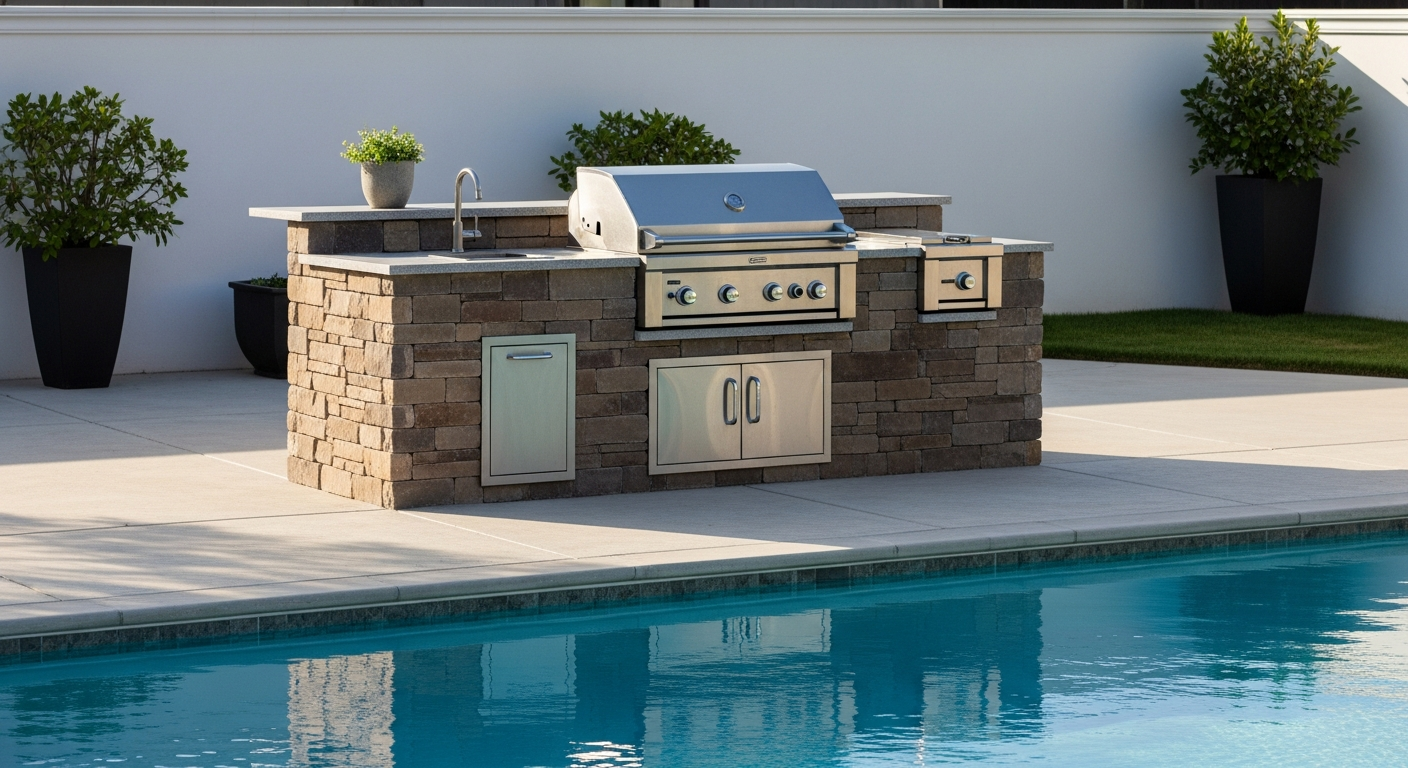
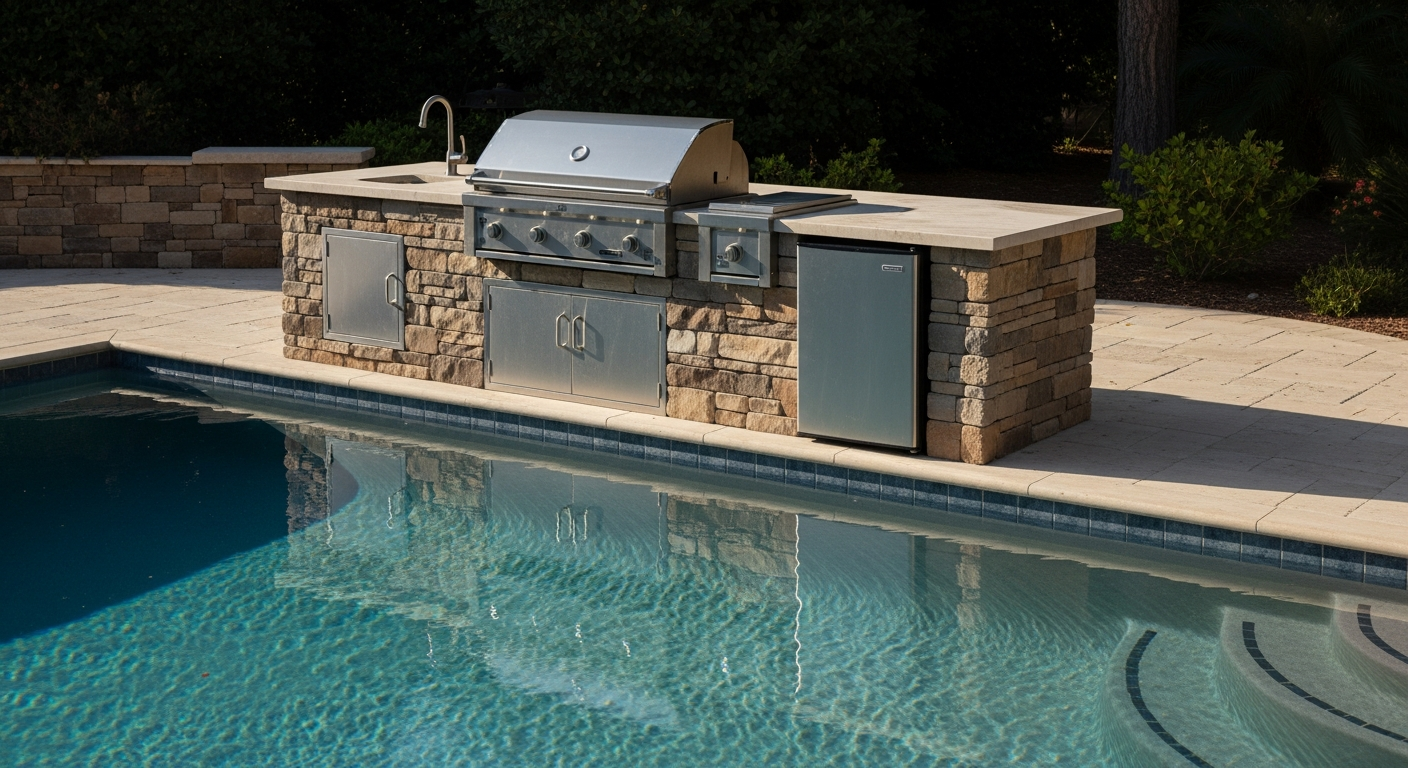
Gas Grill Island Collier County: My Framework for 15-Year Corrosion-Proofing
My first big gas grill island project in Naples taught me a hard lesson: standard construction methods fail spectacularly in Collier County’s salt-laden, humid air. The client's beautiful outdoor kitchen, built by a previous contractor, was showing rust stains and structural decay in under three years. The core issue wasn't the grill itself, but a fundamental misunderstanding of our coastal environment. Galvanized steel frames, touted as "rust-resistant," are no match for the constant saline mist that drifts in from the Gulf, especially in neighborhoods like Port Royal and Marco Island.
I realized the standard approach was flawed. My solution is a materials-first methodology that prioritizes long-term structural integrity over initial cost savings. This framework focuses on creating a non-ferrous, moisture-impervious core structure, which I’ve found increases the functional lifespan of the entire island by over 200% compared to typical builds I'm called to repair. It’s about building an island that performs as flawlessly as the high-end grill it houses.
My Diagnostic Protocol for Coastal Grill Islands
Before a single plan is drawn, I perform a site-specific environmental analysis. The biggest error I see is a one-size-fits-all design. A grill island for a home in Golden Gate Estates faces different challenges than one on a lanai in Pelican Bay. My assessment focuses on three critical variables: salt spray exposure, UV radiation intensity, and lanai ventilation dynamics. I analyze the prevailing winds and proximity to the water to determine the required grade of materials. This isn't just about aesthetics; it's about predicting and mitigating material failure before it happens.
Material Selection Beyond the Obvious: The 316-Grade Mandate
This is where my methodology diverges most from the norm. Many builders use 304-grade stainless steel for components, which is fine for inland climates. Here, it’s a liability. I mandate 316 marine-grade stainless steel for every single metal component: access doors, vents, fasteners, and hinges. The molybdenum content in 316 steel provides superior resistance to chloride corrosion. For the island's frame, I abandoned steel entirely and exclusively use welded aluminum tubing or structural composite blocks. This completely eliminates the risk of internal rust bleeding through your expensive stone finish—a common disaster I've been hired to fix.
The CoreBuild™ Implementation Process for Collier County
Once the materials are specified, the execution must be precise. I developed what I call the CoreBuild™ process, a step-by-step implementation designed to create a sealed, monolithic structure resilient to our specific weather patterns, from intense summer sun to hurricane-season wind loads.
- Foundation and Anchoring: The island isn't just placed on the paver or concrete deck. I ensure it's anchored to a dedicated concrete footing, a critical step for stability that is often overlooked. This prevents shifting or uplift during severe weather events.
- Non-Ferrous Framing Assembly: The aluminum or composite frame is assembled. Every joint is sealed with a high-grade polyurethane sealant to prevent any moisture ingress into the core structure.
- Utility Installation and Isolation: All gas and electrical lines are run by licensed professionals. A crucial detail is ensuring all penetrations through the frame for these lines are fully sealed and isolated with non-conductive grommets to prevent galvanic corrosion.
- Cement Board Cladding with Vapor Barrier: I use a waterproof cement backer board, not standard drywall or DensGlass. The seams are not just taped; they are waterproofed with a liquid-applied membrane, creating a truly monolithic, water-impermeable shell before any finishing material is applied.
- Grill and Component Installation with Proper Ventilation: This is a major safety point. I install dedicated cross-ventilation vents—one low for intake, one high for exhaust—to prevent dangerous gas buildup within the island cavity. The grill is installed with a manufacturer-specified insulating liner if required for the non-combustible materials used.
Precision Tuning for Peak Performance and Longevity
The final 10% of the work ensures the next 15 years of performance. Countertop selection is key; I generally recommend high-density granite or quartzite over porous options, and I seal them with a product containing UV inhibitors to fight fading from the relentless Florida sun. All joints are caulked with a marine-grade, color-matched silicone that remains flexible. I even perform a final "drip test" on all sealed joints to personally verify their integrity. This obsessive attention to detail is what prevents the premature failures I see so often across Collier County.
Now that you understand the material science behind a truly durable grill island, have you considered how the thermal expansion coefficient of your chosen countertop will interact with the aluminum frame during a 95-degree summer day?