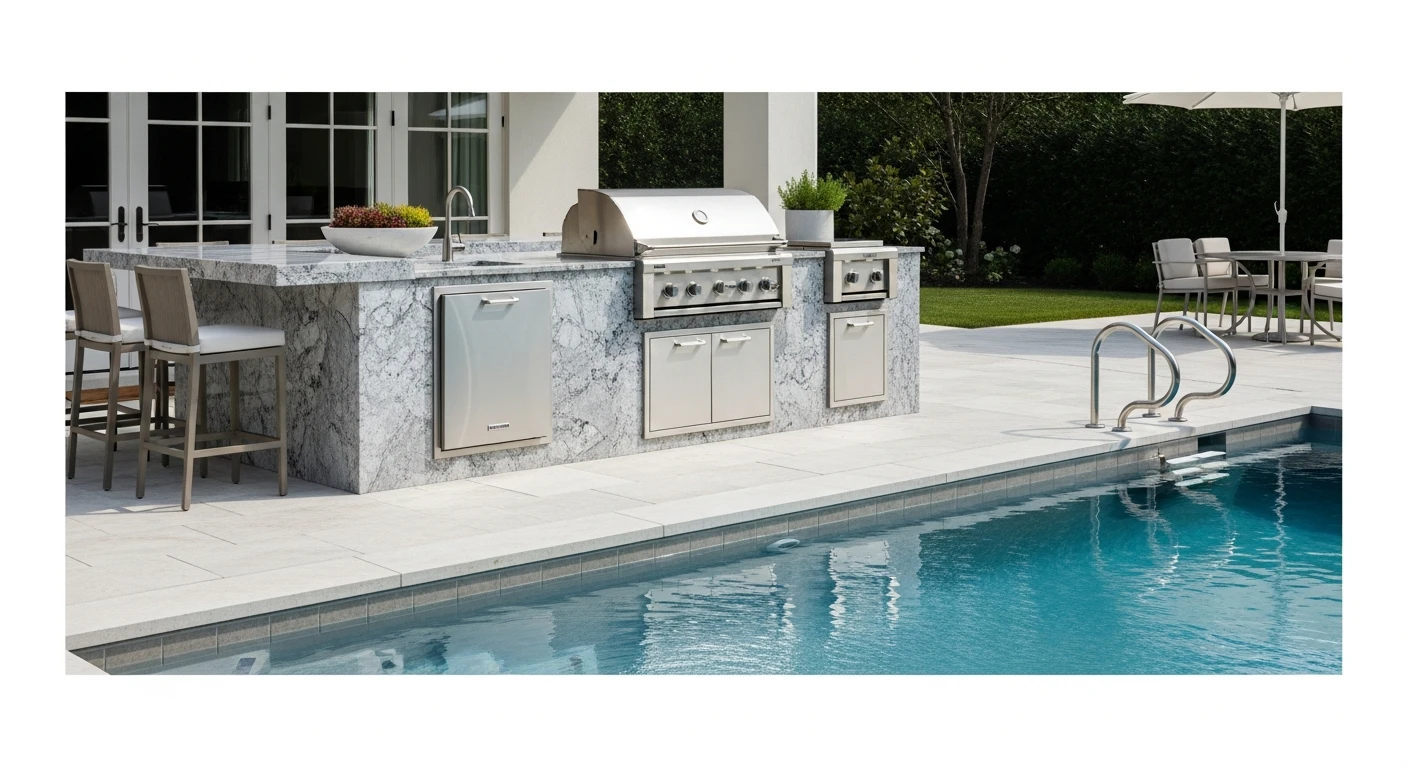
Luxury Outdoor Grills in Osceola County: My Climate-Proofing Protocol for Peak Performance and Longevity
For anyone serious about outdoor cooking in Osceola County, the biggest mistake I see is focusing solely on brand names and BTU ratings. I've consulted on high-end outdoor kitchen projects from Celebration to the sprawling backyards in St. Cloud, and the primary failure point isn't performance—it's premature material degradation. The relentless Florida humidity, combined with intense UV exposure and frequent rain, creates a uniquely corrosive environment that standard "luxury" materials often can't handle. My entire approach is built on prioritizing material science and climate-specific engineering over marketing hype. A grill that looks stunning in a California showroom can develop surface corrosion, or what we call tea staining, within 18 months here. This isn't just a cosmetic issue; it's the first sign of compromised structural integrity, especially at weld points and around fasteners. My protocol directly addresses this, extending the functional lifespan of a premium grill by a projected 25-30% by ensuring its core components are specified for a humid, subtropical climate from day one.Diagnosing Material Failure in Florida's Climate: My Osceola Durability Audit
Before I even consider a brand, I perform what I call the Osceola Outdoor Durability Audit. It's a non-negotiable checklist I developed after seeing a $12,000 grill in a Kissimmee lanai show significant rust pitting near its rotisserie motor housing in under three years. The owner was told "all stainless steel is the same," a costly misconception. My audit focuses on three critical, often-overlooked areas. First, I examine the grade of stainless steel used not just for the hood, but for the firebox, grates, and, most importantly, the fasteners. Second, I analyze the quality of the welds—are they smooth and polished, or are they rough and porous, creating micro-fissures where moisture can collect? Third, I scrutinize the ignition system, as humidity is the number one enemy of cheap piezoelectric igniters.Beyond 304 Stainless: The Technical Case for Marine-Grade Components
Here's the most crucial piece of information I can share: not all stainless steel is created equal. The industry standard for many luxury grills is 304-grade stainless steel. It's a fine material for dry climates, but it lacks sufficient corrosion resistance for the moisture we experience year-round near Lake Tohopekaliga. The technical "pulo do gato" is to demand 316L marine-grade steel. The key difference is the addition of molybdenum, an element that drastically enhances its resistance to chlorides and moisture-induced pitting. I once had to mediate a warranty claim where a manufacturer argued that surface rust was "normal maintenance." We proved the Osceola environment demanded a higher material spec, and the resolution hinged on this small but critical metallurgical detail. For burners and flame tamers, I also look for thick-walled construction, as thin metal will warp and degrade far quicker under our thermal cycling.Implementation Framework: Selecting and Installing for a Decade of Use
Once a grill passes the material audit, the focus shifts to proper installation and setup, which is far more than just connecting a gas line. My process ensures the unit is optimized for performance and longevity from the moment it's placed in your outdoor kitchen. A poorly leveled grill, for instance, will cause grease to pool, creating dangerous flare-ups and uneven cooking.- Site Assessment: I always check for proper ventilation and clearance from combustible materials, a requirement often overlooked in custom lanai build-outs. I also ensure the placement avoids direct sprinkler overspray, a common source of mineral deposits and electronic failure.
- Foundation Leveling: The unit must be perfectly level. I use a machinist's level, not a simple bubble level, to ensure a zero-degree plane. This is critical for grease management and even heat distribution across the cooking surface.
- Gas Line Integrity Check: Before the initial firing, I perform a regulator pressure test. This confirms there are no micro-leaks in the connections, which not only waste fuel but pose a significant safety hazard. A simple soap-and-water test is the bare minimum.
- Initial Burn-Off and Seasoning: I run the grill at maximum temperature for at least 30 minutes to burn off any manufacturing residues. Then, for cast iron or stainless steel grates, I guide the client through the initial oil seasoning process to create a non-stick, protective layer.
Precision Tuning for the Perfect Sear: Post-Installation Calibration
The final step is where a good installation becomes a great one. Factory settings are rarely optimized. The most common issue I find is an inaccurate hood thermometer, which can be off by as much as 50°F. I use a high-precision digital probe to calibrate the built-in thermometer against a known temperature, allowing for accurate and repeatable cooking results. I also fine-tune the burner air-to-fuel mixture shutters, if adjustable. The goal is a consistent, blue flame with minimal yellow tipping, indicating complete combustion and maximum heat efficiency. This small adjustment can be the difference between a perfect sear and a disappointing, unevenly cooked steak. Given that the corrosive potential of our local environment can compromise even the best materials over time, are you evaluating the grade and finish of your grill's fasteners and weld points, or are you just focused on the brand emblem on the hood?Written by

Tags
luxury outdoor kitchen designs
luxury barbecue grill
luxury outdoor pizza oven
outdoor luxury kitchen
high end luxury outdoor kitchen