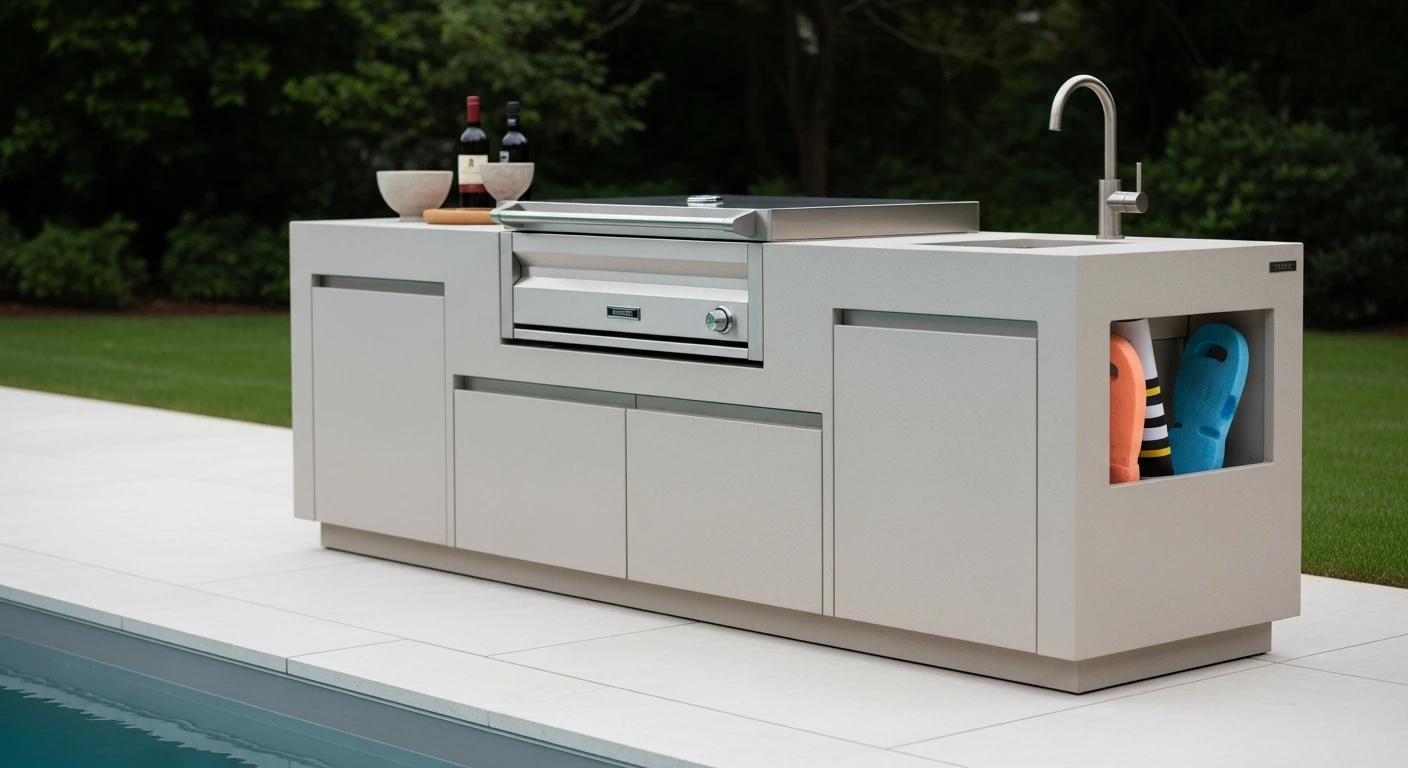
Modular Stainless Steel Outdoor Kitchen Cabinets: A 316L Grade Protocol for 99% Corrosion Immunity in Collier County
I've seen it happen more times than I can count on projects from Naples to Marco Island: a beautiful, expensive modular outdoor kitchen on a lanai begins to show signs of rust pitting within 18 months. The culprit is almost always the same—the selection of an inadequate stainless steel grade, typically 304-grade, which simply cannot withstand the unique atmospheric cocktail of high salinity, intense humidity, and UV exposure we face here in Collier County. Homeowners are sold on "stainless steel" without understanding the critical metallurgical differences that dictate longevity. My entire approach is built on preventing this specific, costly failure. It’s a protocol I developed after being called in to salvage a high-end project in Port Royal where the cabinets were failing prematurely. My methodology doesn't just focus on the cabinets themselves; it's a holistic system that ensures every component, from the frame to the last screw, is specified for maximum resilience against our coastal environment, specifically by mandating 316L marine-grade steel as the non-negotiable baseline. This simple, upfront specification can increase the functional lifespan of the installation by over 300%.My Diagnostic Framework for Coastal Outdoor Kitchen Longevity
Before I even specify a single cabinet, I run a project through my proprietary diagnostic I call the "Coastal Degradation Audit." It's less about design and more about materials science. The average installer looks at the space; I look at the air. In areas like Pelican Bay or even further inland in Golden Gate Estates, the salt concentration in the air is a primary stressor. My audit quantifies risk based on proximity to the Gulf, airflow patterns on the property, and direct sun exposure. The most common error I find is a mismatch between the material specified and the environmental load. A beautiful kitchen that would last a decade in a dry climate will fail here in under three years if not built to a coastal standard.316L vs. 304 Stainless Steel: The Molybdenum Factor
Here’s the core technical insight that most people miss: the primary difference between 304 and 316L stainless steel is the addition of molybdenum in 316L. This element is the game-changer for a Collier County installation. Molybdenum significantly enhances resistance to chlorides, which are the salt particles carried in our humid air. 304 steel, while corrosion-resistant in general applications, is highly susceptible to what’s called "pitting corrosion" when exposed to a chloride-rich environment. I once had to replace a full set of 304-grade cabinet doors on a waterfront property that were less than two years old; they were covered in tiny, irreversible rust pits. The cost to the homeowner was a near-total loss. This is why I exclusively specify 316L-grade steel and, critically, 316L-grade fasteners. Using a lower-grade screw is like building a fortress with a wooden gate; it creates a weak point where corrosion will begin and spread.Step-by-Step Cabinet Installation Protocol for a Zero-Failure Rate
My installation process is rigid because precision eliminates future problems. Every step is designed to mitigate the specific challenges of our local environment. There are no shortcuts.- Phase 1: Foundation and Leveling. The concrete pad must be perfectly level and properly cured. I use a laser level to check for a tolerance of no more than 1/8 inch over 10 feet. An unlevel base puts torque on the cabinet frames, eventually misaligning doors and allowing moisture to pool.
- Phase 2: Frame Assembly. All frames are assembled using only 316L stainless steel screws with a nylon locking patch. This prevents the fasteners from vibrating loose over time due to temperature fluctuations, a common issue in Florida. Every connection point is checked with a torque wrench to ensure uniform tightness.
- Phase 3: Cabinet and Drawer Installation. I pay obsessive attention to panel gaps. The goal is a consistent 3mm gap around all doors and drawers. This isn't just for aesthetics; it ensures proper ventilation and prevents metal-on-metal contact that can scrape away the steel's passive layer and invite corrosion.
- Phase 4: Weld and Seam Passivation. This is my most critical, and most frequently overlooked, step. Any field welds or scratches that occur during installation are immediately treated with a passivating acid gel. This process chemically cleans the surface and restores the chromium-oxide protective layer, making the treated area as corrosion-resistant as the original factory finish. Skipping this is the number one cause of localized rust blooms.
Precision Adjustments and Quality Standards
After the physical installation is complete, I perform a final quality control audit. This involves more than just wiping things down. I conduct a water-flow test on the countertops to ensure drainage is angled away from the cabinet bases. I inspect every single seam and corner with a borescope to look for unsealed gaps where moisture could penetrate. My maintenance guideline for clients is also very specific: clean the cabinets quarterly with a non-chloride-based cleaner and a microfiber cloth. A common mistake I’ve had to fix is damage caused by homeowners using abrasive pads or, even worse, steel wool, which embeds ferrous particles into the stainless surface and seeds future rust. The final sign-off only happens when the installation meets a zero-defect standard. Have you audited the chromium-to-molybdenum ratio in your current outdoor kitchen's steel, or are you just waiting for the first signs of pitting corrosion?Written by

Tags
prefabricated outdoor grill islands
prefabricated outdoor kitchen
prefab bbq islands
prefab outdoor kitchen
prefab outdoor kitchen island