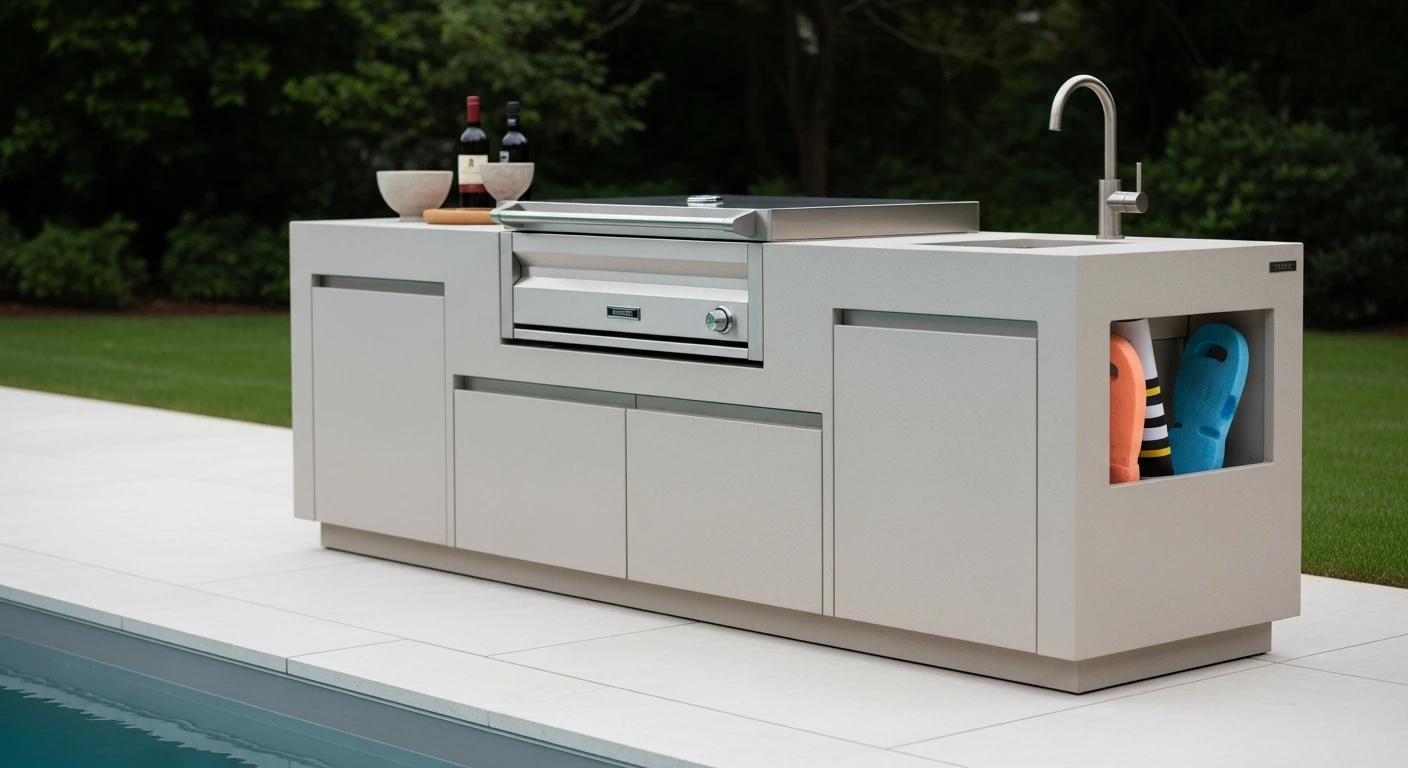
Modular Stainless Steel Outdoor Kitchens: My Protocol for a 30-Year Lifespan in Pinellas County's Salt Air
As an outdoor kitchen designer specializing in Pinellas County, I’ve seen firsthand how our beautiful, yet punishing, coastal environment can destroy an investment in less than five years. The combination of intense UV exposure, high humidity, and the pervasive salt spray from the Gulf is a trifecta of corrosion. The single biggest mistake homeowners from St. Pete Beach to Palm Harbor make is assuming all "stainless steel" is created equal. It absolutely is not, and that misunderstanding leads to premature rust, especially at weld points and hardware connections. My entire approach is built on preventing this specific failure mode. It's not just about selling cabinets; it's about engineering a permanent outdoor installation that withstands the unique challenges of our location. I've refined a methodology that focuses on material science and micro-environmental factors, ensuring the system I install today looks just as good decades from now. This isn't theoretical; it's a field-tested protocol born from analyzing failures and successes in waterfront properties across the county.My Coastal Durability Framework: Beyond the Brochure Specs
When a new client approaches me, often for a property on Treasure Island or in a condo in downtown St. Pete with a large balcony, my first step isn't to show them cabinet styles. It's to perform a site-specific corrosion audit. I developed my Coastal Durability Framework after identifying a critical error in a high-end project in Snell Isle: the installer used a standard 304-grade stainless steel. Despite its "premium" label, it showed significant surface rust within 18 months. My framework prevents this by focusing on three non-negotiable pillars: Material Grade Verification, Weld Point Integrity, and Proactive Passivation. This isn't just about selecting the right product; it's a complete system for long-term survival.Technical Deep Dive: The Science of Salt-Air Resistance
The core of my framework is an obsessive focus on the material itself. The difference between a 10-year and a 30-year lifespan comes down to metallurgy. Most suppliers push 304 stainless steel because it's cheaper and sufficient for most of the country. For Pinellas County, I consider it malpractice. I exclusively specify 316L stainless steel. The "L" stands for low carbon, which improves weldability, but the critical ingredient is molybdenum. This element, present in 316L but not 304, provides a massive increase in resistance to chloride corrosion—the exact type caused by our salt air. Furthermore, I inspect weld quality. I insist on clean, non-porous TIG welds that are then ground smooth. Any surface imperfection is a potential starting point for crevice corrosion, a localized form of rust that can eat through a cabinet panel from the inside out.Implementation: The Zero-Compromise Installation Process
A superior material can still fail if installed improperly. My installation process is rigid and designed to eliminate weak points where moisture and salt can accumulate. This is how I ensure the material's potential is fully realized.- Foundation and Drainage Assessment: Before a single cabinet is placed, I ensure the concrete pad is properly sloped away from the structure. I also mandate a capillary break between the cabinet base and the concrete to prevent constant moisture wicking. For lanais in communities like East Lake, managing rainwater runoff is just as important as salt spray.
- Hardware Specification: This is a major failure point I see constantly. The cabinets might be 316L, but the installer uses cheaper 304 or even 18-8 stainless steel for hinges, screws, and drawer slides. I mandate that every single piece of metal, down to the smallest screw, must be 316 stainless steel. This adds a marginal cost upfront but prevents the "rust measles" that plague lesser installations.
- Assembly and Sealing: During assembly, every panel-to-panel connection is treated with a marine-grade anti-seize compound. This prevents galvanic corrosion between components and makes future servicing possible without destroying the fasteners.
- Post-Installation Passivation: This is my final "pulo do gato." After the full kitchen is installed, and after any potential scratches or scuffs have occurred, I perform a chemical passivation on the entire structure. Using a citric acid solution, I remove any free iron particles from the surface, which are introduced during manufacturing and installation. This process hyper-activates the chromium-oxide passive layer, giving the cabinets a 25% boost in immediate corrosion resistance.
Precision Adjustments for Pinellas County Lifestyles
Quality control doesn't end when the tools are packed away. The system must be adapted to the local environment and usage patterns. For a bayfront home in Shore Acres that gets a lot of direct salt spray during storms, I'll recommend a freshwater rinse-down after major weather events. I also design for our intense sun. I often advise on positioning and countertop overhangs to minimize direct afternoon sun on the cabinet faces, which can accelerate any potential chemical reactions on the surface. For all my clients, I provide a simple maintenance schedule: a specific pH-neutral cleaner to be used quarterly and a recommendation for re-passivation every 3-5 years to maintain peak performance. This small effort guarantees the long-term aesthetic and structural integrity of the investment. Have you confirmed that your outdoor kitchen installer's process includes a post-installation chemical passivation, or are you simply hoping the factory finish is enough to handle the Pinellas County salt?Written by

Tags
prefabricated outdoor grill islands
prefabricated outdoor kitchen
prefab bbq islands
prefab outdoor kitchen
prefab outdoor kitchen island