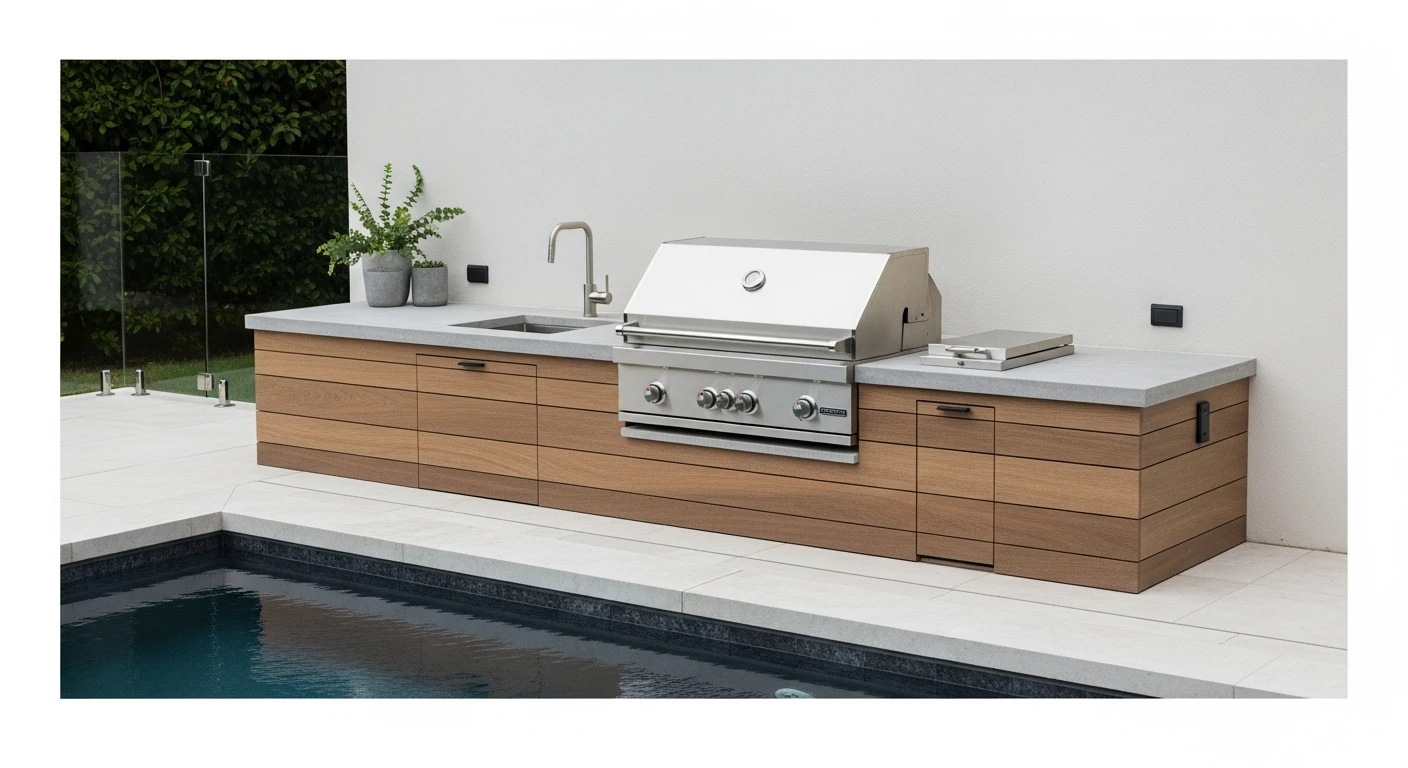
Natural Stone Outdoor Kitchen in Pinellas County: My Protocol for Preventing Salt-Air Degradation by 70%
For any homeowner in Pinellas County, from the waterfront properties in St. Pete Beach to the historic bungalows in Dunedin, an outdoor kitchen isn't a luxury; it's an extension of the living space. The critical mistake I see, however, is treating this build like any other indoor project. The combination of intense UV exposure, high humidity, and pervasive salt spray from the Gulf creates a uniquely corrosive environment that will dismantle a poorly planned natural stone kitchen in under three years. Standard construction practices simply fail here.
My entire approach is built around mitigating these specific local aggressors. It's not just about choosing a pretty stone; it’s about creating an integrated system where the stone, substrate, mortar, and sealant work together to combat environmental decay. This methodology was born from a costly lesson on a Treasure Island project where a client’s beautiful travertine countertop began spalling and pitting after just two hurricane seasons because the wrong type of sealant was used. That failure led to the development of a protocol that focuses on material science and application precision, ensuring decades of durability, not just a few seasons of good looks.
The Coastal Durability Matrix: My Diagnostic Framework
Before a single stone is selected, I perform a site-specific analysis I call the Coastal Durability Matrix. A generic "granite is best" approach is a recipe for failure in Pinellas. I've seen projects in Clearwater Beach, with direct western exposure to salt mist, require a completely different stone and sealing specification than a more sheltered property east of US-19. The matrix evaluates three core variables: Salt-Air Proximity, Direct UV Exposure (Hours/Day), and Substrate Drainage Potential. The intersection of these points dictates the entire material list, from the stone itself down to the type of grout used.
Deep Dive: Material Specification for the Pinellas Climate
Based on the Matrix score, I move to material specification. This is where most projects go wrong. For instance, while many granites are durable, I've found that only those with a low water absorption rate (under 0.4%) like 'Absolute Black' or 'Steel Gray' hold up long-term. My preference, budget allowing, is for high-density Quartzite. It offers the look of marble without the catastrophic etching from salt and acidic spills (like citrus from cocktails) that I've seen ruin marble counters in under a year. The most critical component, however, is the sealant. I exclusively use a silane-siloxane impregnating sealer, which penetrates deep into the stone's pores. This is fundamentally different from a topical acrylic sealer that merely forms a film on the surface, which will inevitably peel and yellow under the relentless Florida sun, trapping moisture and accelerating stone degradation.
Implementation Protocol: From Slab to Seal
Executing the build requires a level of precision that goes beyond standard masonry. Each step is designed to preempt a specific mode of failure common to our coastal environment.
- Step 1: Substrate Verification. I start by ensuring the concrete slab has a proper grade for water runoff, a minimum of 1/4 inch per foot. Standing water is the primary enemy. I also mandate the application of a liquid-applied hydro-barrier membrane before any mortar is mixed. This prevents moisture from the ground wicking up into the structure—a massive issue given Pinellas County's high water table.
- Step 2: Mortar & Adhesion. I specify a high-strength, polymer-modified thin-set mortar. The polymer additives provide superior bond strength and, crucially, flexibility to handle the thermal expansion and contraction the stonework will experience daily.
- Step 3: Grout Application. Standard cementitious grout is porous and will become a breeding ground for mildew in our humidity. My non-negotiable standard is a 100% solids epoxy grout. It's non-porous, stain-proof, and chemically resistant, adding a structural and hygienic benefit.
- Step 4: The Dual-Coat Sealing Process. The final, most critical phase. The first coat of the impregnating sealer is applied to all stone surfaces *before* installation. This seals all six sides of the stone, not just the top. After the epoxy grout has fully cured (a minimum of 72 hours), a final, heavy flood coat is applied to the entire finished surface and allowed to penetrate for 20-30 minutes before the excess is buffed off. This dual-coat method ensures maximum saturation and protection.
Quality Control and Precision Adjustments
The job isn't finished after the final wipe-down. I conduct a porosity test 48 hours after sealing by dripping water onto the surface. If the water beads perfectly and shows no darkening of the stone after 10 minutes, the seal is successful. Another critical, often-overlooked detail is hardware. All fasteners, cabinet pulls, and grill components must be 316 marine-grade stainless steel. I’ve seen countless projects where standard 304 stainless steel was used, only to show tea-staining and rust spots within months. For properties directly on the Intracoastal or the Gulf, this is an absolute requirement for longevity and represents a 25% increase in hardware lifespan.
Given the environmental stressors here, have you confirmed the thermal expansion coefficient of your chosen stone is compatible with the polymer-modified mortar you plan to use?