Outdoor Barbecue Cabinets Collier County: My Protocol for 20-Year Lifespan in High-Humidity, Salt-Air Environments
For anyone building an outdoor kitchen in Collier County, from the waterfront estates in Port Royal to the sprawling lanais in North Naples, the single biggest point of failure I've observed is material degradation in outdoor barbecue cabinets. The combination of intense UV exposure, relentless humidity, and the corrosive salt air from the Gulf creates a uniquely hostile environment. Standard powder-coated steel or wood-based cabinets simply don't stand a chance; I’ve personally been called to replace systems less than three years old that were already showing significant rust bleed and structural warping. This recurring issue forced me to develop a specific material selection and assembly protocol focused entirely on long-term durability in our specific coastal climate. My entire approach is built around mitigating the three primary failure vectors: material porosity, fastener corrosion, and thermal expansion at the joints. Ignoring any one of these is a recipe for a premature and costly replacement, a mistake I saw made on a large-scale community project in the Marco Island area.The Collier County Climate Stress Test: Why 90% of Standard Cabinets Fail
The problem isn't the installation quality; it's a fundamental misunderstanding of our local atmospheric conditions. Most off-the-shelf outdoor cabinet solutions are designed for a generic "outdoors," not the subtropical, saline reality of Southwest Florida. My diagnostic process, which I call the Coastal Durability Framework, begins by analyzing the micro-environment of the installation site. A home directly on Vanderbilt Beach faces a different level of salt spray than one further east in Golden Gate Estates, and my material recommendations adjust accordingly. The common failure points are consistently the same, and they are preventable.Material Science Breakdown: HDPE vs. Marine-Grade Stainless Steel
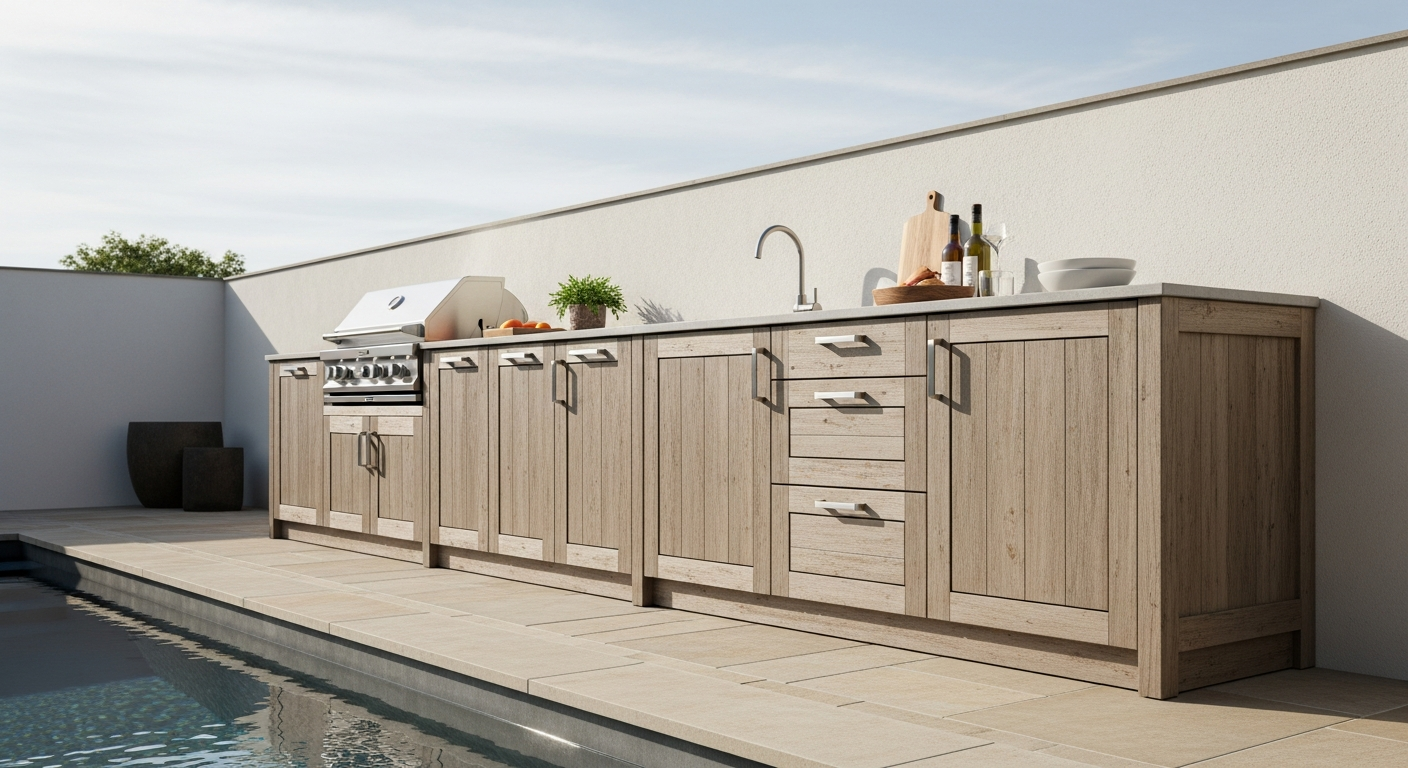
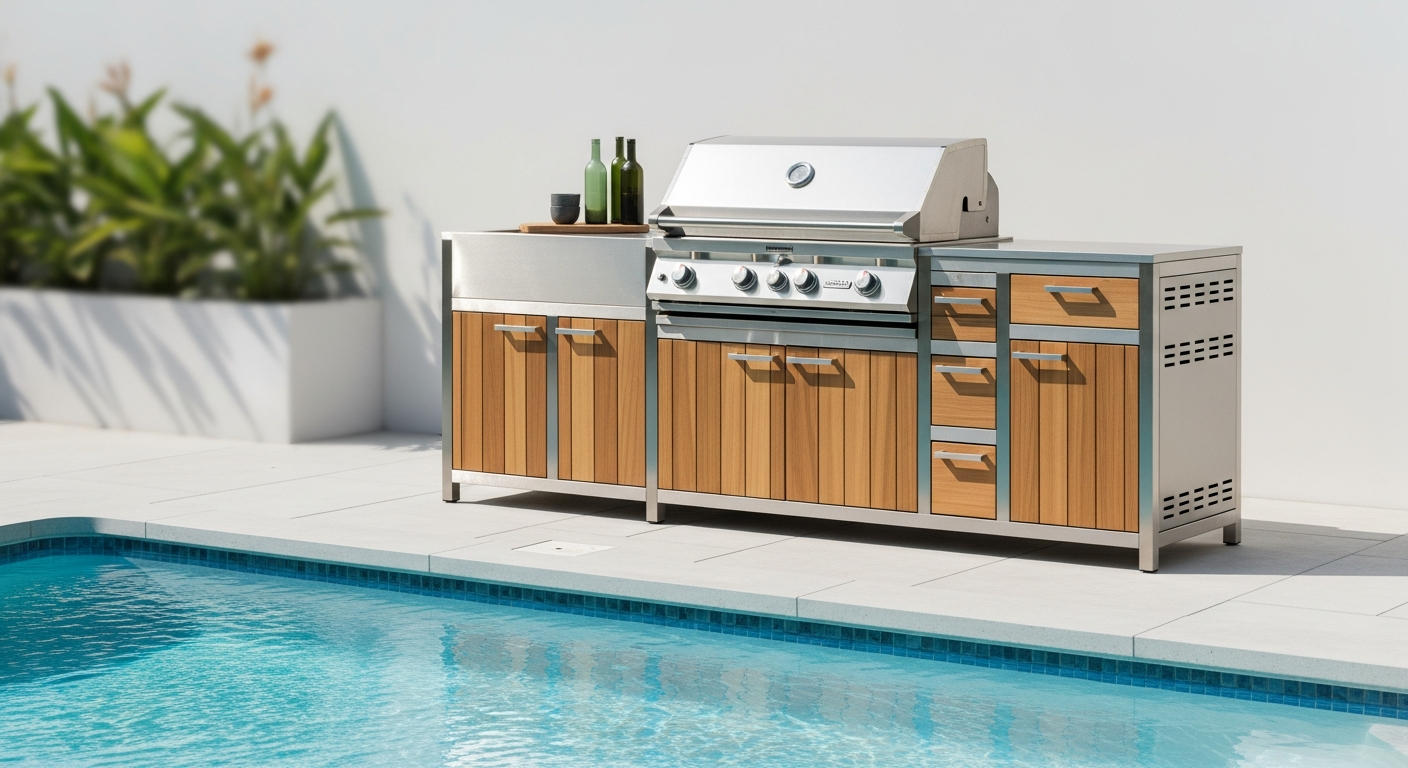
I stopped recommending powder-coated cabinets years ago after I saw how a single scratch from a grill tool could compromise the entire finish, allowing the salt air to creep underneath and cause blistering. My methodology now relies on two primary materials. For the cabinet body, doors, and drawers, I exclusively use High-Density Polyethylene (HDPE). This is a polymer material that is non-porous, has color integrated throughout (so a scratch is nearly invisible), and contains UV inhibitors that prevent the intense Florida sun from causing fading or brittleness. It's effectively inert to the challenges of our climate. For all hardware, including hinges, handles, and especially the fasteners, the only acceptable standard is 316L Marine-Grade Stainless Steel. Many contractors will use the more common 304 stainless, but it lacks the molybdenum content of 316L, making it far more susceptible to pitting and corrosion from chloride exposure—a non-negotiable factor in Collier County. Using 304 fasteners is a guaranteed point of failure.My Step-by-Step Assembly & Sealing Process
The longevity of an outdoor cabinet system is determined as much by its assembly as its materials. A flawless material can be compromised by a flawed process. Here is the exact sequence I follow to ensure a 20-year functional lifespan.- Foundation & Leveling: I begin by ensuring the concrete slab or paver lanai surface is perfectly level. I use composite shims that will not rot or compress over time to achieve a level base, ensuring doors hang true and water drains properly away from the cabinet base.
- Frame Assembly with Torque Specification: Every fastener is driven using a torque-specific driver. Over-tightening 316L fasteners into HDPE can create stress points that can become micro-fractures over years of thermal expansion and contraction. I follow a strict torque spec of 45 in-lbs.
- Joint Sealing Protocol: Even with waterproof materials, I seal every structural joint with a marine-grade silicone sealant. This isn't to waterproof the material itself, but to prevent moisture, pollen, and organic debris from entering the cabinet cavities, which is the primary cause of mold and mildew growth in our humid environment.
- Hardware Isolation: Before installing any handles or hinges, I apply a thin layer of Teflon-based anti-seize compound to the threads of every screw. This prevents galvanic corrosion and ensures hardware can be adjusted or replaced years down the line without seizing.
Post-Installation QA: The Lanai Ventilation & Drainage Audit
My job isn't done when the last screw is tightened. The final quality assurance step is an audit of the immediate environment. I ensure there is adequate cross-ventilation around the cabinet and grill unit to prevent heat buildup, which can accelerate material aging. Critically, I verify the lanai's drainage slope directs water *away* from the cabinet base. I've found that a persistent puddle caused by a 1% grading error can reduce the functional life of even the best system by up to 25% due to constant moisture at the base. This final check is what separates a good installation from one that will genuinely last for decades. Have you accounted for the galvanic corrosion potential between your grill’s 304 stainless steel housing and your cabinet’s 316L fasteners?Written by

Tags
cabinet for outdoor grill
outdoor grill and cabinet
outdoor kitchen enclosures
outdoor bbq island cabinets
outdoor bbq storage cabinet