Outdoor Deck Kitchen Ideas Osceola County: A Framework for 99% Humidity & UV Resistance
For years, I've seen countless outdoor deck kitchens in Osceola County fail within 3-5 years, and the root cause is almost always the same: a fundamental misunderstanding of our local microclimate. Homeowners in Kissimmee and St. Cloud invest in beautiful designs that are conceptually sound but materially destined for rapid degradation under the relentless Florida sun and suffocating humidity. The standard "weather-resistant" label is practically meaningless here. My approach isn't about finding prettier ideas; it's a material-first, airflow-centric methodology designed to guarantee longevity. I've seen projects near Lake Tohopekaliga suffer from catastrophic corrosion not because the stainless steel was low quality, but because it was the wrong grade for ambient moisture. A successful outdoor kitchen on an Osceola deck isn't built, it's engineered against a specific set of environmental stressors: intense UV radiation, near-constant 90%+ humidity, and torrential downpours.The Core Failure in Kissimmee-St. Cloud Outdoor Kitchens & My Diagnostic Protocol
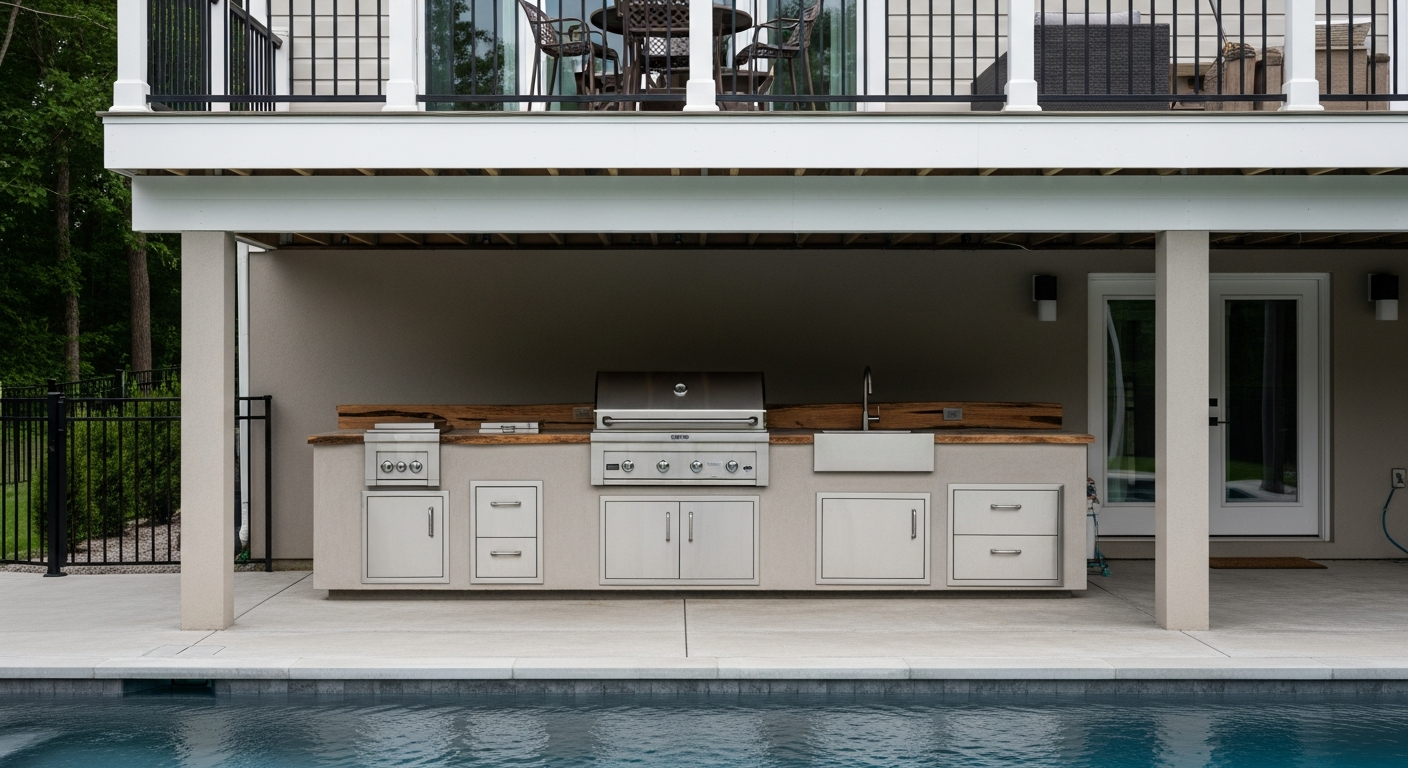
The most common mistake I've had to correct on projects, from sprawling single-family homes in Celebration to new builds in Harmony, is applying indoor logic to an outdoor space. Contractors and homeowners prioritize granite countertops and standard 304-grade stainless steel appliances because they look good initially. This approach ignores the physics of material expansion, moisture penetration, and galvanic corrosion, which are amplified in our climate. My proprietary diagnostic protocol, the Climate Durability Audit, prevents these failures before a single dollar is spent on materials. The audit is a three-step process. First is the Material Stress Analysis, where I evaluate material choices against local UV index and average humidity levels, not generic manufacturer claims. Second is Airflow Mapping, which is critical for lanais and covered decks to prevent trapped, super-heated, moist air from accelerating mildew growth and equipment failure. Finally, I conduct a Moisture Pathway Analysis to identify how water will travel and where it will pool during a typical Osceola thunderstorm, ensuring the substructure is as protected as the visible surfaces.Material Science Deep Dive: Beyond Standard "Weatherproof" Claims
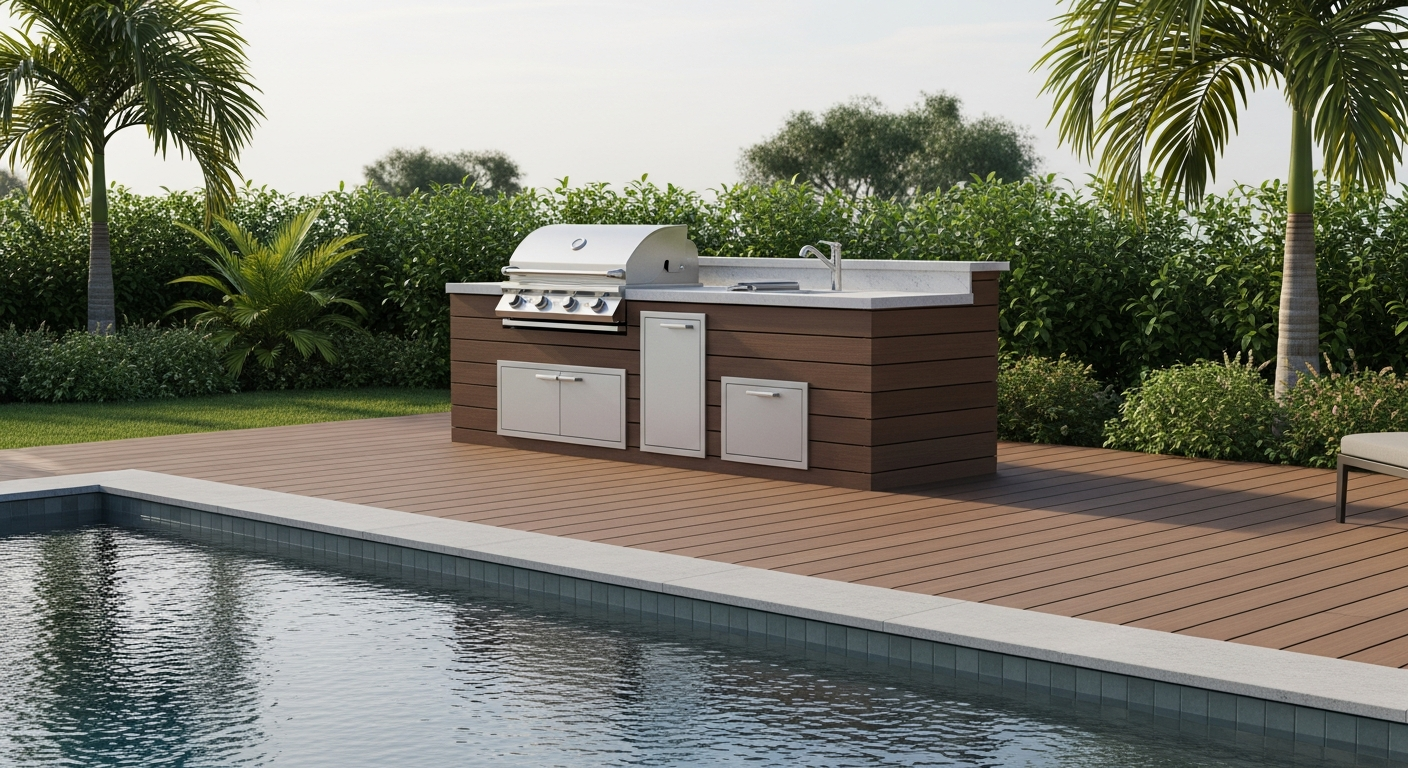
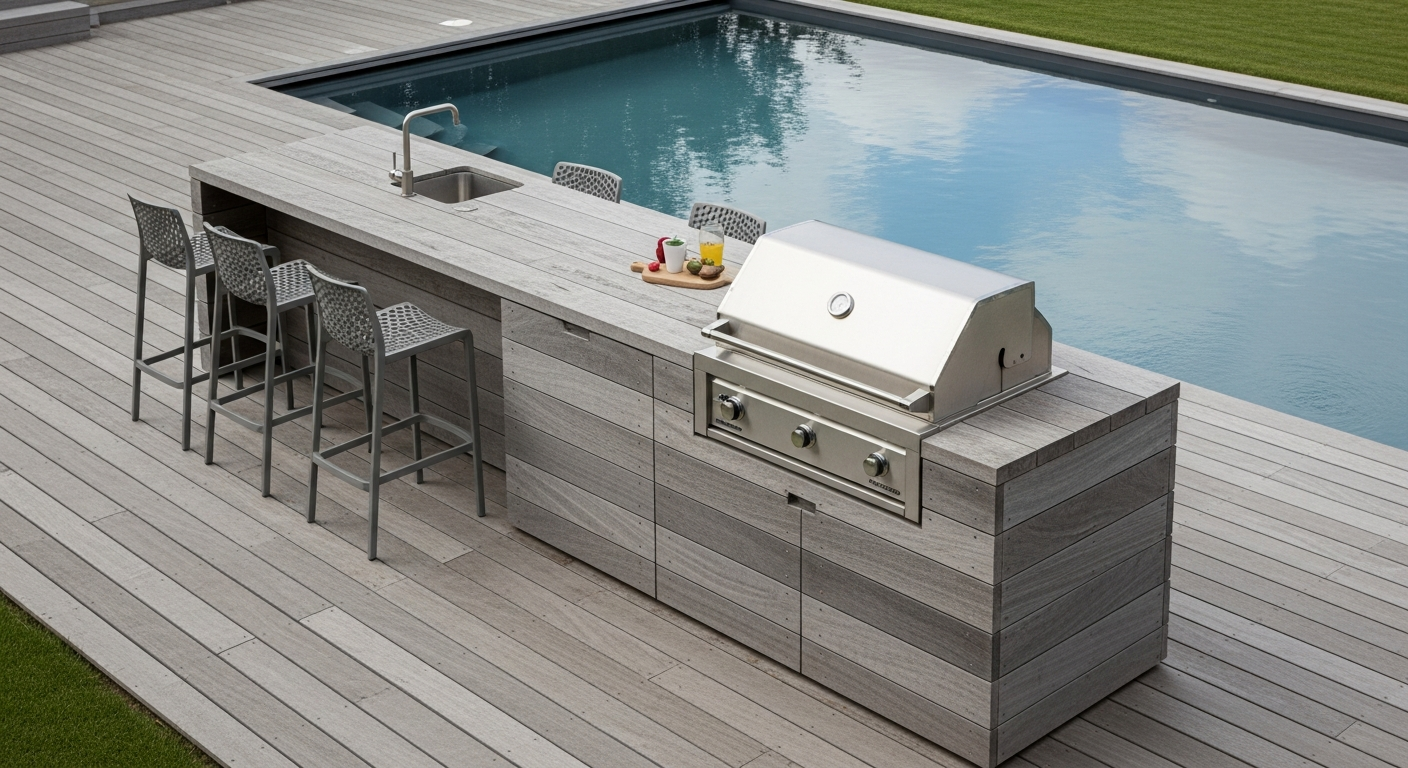
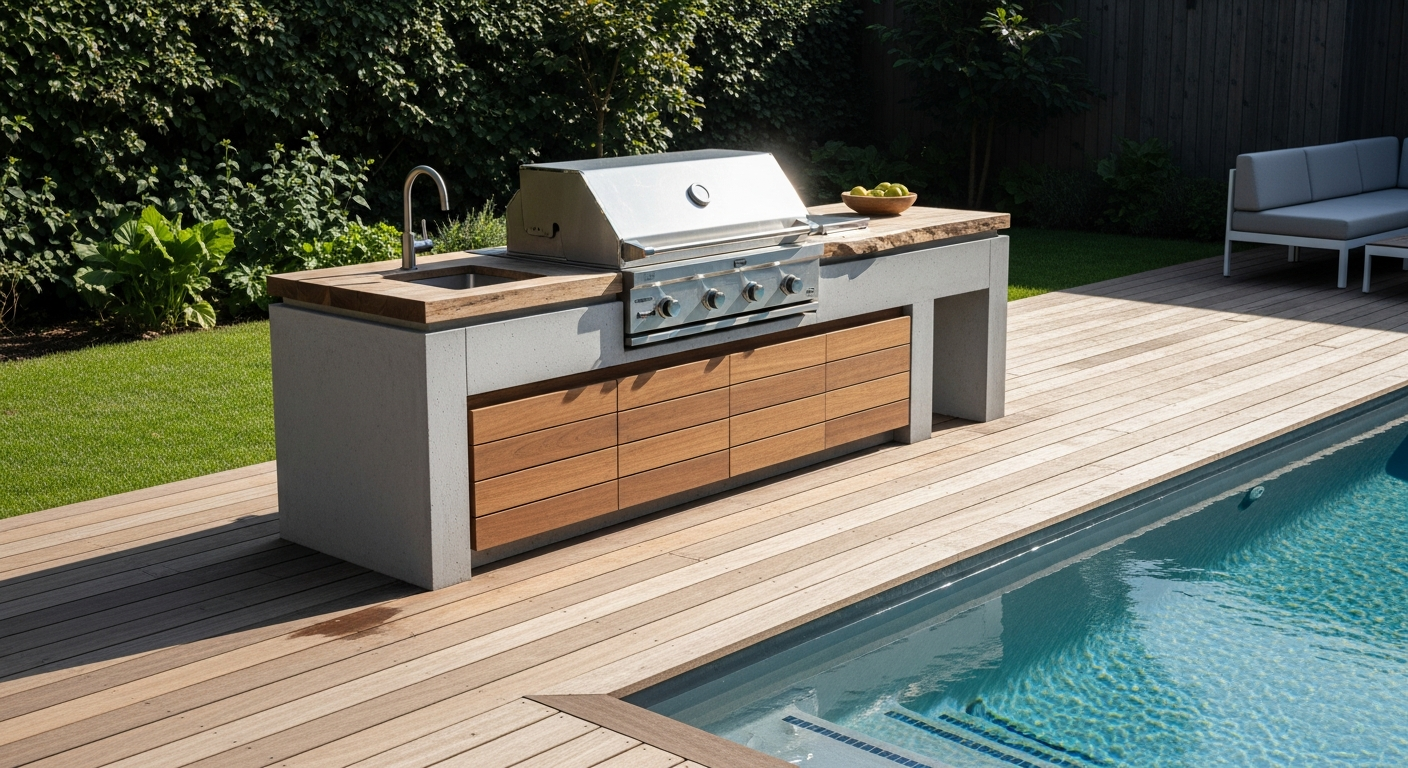
Let's get technical. The difference between an outdoor kitchen that lasts and one that needs replacing is in the material specifications, not the brand name. When I consult on a project, I push for materials that are often overlooked due to a slight increase in initial cost, but which deliver a 200-300% increase in functional lifespan.- Countertops: Forget porous granite. I specify sintered stone (like Dekton) or non-porous quartzite. These materials have near-zero water absorption, are completely UV-stable (so the color won't fade), and can handle the thermal shock of a hot pan on a cool, rain-swept evening.
- Cabinetry & Structure: Wood is a non-starter. Even Ipe, while rot-resistant, requires intensive maintenance. The gold standard I implement is marine-grade high-density polyethylene (HDPE) or powder-coated aluminum frames. I once replaced a 3-year-old outdoor kitchen in Poinciana where the stainless steel cabinet boxes had completely rusted at the welds and hinges. HDPE is inert; it simply does not care about water.
- Appliances: This is a critical point of failure. The market is flooded with 304-grade stainless steel. For Osceola County, I mandate 316 marine-grade stainless steel for all appliances, including the grill, side burners, and access doors. The added molybdenum in the 316 alloy provides superior resistance to corrosion from chlorides found in our humid, salty air, drastically reducing the chances of pitting and rust.
Implementation Blueprint for a Hurricane-Resistant Deck Kitchen
An idea is useless without a flawless execution plan. My blueprint focuses on building a cohesive system, not just assembling parts. For any deck, especially elevated ones common in the area, the kitchen's weight and integration are paramount for safety and longevity.- Substructure Reinforcement: Before anything else, I verify the deck's load-bearing capacity. The kitchen "island" must be positioned over beams, not just joists. I often specify additional sistering of joists and adding diagonal bracing directly under the planned kitchen footprint.
- Surface & Drainage Plane: The deck surface beneath the kitchen should have a positive slope away from the house, at a minimum grade of 1/4 inch per foot. I prefer using composite decking with hidden fasteners to create an unbroken surface that prevents water from sitting on the substructure.
- Utility Installation Protocol: All electrical outlets must be in-use rated GFCI with bubble covers. For plumbing, I use insulated PEX lines to handle temperature fluctuations without cracking. Gas lines must have a dedicated shut-off valve that is easily accessible and located away from the primary heat source.
- Anchoring & Wind Mitigation: This is non-negotiable. Every major component, especially the grill, must be mechanically fastened to the structure. Cabinet doors should have strong magnetic or mechanical latches to prevent them from flying open during high winds. This is a lesson I learned after seeing a project's doors torn off during a minor tropical storm.
Precision Tuning for Osceola County: My Post-Installation Quality Checklist
The job isn't done when the last screw is turned. My reputation is built on the performance of my designs years down the line. I perform a post-installation audit to ensure the system functions as designed, which includes several key checks that are often skipped.- Ventilation Efficacy Test: For any kitchen under a roof, I run a test to ensure there is adequate cross-ventilation. I check for heat buildup around the grill hood that could indicate a fire hazard or lead to premature failure of electronic components. Proper ventilation is the single best defense against mildew.
- Gasket and Seal Inspection: I meticulously inspect every seal on refrigeration units, storage drawers, and access doors. A compromised gasket in our humid environment means constant condensation, mold growth, and wasted energy.
- Drainage Gradient Verification: I pour a gallon of water on the countertop and the surrounding deck area to physically confirm that water flows away from critical components and does not pool anywhere. This simple, five-minute test can prevent thousands of dollars in water damage.
Written by

Tags
covered deck with outdoor kitchen
outdoor deck and kitchen ideas
outdoor kitchen on a wood deck
outdoor kitchen wood deck
wood deck outdoor kitchen