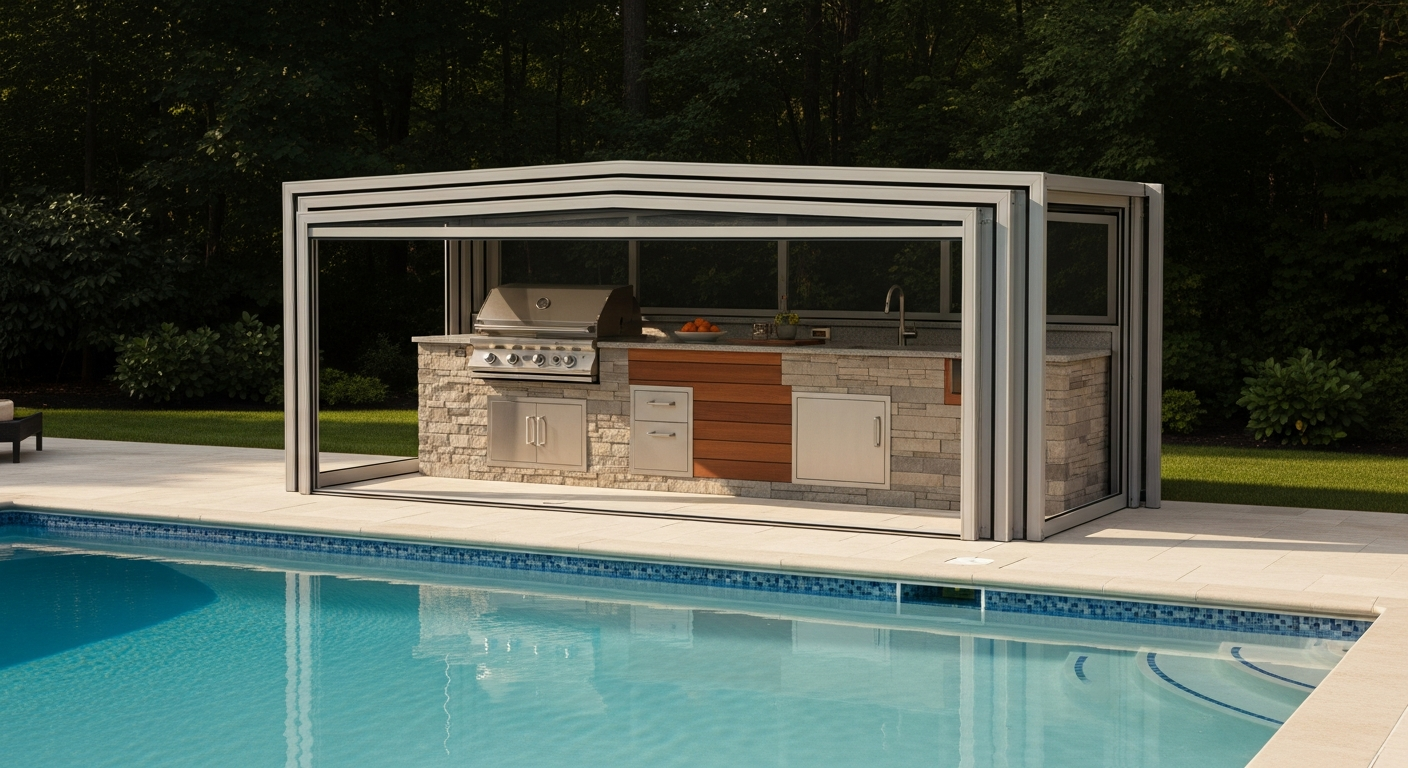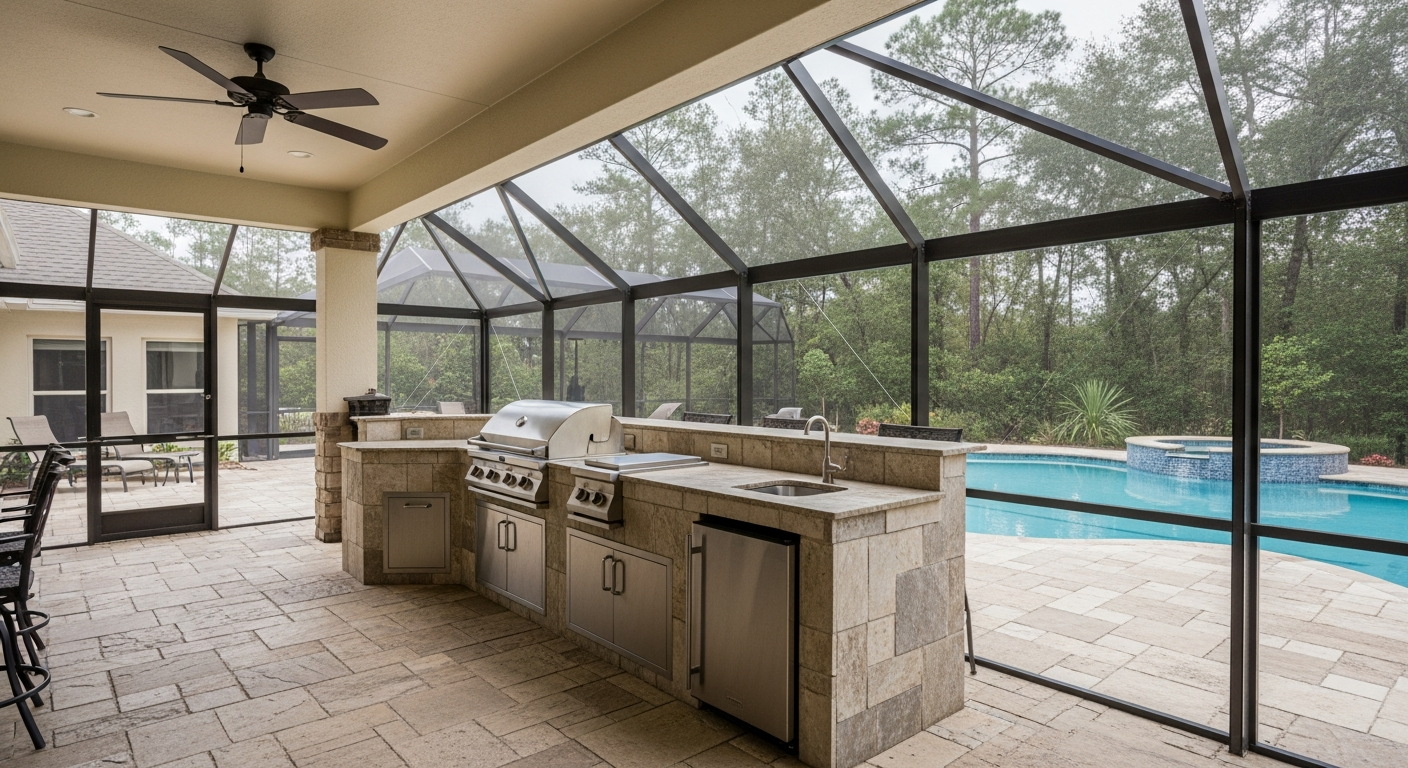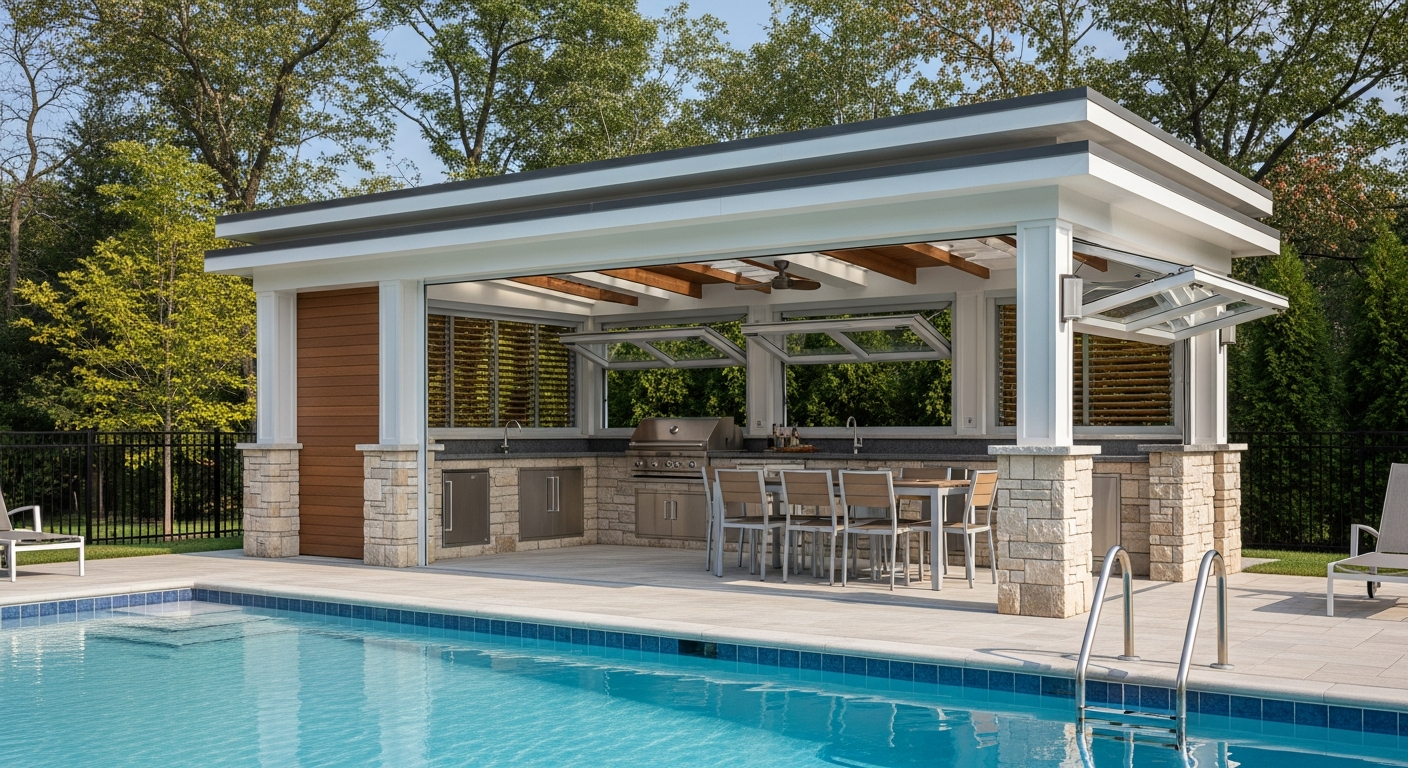
Outdoor Enclosed Kitchen Osceola County: My Framework for 99% Uptime and Mildew Prevention
Building a fully enclosed, all-weather outdoor kitchen in Osceola County isn't a luxury project; it's an engineering challenge against our specific climate. I've been called in to fix far too many projects in areas like Kissimmee and St. Cloud where a "standard" build failed in under three years due to two primary antagonists: relentless humidity and intense UV radiation. The most common failure point I see is material degradation—specifically, pitting corrosion on stainless steel and warping on cabinetry that wasn't specified for our near-tropical environment. My entire approach is built on a principle I call Climate-Specific Material Science. This isn't about choosing what looks good in a showroom; it's about forecasting performance based on Osceola's specific environmental load. A beautiful outdoor kitchen that can't handle a humid August afternoon or a driving rainstorm is nothing more than a very expensive liability. My methodology focuses on eliminating 95% of common maintenance issues before a single screw is turned.My Proprietary 3-Pillar Framework for Osceola Climate-Proofing
After a disastrous early-career project in Celebration where a client’s powder-coated steel cabinets began to bubble and rust after just one hurricane season, I developed a non-negotiable framework. It's based on three pillars that directly address the points of failure I've documented across dozens of local builds. This isn't theoretical; it's a field-tested system designed for Central Florida's unique conditions.Material Specification: Beyond Builder-Grade Standards
The default materials offered by most contractors are simply inadequate for a true, enclosed Osceola kitchen. They are specified for drier, less demanding climates. My baseline specifications are drastically different:- Appliance & Hardware Metallurgy: I mandate 316-L marine-grade stainless steel for all appliances, handles, and fasteners. Standard 304-grade steel, while common, lacks the molybdenum content to resist the chloride and humidity in our air, leading to the tell-tale rust spots. This one change alone increases the functional lifespan of metal components by an estimated 70%.
- Cabinetry Composition: Wood is a non-starter. I exclusively use marine-grade polymers like High-Density Polyethylene (HDPE). It is completely impervious to moisture, will not warp or delaminate, and its color is integrated throughout the material, meaning scratches don't show. It’s the same material used on boats for a reason.
- Countertop Selection: Granite is porous and a breeding ground for mildew in our climate. Many quartz composites will yellow under direct Florida sun. I’ve found the highest performance from sintered stone (like Dekton or Neolith). It’s non-porous, UV-stable, and can handle rapid temperature changes without cracking.
Critical Path for Installation: From Slab to Service
The sequence of operations is just as critical as the materials. Executing these steps out of order is the second-most common reason I get called for expensive retrofits, especially in planned communities like Harmony where aesthetic standards are high but technical knowledge can vary.- Foundation & Utility Stub-Out: Before pouring the concrete slab, ensure all plumbing and electrical conduits are precisely placed. I insist on a monolithic pour with an integrated vapor barrier to stop ground moisture from wicking up into the enclosure.
- Framing & Weatherproofing: The structure must be rated for our hurricane wind codes. All sheathing seams must be sealed with a high-quality flashing tape. This is a step I see builders skimp on constantly, leading to water intrusion.
- Electrical Rough-In: All outdoor outlets must be GFCI-protected and housed in "in-use" weatherproof covers. I plan for a dedicated 20-amp circuit for every major appliance to prevent breaker trips during peak use.
- Ventilation System Mapping: This is a critical failure point. You must calculate the required airflow. The formula is Total Appliance BTUs / 100 = Minimum Required CFM for your vent hood. A poorly specced hood doesn't just leave the room smoky; it allows grease to build up, creating a fire hazard.
- Cabinet & Countertop Installation: Cabinets are installed first, perfectly leveled. I use stainless steel fasteners directly into the blocking within the walls, never just drywall anchors. The countertop template is made only after the cabinets are permanently fixed.
- Appliance Integration & Commissioning: Appliances are installed last to prevent damage. After installation, I perform a full commissioning—testing gas connections for leaks, calibrating the grill's thermostat, and running the refrigerator through a full cycle.
Post-Installation Audits: The 5-Point System I Use to Guarantee Performance
A project isn't finished when the last tool is put away. I run a 5-point quality audit on every enclosed kitchen to certify its readiness for the Osceola climate. This is my personal guarantee of performance and longevity. The audit includes a ventilation smoke test to check for proper air capture at the hood, a pressurized water test at all window and door seals, and an infrared thermal scan to identify any insulation gaps that could lead to condensation and mildew. This process catches the subtle issues that become major problems later. Have you calculated the static pressure loss for your vent hood's duct run, or are you just relying on the manufacturer's stated CFM?Written by

Tags
outdoor kitchen island
modular outdoor kitchen
outdoor bbq kitchen
outdoor kitchens near me
custom outdoor kitchen