Outdoor Grill With Cabinet: My Framework for a Corrosion-Proof Lanai Kitchen in Collier County
The biggest mistake I see in outdoor kitchen projects across Collier County, from Port Royal to Pelican Bay, isn't the grill choice; it's the cabinet material selection. Homeowners invest in a high-end grill only to watch its surrounding structure succumb to rust and delamination within five years. This failure is almost always due to builders specifying standard 304 stainless steel, which simply cannot withstand the unique combination of high humidity, intense UV exposure, and, most critically, the salt-laden air from the Gulf. My entire approach is built on preventing this specific, costly failure. It's a material-first methodology that I developed after being called in to remediate a beautiful, but failing, two-year-old outdoor kitchen on Marco Island. The cause was galvanic corrosion at every single fastener point. This experience forced me to create a system that guarantees a minimum 20-year structural lifespan, even in the most demanding coastal conditions.The Collier County Corrosion Test: My Diagnostic for Premature Outdoor Kitchen Failure
Before any design is drawn, I perform what I call the "Corrosion Test," a site-specific analysis. An installation in an inland community like Ave Maria faces different challenges than one on a waterfront lanai in Naples. My diagnostic focuses on three environmental stressors: Chloride Exposure (salt), UV Degradation, and Condensation Cycles. I've found that most failures occur when a design accounts for one or two of these, but not the interplay between all three. A common error is a beautifully designed, shaded kitchen that doesn't account for the nightly condensation that settles on metal surfaces, accelerating the corrosive effects of daytime salt spray.Material Specification: Why 304 Stainless Steel is a Costly Mistake Here
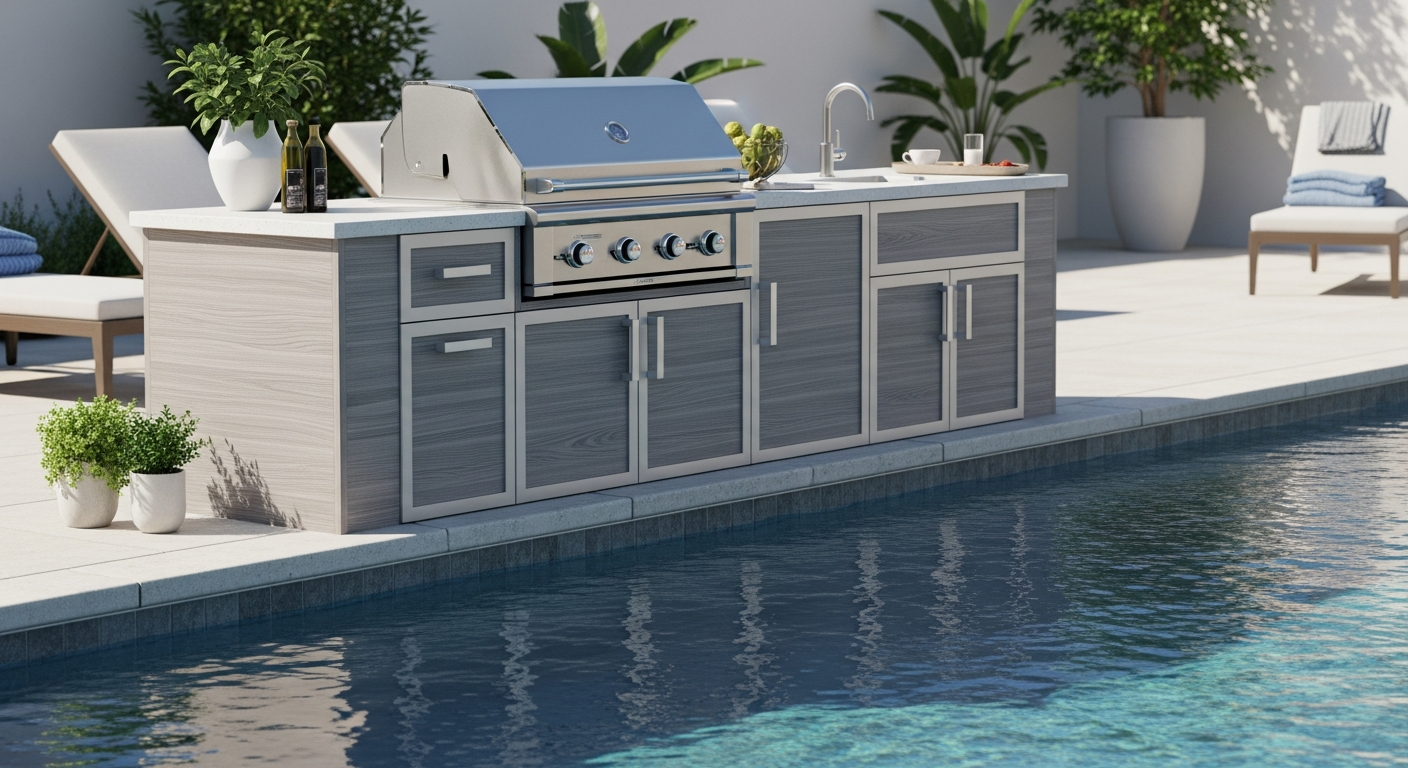
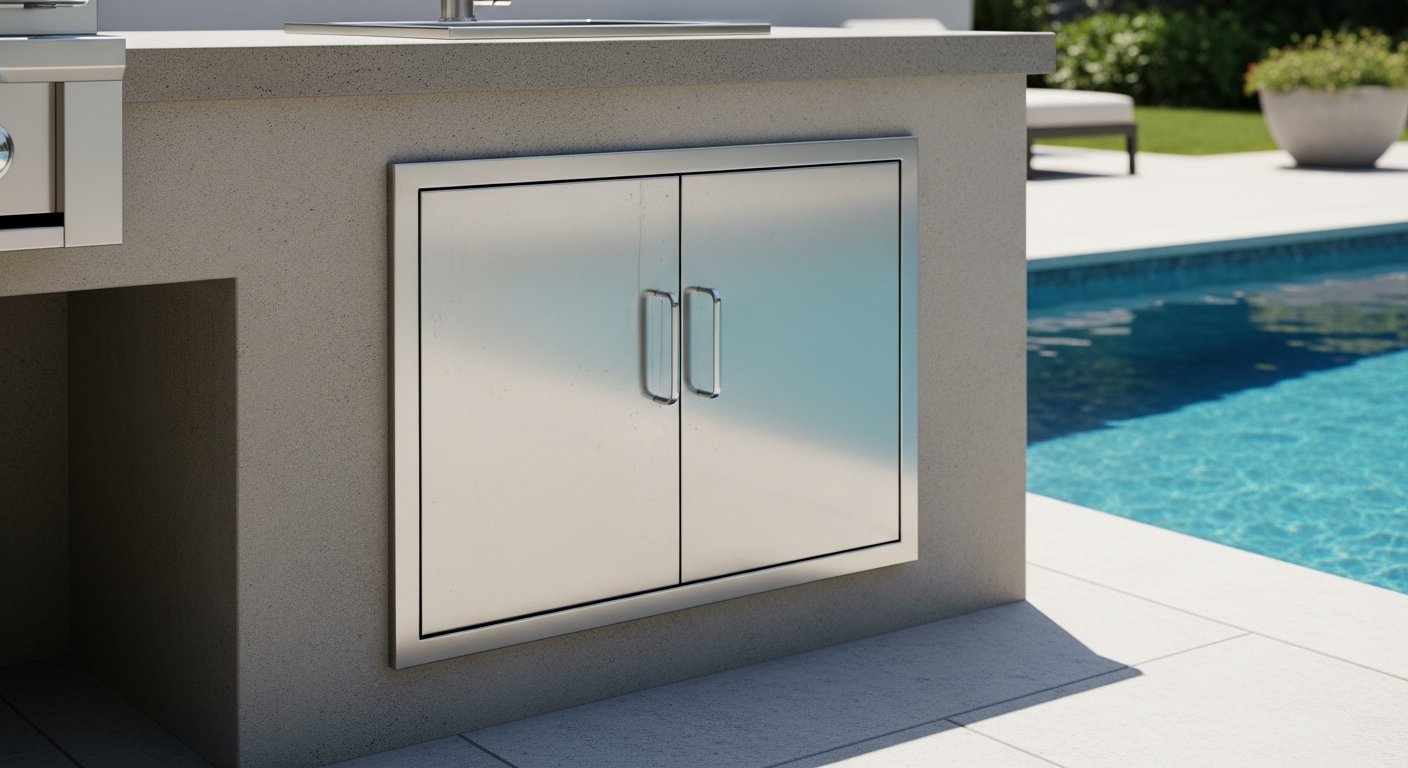
Let's get technical. The primary difference between the commonly used 304 stainless steel and the material I mandate, 316L marine-grade stainless steel, is a single element: molybdenum. This element provides superior resistance to chlorides (salt). Using 304 steel for an outdoor grill cabinet in our coastal environment is the definition of a planned obsolescence. I’ve seen cabinets with rust blooms within 18 months. For cabinetry, my hierarchy of materials is strict:- Best: 316L Stainless Steel for frames and doors. It's a lifetime investment.
- Good: Marine-Grade High-Density Polymer (HDPE). It's inert, waterproof, and won't corrode, but can lack the premium feel of steel. I often use it for internal shelving.
- Avoid: Powder-coated galvanized steel. I've seen countless projects where a single scratch from a grill tool has compromised the coating, allowing moisture underneath and causing massive paint bubbling and rust from the inside out.
From Slab to Sizzle: The Lanai Installation Protocol
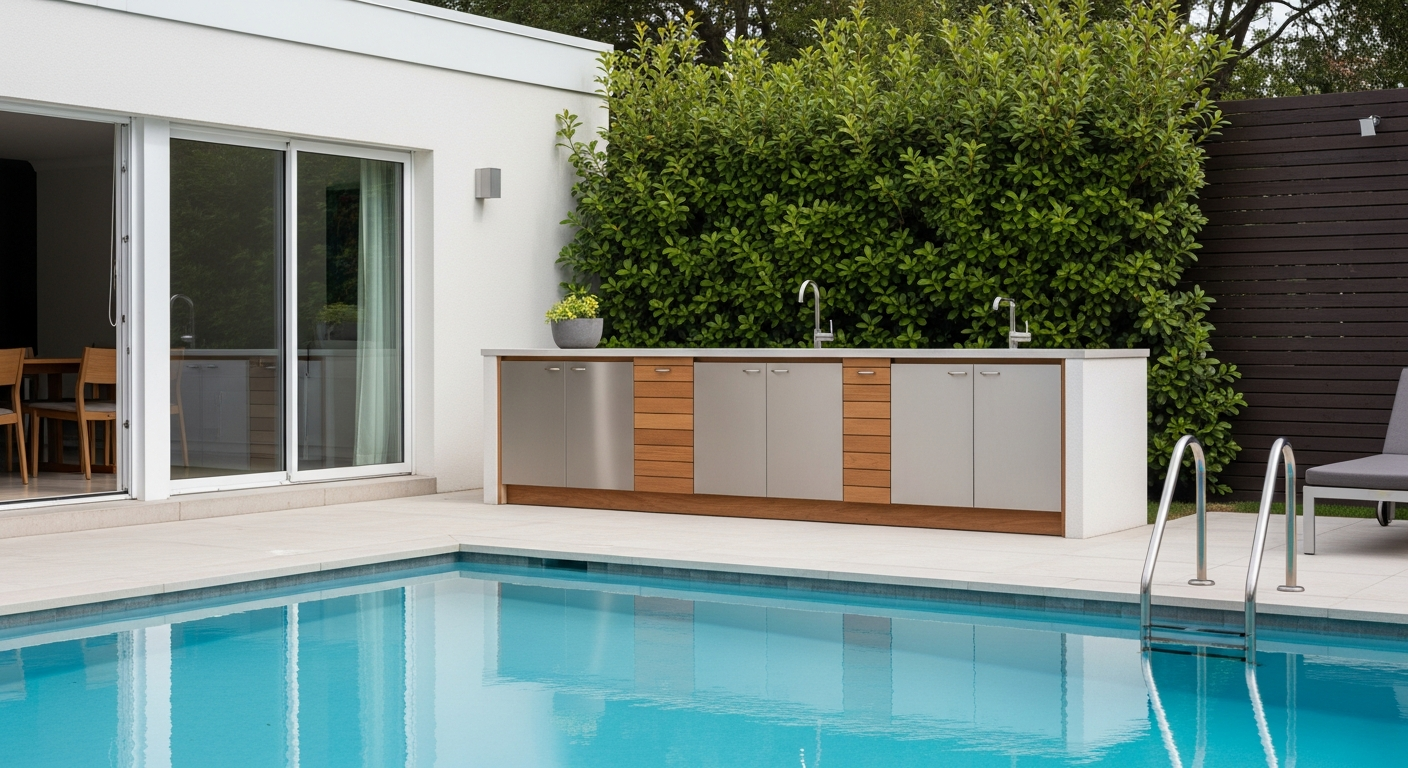
Proper installation is just as critical as material selection. My process is non-negotiable and ensures the system performs as designed. I once had to completely rebuild a project in a Bonita Springs country club because the contractor laid the cabinets directly on a concrete lanai slab without a moisture barrier, leading to efflorescence and corrosion from the ground up. My implementation checklist is as follows:- Site Foundation: We always install a non-porous composite shim barrier between the concrete slab and the cabinet legs. This elevates the structure by a quarter-inch, preventing any direct contact with ground moisture.
- Frame Assembly: All metal-to-metal joints are treated with a marine-grade anti-seize compound before fastening. This prevents the threads from galling and creates an additional moisture barrier.
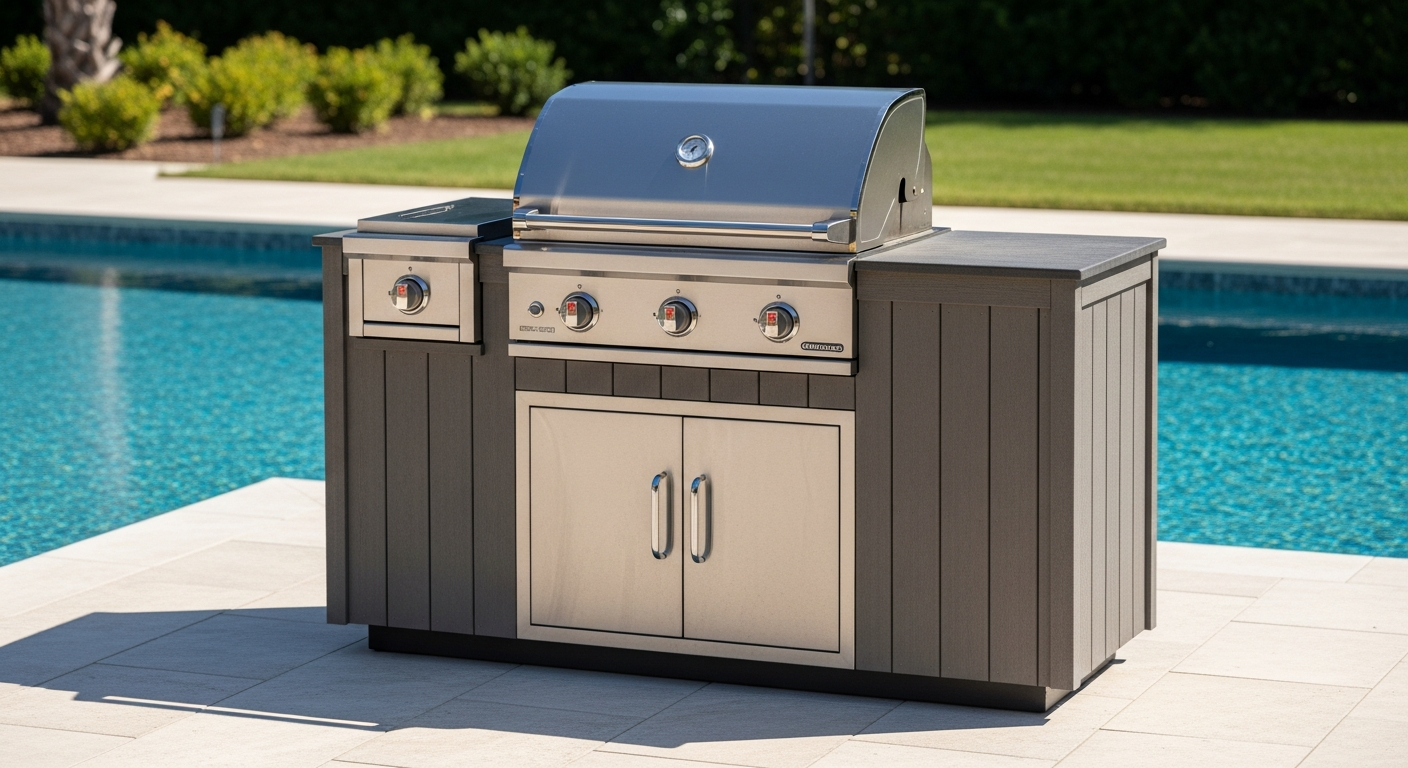
- Grill Housing Ventilation: We ensure a minimum of 3 inches of air gap around the grill housing and install passive vents. This prevents heat buildup that can damage countertops and warp cabinet doors, a frequent issue with drop-in grill installations.
- Countertop Sealant: For natural stone like granite, we use a silane/siloxane penetrating sealer, which creates a hydrophobic barrier deep within the stone, rather than a simple topical sealant that UV rays will break down in a single season.
Post-Installation Commissioning: My 10-Point Weatherproofing Audit
Once the installation is complete, my job isn't done. I conduct a final audit to ensure long-term resilience. This is the "pulo do gato" that separates a good installation from a great one. The most critical point on my audit is checking for proper electrical isolation. When you have different metals (like the stainless cabinet and a copper gas line) in close proximity in a wet, salty environment, you create a battery. This is called galvanic corrosion. To prevent this, I ensure that a dielectric union is installed on all gas and water lines connected to the structure. It’s a small, inexpensive part that most contractors overlook, but it's the single most effective defense against accelerated corrosion of your plumbing and grill components. This simple check can add a decade to the life of the internal grill parts. I also provide clients with a maintenance schedule that increases the unit's lifespan by an estimated 30%, including a specific freshwater rinse-down procedure after any major tropical storm or King Tide event. So, when planning your outdoor kitchen, have you considered how the dew point inside your sealed cabinets will affect your electronic ignition system over a typical Collier County summer?Written by

Tags
custom outdoor kitchen cabinets
custom outdoor cabinets
custom stainless steel doors for outdoor kitchen
pre made outdoor cabinets
outdoor cooking cabinet