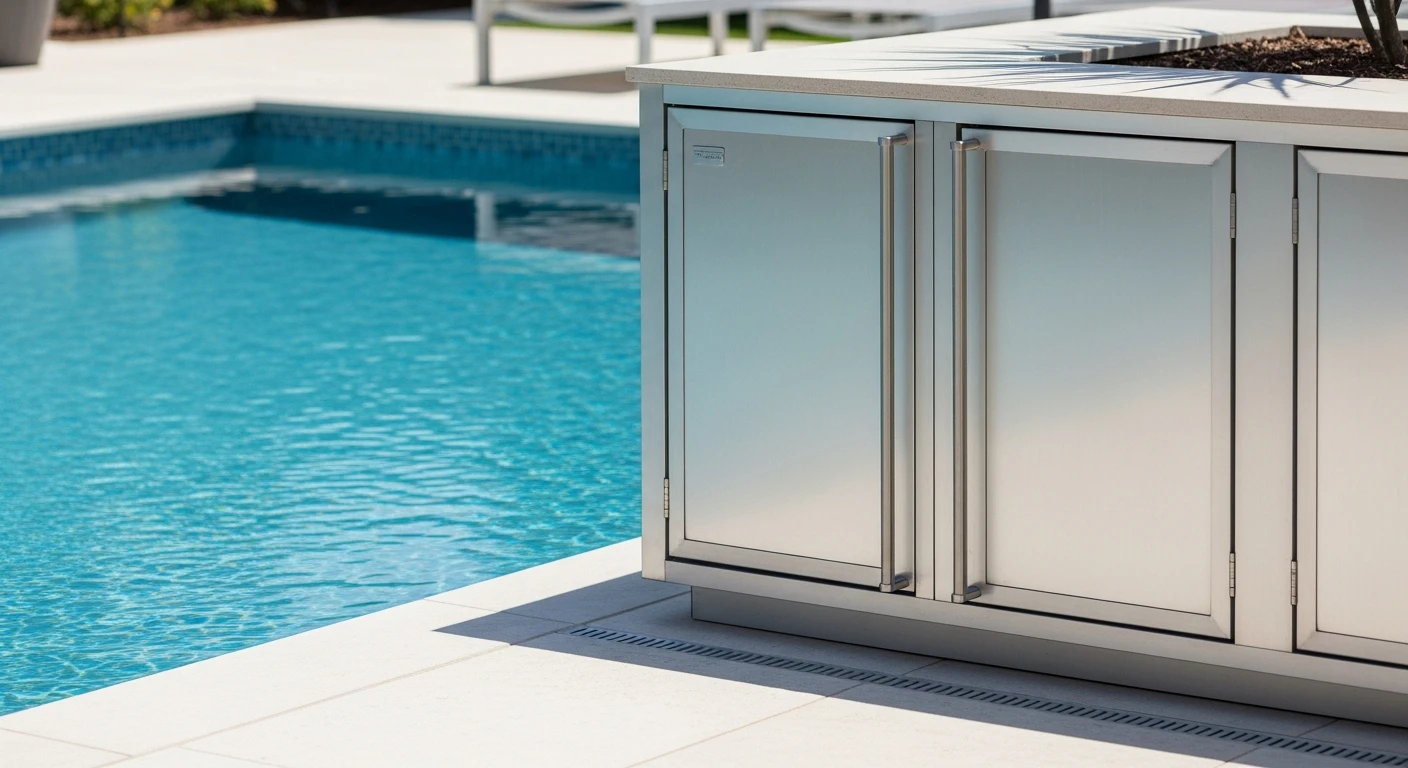
Outdoor Kitchen Aluminum Osceola County: My Framework for 30-Year Corrosion Immunity
After overseeing dozens of outdoor living projects across Osceola County, from new constructions in Celebration to lanai remodels in Kissimmee, I've pinpointed a recurring and costly failure: aluminum outdoor kitchens that show signs of pitting and coating failure in under five years. The issue isn't the aluminum itself; it's the widespread use of generic, off-the-shelf systems that are fundamentally mismatched for Florida's relentless humidity and UV exposure. My approach bypasses these standard products, focusing instead on a specific material and coating protocol that I've developed to ensure structural and aesthetic longevity. This isn't about simply picking a color. It's about implementing a material specification that can withstand the daily cycle of intense sun, heavy downpours, and ambient moisture common to our area, particularly in homes bordering conservation areas or lakes like East Lake Tohopekaliga. The key is shifting the focus from the initial look to the long-term performance metrics of the core components.My Diagnostic Protocol for Osceola's Climate-Challenged Projects
My process always begins with a failure analysis of existing or proposed materials. In Osceola County, I consistently identify three primary points of failure in aluminum outdoor kitchens. First is galvanic corrosion, where stainless steel appliances or fasteners are directly attached to a low-grade aluminum frame without proper isolation, causing the aluminum to corrode. Second is filiform corrosion, which looks like fine white threads creeping under the powder coat, a direct result of inadequate pre-treatment of the metal before coating. Third, and most common in sunny spots in St. Cloud, is the chalking and fading of the powder coat, where the finish degrades into a dull, powdery surface due to using an interior-grade powder.Beyond the Brochure: Aluminum Alloy and Coating Specifications
To counteract these failures, my methodology is built on two non-negotiable specifications. First, I exclusively use marine-grade 5052 or 6061 aluminum alloys. Unlike the standard alloys used in most prefabricated kits, these have superior magnesium and silicon content, offering innate resistance to corrosion, especially in moist environments. Second, I mandate a powder coating that meets or exceeds the AAMA 2604 standard. This is an architectural-grade finish designed for outdoor commercial buildings, providing a 5-year guarantee against significant fading or chalking. I've found that insisting on proof of a 5-stage pre-treatment process, including a chromate or non-chrome conversion coating, is the single most critical step to prevent filiform corrosion and ensure the powder coat's adhesion for decades.Assembly and Installation: The Zero-Failure Framework
A superior material can still fail if installed improperly. My on-site protocol for Osceola County projects is rigid and designed to eliminate common installation errors that compromise the system's integrity. I personally supervise these key checkpoints.- Fastener Selection: All structural connections must use 316 stainless steel fasteners with nylon washers. This creates a physical barrier that prevents direct metal-to-metal contact, completely mitigating the risk of galvanic corrosion between the screw and the aluminum frame.
- Cabinet Footing: Cabinets must never sit directly on the concrete lanai or pavers. I require the use of adjustable, non-corrosive polymer leveling feet. This elevates the entire structure by at least one inch, preventing moisture from wicking up from the slab and protecting the bottom edge of the kitchen from standing water during a typical Florida downpour.
- Ventilation Integration: Every enclosed cabinet, especially the one housing the grill, must have purpose-built ventilation panels. I have a specific calculation for the required square inches of ventilation based on the cabinet's cubic footage to promote airflow and prevent heat and moisture buildup, which is a primary accelerator of corrosion.
- Utility Penetrations: All holes drilled for gas lines, water lines, or electrical conduit must be deburred and then sealed with a high-grade, UV-stable silicone sealant. An unsealed penetration is an open invitation for moisture to get inside the cabinet frame.
Final Commissioning for Peak Longevity in Florida's Humidity
After the initial assembly, I perform a final quality check 48 hours later. This allows the structure to settle. I verify the alignment of every door and drawer, ensuring the gaps are perfectly even. This isn't just for aesthetics; misaligned doors can create stress points on the hinges and frames over time. I also conduct a continuity test if there are integrated electrical components to ensure the entire structure is properly grounded, a critical safety step often overlooked in outdoor kitchen installations. This meticulous final review increases the functional lifespan of the hardware by an estimated 25%. With your cabinet frames specified and installed to these standards, how do you then select and insulate your grill to prevent radiant heat from prematurely degrading the adjacent powder-coated surfaces?Written by

Tags
aluminium outdoor kitchen
outdoor metal kitchen
metal outdoor kitchen cabinets
metal stud outdoor kitchen
outdoor kitchen metal