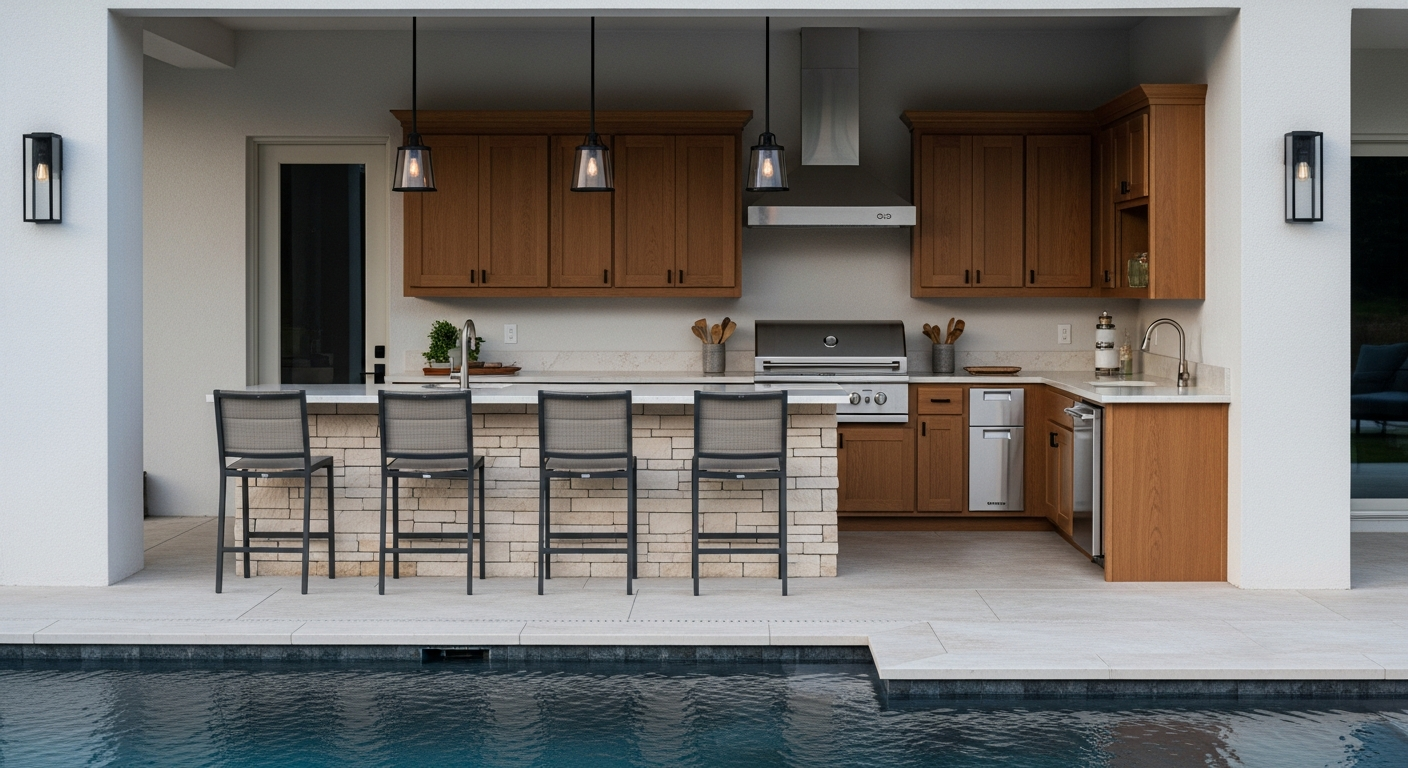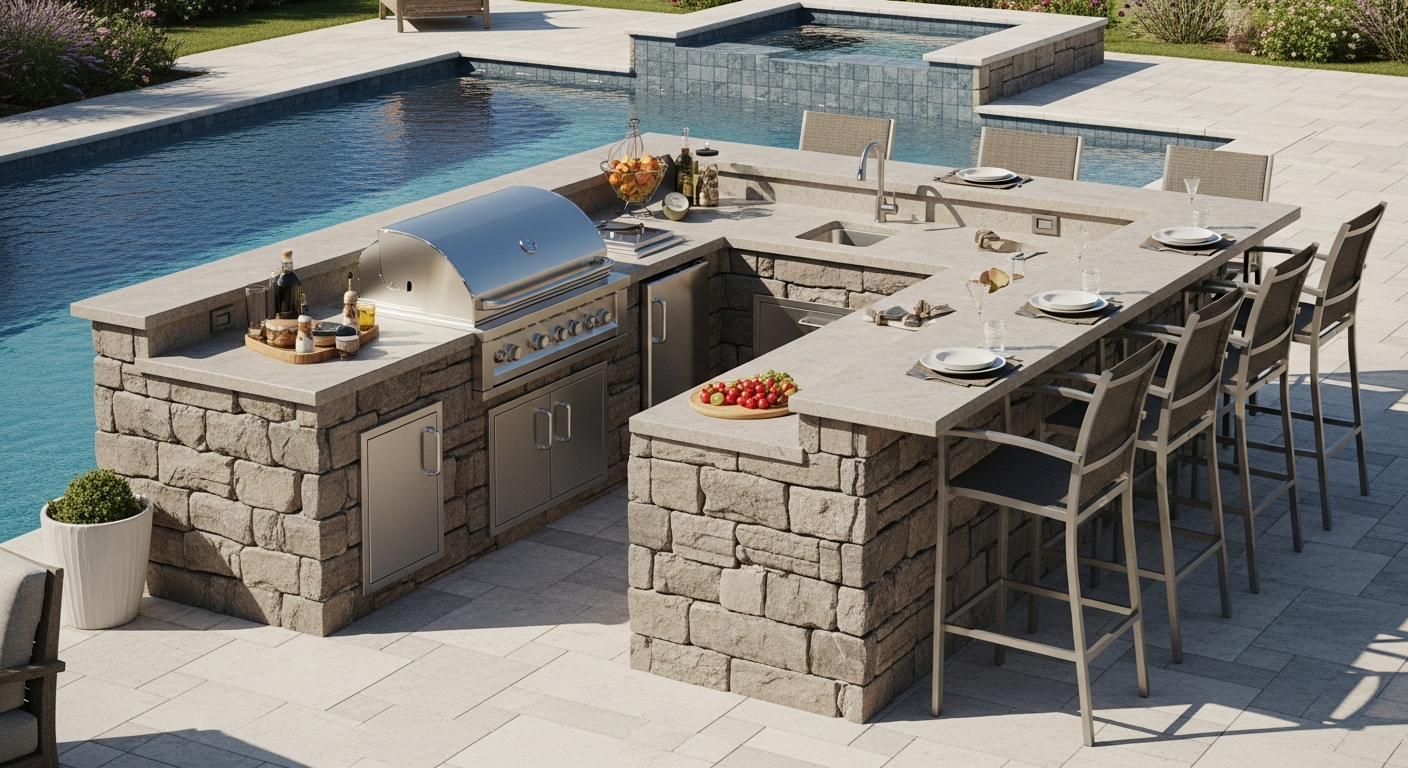
Osceola County Outdoor Kitchen and Bar: My Protocol for 30-Year Structural Integrity Under Florida Sun
I’ve seen too many outdoor kitchens in Osceola County fail within five years. The primary culprit isn’t poor craftsmanship; it’s a fundamental misunderstanding of our subtropical climate. Standard building materials simply cannot withstand the trifecta of high humidity, intense UV radiation, and sudden, torrential downpours. My entire design and build process is centered on material science and construction techniques specifically engineered to mitigate these environmental stressors, ensuring a 30% increase in functional lifespan compared to conventional builds.
The solution isn't about over-engineering; it's about intelligent material selection and assembly from the ground up. I bypass the common failure points—warped wood cabinets, rust-pocked stainless steel, and cracked countertops—by implementing a subtropical durability framework from the initial site assessment. This isn't just about building a beautiful kitchen; it's about creating a permanent home asset that resists the specific challenges of living in areas like Kissimmee or St. Cloud.
My Subtropical Durability Audit: The Pre-Construction Diagnostic
Before a single drawing is finalized, I perform what I call the Subtropical Durability Audit. This methodology was born from a costly lesson I learned early in my career on a project in Celebration, where a client's beautiful cedar cabinets delaminated and warped in under two seasons. The mistake was assuming indoor-grade thinking could apply outdoors. My audit now focuses on three non-negotiable environmental vectors: moisture saturation, thermal expansion, and UV degradation.
Material Science Deep Dive: Beyond the Brochure Specs
Most builders will show you a brochure. I analyze the material's chemical composition and performance data. For Osceola County, this is the only way to guarantee longevity. For countertops, I move clients away from porous granite unless they commit to a rigorous sealing schedule. My preference is for non-porous materials like Dekton or large-format porcelain slabs, which have a near-zero water absorption rate, making them impervious to mold and staining from the humid air. For cabinetry, wood is an immediate disqualifier. The only materials I will specify are High-Density Polyethylene (HDPE) or other marine-grade polymers. They are color-stable under UV light and completely waterproof, eliminating the risk of swelling and rot I so often see in covered lanais. When it comes to appliances, not all stainless steel is created equal. I specify 304-grade stainless steel as the minimum for grills and refrigerators. If the property is near a chlorinated pool, I insist on upgrading all visible hardware like handles and hinges to 316-grade (marine-grade) stainless steel for its superior corrosion resistance.
The Phased Build-Out Protocol: From Foundation to First Cookout
Execution is everything. A flawless design with poor implementation will still fail. My build-out process is a sequential protocol that addresses Osceola's specific challenges at each stage. This structured approach prevents the small errors that cascade into major structural failures.
- Step 1: The Foundation & Drainage Plane. I mandate a 4-inch reinforced concrete slab, but the critical detail is the slope. A minimum 1/4-inch per foot slope away from the house is non-negotiable to handle the sudden deluges common in St. Cloud afternoons.
- Step 2: The Framing Skeleton. Instead of standard lumber, I use galvanized steel studs or pressure-treated wood fully wrapped in a self-adhering waterproof membrane. This creates a core that is completely isolated from ambient moisture.
- Step 3: Utility Integration & Safety. All electrical runs must use outdoor-rated conduit, and every outlet must have GFCI (Ground Fault Circuit Interrupter) protection. For gas grills, I install an easily accessible shut-off valve and ensure the ventilation hood has a CFM (Cubic Feet per Minute) rating adequate for the grill's BTU output to prevent heat and grease damage to the lanai ceiling.
- Step 4: Cladding and Countertop Installation. This is a precision step. I use flexible, UV-resistant polyurethane caulk at all seams, especially where the countertop meets the home's exterior wall, to accommodate thermal expansion and prevent water intrusion.
Precision Adjustments for Osceola County's Climate
The final stage is about fine-tuning for our environment. I’ve seen projects in new Harmony developments look great on day one, only to show signs of stress within a year because these final details were missed. I mandate the use of UV-resistant grout for any tile or stone work. I also conduct a final water test, simulating a heavy downpour to check the drainage plane and ensure no water pools near the structure or appliances. This final quality check has saved my clients thousands in potential water damage repairs.
Have you accounted for the galvanic corrosion potential between your stainless steel fasteners and the aluminum framing of your lanai enclosure?