Lee County Outdoor Kitchen Cabinets: My Protocol to Prevent Delamination and Corrosion for 15+ Years
After designing and troubleshooting dozens of outdoor kitchens from the waterfront canals of Cape Coral to the expansive lanais in Estero, I've seen one catastrophic failure more than any other: material degradation. Homeowners invest heavily in a beautiful setup, only to watch it warp, delaminate, or rust within three to five years. This isn't just bad luck; it's a failure in material specification and installation methodology, issues I've refined a system to completely eliminate. The core problem is that most installers treat a Lee County project like one in a dry, temperate climate. They underestimate the trifecta of destructive forces here: the intense, year-round UV radiation, the high humidity with a staggering dew point, and the pervasive salt aerosol, which can travel miles inland from Fort Myers Beach. My entire approach is built on countering these three specific environmental stressors from the very first step.Diagnosing Environmental Stressors: My Coastal Durability Matrix
Before I even consider a cabinet brand, I perform an on-site analysis using what I call the Coastal Durability Matrix. This isn't a generic checklist; it's a diagnostic tool I developed after a project near Sanibel showed severe corrosion on 304-grade stainless steel hardware in under 24 months—a costly error that became a powerful lesson. The matrix forces a decision based on data, not just aesthetics.Technical Breakdown of the Matrix Factors
My matrix quantifies three critical variables for any property in Lee County:- Salt Air Saturation (SAS): This is more than just proximity to the Gulf. I assess prevailing wind patterns, canal frontage, and elevation. A home in a dense Lehigh Acres neighborhood has a much lower SAS score than a property on a direct-access canal in Cape Coral. This score dictates the minimum grade of all metal components. For any score above a 6/10, 316 marine-grade stainless steel for all hardware—hinges, screws, handles—is non-negotiable.
- Direct UV Exposure (DUE): I measure the number of hours the installation will receive direct, unfiltered sunlight, especially between 10 a.m. and 4 p.m. This is critical for polymer-based cabinets. A high DUE score makes materials like High-Density Polyethylene (HDPE) an excellent choice, but only if it's a high-quality brand with color and UV inhibitors integrated throughout the polymer matrix, not a cheap surface laminate that will inevitably peel.
- Moisture Intrusion Potential (MIP): This assesses risks from rain, pool splash, and humidity. I look at the base foundation, lanai screening, and overhangs. The key failure point I often see is water pooling at the base. A high MIP score mandates cabinets with thermally-welded, waterproof seams and legs that elevate the cabinet box off the concrete, completely eliminating ground contact.
Implementation Protocol for Zero-Failure Installations
Executing the installation correctly is just as critical as the material selection. My process follows a strict sequence designed to mitigate the risks identified in the Coastal Durability Matrix. I've seen beautiful, expensive marine-grade cabinets fail simply because the installer used the wrong fasteners.Precision Adjustments and Quality Control Standards
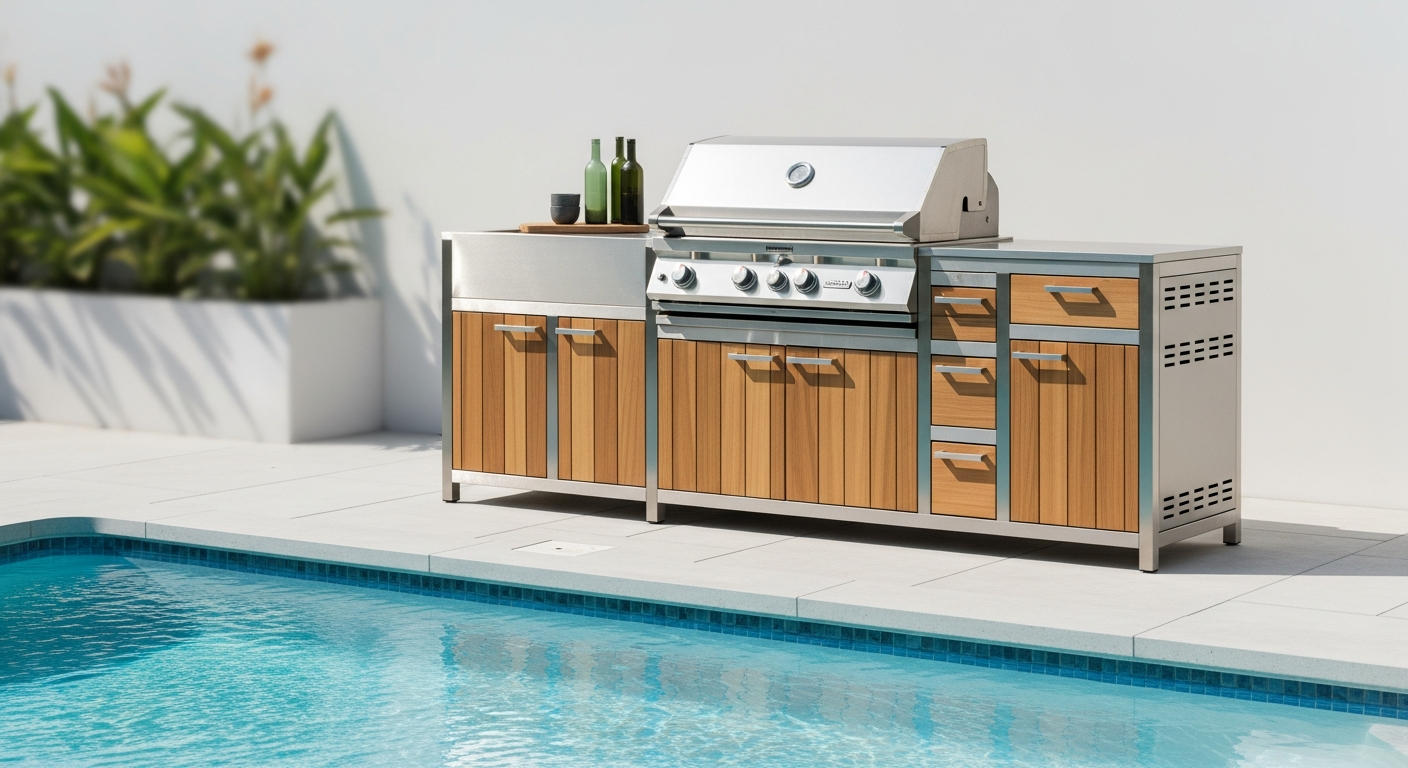
The final 10% of the job is what ensures a 15+ year lifespan. These are the small details that most rush through.- Ventilation Channels: For any cabinet housing a grill or side burner, I mandate the installation of dedicated ventilation panels. Trapped heat and gas can accelerate material aging by up to 30% and cause warping, a common issue I find in retrofits within enclosed Fort Myers lanais.
- Gasket & Sealant Specification: All door and drawer gaskets must be EPDM rubber, which is ozone and UV resistant. Standard vinyl gaskets will crack and become brittle in the Florida sun within two seasons. Furthermore, every anchor point piercing the cabinet box is sealed with a small application of marine-grade silicone sealant.
- Post-Installation Drainage Audit: After the full install, I conduct a water test. I ensure that water flows away from the cabinets and that no part of the frame or toe-kick obstructs the natural drainage path of the patio or lanai. This simple test has prevented countless cases of base-level water damage.
Written by

Tags
bbq kitchen cabinets
outdoor grill cabinets for sale
outdoor bbq kitchen units
outdoor cooking cabinet
outdoor kitchen grill cabinets