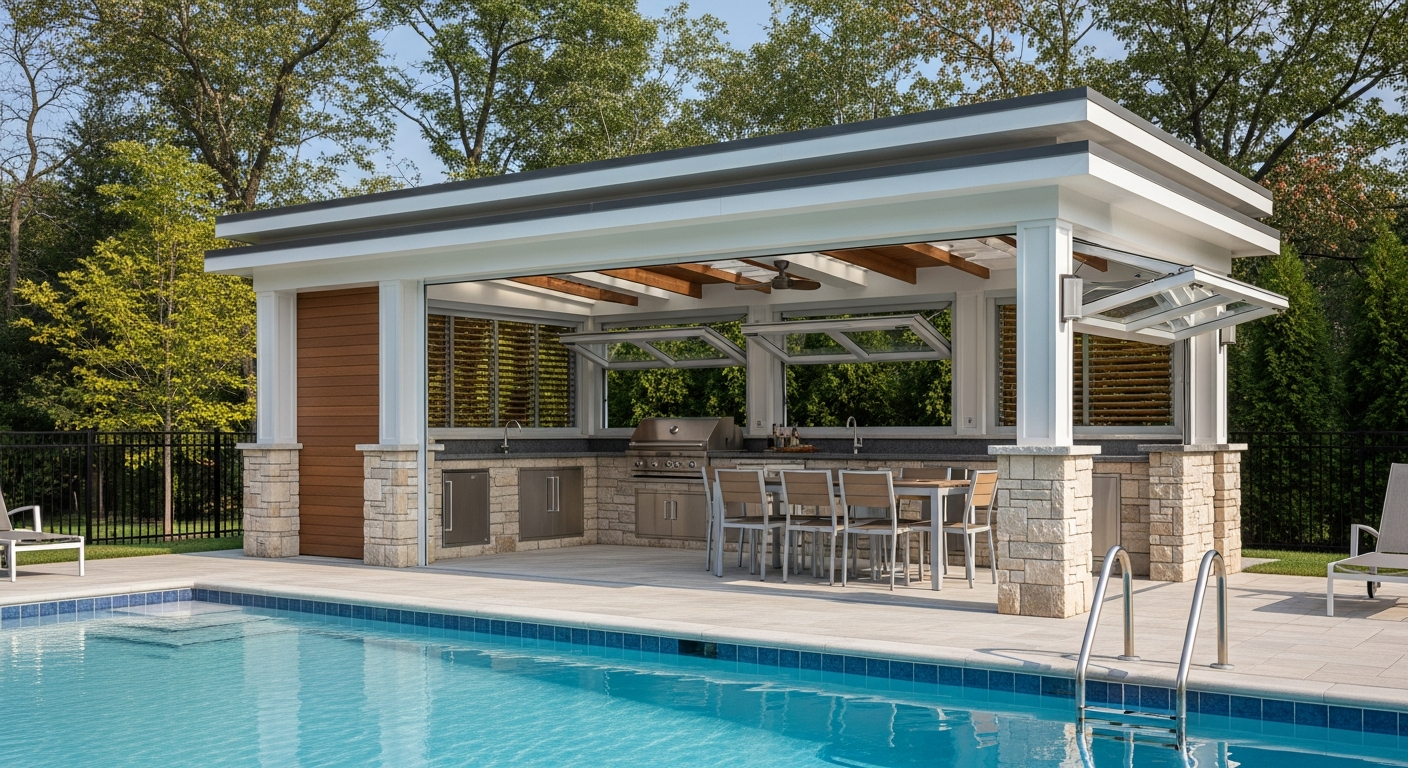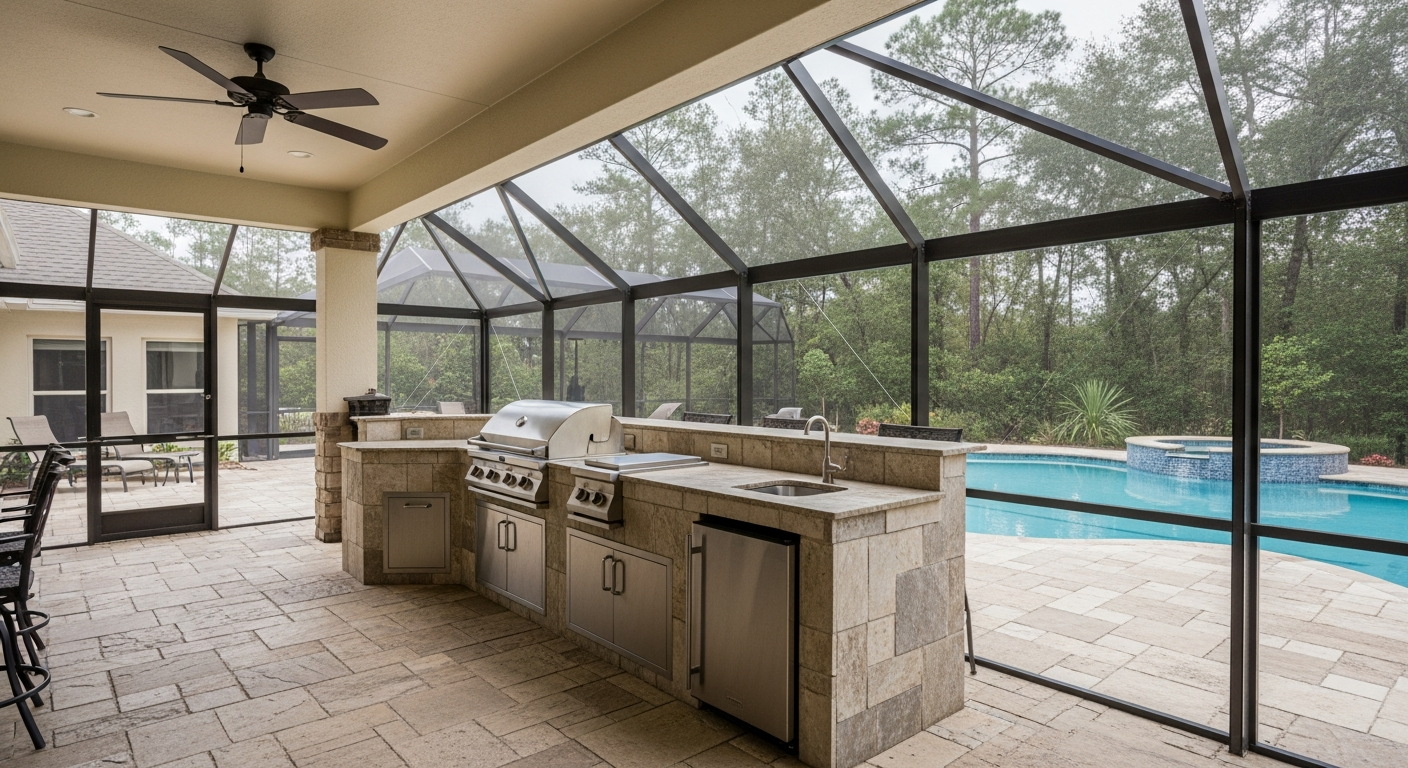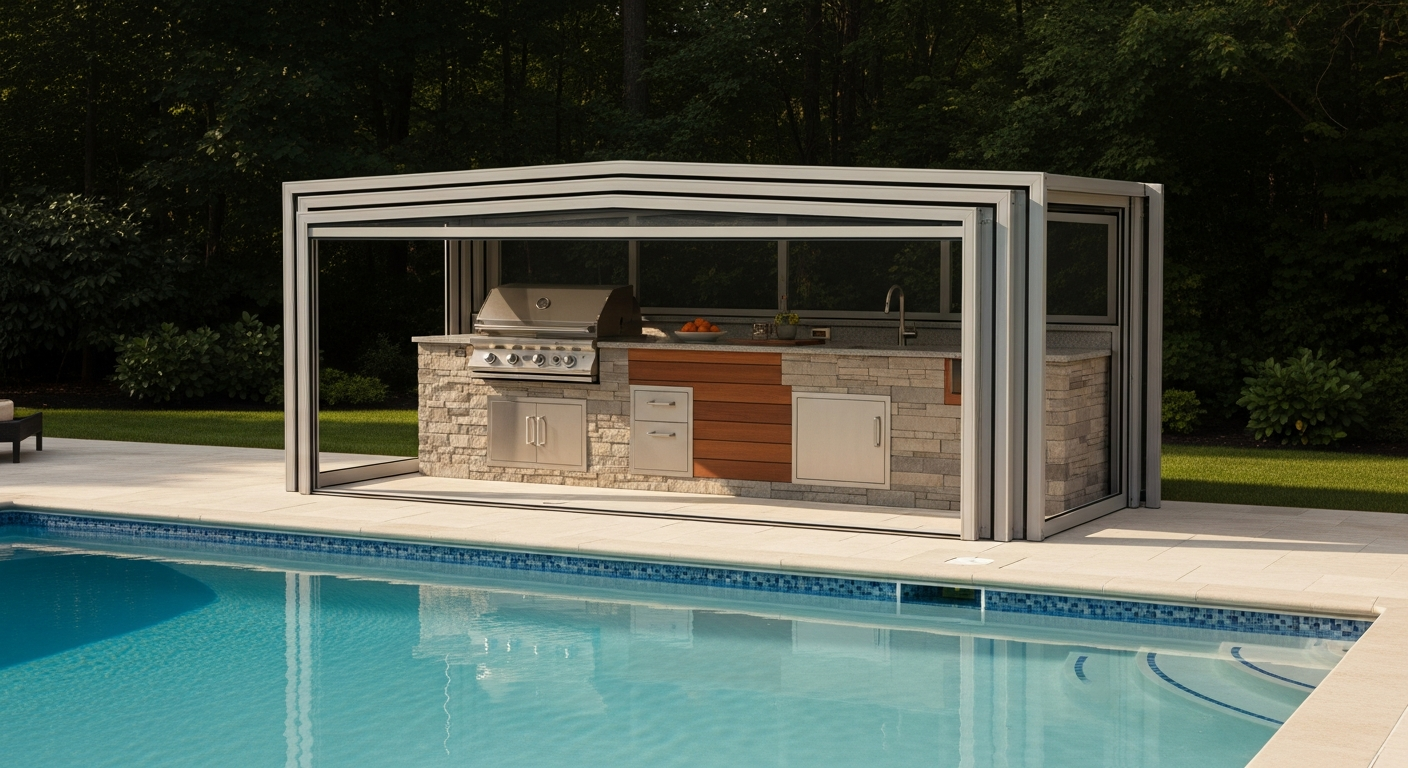
Enclosed Outdoor Kitchens in Lee County: My Framework for Hurricane-Proofing and Preventing Mold Bloom
As a specialist who has designed and remediated dozens of outdoor living spaces from Cape Coral to Sanibel Island, I can tell you that most enclosed outdoor kitchens fail within 7 years. The primary culprits are not the hurricanes themselves, but two silent destroyers: trapped humidity causing rampant mold growth behind cabinets, and galvanic corrosion from the salt-saturated air that literally eats away at standard "outdoor-rated" hardware. My entire methodology is built around creating a sealed, yet breathable, structure that actively combats these specific Lee County environmental pressures. The biggest mistake I see homeowners and even contractors make is treating an enclosed lanai kitchen like an interior room. They seal it tight, use standard drywall or wood framing, and install a basic vent hood. I once consulted on a gorgeous waterfront project in Fort Myers where this exact approach led to a $30,000 remediation just two years after installation because black mold had completely compromised the wall behind a high-end grill. My process starts with accepting that the structure will be exposed to extreme moisture and designing a system to manage it, not just block it.The Coastal Enclosure Durability Audit: My Diagnostic Protocol
Before a single material is chosen, I perform what I call the "Coastal Enclosure Durability Audit." This isn't a simple measurement; it's a multi-point analysis of the micro-environment. It’s a framework I developed after noticing a pattern of failures in canal-front homes in Cape Coral, which face different humidity patterns than beachfront properties on Captiva Island. The audit focuses on predicting failure points before they are built.Technical Deep Dive: Core Audit Components
My audit is based on three non-negotiable pillars. Getting any one of these wrong guarantees a premature failure.- Moisture & Salinity Mapping: I first assess the primary direction of prevailing winds and salt spray. This dictates the placement of weather stripping and the grade of all metallic components. For any property within a mile of the Gulf or a major waterway, I mandate 316L marine-grade stainless steel for all hardware, fasteners, and appliance exteriors. Standard 304 stainless steel, often marketed as sufficient, will show pitting and rust within 18 months in our salty air.
- Substrate & Framing Analysis: Wood framing and standard drywall are forbidden in my designs. They are sponges for humidity. The framing must be light-gauge galvanized steel or aluminum studs. The wall substrate behind the kitchen must be a cement board, like HardieBacker, which is impervious to mold and moisture. This single material choice increases the structural lifespan by an estimated 50%.
- Ventilation Pressure Dynamics: A powerful vent hood is only half the solution. An enclosed space needs a balanced system. I calculate the required Cubic Feet per Minute (CFM) for the hood based on the grill's total BTUs, then I engineer a passive, screened intake vent on the opposite wall. This creates a cross-breeze that prevents the pocket of hot, humid air that typically gets trapped above the grill, dramatically reducing the conditions for mold growth.
Implementation: The Zero-Failure Assembly Sequence
Once the audit is complete, the build-out follows a strict sequence I’ve refined over years of projects. Deviating from this order is how small mistakes become catastrophic failures. This is my exact checklist for ensuring long-term durability in the demanding Lee County climate.Phase 1: Framing, Substrate, and Utility Placement
- Frame the structure using only galvanized steel or aluminum studs, fastened with coated hardware.
- Install all electrical and gas lines, ensuring all outdoor-rated junction boxes are sealed with marine-grade silicone.
- Clad the entire kitchen wall area with 1/2-inch cement board, taping and sealing the seams as you would for a shower enclosure. This creates a monolithic, waterproof barrier.
Phase 2: Cabinetry, Countertops, and Appliance Integration
- Install cabinetry made from marine-grade polymers (like HDPE) or powder-coated stainless steel. I've seen expensive teak cabinets warp and rot in under three years here.
- Set countertops, ensuring a proper drip edge to guide water away from the cabinet faces. For our intense sun, I recommend sintered stone (like Dekton) over quartz, as it has zero porosity and is completely UV stable.
- Install the grill and other appliances, ensuring the ventilation hood has a minimum 3-inch clearance from any combustible materials and is vented directly outside, never into an attic or soffit space.
Final Adjustments and Quality Standards
The final phase is about precision. It's where a good job becomes an exceptional one. After the main installation, I personally inspect the sealant on every joint and connection point. I specify a high-performance, elastomeric sealant designed for continuous water exposure. The final quality check involves a "smoke test," where I use a theatrical smoke pencil to test the vent hood's draw and ensure the negative pressure is pulling air correctly through the cross-ventilation intake. This confirms the system is actively working to pull humid air out of the enclosure. Have you calculated the required air exchange rate for your enclosed space, or are you just hoping a powerful fan will solve the inevitable humidity problem?Written by

Tags
outdoor grill island
outdoor bbq island
outdoor kitchen cost
backyard kitchen
outdoor barbecue kitchen