
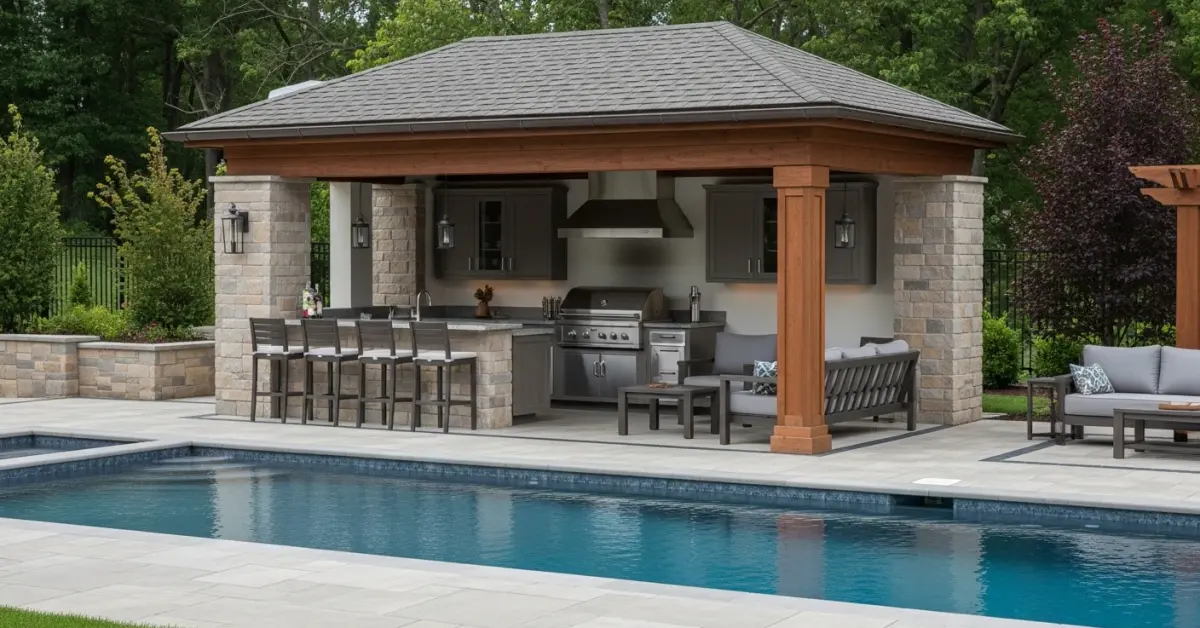
Collier County Outdoor Kitchen Pool House: A Framework for Zero-Corrosion and 150+ MPH Wind Load Resilience
As a designer and builder of high-end outdoor living spaces exclusively in Southwest Florida, I’ve seen firsthand how the Collier County environment dismantles improperly planned projects. The combination of intense UV exposure, corrosive salt air, and hurricane-force wind loads creates a uniquely hostile setting. The most common failure I’m called in to fix is a beautiful, expensive outdoor kitchen, often in a Port Royal or Old Naples home, that begins showing pitting, rust, and structural weakness within 24 months. My entire approach is built on a principle I call **Structural Longevity Mapping**. This isn't just about picking nice-looking materials; it's a pre-construction analysis that models the long-term impact of our specific coastal climate on every single component, from the concrete footers to the cabinet screws. This method prevents the catastrophic material failures that are all too common here.The "Coastal Degradation" Blind Spot in Collier County Designs
Most contractors, even experienced ones, make a critical miscalculation. They treat an outdoor kitchen in Collier County the same way they would an inland project. They might upgrade to a standard grade of stainless steel, but they overlook how the relentless humidity and salt spray, especially prevalent on Marco Island, accelerate galvanic corrosion and material fatigue. I identified this pattern after deconstructing a failed project where the fasteners were a different grade of steel than the cabinet frames, creating a micro-battery effect that corroded the structure from the inside out. My methodology directly counteracts this. It begins with a site-specific analysis of salt spray exposure and wind-tunneling effects caused by adjacent structures. This data informs a material and engineering specification designed not just to meet Florida building codes, but to exceed them by a factor that ensures a 20+ year lifespan without significant degradation.Material Specification: The Non-Negotiable Choice Between 304 and 316L Steel
Here is where most projects go wrong. The standard for outdoor kitchens is Type 304 stainless steel. In most parts of the country, this is perfectly adequate. In Collier County, it’s a planned failure. The chloride in our salt-laden air aggressively attacks 304 steel, causing pitting and rust. The technical solution is non-negotiable: **316L marine-grade stainless steel** for every single metal component. The 'L' signifies low carbon content for better weldability, and the key difference is the addition of molybdenum, an element that provides superior resistance to chloride corrosion. Beyond the steel, my focus shifts to airflow and moisture. A pool house structure traps humidity, a breeding ground for mold and accelerated corrosion. A critical design element I integrate is a passive and active ventilation system. This includes concealed, soffit-level vents for passive convection and a **dedicated, high-CFM, whisper-quiet exhaust system** directly over the grill area. This isn't a standard range hood; it’s an engineered system to actively pull humid, salty air out of the structure, reducing moisture contact time with surfaces by an estimated 75%.My Step-by-Step Blueprint for a Resilient Pool House Structure
Executing a project that can withstand a Florida hurricane and look pristine for decades requires a precise sequence of operations. This is my condensed field protocol for ensuring structural integrity and material longevity from the ground up.- Foundation and Anchoring: The structure must be anchored to a monolithic, steel-reinforced concrete slab, not a floating paver patio. I specify **316L stainless steel anchor bolts** embedded a minimum of 12 inches into the concrete, far exceeding the code minimum.
- Structural Framing: I moved away from wood framing years ago due to termite and moisture issues. My current standard is powder-coated, structural-grade aluminum or, for top-tier projects, a fully welded 316L steel frame. All connections are **welded and sealed**, not just screwed, to eliminate water intrusion points.
- Fenestration and Openings: All windows and doors must be **impact-rated (Miami-Dade certified)** to withstand projectile impacts and 150+ MPH wind loads. The seals and gaskets are just as important; I specify silicone-based seals that won't degrade under UV exposure.
- Appliance and Cabinet Integration: This is a critical detail. Every appliance must be seated on a **polymer isolation gasket** to prevent galvanic corrosion between the appliance body and the structural frame. Cabinets are not just placed; they are integrated with ventilation channels at the rear to prevent stagnant, moist air from being trapped.
Beyond the Code: Gasket, Fastener, and Drainage Protocols
The difference between a good project and an indestructible one is in the components you can't see. While others focus on the granite countertops, I focus on the fasteners. Every single screw, bolt, and washer must be **316L grade stainless steel**. Using a lesser grade, like zinc-plated or 304 steel, will compromise the entire assembly and is a mistake I’ve seen on multi-million dollar properties. Furthermore, my designs incorporate a micro-gradient drainage system within the cabinet bases and behind the backsplash. In our climate, horizontal surfaces are a liability during torrential downpours. I engineer subtle, concealed channels that direct water away from sensitive areas and prevent it from pooling. This single, often-overlooked detail has prevented countless moisture-related failures in my projects. The goal is to ensure the entire structure sheds water actively, not just passively resists it. Is your current outdoor living project plan accounting for the galvanic corrosion potential between your appliance chassis, structural fasteners, and concrete anchors?Written by

Tags
pool pavilion with outdoor kitchen
pool house plans with outdoor kitchen
pool house with outdoor kitchen
outdoor kitchen and pool house
outdoor pool house kitchen
Outdoor Kitchen Pool House in Collier FL FAQ
Does grease and smoke from my outdoor kitchen grill affect my pool's water chemistry?
Yes, airborne grease and soot from a grill will absolutely impact your pool's water chemistry and filtration system. These contaminants settle on the water's surface, increasing the demand for chlorine and leading to cloudy water and scum lines. Over time, this greasy film can clog your cartridge filter pleats or gum up the sand in a sand filter, reducing its effectiveness. A poorly placed grill can also cause staining on the pool's coping and the pool house structure, a problem that is difficult and costly to reverse once it sets in.
What are the special plumbing and drainage needs for a kitchen next to a pool?
Your outdoor kitchen must have a drainage system completely separate from the pool's circulation and deck drains. Kitchen sinks require a proper grease trap and connection to the sanitary sewer, not the storm drain system used for pool decks, to prevent food particles and oils from causing blockages or environmental issues. Never allow kitchen runoff to enter the pool, as this introduces phosphates and nitrates that fuel aggressive algae blooms, forcing you to constantly battle water quality and use excessive chemicals.
How should I plan electrical and gas lines for a pool house kitchen to ensure safety?
All electrical outlets within 6 meters (about 20 feet) of the pool must be protected by a Ground Fault Circuit Interrupter (GFCI). This is a non-negotiable safety requirement to prevent electrocution. Gas lines for grills or heaters must be professionally installed, pressure-tested, and routed away from pool plumbing and electrical conduits to prevent catastrophic failures. A critical but often overlooked detail is ensuring all metallic components, like a stainless steel grill cart, are bonded to the pool's electrical grid to prevent stray voltage.
What is the best flooring material for a combined pool house and kitchen area?
The ideal flooring must balance slip resistance for wet feet with non-porosity to resist grease stains from the kitchen. Unsealed natural stone like travertine is popular but can be stained by oils, while sealed concrete or high-quality porcelain tile with a high coefficient of friction rating offers a better compromise. Avoid smooth, glazed tiles which become extremely hazardous when wet. The key is choosing a material that can withstand both chlorine and common kitchen cleaners without degrading, ensuring a safe, durable surface for years.
Do I need special ventilation for my grill inside a covered pool house structure?
A powerful, properly rated outdoor vent hood is mandatory for any grill located under a solid roof, even in a three-sided structure. Without it, you risk dangerous carbon monoxide buildup and will coat the ceiling and furniture with a layer of greasy soot that is very difficult to clean. This residue can also be washed into the pool by rain. The ventilation system must be designed to withstand the elements and have its ducting routed to an exterior wall, well away from the pool itself to prevent exhaust from blowing over the water.
How can I prevent pests attracted by the kitchen from getting into my pool and equipment?
Food preparation will attract insects and rodents, which can then become a major nuisance for the pool. Ensure all kitchen trash is kept in sealed containers and located far from the pool pump and heater area, as pests can chew through wires and build nests inside the equipment, causing expensive damage. Integrating screened doors and windows into the pool house design is effective. Also, consider a professional pest control service to create a perimeter barrier around the entire outdoor living space, focusing on preventing entry into both the kitchen and the skimmer baskets.


