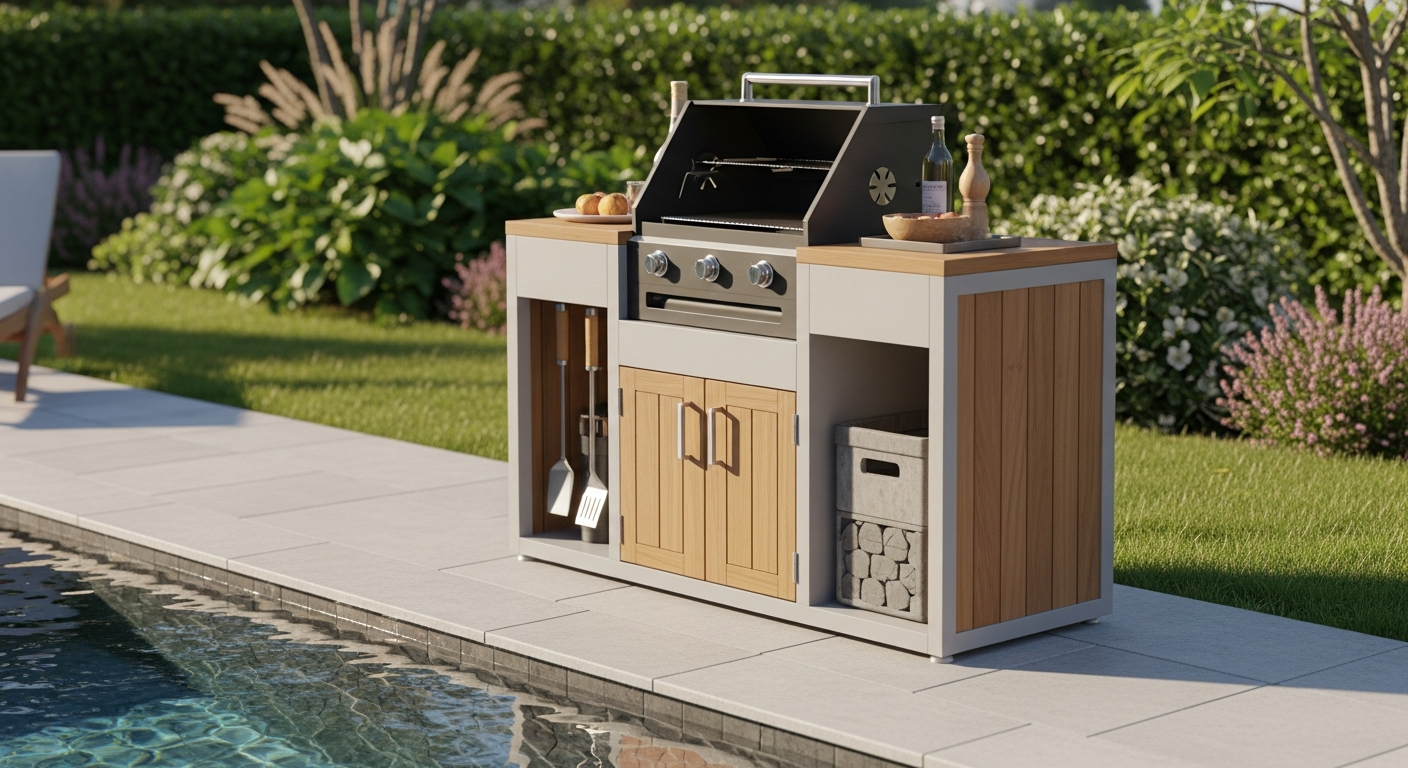
Outdoor Kitchen Storage Cabinet Osceola County: My Protocol for 30-Year Weatherproof Integrity
Choosing an outdoor kitchen storage cabinet in Osceola County isn't about picking a style; it's a technical decision against relentless humidity, intense UV exposure, and torrential rain. I've been called to far too many homes in communities like Celebration and Reunion to replace warped, rusted, or delaminated cabinets that failed in under five years. The primary mistake is selecting materials based on their "outdoor-rated" label, which often doesn't account for Florida's specific subtropical challenges. My approach focuses on material science and installation mechanics to achieve a minimum 30-year operational lifespan without structural failure. The core of my methodology is a direct countermeasure to the two biggest failure points I see in Kissimmee and St. Cloud projects: moisture ingress at the seams and hardware corrosion. A cabinet can be made of the best polymer, but if it's assembled with standard 304-grade steel screws and lacks proper sealing, it's doomed. I engineered my protocol to address the entire system—from the base it sits on to the air that circulates within it—to create a truly resilient structure.The Climate-Specific Material Matrix: A Diagnostic Framework
I stopped using generic "good, better, best" comparisons years ago. They are misleading for the Osceola climate. Instead, I developed what I call the "Climate-Specific Material Matrix" to diagnose the right solution for a property. It's not just about choosing stainless steel or a polymer; it's about specifying the exact grade and composition to counter our local environment, which can be surprisingly corrosive, even miles from the coast, due to high ambient humidity and airborne particulates.Technical Deep Dive: Material Grades and Composition
My matrix prioritizes two key performance indicators: Corrosion Resistance Factor (CRF) and UV Degradation Index (UVDI). For Osceola County, I never specify a material with a CRF below 9 or a UVDI above 2 (on a 1-10 scale where lower is better). For metal components, I exclusively use 316L stainless steel. Many contractors opt for the cheaper 304 grade, but the addition of molybdenum in 316 grade offers vastly superior protection against the pitting and corrosion caused by our humid, acidic rain. The "L" designation indicates low carbon content, which further enhances weldability and reduces carbide precipitation, a common cause of rust at weld points. This is a non-negotiable detail for properties near Lake Tohopekaliga, where the air moisture is constant. For the cabinet body, I've found that not all HDPE (High-Density Polyethylene) is created equal. I specify marine-grade, UV-stabilized polymer sheets, like King StarBoard®. Unlike standard HDPE, which can yellow and become brittle over a decade of Florida sun, these marine-grade polymers have UV inhibitors integrated throughout the material, not just as a surface coat. This prevents the color fade and structural weakening I've seen in so many lanais in the newer developments.My 4-Stage Installation Protocol for Zero-Failure Cabinets
A perfect material can fail if the implementation is flawed. My installation process is rigid and designed to eliminate common failure points from the ground up.- Stage 1: The Foundation & Air Gap: I mandate a perfectly level, non-porous concrete or paver base. More importantly, I install the cabinets on polymer risers to create a 1/2-inch air gap underneath. This simple step is my "pulo do gato" for preventing moisture wicking from the ground and allowing airflow, which drastically reduces the chances of mold or mildew growth inside the cabinet base.
- Stage 2: Gasket System Integration: Every door and drawer opening is fitted with a closed-cell EPDM rubber gasket. This is the same material used for automotive weather stripping. It creates a nearly airtight seal when closed, protecting the interior from driving rain during our summer storms and keeping pests out—a frequent complaint I hear from homeowners in more rural parts of the county.
- Stage 3: Fastener Assembly: I never use screws that tap directly into the polymer. This creates a weak point that can strip over time with thermal expansion and contraction. Instead, I use a system of 316L stainless steel threaded inserts and machine bolts. This provides superior clamping force and allows for components to be removed for service without damaging the cabinet structure.
- Stage 4: Controlled Ventilation: A completely sealed box can trap moisture. I integrate discreet, screened ventilation ports into the cabinet design, typically in the toe-kick area and the upper rear panel. This creates a passive convection current that cycles the air, keeping the interior dry without allowing insects or debris inside.
Precision Tuning and Quality Assurance Standards
Once the cabinets are assembled, the final adjustments are critical. I use a digital caliper to ensure a consistent 3mm gap around all doors and drawers for a flawless aesthetic and to prevent binding during humid months when materials can slightly expand. Before handover, I conduct a "monsoon simulation"—a 10-minute, high-pressure water test directed at all seams and openings. If a single drop of water is found inside, the sealing process is re-evaluated. This rigorous standard is why I can confidently guarantee the weatherproof integrity of my installations. Given that your outdoor kitchen cabinet must withstand direct sunlight, high humidity, and potential contact with chlorinated pool water, have you accounted for the specific galvanic corrosion potential between your chosen hardware and any adjacent aluminum structures like a lanai frame?Written by

Tags
barbecue storage cabinet
outdoor kitchen cabinet storage
outdoor kitchen storage drawers
outdoor kitchen modular cabinets
outdoor pantry storage