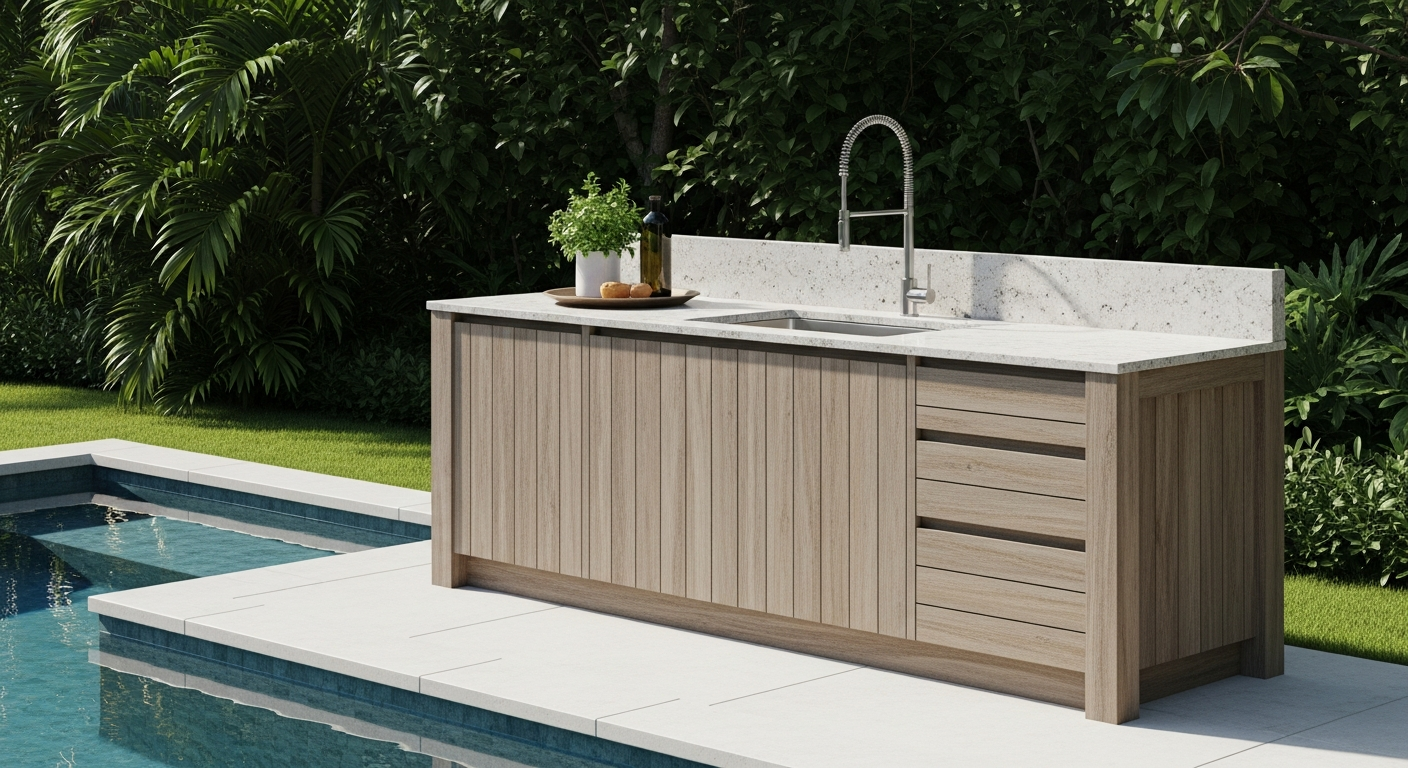
Outdoor Kitchen with Fridge and Sink: My Protocol for a 30-Year Lifespan in Collier County's Saline Air
I've seen it dozens of times across Naples and Marco Island: a beautiful outdoor kitchen, barely five years old, already showing signs of critical failure. The culprit is almost never a single catastrophic event, but a series of small, incorrect assumptions about our unique Collier County environment. The most common mistake I encounter is treating an outdoor kitchen as a simple extension of an indoor one, especially concerning the integration of a fridge and sink. This approach ignores the relentless humidity, salt spray, and intense UV exposure that define our climate. My entire methodology is built around one core principle: creating a completely sealed and resilient utility core. This means the enclosures and connections for your refrigerator and sink must be more robust than the appliances themselves. An outdoor-rated fridge is useless if its power connection corrodes or if moisture wicks into the surrounding cabinetry, causing rot and attracting pests—a frequent issue in lanais from Pelican Bay to Golden Gate Estates.My Saline Environment Assessment Protocol: Beyond the Basics
Before I even consider materials, my first step is a site-specific analysis. An outdoor kitchen on a waterfront property in Port Royal faces a vastly different level of saline aerosolization than one in an inland golf community. I don't just use a generic "outdoor-rated" checklist; I developed what I call the Saline Environment Assessment Protocol. It involves measuring the proximity to saltwater bodies and evaluating the prevailing wind patterns to determine the specific grade of materials required. This dictates everything from the type of stainless steel to the sealant chemistry. A failure to perform this hyper-local diagnosis is the number one reason I see premature rust and electrical faults.Material Selection Matrix: 316L Stainless vs. Marine-Grade Polymers
After years of projects, I can tell you that not all "stainless steel" is created equal, especially here. Many contractors will use 304-grade stainless, which is fine for many parts of the country. In Collier County, it's a costly error. The chloride in our salt-laden air aggressively attacks 304 steel, causing pitting and rust stains within 24-36 months. My non-negotiable standard for all metallic components, from screws and hinges to the sink basin and fridge door, is 316L marine-grade stainless steel. The "L" signifies low carbon content, and the added molybdenum provides superior resistance to chloride corrosion. For cabinetry, my go-to solution is often a marine-grade polymer like high-density polyethylene (HDPE). Unlike wood or even PVC composites, it is a solid, non-porous material that offers:- Zero water absorption, preventing swelling or delamination.
- Inherent UV stability, meaning the color won't fade or yellow under the Florida sun.
- Complete resistance to rot, fungus, and insects.
The Tri-Seal Method for Utility Penetrations
The weakest points in any outdoor kitchen with a fridge and sink are the penetrations for plumbing and electrical lines. This is where water and pests will get in. I fixed a major failure on a large project in Aqualane Shores where the original builder simply drilled a hole and filled it with basic silicone. My proprietary Tri-Seal Method ensures this never happens.- Isolate and Sleeve: I drill an oversized opening for any utility line. A flexible, waterproof conduit is then passed through, creating a sleeve. This isolates the utility line from direct contact with the masonry or frame.
- Primary Interior Seal: The gap between the sleeve and the structure is filled from the inside with a high-performance marine-grade polyurethane sealant. This creates an expanding, flexible, and completely waterproof barrier.
- Secondary Exterior Gasket: On the exterior, a weatherproof electrical or plumbing gasket is installed over the sleeve. This acts as the first line of defense, deflecting the vast majority of wind-driven rain and preventing UV degradation of the inner sealant. The entire installation must be on a dedicated GFCI outlet for safety.
Appliance Condensation and Drainage: The Overlooked Failure Point
An outdoor-rated refrigerator in our 90% humidity climate works incredibly hard. This process generates a significant amount of condensation. Simply letting it drip onto your travertine patio is a recipe for stains and mold. More importantly, improper ventilation traps this humid air, forcing the compressor to overwork and leading to a 50% reduction in the appliance's lifespan. My standard for quality control is precise and absolute. I mandate a minimum 1.5-inch air gap around the sides and back of the refrigerator and a dedicated ventilation channel at the top. The condensation drain pan line is never left to evaporate. It is hard-plumbed with a proper P-trap and integrated directly into the sink's main drainage line, ensuring all moisture is channeled away from the kitchen structure permanently. This single step prevents moisture buildup, protects the cabinetry, and dramatically increases the longevity of the appliance. Have you calculated the vapor pressure differential for your appliance enclosure to prevent premature compressor failure in August's humidity?Written by

Tags
outdoor island with sink
outdoor kitchen with fridge and sink
bbq island with sink
outdoor grill and sink combo
custom outdoor kitchens near me