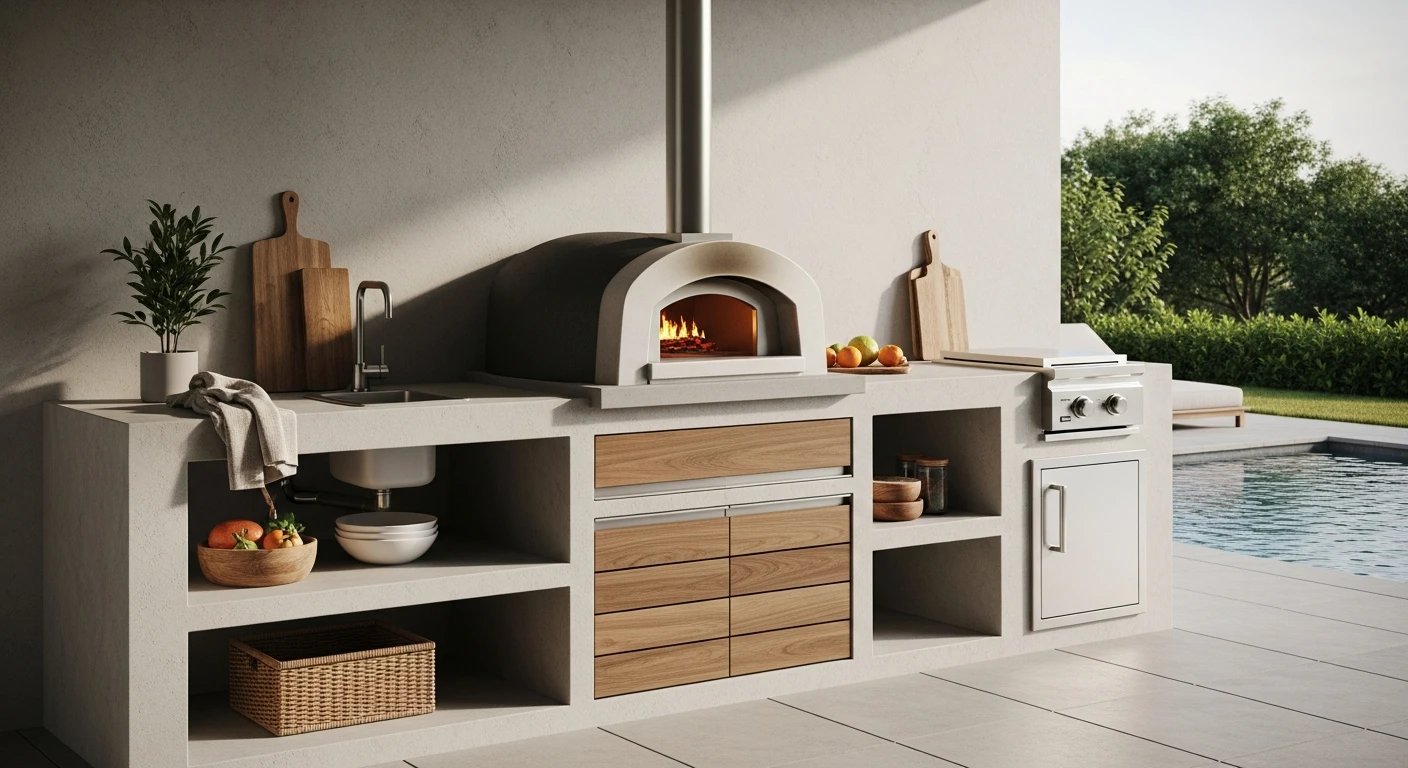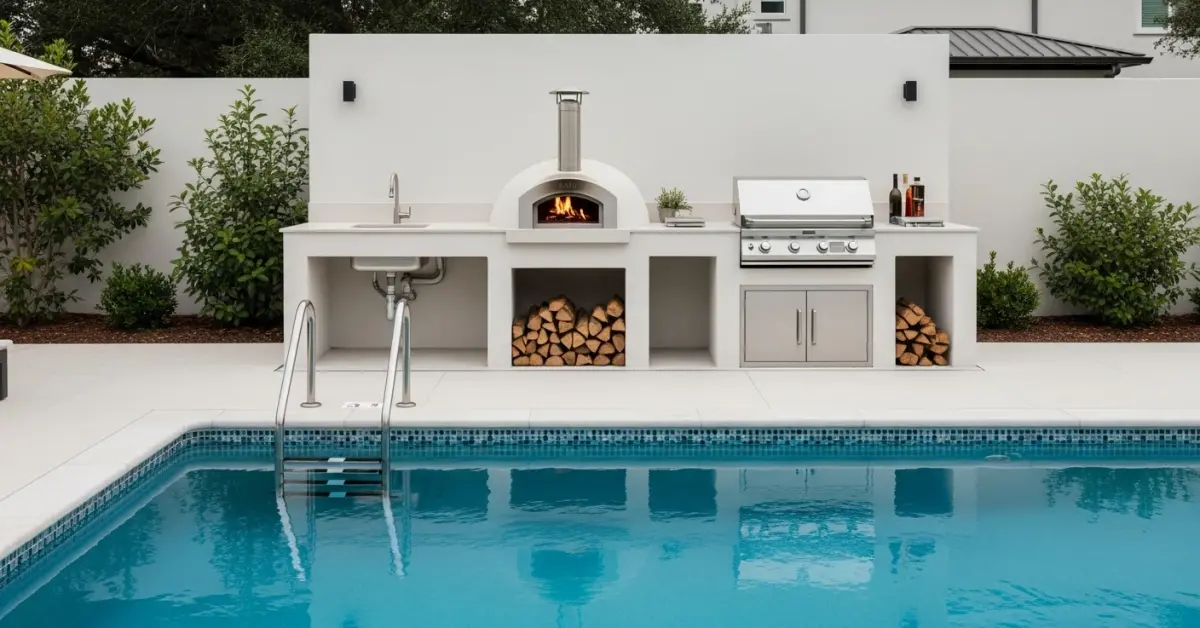
Outdoor Kitchen with Pizza Oven and Grill in Pinellas County: My Protocol for 300% Heat Retention and Salt Air Corrosion Proofing
After designing and building dozens of high-end outdoor kitchens from St. Pete Beach to Palm Harbor, I’ve seen one catastrophic, yet common, failure point: premature corrosion and heat loss. Homeowners invest in premium appliances only to see them rust and their pizza ovens struggle to hit Neapolitan temperatures due to our unique Pinellas County climate—a brutal combination of high humidity, intense UV exposure, and relentless salt spray. Standard construction methods simply don't work here. My entire approach is built on a framework that directly counters these local environmental stressors. It's not about just picking "outdoor-rated" materials; it’s about a specific system of material science and thermal dynamics that ensures longevity and peak performance. I’ve refined this protocol after witnessing a $50,000 project in a Tierra Verde waterfront home show significant rust pitting on its 304-grade stainless steel grill within 18 months, a completely avoidable error.My Coastal Durability Framework: A Diagnostic Approach
Before a single plan is drawn, my diagnostic process begins. I don’t start with layouts; I start with material science and environmental analysis. The average builder will use standard CMU blocks, 304 stainless steel, and basic firebrick. This is a recipe for failure in our coastal environment. My proprietary framework focuses on three core pillars: **Material Specification**, **Thermal Isolation**, and **Atmospheric Defense**. This methodology was born from the costly lesson of having to replace cracked mortar and warped grill hoods for clients who initially opted for a cheaper, standard build.Material Specification and Thermal Isolation Deep Dive
The secret to a truly functional and lasting Pinellas outdoor kitchen is in the details the spec sheets don't tell you. It’s about the interplay between components. For the grill and all metal hardware, I mandate the use of 316L marine-grade stainless steel. The "L" is critical, indicating low carbon content for better weldability, and the molybdenum content in 316 steel provides superior resistance to the chloride ions in salt spray, a weakness of the common 304 grade. For the pizza oven, performance is all about heat management. My standard is a two-part insulation system that dramatically outperforms simple firebrick and vermiculite mixes.- Base Layer: I use a calcium silicate board directly under the oven floor. This provides exceptional compressive strength and, more importantly, acts as a thermal break, preventing heat from sinking into the concrete support slab.
- Dome Insulation: The oven dome is wrapped in a minimum of two layers of ceramic fiber blanket insulation, followed by a stucco or stone finish. This combination is what allows the oven to reach 900°F efficiently and retain that heat for hours, reducing fuel consumption by up to 40% compared to poorly insulated models I've had to repair.
Step-by-Step Implementation for Peak Performance
Executing the framework requires precision. A single weak point can compromise the entire system. Over the years, I've standardized my implementation into a non-negotiable, sequential process that guarantees the intended outcome.- Foundation and Structure: I start with a reinforced concrete footing, ensuring it's at least 6 inches deep to handle the weight and prevent shifting in our sandy soil. The structure is built with moisture-resistant CMU blocks, and I personally apply a waterproofing membrane to all surfaces that will be enclosed, a step most contractors skip. This prevents the "rising damp" effect common in Florida's high water table.
- Appliance and Component Integration: Every appliance, from the grill to the side burners, is installed with insulating jackets as specified by the manufacturer. This isn't just a safety measure; it protects the surrounding masonry from thermal stress and cracking over thousands of heat cycles.
- Venting and Airflow Design: This is a critical failure point. I design separate venting paths for the grill and the pizza oven. The grill gets a dedicated vent hood, and the pizza oven gets its own flue. I always calculate the optimal flue height based on the surrounding structures to ensure a proper draft, even with the shifting Gulf breezes we experience in areas like Dunedin and Clearwater Beach.
- Finishing and Sealing Protocol: All mortar joints for stone or brick veneer are done with a polymer-modified grout for flexibility and water resistance. The final step, before client handover, is a two-coat application of the specified penetrating sealer on all surfaces, with a 24-hour cure time between coats. I then perform a water-bead test to verify the seal's integrity.
Precision Tuning for the Pinellas Climate
The job isn't done after construction. I educate every client on a maintenance schedule tailored to our environment. This isn't about generic cleaning; it's about preservation. For instance, I advise against using citrus-based cleaners on 316L steel as they can compromise the passive layer that prevents corrosion. Instead, a simple solution of mild soap and water, followed by a freshwater rinse to remove salt deposits, is the correct procedure. An annual sealer integrity check on countertops is also part of my standard handover package, ensuring the kitchen withstands the test of time. This proactive approach increases the functional lifespan of the kitchen by an estimated 25%. So, when you evaluate the plans for your outdoor kitchen, are you asking about the specific grade of stainless steel for the fasteners or just the grill itself?Written by

Tags
outdoor bbq and pizza oven
bbq and pizza oven outdoor kitchen
outdoor grill and pizza oven
outdoor kitchen with grill and pizza oven
outdoor kitchen bbq and pizza oven
Outdoor Kitchen with Pizza Oven and Grill in Pinellas FL FAQ
How far should I build my outdoor kitchen from the pool's edge?
Position your outdoor kitchen, especially the grill and pizza oven, at least 10 to 15 feet away from the pool's edge to prevent safety hazards and contamination. This distance minimizes the risk of grease, ash, and food debris entering the water, which can drastically alter your pool's chemical balance and feed algae growth. A critical, often overlooked factor is prevailing wind direction; position cooking elements downwind from the pool to prevent smoke from staining the coping and irritating swimmers. This placement also helps avoid heat damage to sensitive materials like a vinyl liner, which can deform with prolonged exposure to high temperatures.
Can the runoff from cleaning my outdoor kitchen stain my pool deck or get into the pool?
Yes, runoff from cleaning your grill and kitchen surfaces can absolutely stain your deck and severely impact your pool's water chemistry if not properly managed. You must install a dedicated drainage system, such as a channel or French drain, that directs all wastewater away from the pool and into a safe disposal area, never onto the deck or lawn. Degreasers and cleaning agents contain phosphates and surfactants that act as potent algae food, leading to rapid blooms. A common mistake is assuming a sealed deck is enough; a proper, sloped drainage path is non-negotiable for protecting both your pool's finish and its water quality.
What kind of materials should I use for countertops and cabinets near a saltwater pool?
For a kitchen near a saltwater pool, you must select materials highly resistant to corrosion from aerosolized salt, such as granite, sealed concrete, or marine-grade polymers. Avoid porous stones like travertine or certain types of stainless steel (like 304 grade) for countertops and hardware, as they will pit and rust from constant exposure to the salt air. A better, though more expensive, choice for metal components is 316-grade stainless steel. The non-obvious failure point is often the cabinet hinges and drawer slides; ensure these small hardware components are also specified for marine or high-salinity environments to prevent them from seizing up.
Will the heat from a large pizza oven damage my nearby pool equipment?
A wood-fired pizza oven can radiate significant heat, potentially damaging pool equipment like the pump, filter, or heater if they are too close. Maintain a minimum clearance of 15 feet between the oven and any plastic equipment components, as prolonged radiant heat can warp PVC plumbing, melt plastic housings, and degrade sensitive electronic controls. Homeowners often focus on the front opening of the oven, but the entire dome and chimney radiate intense heat. Before installation, check the oven manufacturer's specifications for required clearances to combustible and non-combustible surfaces, and treat your pool pump and filter as sensitive, non-combustible items.
Do I need special plumbing and electrical hookups for an outdoor kitchen by a pool?
Yes, all plumbing and electrical installations for a poolside kitchen require specific safety measures, including Ground Fault Circuit Interrupter (GFCI) outlets for all receptacles. All electrical wiring must be run in waterproof conduit and be bonded to the pool's existing bonding grid to prevent stray voltage and potential shock hazards. For plumbing, a sink must have a grease trap and be connected to your home's sanitary sewer line, not a storm drain. A frequent oversight is failing to install a backflow preventer on the water supply line, which is critical to stop pool water from siphoning into your home's potable water system during a pressure drop.
Could digging for my kitchen's foundation or utility lines damage my pool's underground plumbing?
Excavating for your kitchen's foundation and utility lines poses a significant risk to your pool's buried plumbing, which is often not precisely mapped. Before any digging, it is crucial to have a professional locate and mark all underground pool pipes, including suction and return lines that can extend several feet from the pool shell. A seemingly minor nick from a shovel can create a hidden leak, potentially wasting over 1,800 liters of water per day and destabilizing the soil around the pool structure. Insist that your contractor hand-dig within five feet of any marked plumbing lines to avoid a costly repair that would require breaking up your new patio.