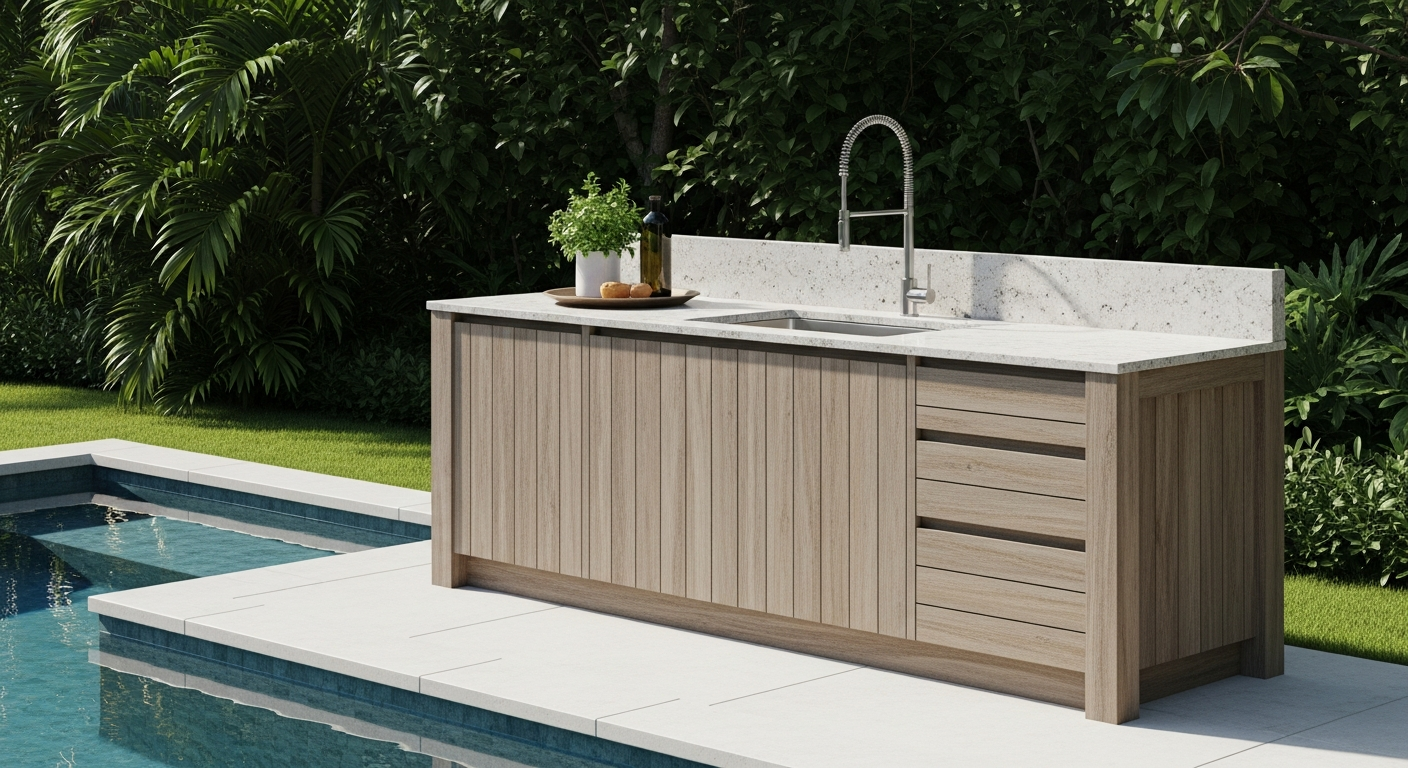
Outdoor Kitchen with Sink and Fridge in Pinellas County: My Anti-Corrosion Framework to Double Appliance Lifespan
After years of designing and building outdoor kitchens across Pinellas County, from the waterfront homes in St. Pete to the sprawling backyards in Palm Harbor, I’ve seen one mistake cost homeowners thousands: underestimating the devastating effect of our salt-laden, humid air. A standard, high-quality outdoor fridge and sink combo that would last a decade elsewhere can show signs of critical failure here in less than three years. The issue isn't the appliance quality; it's the installation and material specification protocol. My entire approach is built around mitigating this specific environmental stress. I developed a framework that focuses on material science and micro-environmental factors unique to our coastal setting. It’s not just about choosing stainless steel; it's about understanding which grade of steel, what type of enclosure, and which specific sealing techniques are required to combat the constant assault of salinity and moisture, ultimately preventing premature rust, electrical faults, and component failure.The Salinity Stress Test: My Pre-Installation Audit for Coastal Pinellas Homes
Before any materials are ordered, I perform what I call the **Salinity Stress Test**. This isn't a standardized industry procedure; it's a methodology I created after witnessing a top-of-the-line stainless steel fridge corrode on a Treasure Island property in just 18 months. The client was furious, but the root cause was a combination of direct salt spray exposure from the intercoastal and poor ventilation trapping corrosive moisture. My audit now analyzes three critical, localized factors. First, I map the **prevailing wind and moisture pathways** on the property. In areas like Clearwater Beach, the salt spray can travel much further inland than people assume. Second, I assess the **UV exposure index** for the proposed kitchen location, as intense sun degrades protective coatings and plastic components at an accelerated rate. Finally, I evaluate the **foundation and drainage plan**, because standing water, even for a short period after a classic Pinellas downpour, creates a hyper-corrosive microclimate beneath the appliances.Material Selection Beyond 304 Stainless: Why I Mandate Marine-Grade Alloys and Polymers
The results of my audit directly dictate material selection. The term "outdoor-rated" is dangerously vague in our market. My specifications are far more granular. I've found that even 304-grade stainless steel, a common industry standard, is insufficient for properties within a mile of the coast. Its nickel and chromium content can’t withstand the chloride-rich environment. My baseline requirement is 316L marine-grade stainless steel for sinks, faucets, and any visible hardware. The "L" signifies low carbon content, which improves weldability and further reduces corrosion risk. For cabinetry and fridge enclosures, I've moved almost exclusively to powder-coated aluminum or, in extremely high-exposure areas, structural marine-grade polymers like StarBoard®. These materials are inert to saltwater and won't create the **galvanic corrosion** I often see when dissimilar metals are fastened together without proper insulation—a rookie mistake that dooms an installation from day one.My 5-Step Waterproofing and Electrical Safeguarding Process
Execution is everything. The most advanced materials will fail if the installation isn't sealed against the elements. My process is a non-negotiable sequence of five critical actions that I personally oversee.- Concrete Pad Sloping and Sealing: I mandate a minimum 1/4-inch per foot slope away from the structure and apply a penetrating silicate concrete sealer. This prevents water from wicking up into the cabinetry.
- Marine-Grade Electrical Shielding: All electrical runs are housed in sealed PVC conduit with vapor-proof junction boxes. I exclusively use weather-resistant GFCI outlets with in-use "bubble" covers to protect connections from driving rain.
- Appliance Gasket Reinforcement: Before sliding a fridge or ice maker into its enclosure, I apply a bead of marine-grade silicone sealant to the rear and sides of the unit's housing. This creates a secondary barrier against moisture intrusion into the compressor and electronics bay.
- Isolated Plumbing Runs: I use PEX-A tubing for all water lines. It’s flexible and completely impervious to salt corrosion, unlike copper which can degrade over time. All plumbing penetrations through cabinetry are sealed with waterproof grommets.
- Strategic Ventilation Baffling: To prevent moisture buildup without allowing direct salt spray entry, I design and install louvered vents with interior baffles. This ensures critical airflow for refrigeration components while deflecting corrosive air.
Calibrating for Peak Performance in the Florida Heat
The final phase is about precision tuning for our unique climate. An outdoor refrigerator in Dunedin faces a much higher ambient heat load than one in a milder climate. I always calibrate the thermostat to account for this, often setting it slightly lower to ensure food-safe temperatures during the peak heat of a July afternoon. This prevents the compressor from running constantly, a common cause of premature failure. For the sink, my focus is on the P-trap and drainage line. I ensure the drain has a steep enough pitch to clear food particles quickly, discouraging pests. I also specify a deeper P-trap than standard, which is less likely to dry out in the heat and allow sewer gases (and palmetto bugs) to escape. It's a small detail that makes a huge difference in the usability and enjoyment of the kitchen. Given that many Pinellas County homes are in potential flood zones, have you truly considered how hydrostatic pressure during a storm surge could impact your outdoor kitchen's underground plumbing and electrical conduits?Written by

Tags
outdoor kitchen remodel
outdoor kitchen renovation
grill island with sink
outdoor grill island with sink
outdoor kitchen cart with sink