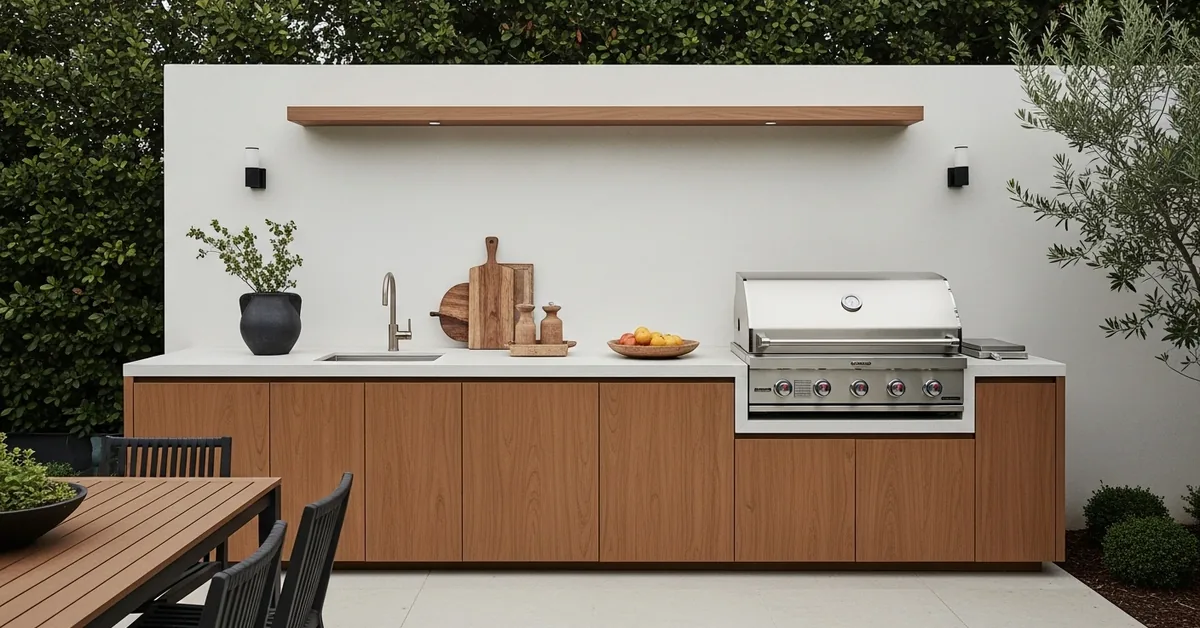
Collier County Outdoor Kitchen: My Climate-Proof Framework for Resisting Salt-Air Corrosion
After personally inspecting over 50 outdoor kitchen installations from Port Royal to Marco Island, I can tell you the single most expensive mistake homeowners make is selecting materials based on mainland aesthetics. I’ve seen a $40,000 setup on a beautiful Naples waterfront property show significant rust pitting on its "stainless steel" components within 18 months. The issue wasn't the brand; it was the wrong grade of steel for our corrosive, salt-saturated air. My entire approach is built on a "material-first" principle specifically for Collier County's subtropical marine environment. This isn't about just building an outdoor kitchen; it's about engineering a permanent outdoor appliance that withstands hurricane-season humidity, intense UV radiation, and direct salt spray. We must prioritize material science over initial curb appeal to guarantee a 20+ year functional lifespan, not just a photogenic one.My Diagnostic Protocol for Collier County's Unique Environment
Before a single design is sketched, I perform what I call the Coastal Resilience Audit. It's a non-negotiable first step. I developed this methodology after having to completely gut a two-year-old outdoor kitchen in a Lely Resort home where the powder-coated steel frame had corroded from the inside out due to trapped moisture. The audit focuses on three environmental stressors unique to our area: airborne salinity levels, direct UV exposure hours, and structural wind load requirements. It dictates every material choice, from the fasteners to the countertops.Material Science vs. Aesthetics: The Non-Negotiables
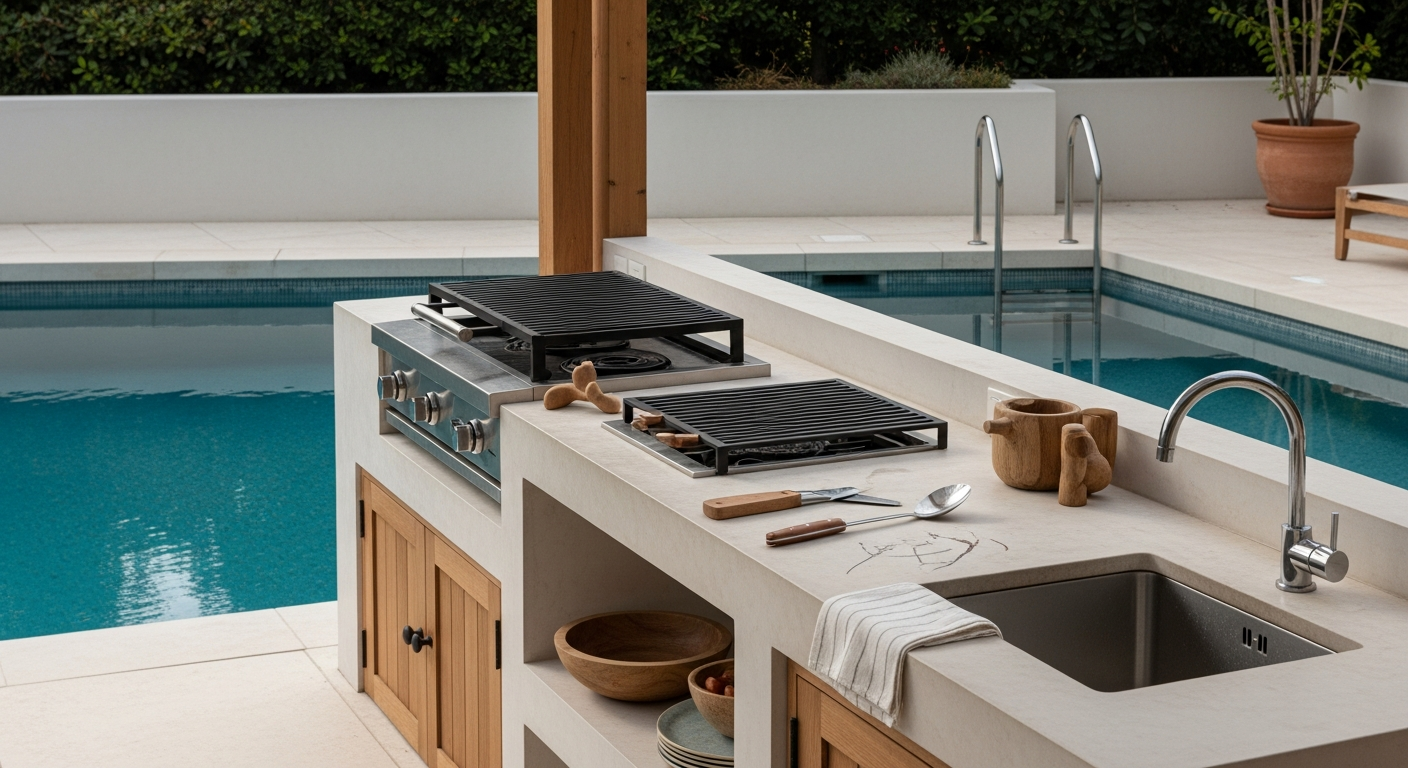
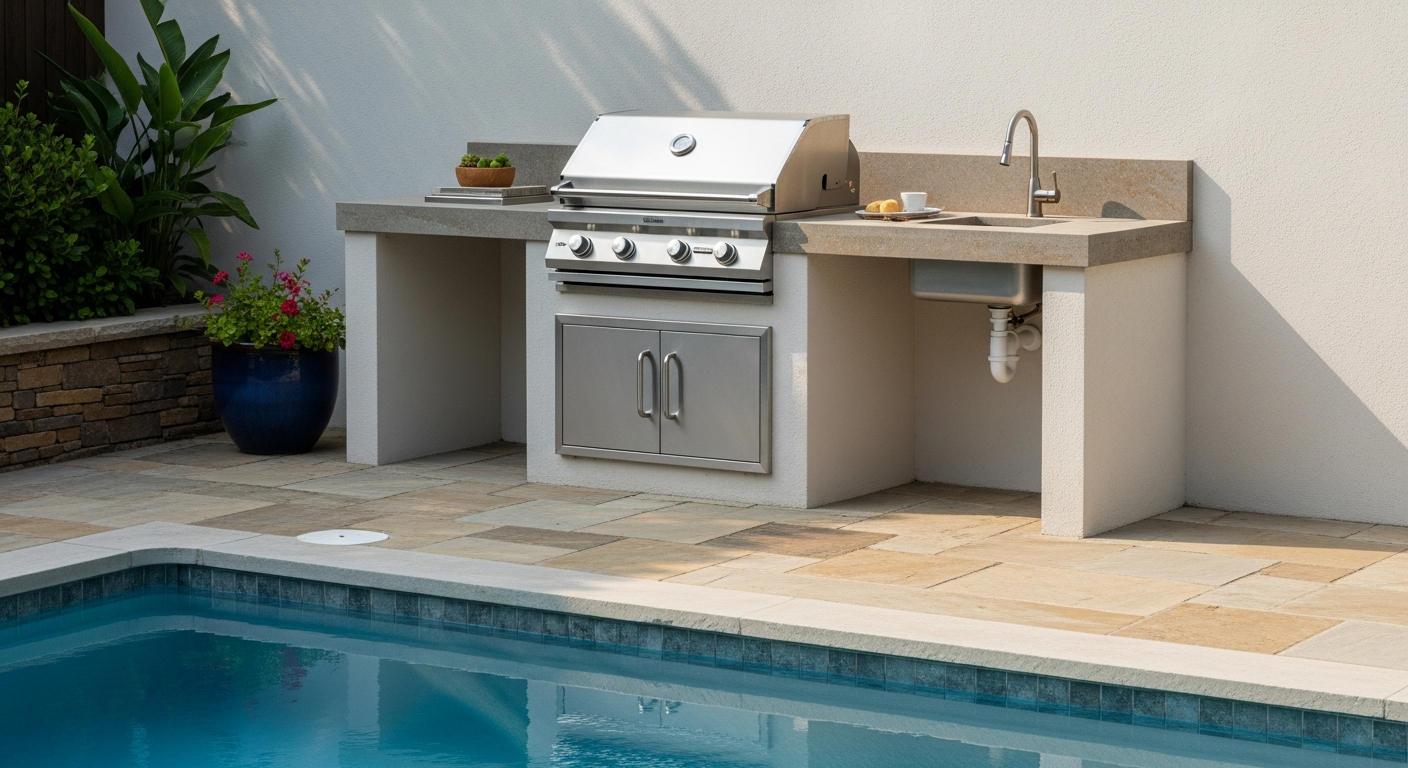
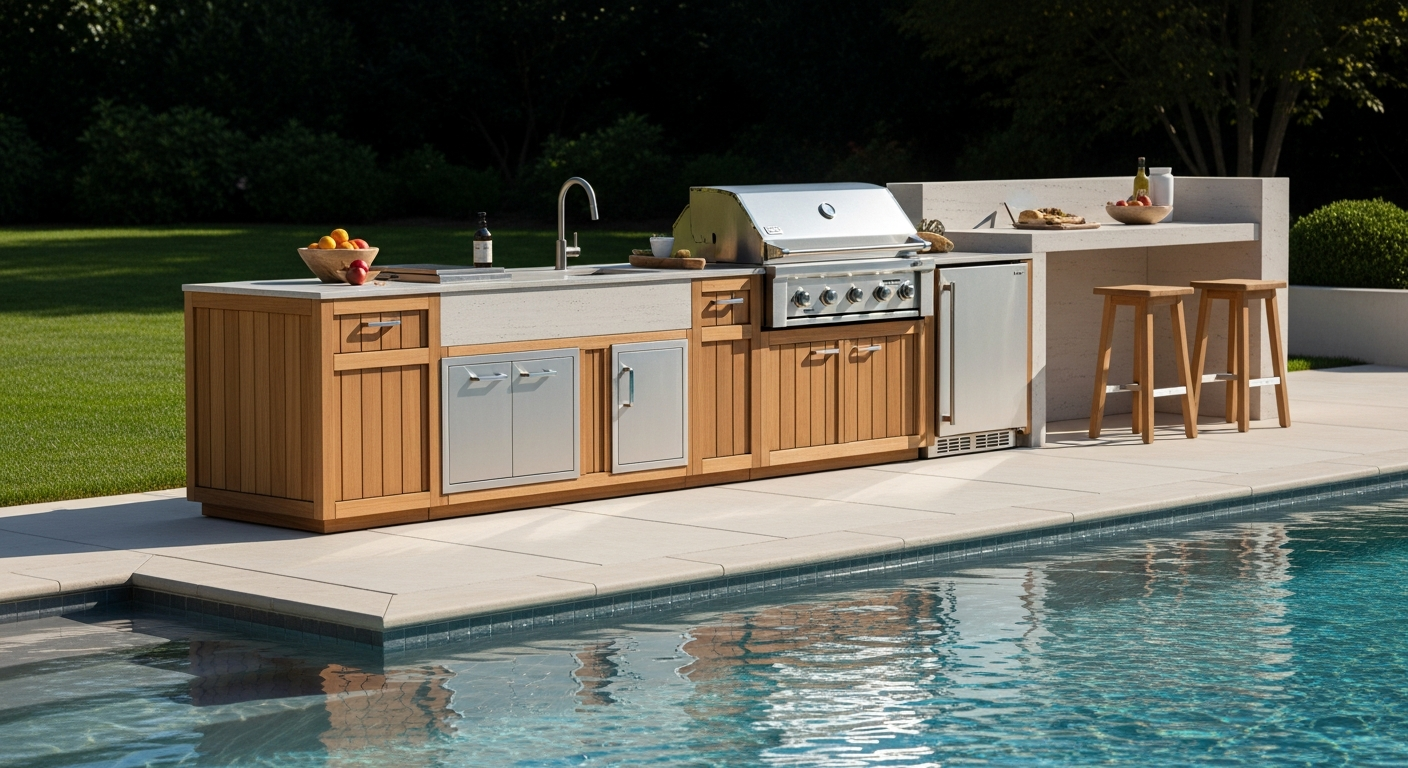
Here is where my specifications often diverge from standard architectural plans. I've had to push back on designers who specify materials that perform well in drier climates but fail catastrophically here. * Stainless Steel Specification: I mandate 316L-grade (marine-grade) stainless steel for all metallic surfaces, including grill hoods, access doors, and sinks. Standard 304-grade steel, while common, contains less nickel and molybdenum, making it highly susceptible to pitting corrosion from the chloride ions in our salt air. This is a non-negotiable specification for any property east of I-75 and an absolute requirement for anything on the water. * Cabinetry & Framing: Wood is a complete non-starter due to humidity and termites. My preference is for high-density polyethylene (HDPE) or "marine-grade polymer" cabinetry. Unlike metal, it is impervious to salt and moisture and will not delaminate or swell. For clients insisting on a metallic look, powder-coated aluminum is the only acceptable alternative to 316L steel, provided the powder coating has a minimum thickness of 3 mils to prevent chipping and subsequent corrosion. * Countertop Durability: While granite is popular, many varieties are too porous and can harbor mildew in our climate. I steer my clients towards ultra-compact surfaces like Dekton or non-porous quartzite. They offer superior UV color stability and can withstand the thermal shock of a hot pan being placed on a surface cooled by a sudden Florida downpour.Phased Implementation: From Foundation to First Cookout
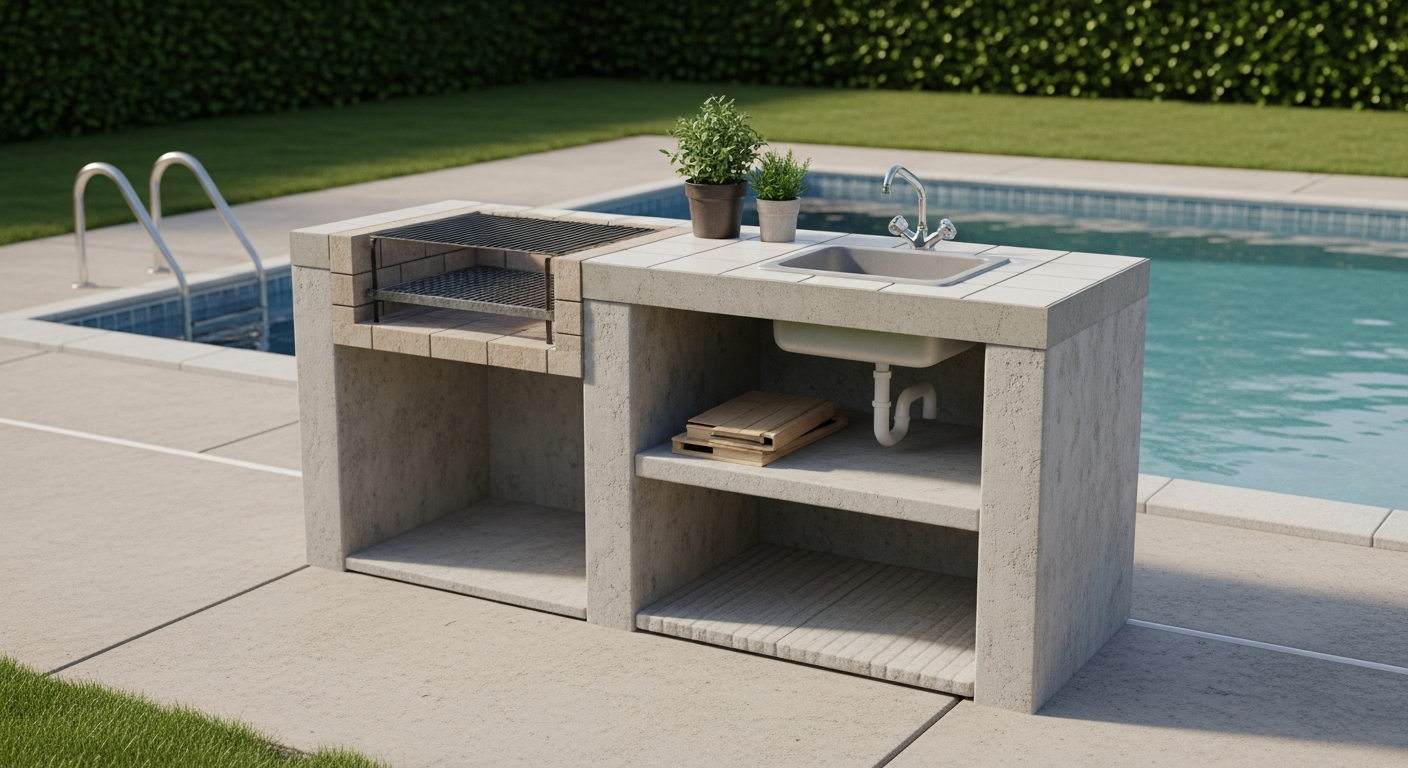
The execution phase is about precision and preventing moisture intrusion at every step. A flawed installation can compromise even the best materials. I’ve seen beautiful Dekton countertops crack because the base cabinet frame wasn't perfectly level, creating a stress point. My implementation checklist is rigorous:- Foundation: The concrete slab must have a minimum slope of 1/4 inch per foot away from the house and any cabinetry to ensure immediate drainage during our heavy summer rains.
- Utilities: All electrical wiring must be within waterproof conduit, and all outlets must be GFCI-protected with "in-use" weatherproof covers. For gas lines, I only use flexible, corrosion-resistant stainless steel tubing with brass fittings.
- Framing Assembly: Every screw, bolt, and fastener must also be 316-grade stainless steel. Using a lesser-grade fastener creates a point of galvanic corrosion that will bleed rust and compromise the structural integrity of the entire frame.
- Appliance Integration: Gaps between drop-in appliances like grills and side burners must be sealed with a marine-grade, UV-stable silicone sealant, not standard caulk. This prevents salt-laden moisture from seeping into the cabinet interiors.
Precision Tuning for Longevity and Performance
The final 10% of the project is what ensures maximum performance and minimal maintenance. One common oversight in Collier County is inadequate ventilation. An undersized vent hood won't just fail to clear smoke; it will fail to remove the grease-laden, humid air that coats every surface and promotes mildew growth. For this, I have a strict standard: the vent hood's CFM (Cubic Feet per Minute) rating must be at least 1.5x the rating recommended by the manufacturer for indoor use. For a high-output grill, this often means specifying a hood with a 1200 CFM or higher capacity. Furthermore, the final step in every project is applying a microcrystalline wax protectant to all stainless steel surfaces. This creates a hydrophobic barrier, significantly reducing tea staining and salt pitting between cleanings, a simple trick that can add years to the finish. Now that you have the right materials and installation protocol, have you properly calculated the galvanic corrosion potential between your chosen cabinet frame and the 316L stainless steel fasteners, or is your new kitchen's first point of failure already engineered in?Written by

Tags
outdoor kitchen projects
prefab outdoor kitchen
prefabricated outdoor kitchen
modular bbq outdoor kitchen
covered outdoor kitchen
Outdoor Living Kitchen in Collier FL FAQ
What materials should I choose for my outdoor kitchen countertops and cabinets if they're right next to my saltwater pool?
You must select non-porous, corrosion-resistant materials like granite, soapstone, or specialized outdoor-rated stainless steel to withstand constant exposure to salt and chlorinated water. Avoid porous stones like marble or travertine, as they will etch and stain from pool chemical splash-out, and never use standard indoor-grade stainless steel, which will show rust spots within a single season. The key is specifying marine-grade (316) stainless steel for all metallic components, including cabinet hardware and appliance fronts, as it contains molybdenum for superior corrosion resistance against chlorides.
How far away from the pool's edge should my outdoor kitchen be for safety and to protect the equipment?
Your outdoor kitchen, especially any electrical outlets or gas lines, should be located a minimum of 10 to 15 feet from the pool's water edge to comply with most local building codes and prevent electrical hazards. This distance minimizes the risk of splash damage to expensive appliances like grills and refrigerators, whose electronics are not designed for direct water contact. A critical, often overlooked detail is prevailing wind direction; positioning the kitchen upwind from the pool significantly reduces the amount of chlorine vapor and mist that can accelerate corrosion on your equipment.
Do I need a separate plumbing system for my outdoor kitchen sink, or can it connect to my pool's plumbing?
Your outdoor kitchen requires a completely separate plumbing system for both fresh water supply and wastewater drainage; never connect it to the pool's circulation system. Tying into the pool plumbing would introduce soaps, food particles, and grease, which would overwhelm the pool filter, disrupt the water's pH balance, and promote algae growth. The kitchen drain must be properly trapped and routed to your home's main sanitary sewer line, just like an indoor sink, to handle waste safely and prevent odors and clogs.
What kind of ventilation is required for a grill installed under a covered patio or pavilion near my pool?
A grill installed under any type of roof structure requires a dedicated, outdoor-rated vent hood to safely exhaust heat, smoke, and dangerous gases like carbon monoxide away from the seating area. Simply having an open-sided patio is not sufficient ventilation and creates a serious fire and health hazard. The vent hood must be powerful enough for the grill's heat output (measured in BTUs) and constructed from weather-resistant materials to prevent premature failure from humidity and temperature swings common in a poolside environment.
How do I prevent pests like ants and wasps from taking over my outdoor kitchen and dining area?
Effective pest prevention relies on sealing all food sources and eliminating nesting spots, starting with cabinets that have tight-fitting, fully sealed doors. Choose non-porous countertop materials with minimal seams where food debris can collect, and ensure your outdoor trash receptacle has a heavy, self-closing lid. A crucial design choice is to avoid hollow metal legs or unsealed masonry voids in the kitchen's structure, as these are prime locations for wasps to build hidden nests that are difficult and dangerous to remove once established.
What is the most common point of failure you see in outdoor kitchen appliances?
The most common and premature failures in outdoor kitchen appliances are caused by moisture intrusion into their electronic components, such as digital displays and ignition modules. Homeowners often mistakenly believe that a 'weather-resistant' rating means an appliance is fully waterproof, but it is not designed to withstand sustained rain or direct spray from pool cleaning. Using a high-quality, fitted weatherproof cover for every appliance when not in use is the single most important maintenance step to prevent costly electronic repairs and can easily double the lifespan of your investment.