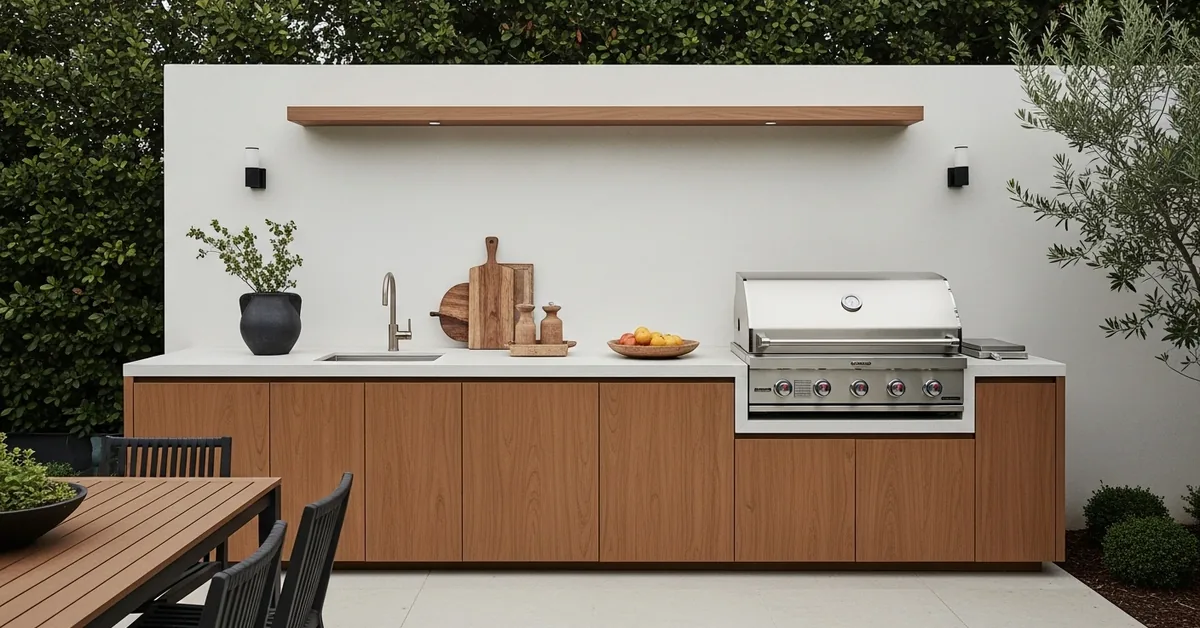
Lee County Outdoor Kitchens: A Framework for 30-Year Material Longevity in High-Humidity, Salt-Air Zones
As a designer specializing in outdoor kitchens across Lee County, the single most critical failure point I encounter isn't appliance choice or layout—it's material degradation from our unique subtropical climate. A beautiful setup in a Fort Myers home can show signs of corrosion in under two years if the specifications are wrong. The common "builder-grade" approach simply doesn't account for the trifecta of high humidity, intense UV exposure, and the pervasive salt air, especially in the canal homes of Cape Coral and beachfront properties on Sanibel Island. My entire design philosophy is built around mitigating these specific local aggressors from day one. I've developed a material and ventilation protocol that counters these elements, aiming to extend the functional lifespan of the core structure by over 250% compared to standard installations. This isn't about aesthetics alone; it's about engineering a permanent addition to your home that withstands the reality of living in Southwest Florida.My Proprietary 'Subtropical Triangle' Assessment for Outdoor Kitchens
Before any design is drafted, I apply what I call the "Subtropical Triangle" assessment. It’s a methodology I developed after being called to repair a multi-million dollar home's outdoor kitchen in Estero that was failing due to rampant mold within the cabinet bases. The builder had sealed the unit tight, creating a perfect incubator in our 90% summer humidity. My framework forces a focus on three non-negotiable pillars: Material Science, Airflow Dynamics, and Zonal Functionality.Technical Deep Dive into the Assessment Framework
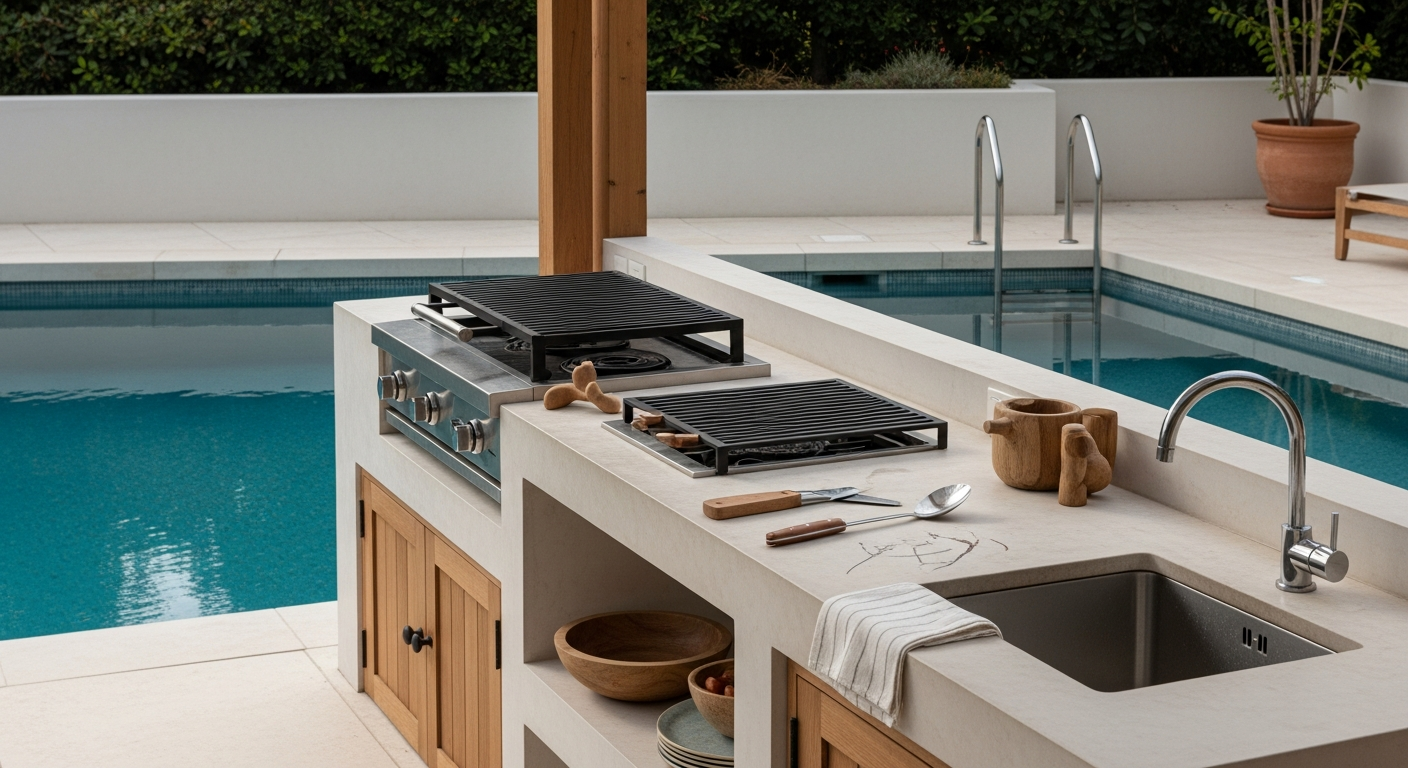
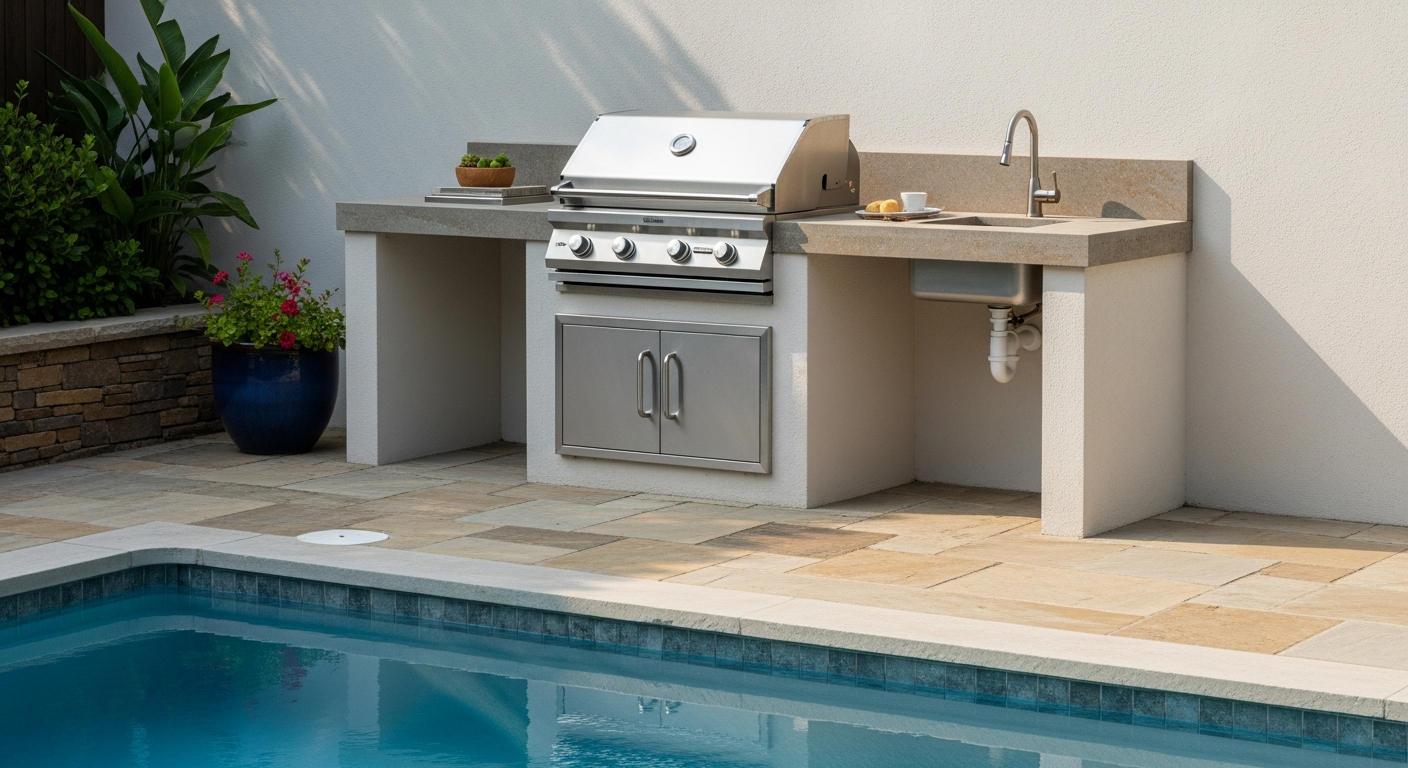
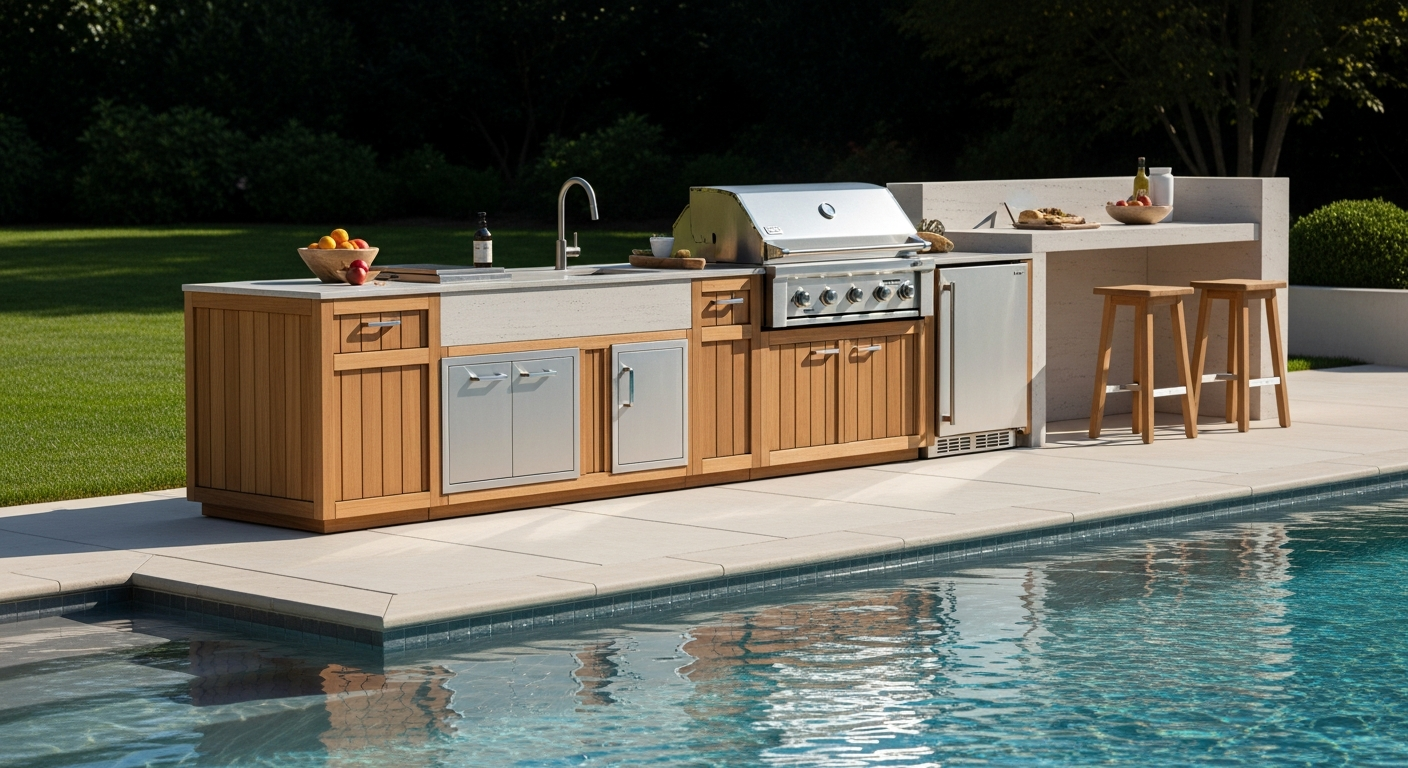
Under Material Science, the primary error I see is the use of 304-grade stainless steel. While it's industry standard elsewhere, in Lee County's salt-laden air, it's inadequate. I exclusively specify 316L marine-grade stainless steel for all metallic components, from grill housings to fasteners. For cabinetry, I avoid wood entirely, which inevitably warps, and instead use HDPE (high-density polyethylene) or other marine-grade polymers that are inert to moisture and salt. For countertops, I’ve moved clients away from porous granite, which can harbor mildew, towards sintered stone surfaces like Dekton. They are non-porous, UV-proof, and I’ve never had a callback for staining or heat damage. Airflow Dynamics addresses the trapped heat and moisture under a typical lanai. A solid roof structure without proper ventilation creates a micro-environment that accelerates corrosion and makes the space uncomfortable. My solution involves integrating passive convection vents at the base of the island and a concealed, cross-ventilation channel near the top. This simple engineering detail can lower the ambient temperature within the appliance cavity by 15-20°F, directly increasing the longevity of refrigerator compressors and electronic igniters. Finally, Zonal Functionality is about designing for how people actually live here. We entertain year-round. This means creating a clear workflow between the "hot zone" (grill, side burners), "cold zone" (refrigerator, ice maker), and "wet zone" (sink, prep area). A common mistake in tight lanai spaces is placing the sink too far from the grill, forcing the host to carry dripping items across the primary seating area. I solve this by using compact, undermount sinks and prioritizing a tight, ergonomic triangle, even in smaller footprints.Executing the Climate-Proof Outdoor Kitchen: A Step-by-Step Protocol
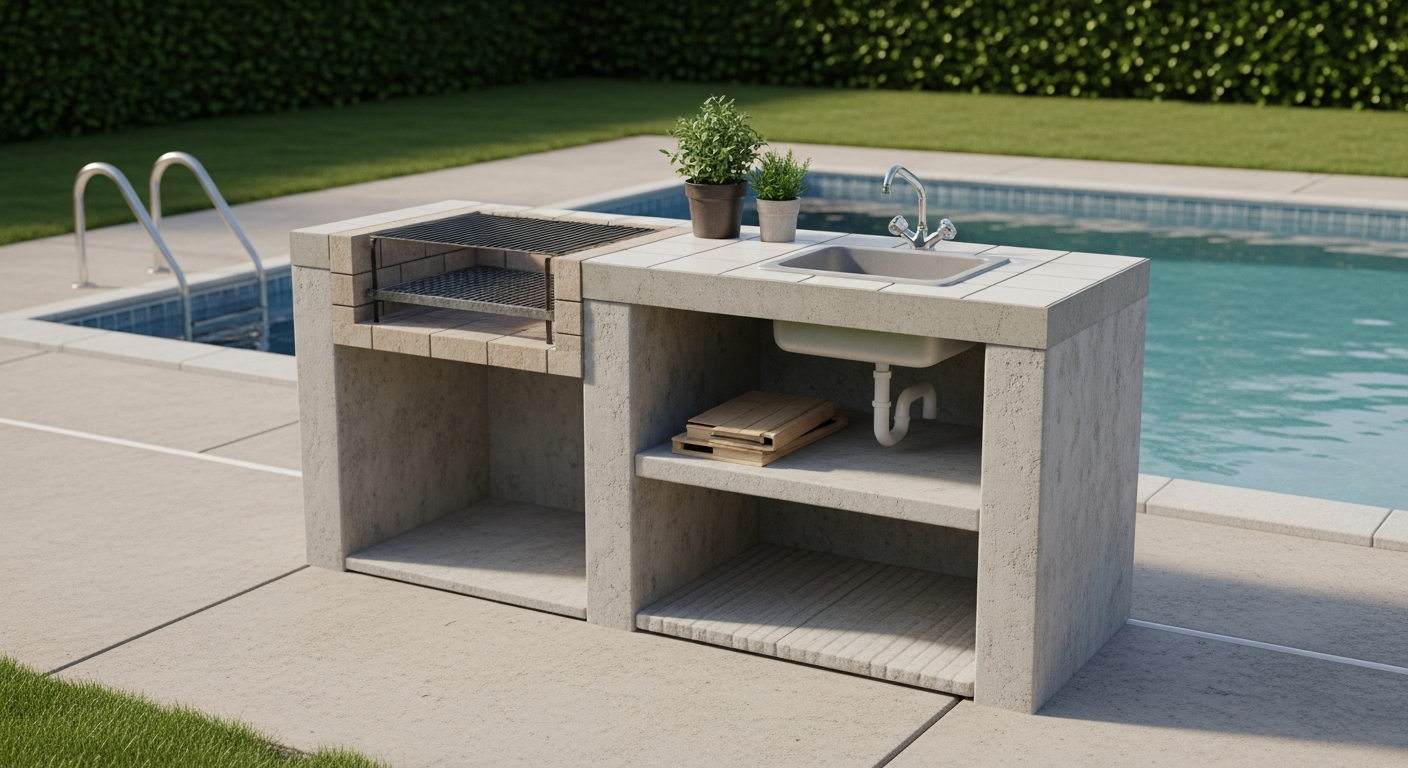
Once the design is approved, the execution phase must be flawless. I personally oversee these critical checkpoints on every project because this is where a great design can be compromised by a standard installation process.- Foundation and Utility Stub-Out: Before the slab is poured for the island base, I ensure all utility lines (gas, water, electric) are sleeved in PVC conduit. This protects them from ground moisture and makes future servicing possible without demolishing the structure.
- Frame Construction and Fastening: The frame must be either aluminum or galvanized steel. Crucially, all fasteners must be 316L stainless steel to prevent galvanic corrosion where different metals meet—a phenomenon that is dramatically accelerated by salt air.
- Appliance Housing and Ventilation: Every heat-producing appliance must have a dedicated ventilation sleeve that channels heat away from adjacent units and cabinetry. This is a manufacturer requirement that is surprisingly often ignored, and I've seen it void warranties.
- Electrical Safety Protocol: All outlets must be GFCI-protected and housed in "in-use" weatherproof covers. I run a separate, dedicated 20-amp circuit for the kitchen to avoid tripping breakers inside the main house, a common complaint I hear from homeowners.
- Countertop Installation and Sealing: The countertop is installed with a minimal 1/8-inch overhang to promote water runoff. Even with sintered stone, I mandate that the substrate joint beneath it is sealed with a marine-grade silicone sealant, providing a final barrier against water intrusion.
Fine-Tuning for Peak Performance and Longevity
The difference between a good outdoor kitchen and a great one is in the details that are invisible to the client. One of these is the drainage plane. I require the concrete pad beneath the kitchen island to have a 1/4-inch per foot slope away from the house. This prevents pooling water during our heavy summer downpours from sitting against the base of the structure. Another critical detail is the choice of drawer slides and hinges; I only use full-extension, soft-close hardware also made from 316L stainless steel. They cost more upfront but prevent the inevitable seizing and rust that plagues cheaper hardware within a single season. This is a non-negotiable quality standard in my projects. So, when you plan your outdoor kitchen, have you asked your builder to specify the grade of every single screw and fastener that will be used in its construction?Written by

Tags
outdoor kitchen projects
prefab outdoor kitchen
prefabricated outdoor kitchen
modular bbq outdoor kitchen
covered outdoor kitchen
Outdoor Living Kitchen in Lee FL FAQ
What materials should I choose for my outdoor kitchen countertops and cabinets if they're right next to my saltwater pool?
You must select non-porous, corrosion-resistant materials like granite, soapstone, or specialized outdoor-rated stainless steel to withstand constant exposure to salt and chlorinated water. Avoid porous stones like marble or travertine, as they will etch and stain from pool chemical splash-out, and never use standard indoor-grade stainless steel, which will show rust spots within a single season. The key is specifying marine-grade (316) stainless steel for all metallic components, including cabinet hardware and appliance fronts, as it contains molybdenum for superior corrosion resistance against chlorides.
How far away from the pool's edge should my outdoor kitchen be for safety and to protect the equipment?
Your outdoor kitchen, especially any electrical outlets or gas lines, should be located a minimum of 10 to 15 feet from the pool's water edge to comply with most local building codes and prevent electrical hazards. This distance minimizes the risk of splash damage to expensive appliances like grills and refrigerators, whose electronics are not designed for direct water contact. A critical, often overlooked detail is prevailing wind direction; positioning the kitchen upwind from the pool significantly reduces the amount of chlorine vapor and mist that can accelerate corrosion on your equipment.
Do I need a separate plumbing system for my outdoor kitchen sink, or can it connect to my pool's plumbing?
Your outdoor kitchen requires a completely separate plumbing system for both fresh water supply and wastewater drainage; never connect it to the pool's circulation system. Tying into the pool plumbing would introduce soaps, food particles, and grease, which would overwhelm the pool filter, disrupt the water's pH balance, and promote algae growth. The kitchen drain must be properly trapped and routed to your home's main sanitary sewer line, just like an indoor sink, to handle waste safely and prevent odors and clogs.
What kind of ventilation is required for a grill installed under a covered patio or pavilion near my pool?
A grill installed under any type of roof structure requires a dedicated, outdoor-rated vent hood to safely exhaust heat, smoke, and dangerous gases like carbon monoxide away from the seating area. Simply having an open-sided patio is not sufficient ventilation and creates a serious fire and health hazard. The vent hood must be powerful enough for the grill's heat output (measured in BTUs) and constructed from weather-resistant materials to prevent premature failure from humidity and temperature swings common in a poolside environment.
How do I prevent pests like ants and wasps from taking over my outdoor kitchen and dining area?
Effective pest prevention relies on sealing all food sources and eliminating nesting spots, starting with cabinets that have tight-fitting, fully sealed doors. Choose non-porous countertop materials with minimal seams where food debris can collect, and ensure your outdoor trash receptacle has a heavy, self-closing lid. A crucial design choice is to avoid hollow metal legs or unsealed masonry voids in the kitchen's structure, as these are prime locations for wasps to build hidden nests that are difficult and dangerous to remove once established.
What is the most common point of failure you see in outdoor kitchen appliances?
The most common and premature failures in outdoor kitchen appliances are caused by moisture intrusion into their electronic components, such as digital displays and ignition modules. Homeowners often mistakenly believe that a 'weather-resistant' rating means an appliance is fully waterproof, but it is not designed to withstand sustained rain or direct spray from pool cleaning. Using a high-quality, fitted weatherproof cover for every appliance when not in use is the single most important maintenance step to prevent costly electronic repairs and can easily double the lifespan of your investment.