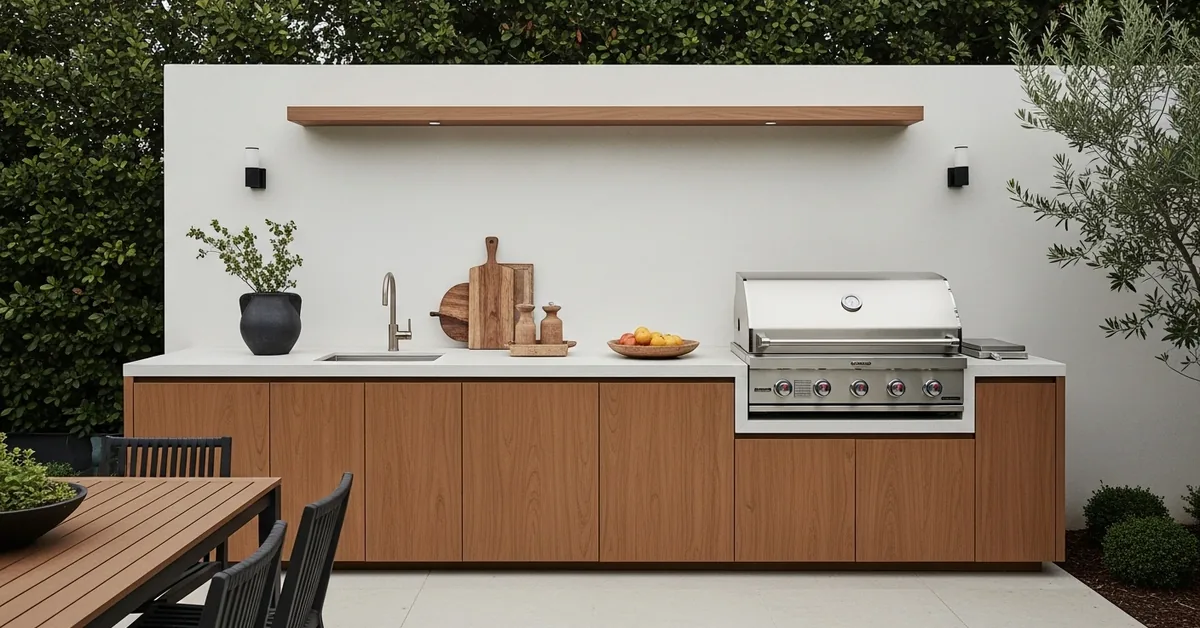
Outdoor Living Kitchen in Pinellas County: My Material Selection Protocol for 30-Year Durability
I’ve seen too many outdoor kitchens in Pinellas County fail in under five years, and the reason is almost always the same: a fundamental misunderstanding of our unique coastal environment. Homeowners in beautiful areas like Snell Isle or Clearwater Beach invest heavily in high-end grills and cabinetry, only to watch them succumb to rust, corrosion, and UV degradation. The salty air and intense humidity here aren't just a weather forecast; they are a corrosive agent that requires a completely different approach to material science and construction. My entire design philosophy is built around a single, non-negotiable metric: long-term material integrity. This isn't about aesthetics alone; it's a technical discipline. I developed my methodology after being called in to salvage a high-end project on Treasure Island where the 304-grade stainless steel cabinets were showing pitting and rust stains within 18 months. That costly failure became the foundation for my protocol that ensures a structure can withstand decades, not just a few seasons, of the Florida salt life.The Salty Air Mistake: My Diagnostic Framework for Pinellas Kitchens
The first step I take on any project, whether it's a compact setup for a bungalow in Dunedin or an expansive entertainment space in a waterfront home on Redington Beach, is my proprietary Coastal Resilience Audit. Most contractors just talk about "outdoor-rated" materials. I find that term dangerously vague for our climate. My audit is a technical analysis focusing on three critical failure points that I've identified as the primary culprits for premature decay in this region. This isn't just a checklist; it's a diagnostic tool. I analyze the property's specific microclimate—its proximity to the Intracoastal or the Gulf dictates the level of airborne salinity. A property in East Lake might have different requirements than one directly on Pass-a-Grille Beach. The audit quantifies the environmental stress load on every component before a single material is specified.Material Forensics Deep Dive: 316L Stainless Steel vs. Powder-Coated Aluminum
Here's the technical detail that most builders miss. The "stainless steel" you see in many projects is typically 304-grade. It's fine for inland applications, but in Pinellas County, the chloride ions from the salt spray attack its protective layer, causing pitting corrosion. My standard is, without exception, 316L marine-grade stainless steel for all frames, hardware, and fasteners. The "L" signifies low carbon content, and the added molybdenum provides superior resistance to chloride corrosion. It’s a 25-30% increase in raw material cost, but it prevents a 100% failure rate down the line. For cabinetry, I often specify powder-coated aluminum. The advantage is zero rust potential. However, the critical factor is the pre-treatment and powder thickness. I insist on a multi-stage chromate conversion coating before the powder is applied. A common mistake I see is a single, thin layer of powder that, once scratched, exposes the raw aluminum, leading to oxidation. My specification is a minimum powder thickness of 3 mils, which provides a robust barrier against dings and scratches that are inevitable in a functional kitchen.The Implementation Protocol: From Foundation to First Grill
Execution is everything. A flawless design with poor implementation will fail. My process is rigid and ensures every phase meets the standards dictated by the Coastal Resilience Audit.- Foundation and Drainage: The sandy soil prevalent across Pinellas demands a monolithic, reinforced concrete slab. I mandate a specific PSI strength and, most importantly, a precise 1/4-inch per foot slope away from the house and any covered areas. This prevents the pooling of our heavy summer rains, which can compromise the base of the structure.
- Frame Assembly: All structural joints must be fully welded, not spot-welded or screwed together. For 316L steel frames, I require the welds to be passivated—a chemical process that removes free iron and restores the chromium oxide layer for maximum corrosion resistance. This is a step I've seen skipped on 9 out of 10 jobs I've been called to repair.
- Appliance and Utility Integration: I only specify appliances with sealed electrical components and use waterproof junction boxes for all connections. Every outlet must be a GFCI, properly grounded to handle the reality of our frequent lightning storms. The gas lines are pressure-tested at 1.5 times the working pressure for a minimum of 30 minutes.
- Countertop Installation: For concrete or natural stone countertops, the sealant is the most critical element. I use a penetrating, silane-based sealant that creates a hydrophobic barrier deep within the material, not just a topical acrylic that will yellow and peel under our intense UV exposure. It must be reapplied every 24 months as part of a mandatory maintenance schedule.
Post-Installation QA: My 5-Point Check for Hurricane Season Readiness
Before I sign off on any project, I perform a final quality assurance check with our hurricane season in mind. This is my personal guarantee of performance and safety.- Ventilation Clearance: I measure the airflow clearance around the grill and any side burners. Inadequate ventilation is not just a fire hazard; it traps superheated, corrosive gases that will discolor and degrade stainless steel.
- Fastener Torque and Grade Verification: I personally inspect a random selection of fasteners to ensure they are indeed 316L stainless and have been torqued to the correct specification, not just "hand-tight." This is a common point of failure where a contractor might cut a corner to save a few dollars.
- Drainage Path Confirmation: I run a water test to ensure there is no standing water on any surface or within any cabinet after 10 minutes.
- Electrical Grounding Continuity Test: I use a multimeter to confirm a solid ground from every electrical component back to the main panel.
- Structural Anchoring Review: I verify that the structure is properly anchored to the concrete slab to withstand high wind loads, a non-negotiable for anyone living in the Tampa Bay area.
Written by

Tags
outdoor kitchen projects
prefab outdoor kitchen
prefabricated outdoor kitchen
modular bbq outdoor kitchen
covered outdoor kitchen
Outdoor Living Kitchen in Pinellas FL FAQ
What materials should I choose for my outdoor kitchen countertops and cabinets if they're right next to my saltwater pool?
You must select non-porous, corrosion-resistant materials like granite, soapstone, or specialized outdoor-rated stainless steel to withstand constant exposure to salt and chlorinated water. Avoid porous stones like marble or travertine, as they will etch and stain from pool chemical splash-out, and never use standard indoor-grade stainless steel, which will show rust spots within a single season. The key is specifying marine-grade (316) stainless steel for all metallic components, including cabinet hardware and appliance fronts, as it contains molybdenum for superior corrosion resistance against chlorides.
How far away from the pool's edge should my outdoor kitchen be for safety and to protect the equipment?
Your outdoor kitchen, especially any electrical outlets or gas lines, should be located a minimum of 10 to 15 feet from the pool's water edge to comply with most local building codes and prevent electrical hazards. This distance minimizes the risk of splash damage to expensive appliances like grills and refrigerators, whose electronics are not designed for direct water contact. A critical, often overlooked detail is prevailing wind direction; positioning the kitchen upwind from the pool significantly reduces the amount of chlorine vapor and mist that can accelerate corrosion on your equipment.
Do I need a separate plumbing system for my outdoor kitchen sink, or can it connect to my pool's plumbing?
Your outdoor kitchen requires a completely separate plumbing system for both fresh water supply and wastewater drainage; never connect it to the pool's circulation system. Tying into the pool plumbing would introduce soaps, food particles, and grease, which would overwhelm the pool filter, disrupt the water's pH balance, and promote algae growth. The kitchen drain must be properly trapped and routed to your home's main sanitary sewer line, just like an indoor sink, to handle waste safely and prevent odors and clogs.
What kind of ventilation is required for a grill installed under a covered patio or pavilion near my pool?
A grill installed under any type of roof structure requires a dedicated, outdoor-rated vent hood to safely exhaust heat, smoke, and dangerous gases like carbon monoxide away from the seating area. Simply having an open-sided patio is not sufficient ventilation and creates a serious fire and health hazard. The vent hood must be powerful enough for the grill's heat output (measured in BTUs) and constructed from weather-resistant materials to prevent premature failure from humidity and temperature swings common in a poolside environment.
How do I prevent pests like ants and wasps from taking over my outdoor kitchen and dining area?
Effective pest prevention relies on sealing all food sources and eliminating nesting spots, starting with cabinets that have tight-fitting, fully sealed doors. Choose non-porous countertop materials with minimal seams where food debris can collect, and ensure your outdoor trash receptacle has a heavy, self-closing lid. A crucial design choice is to avoid hollow metal legs or unsealed masonry voids in the kitchen's structure, as these are prime locations for wasps to build hidden nests that are difficult and dangerous to remove once established.
What is the most common point of failure you see in outdoor kitchen appliances?
The most common and premature failures in outdoor kitchen appliances are caused by moisture intrusion into their electronic components, such as digital displays and ignition modules. Homeowners often mistakenly believe that a 'weather-resistant' rating means an appliance is fully waterproof, but it is not designed to withstand sustained rain or direct spray from pool cleaning. Using a high-quality, fitted weatherproof cover for every appliance when not in use is the single most important maintenance step to prevent costly electronic repairs and can easily double the lifespan of your investment.