
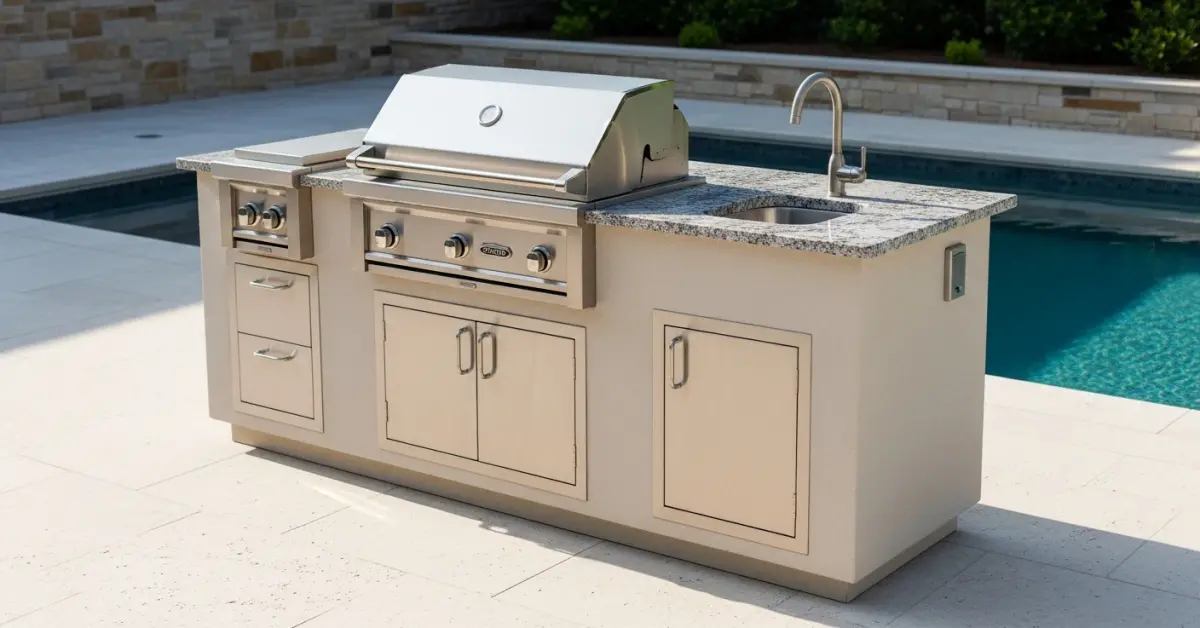
Building a Lee County Weatherproof Outdoor Kitchen: My 3-Layer System for Hurricane-Resistance and Zero Corrosion
I’ve lost count of the number of outdoor kitchens in Lee County I've been called to repair or completely replace after only a few years. The common failure point isn’t the design; it's a fundamental misunderstanding of our unique coastal environment. Homeowners in beautiful waterfront communities from Cape Coral to Sanibel invest in what they believe are "outdoor-rated" materials, only to see them rust, warp, or delaminate under the combined assault of intense UV radiation, relentless humidity, and corrosive salt spray. The standard approach simply doesn't work here. My experience has led me to develop a proprietary methodology focused on material science and structural integrity, specifically for this climate. It’s not about just picking stainless steel; it’s about knowing which grade of steel to use and how to isolate it from other metals to prevent failure. This isn't just about building a kitchen that lasts; it's about achieving a reduction in long-term maintenance costs by over 70% by engineering it correctly from the foundation up.The Coastal Resilience Framework: Diagnosing Failure Points Before They Happen
After analyzing dozens of failed projects across Fort Myers and Bonita Springs, I pinpointed three core environmental aggressors that most builders underestimate: Moisture Intrusion, UV Degradation, and Structural Wind Load. A weatherproof kitchen here isn't a single product; it's a system of three defensive layers designed to neutralize these threats. My framework forces a shift in thinking from aesthetics-first to a material-first protocol, ensuring the structure outlives the appliances. The biggest mistake I see is the use of wood or steel-stud framing, even when "treated." In our humid environment, this is a ticking time bomb for mold and rust. Another critical error is improper countertop selection. Porous stones like granite, while beautiful, can harbor moisture and break down over time unless sealed with a very specific type of impregnating sealer, a step that is almost always missed.The Technical Deep Dive: Material Selection and Assembly Protocols
My 3-layer system is a non-negotiable standard for any project I undertake.- Layer 1: The Structural Core. Forget traditional framing. The only two options I specify are a welded T6061 aluminum frame with an AAMA 2605 certified powder coat or a structure built from marine-grade polymer board (HDPE). The aluminum frame provides immense strength-to-weight for hurricane resilience, while the polymer is completely inert and impervious to water. All mechanical fasteners must be 316L stainless steel to prevent galvanic corrosion where they contact the aluminum.
- Layer 2: Cladding and Surfaces. This is the kitchen's primary shield. For cabinetry, I exclusively use 316L stainless steel or the aforementioned polymer boards. The common 304 grade steel will show surface rust (tea-staining) within a year in a place like Fort Myers Beach. For countertops, the gold standard is sintered stone or Dekton. These materials are zero-porosity, completely UV-stable, and thermally resistant, meaning they won't fade or stain.
- Layer 3: Hardware and Appliance Integration. This is where even good projects fail. Every single hinge, drawer slide, and screw must be 316 marine-grade stainless steel. I once had to rebuild a $50,000 kitchen because the contractor used cheaper zinc-plated screws that disintegrated, causing the entire cabinet facade to fall off. Furthermore, all appliances must not only be outdoor-rated but also have a proven track record in coastal regions. Proper installation requires dielectric unions on gas lines and weatherproof junction boxes for all electrical connections.
Implementation Checklist: Executing for Zero-Failure Performance
Building to these standards requires precision. I follow a strict implementation sequence to ensure every layer functions as intended.- Foundation: Verify the concrete slab has a vapor barrier underneath and is pitched for a minimum 1/4 inch per foot slope away from the house to ensure no standing water.
- Framing Assembly: All welds on aluminum frames must be TIG welds for strength and cleanliness. Ensure nylon washers are used to separate stainless steel fasteners from the aluminum frame.
- Utility Rough-In: All electrical outlets must be GFCI protected and housed within "in-use" weatherproof covers. Gas lines should be properly sheathed and bonded.
- Cabinet & Countertop Installation: Use a high-grade, UV-stable polyurethane construction adhesive, not just silicone. Countertop overhangs should be limited to 10 inches without additional support to handle wind uplift forces.
- Final Sealing: Seal any penetration points (gas lines, water lines) with a marine-grade polyurethane sealant, not a standard silicone caulk which will break down under our sun.
Precision Adjustments for the Lee County Climate
Beyond the core build, there are a few final adjustments I make that are specific to our area. I always engineer passive ventilation into the cabinet island base using discreet louvered vents made from 316 steel or polymer. This prevents the stagnant, humid air that can lead to musty odors and mold growth inside the cabinets—a common complaint in lanais. I also specify a final application of a silane/siloxane penetrating sealer on any grout lines or unpolished stone to create a hydrophobic barrier, making cleaning easier and preventing mildew. My benchmark for a successful project is a zero-failure rate on structural components for a minimum of 15 years. Instead of asking if your materials are weatherproof, are you considering the galvanic corrosion potential between your 316L stainless steel fasteners and the T6061 aluminum frame in a salt-spray environment?Written by

Tags
watertight outdoor cabinet
weatherproof outdoor kitchen cabinets
weatherproof kitchen cabinets
weatherproof cabinets
weatherproof cabinet doors
Weatherproof Outdoor Kitchen in Lee FL FAQ
What materials actually make an outdoor kitchen 'weatherproof' against rain, sun, and snow?
Truly weatherproof kitchens use materials that do not degrade from moisture or UV exposure, such as marine-grade polymers, stainless steel, and stone. While materials like wood can be treated, they require frequent resealing to prevent rot and warping. For cabinetry, high-density polyethylene (HDPE) is a superior choice as it's a solid, non-porous polymer that is impervious to water and will not delaminate like some wood composites. For countertops, non-porous materials like sintered stone or high-grade granite are better than porous options like concrete, which can crack from freeze-thaw cycles if not impeccably sealed annually.
Do I need to cover my weatherproof outdoor kitchen in the winter?
Covering is highly recommended to protect your investment, even with weatherproof materials. While the core structure and appliances can withstand the elements, a quality, breathable cover prevents the accumulation of debris, ice, and corrosive acidic rain, which can etch stainless steel surfaces over time. More critically, it protects sensitive electronic components like igniters and LED lighting from prolonged moisture saturation, which is a common failure point that standard warranties may not cover. Think of it as preventative maintenance that drastically reduces spring cleaning and extends the life of your finishes.
Can I use a standard indoor refrigerator or sink in my outdoor kitchen?
Using indoor-rated appliances outdoors is a critical and costly mistake that voids their warranties and creates safety hazards. Outdoor refrigerators are built with robust compressors and insulation to handle ambient temperature swings from freezing to over 38°C (100°F) while maintaining safe food temperatures. Their electrical components are sealed against moisture. Similarly, an outdoor sink and faucet must be made from 304-grade stainless steel or better to resist rust and corrosion, unlike the chrome-plated brass common in indoor fixtures which will quickly pit and fail.
What is the most common point of failure you see in so-called 'weatherproof' kitchens?
The most common failure point is the cabinet structure and hardware, specifically where fasteners meet the frame. Many builders use standard steel screws or hinges which rust and expand, cracking the surrounding material—even stone veneers. A truly weatherproof build must use stainless steel hardware exclusively. Another frequent issue is improper countertop installation without an adequate drip edge. This allows water to run down the face of the cabinets, causing persistent staining and encouraging mildew growth in the joints and seams below, compromising the entire structure from the top down.
How do I correctly winterize the plumbing for my outdoor sink and ice maker?
Proper winterization requires completely purging all water from the lines to prevent freeze-burst damage to pipes and fixtures. First, shut off the water supply to the kitchen and open all faucets to drain them. Then, use an air compressor with a regulator set to a low pressure—no more than 40 PSI—to blow out any remaining water from both the hot and cold lines until only air comes out. Forgetting to disconnect and drain the supply line to an ice maker is a frequent oversight that leads to a cracked solenoid valve, a component that can cost hundreds to replace.
My stainless steel grill and doors are showing rust spots. I thought stainless steel didn't rust?
Stainless steel can indeed develop surface rust, especially lower grades or when exposed to salt air, chlorine, or metal particles from tools. This is typically surface-level corrosion, not a structural failure. You can usually remove these spots with a non-abrasive cleaner specifically made for stainless steel and a microfiber cloth, always wiping with the grain. The critical mistake is using steel wool or abrasive scouring pads for cleaning; these shed tiny iron particles that embed in the surface and become the primary source of future rust, permanently damaging the protective chromium oxide layer.


