
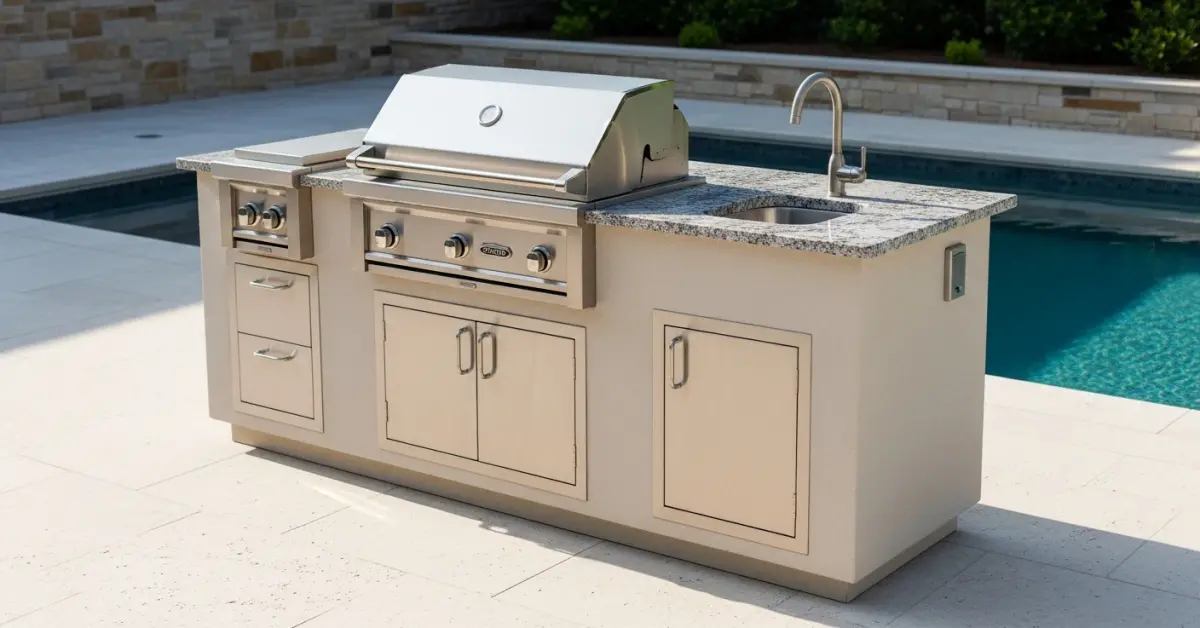
Weatherproof Outdoor Kitchen in Osceola County: A Material Protocol to Eliminate Humidity-Related Degradation
Building an outdoor kitchen in Osceola County that lasts is less about the brand of grill you choose and more about a deep understanding of material science. I’ve seen countless projects in Kissimmee and Celebration look fantastic for one season, only to start delaminating, rusting, or warping within two years. The relentless combination of our high humidity, intense UV exposure, and torrential afternoon downpours creates a uniquely hostile environment that standard building materials simply cannot survive. The fundamental error I see repeated is treating an outdoor kitchen as a simple extension of an indoor one. It's not. My approach is built on a "failure-first" analysis, focusing entirely on specifying materials that are inert to the three primary aggressors in our Central Florida climate: moisture saturation, thermal expansion, and UV degradation. This isn't about over-engineering; it's about building it right once, so you're not dealing with costly repairs later.My Diagnostic Framework for Florida's Climate Extremes
My first step in any project, whether it's a compact setup in a St. Cloud lanai or a sprawling entertainment space in Harmony, is never about the layout. It's about a Material Stress Test based on the property's specific microclimate. I analyze the primary environmental aggressors. In Osceola County, they are, in order of destructive potential:- Hydrostatic Pressure & Humidity: This is more than just rain. It's the ambient moisture that permeates everything. Wood-based products, even "pressure-treated" ones, will eventually absorb this moisture, swell, and create joint failure or harbor mold.
- UV Radiation: The intense Florida sun doesn't just fade colors; it makes polymers brittle and breaks down sealants. Any material without inherent UV stability is on a fast track to failure.
- Corrosion Accelerants: The chlorine from a nearby pool or the salt content in the air, even this far inland, creates an electrolyte that drastically accelerates the rusting of inferior metals. I learned this the hard way on an early project where I specified 430-grade stainless steel components, which showed significant "tea staining" within 18 months due to proximity to a saltwater pool.
The Core Material Selection Matrix
Based on this diagnostic, I developed a non-negotiable material matrix. This isn't a suggestion; it's my baseline for a build designed to last over a decade with minimal maintenance.- Cabinetry Carcasses: The only two options I will specify are marine-grade High-Density Polyethylene (HDPE) or powder-coated aluminum. HDPE is essentially a solid, non-porous plastic that is impervious to water and has UV inhibitors integrated. Wood, MDF, and particle board are immediate disqualifications.
- Countertops: The key metric here is an ultra-low absorption rate and high resistance to thermal shock. When a hot pan is placed on a countertop just cooled by a sudden thunderstorm, inferior materials can crack. My top recommendations are Dekton or large-format porcelain slabs. Granite is acceptable, but it must be sealed annually with a high-quality impregnating sealer, a maintenance step many homeowners forget.
- Hardware & Fasteners: This is the single most common point of failure I've identified in my repair consultations. Every single screw, hinge, and drawer slide must be 304-grade stainless steel at a minimum. Using zinc-plated or galvanized hardware is a guaranteed failure point that will bleed rust stains down your beautiful cabinetry within a year.
The Phased Implementation Protocol for Longevity
Once the materials are locked in, the assembly and installation process must be executed with a specific protocol designed to prevent moisture intrusion at every stage. A perfect material installed incorrectly will still fail.- Foundation and Drainage: The concrete slab must have a subtle but effective slope, directing water away from the structure. I specify a pitch of at least 1/4 inch per foot. All utility lines (gas, water, electric) must be sealed at their penetration points with a marine-grade polyurethane sealant.
- Cabinet Assembly & Leveling: Cabinets must be installed on stainless steel or polymer legs to keep them off the concrete slab, preventing any direct moisture wicking. Every cabinet-to-cabinet connection is made with stainless steel fasteners.
- Appliance Integration: Every appliance must be UL-rated for outdoor use. Crucially, I ensure ventilation requirements for grills are exceeded, not just met. Inadequate ventilation traps heat and moisture, accelerating the degradation of surrounding countertops and cabinetry.
- Countertop and Backsplash Sealing: The weakest point of any countertop is the seam. I use a 100% exterior-grade silicone that contains UV inhibitors and mildewcide. This is not the same as an indoor kitchen and bath caulk.
Precision Tuning for Osceola County's Environment
Perfecting a build here requires accounting for our specific lifestyle patterns. Many Osceola County homes feature lanais or screened-in patios, which changes the dynamic slightly.- Lanai Integration: While a lanai offers protection from direct rain, it can also trap humidity. Proper cross-ventilation is key. I often advise clients to ensure the kitchen is not placed in a stagnant air corner of the lanai.
- Poolside Corrosion Control: If the kitchen is within 15 feet of a pool, I upgrade all external metal components, including the grill exterior and cabinet handles, to 316 marine-grade stainless steel. The higher nickel and molybdenum content in 316 steel provides a significant increase in corrosion resistance against airborne chlorine. This small upgrade can add 25-30% to the functional lifespan of the metal components.
- Cover and Care: Even with the best materials, using breathable covers during the intense summer rainy season or for long periods of non-use dramatically reduces cleaning needs and extends the pristine look of the surfaces.
Written by

Tags
watertight outdoor cabinet
weatherproof outdoor kitchen cabinets
weatherproof kitchen cabinets
weatherproof cabinets
weatherproof cabinet doors
Weatherproof Outdoor Kitchen in Osceola FL FAQ
What materials actually make an outdoor kitchen 'weatherproof' against rain, sun, and snow?
Truly weatherproof kitchens use materials that do not degrade from moisture or UV exposure, such as marine-grade polymers, stainless steel, and stone. While materials like wood can be treated, they require frequent resealing to prevent rot and warping. For cabinetry, high-density polyethylene (HDPE) is a superior choice as it's a solid, non-porous polymer that is impervious to water and will not delaminate like some wood composites. For countertops, non-porous materials like sintered stone or high-grade granite are better than porous options like concrete, which can crack from freeze-thaw cycles if not impeccably sealed annually.
Do I need to cover my weatherproof outdoor kitchen in the winter?
Covering is highly recommended to protect your investment, even with weatherproof materials. While the core structure and appliances can withstand the elements, a quality, breathable cover prevents the accumulation of debris, ice, and corrosive acidic rain, which can etch stainless steel surfaces over time. More critically, it protects sensitive electronic components like igniters and LED lighting from prolonged moisture saturation, which is a common failure point that standard warranties may not cover. Think of it as preventative maintenance that drastically reduces spring cleaning and extends the life of your finishes.
Can I use a standard indoor refrigerator or sink in my outdoor kitchen?
Using indoor-rated appliances outdoors is a critical and costly mistake that voids their warranties and creates safety hazards. Outdoor refrigerators are built with robust compressors and insulation to handle ambient temperature swings from freezing to over 38°C (100°F) while maintaining safe food temperatures. Their electrical components are sealed against moisture. Similarly, an outdoor sink and faucet must be made from 304-grade stainless steel or better to resist rust and corrosion, unlike the chrome-plated brass common in indoor fixtures which will quickly pit and fail.
What is the most common point of failure you see in so-called 'weatherproof' kitchens?
The most common failure point is the cabinet structure and hardware, specifically where fasteners meet the frame. Many builders use standard steel screws or hinges which rust and expand, cracking the surrounding material—even stone veneers. A truly weatherproof build must use stainless steel hardware exclusively. Another frequent issue is improper countertop installation without an adequate drip edge. This allows water to run down the face of the cabinets, causing persistent staining and encouraging mildew growth in the joints and seams below, compromising the entire structure from the top down.
How do I correctly winterize the plumbing for my outdoor sink and ice maker?
Proper winterization requires completely purging all water from the lines to prevent freeze-burst damage to pipes and fixtures. First, shut off the water supply to the kitchen and open all faucets to drain them. Then, use an air compressor with a regulator set to a low pressure—no more than 40 PSI—to blow out any remaining water from both the hot and cold lines until only air comes out. Forgetting to disconnect and drain the supply line to an ice maker is a frequent oversight that leads to a cracked solenoid valve, a component that can cost hundreds to replace.
My stainless steel grill and doors are showing rust spots. I thought stainless steel didn't rust?
Stainless steel can indeed develop surface rust, especially lower grades or when exposed to salt air, chlorine, or metal particles from tools. This is typically surface-level corrosion, not a structural failure. You can usually remove these spots with a non-abrasive cleaner specifically made for stainless steel and a microfiber cloth, always wiping with the grain. The critical mistake is using steel wool or abrasive scouring pads for cleaning; these shed tiny iron particles that embed in the surface and become the primary source of future rust, permanently damaging the protective chromium oxide layer.


