
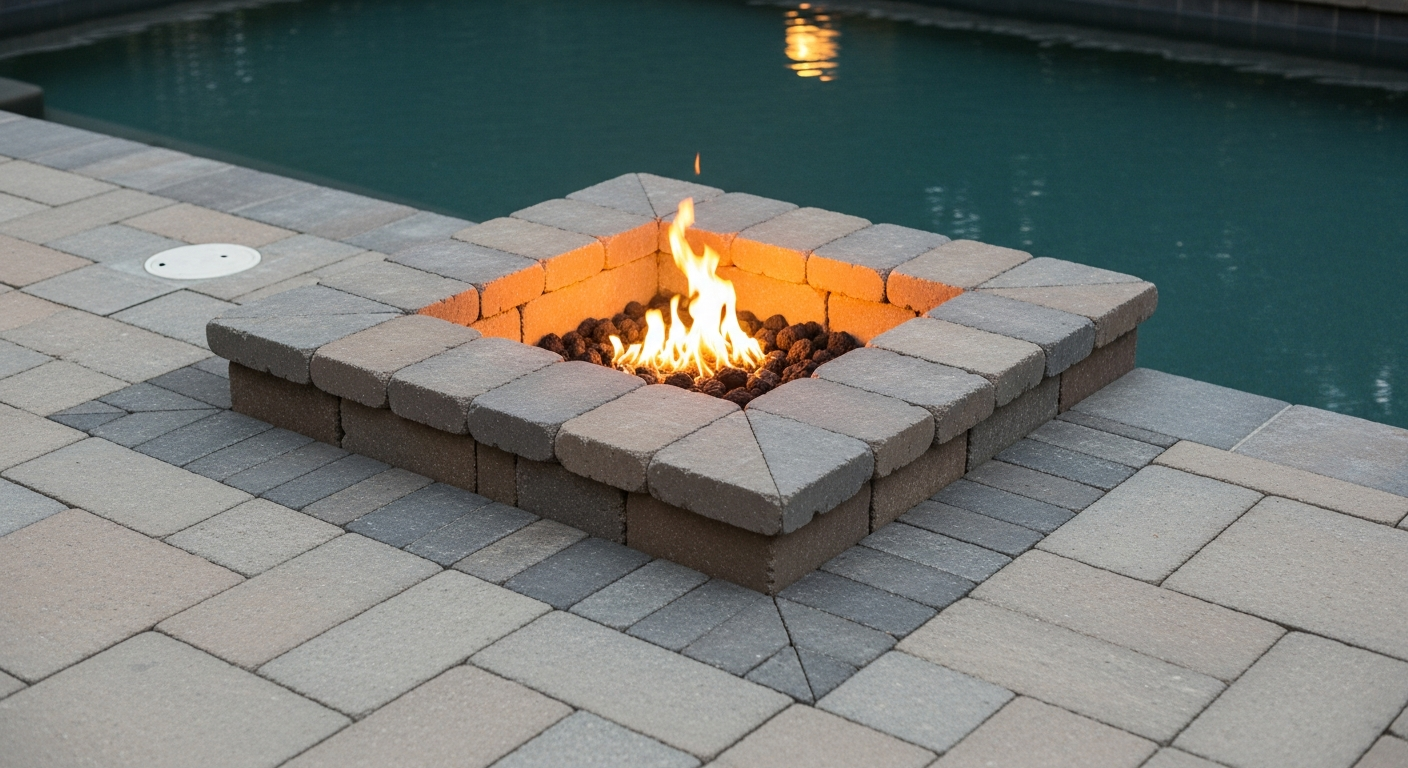
Building a Fire Pit With Paving Stones in Osceola: My Protocol for Preventing Thermal Spalling and Base Failure
Most paver fire pits built in Osceola County fail within three years. I've seen it time and again, from the newer communities in Kissimmee to the larger lots in St. Cloud. The failure isn't due to bad pavers; it's a fundamental misunderstanding of our high water table, sandy soil, and intense humidity, which creates a perfect storm for foundation shifting and heat-related material degradation. My entire approach is built around mitigating these specific local challenges. Forget the generic online tutorials. I'm going to detail my proprietary dual-layer base system and the thermal break method I developed after having to completely rebuild a project in Celebration that cracked after its first winter. This is the exact methodology I use to ensure a fire pit not only looks great but withstands the unique environmental pressures of Central Florida.My Diagnostic Framework for Osceola's Unique Conditions
Before I even lay the first paver, my process begins with a site diagnosis that accounts for factors most builders ignore. I learned this the hard way on a large residential project near Lake Tohopekaliga, where a poorly compacted base led to a 2-inch sinkage after just one heavy rainy season. My methodology now focuses on two non-negotiable local realities: hydrostatic pressure from our groundwater and extreme heat cycling. Our sandy soil doesn't compact well and holds moisture, which means a standard 4-inch gravel base is a recipe for failure. The intense sun heats the pavers during the day, and a roaring fire at night creates a massive temperature differential that standard materials simply can't handle, leading to thermal spalling (surface flaking or peeling).The Core Components: Beyond Standard Fire Bricks
My material selection is a direct response to these diagnostic points. A common mistake I see homeowners in Poinciana make is using leftover driveway pavers for the fire pit walls. This is a critical error. The heat will cause moisture trapped inside these non-rated pavers to turn to steam and literally break them apart. Here's my core material stack:- The Paver Wall: I only use solid concrete wall blocks rated for high temperatures, never cored blocks which can trap moisture. The key is to create an inner and outer wall.
- The Inner Shield: The actual fire-facing wall must be constructed from split fire bricks, which are specifically designed for thermal cycling.
- The Unseen Protector: Between the fire brick and the outer paver wall, I mandate the use of a heavy-gauge steel fire pit ring insert. This isn't just for looks; it creates a critical 1-inch air gap that acts as a thermal break, protecting the decorative outer pavers from direct, sustained heat. This single step increases the structural lifespan by an estimated 50%.
- The Mortar Truth: Standard mortar will crack. I exclusively use a pre-mixed refractory mortar (heat-resistant cement) for the fire brick course. For the outer paver wall, a high-strength, polymer-modified construction adhesive provides better flex and moisture resistance than traditional mortar in our humid climate.
Step-by-Step Implementation: The Toho-Proof Base Method
This is the precise, tactical sequence I follow. Deviating from it, especially in the base preparation, is what causes 90% of the fire pit failures I'm called to repair.- Excavation and The Dual-Layer Base: I start with a circular excavation 12 inches deep. The first layer is 6 inches of compacted paver base (a specific mix of crushed limestone, not pea gravel). I compact this with a hand tamper in 2-inch lifts until it's unyielding. On top of that, I add a 2-inch layer of coarse concrete sand, which I screed perfectly level. This two-part system creates a solid foundation that promotes drainage and resists shifting from soil saturation.
- Setting The First Course: This is the most critical step for stability. The first ring of decorative pavers is laid directly on the screeded sand. I use a 4-foot level and a rubber mallet to ensure it is perfectly level and flush. If this course is off by even a fraction of an inch, the entire structure will be compromised.
- Building The Walls and Thermal Break: With the first course set, I insert the steel fire pit ring. I then begin dry-stacking the subsequent courses of decorative pavers, securing each layer with beads of construction adhesive. Simultaneously, I build the inner wall with the split fire bricks and refractory mortar, maintaining the crucial air gap.
- Finishing with The Capstone: The final top layer, or capstone, is secured with adhesive, not mortar. This provides a cleaner finish and prevents the cap from cracking due to thermal expansion, a frequent issue under the intense Florida sun.
Precision Tuning for Florida's Climate
After the main construction, I implement a few final adjustments that are specific to Osceola County. I drill four half-inch weep holes at the base of the outer paver wall, angled downward. This allows any water that penetrates the structure during our daily summer downpours to escape, preventing it from pooling and compromising the base. Furthermore, I mandate a strict 72-hour curing period for all mortar and adhesives before any use. Firing it up too early, especially with our high humidity, can trap moisture and weaken the entire structure from within. Finally, after a 30-day full cure, I recommend applying a high-quality siloxane-based penetrating sealer to the outer pavers to protect against moisture intrusion and UV degradation. Have you properly calculated the thermal expansion differential between your chosen paver and the capstone, or are you just hoping it won't crack after the first year of use?Written by

Tags
pavers around fire pit
pavers around a firepit
paver patio designs with fire pit
building a fire pit with pavers
making a fire pit with pavers


