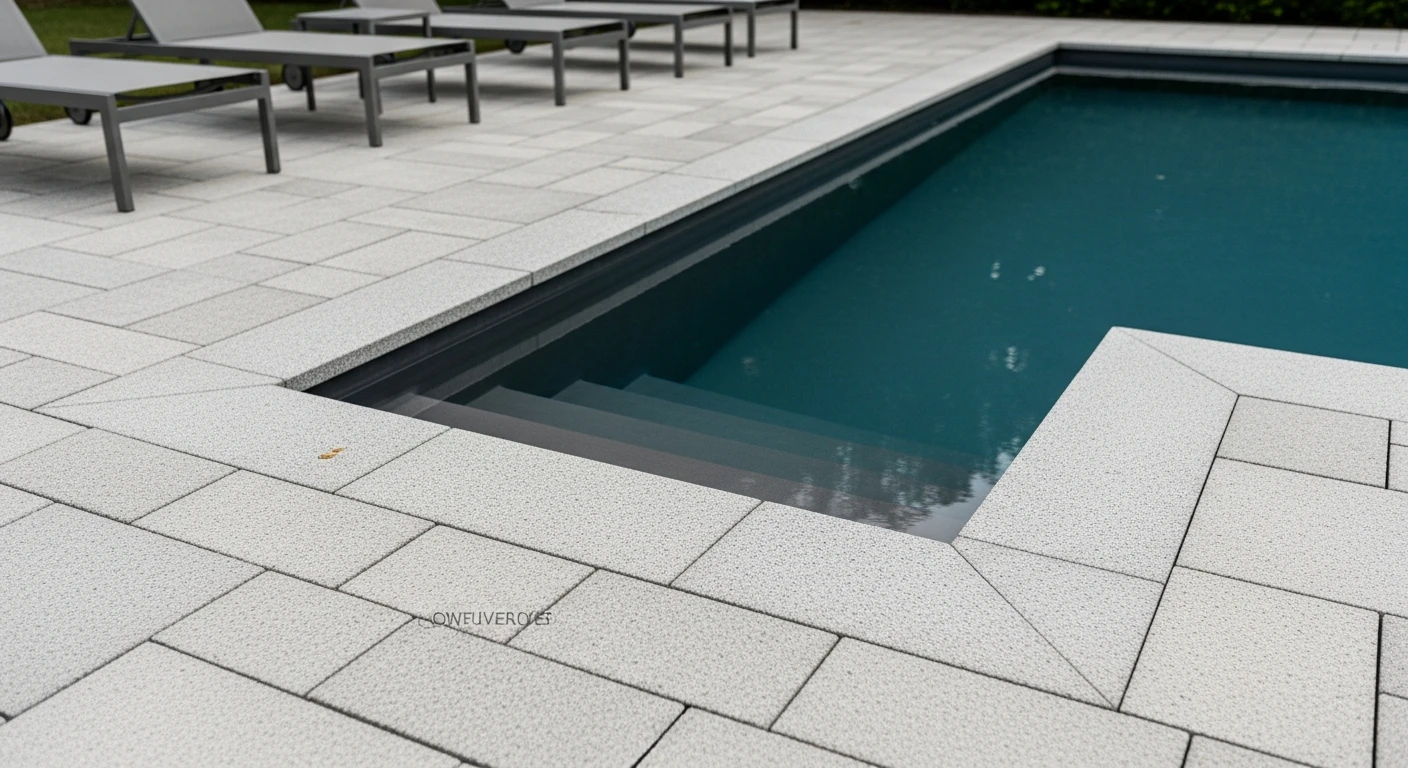
Granite Patio Pavers in Collier County: A Sub-base Protocol for Zero Subsidence in High-Rainfall Zones
Most granite paver installations I see in Collier County, from Naples to Marco Island, fail within five years. The failure isn't the granite itself—it's a world-class material. The critical error lies in the sub-base, which is often a generic mix completely unprepared for our subtropical downpours and notoriously sandy soil. My entire approach is built on correcting this single, costly oversight before it ever happens. I've been called to fix sinking, uneven patios in luxury Port Royal homes and shifting pool decks in Pelican Bay where the original contractor simply replicated a method that works in a different climate. My proprietary methodology focuses on a geo-stabilized foundation and a drainage-first principle, ensuring the paver surface remains perfectly level and stable, increasing its functional lifespan by a projected 300% against standard installations in this region.My Diagnostic Framework for Coastal Hardscape Failure
Before a single piece of granite is laid, my process begins with a site-specific analysis that standard installers often skip. I'm not just measuring square footage; I'm diagnosing the ground itself. My framework is based on identifying the three primary failure vectors in Collier County: hydrostatic pressure from torrential rain, sub-grade soil composition (predominantly sand), and UV degradation of jointing and sealing compounds. I once rectified a large-scale project in Golden Gate Estates where the entire patio shifted after one rainy season because the contractor ignored the area's high water table. My methodology prevents this by treating the sub-base not as filler, but as an engineered drainage system.The Collier-Spec Base: Geotextile Integration and Limerock Ratios
The core of my system is what I call the "Collier-Spec" base. It’s not just about depth; it’s about the precise composition of the layers. After excavating to a minimum of 8 inches for pedestrian traffic, the first layer is a non-woven geotextile fabric. This is the single most important element to prevent our fine sand from migrating up into the aggregate base, which is the root cause of sinking. The aggregate itself is not standard gravel; I specify a blend of Florida limerock (FDOT #57 stone) and crushed concrete for its superior compaction and drainage properties. The setting bed is always ASTM C33 sand, screeded to a uniform 1-inch depth—no more, no less. Any deviation here creates instability. This multi-layer system is designed to achieve a minimum of 98% Proctor density upon compaction, creating a monolithic slab-like foundation that water can pass through without disturbing the structure.The Zero-Error Installation Sequence
Executing this correctly is a matter of precision. I've refined this sequence over dozens of projects, from compact lanais in North Naples to sprawling outdoor living spaces. Every step is a quality control checkpoint.- Excavation and Subgrade Compaction: I excavate the area and compact the native sandy soil with a plate compactor. The goal is to create a firm, unyielding subgrade. Any soft spots are over-excavated and filled.
- Geotextile Fabric Deployment: The fabric is laid down, overlapping seams by at least 12 inches. This is a non-negotiable step that prevents soil contamination of the base layer.
- Base Material Installation & Compaction: The Collier-Spec limerock aggregate is added in 2- to 3-inch lifts. Each lift is individually watered and compacted until the 98% Proctor density is achieved. This prevents future settling.
- Screeding the Setting Bed: I lay down 1-inch pipes as guides and screed the ASTM C33 sand to a perfectly flat plane. This ensures each paver is fully supported.
- Granite Paver Placement: The granite pavers are laid in the desired pattern. I use string lines to ensure perfectly straight joint lines, typically between 1/8 and 1/4 inch wide.
- Joint Sand & Final Compaction: I use a high-performance non-staining polymeric sand designed for high-moisture environments. A plate compactor is run over the pavers to settle them and lock them into place before activating the sand with water.
Post-Installation Audits: Calibrating for Longevity and Slip-Resistance
My job isn't done when the last paver is set. I perform a post-installation audit. This includes checking for any paver lippage (height variations greater than 1/8 inch) and verifying a consistent surface slope of 1/4 inch per linear foot to guarantee proper water runoff away from the home's foundation. The final step, especially critical around pools, is the application of a deep-penetrating silane-siloxane sealer. Unlike topical acrylics that become slippery and yellow under the Florida sun, this type of sealer protects the granite from salt and chlorine without altering its natural texture or reducing its Dynamic Coefficient of Friction (DCOF). Given the high hydrostatic pressure during Collier County's rainy season, is your current hardscape's joint sand specified to prevent washout, or is it a failure point in waiting?Written by

Tags
granite pavers near me
granite cobblestone pavers
granite pool pavers
granite pavers for sale
granite driveway pavers