Granite Pavers Lee County: My Protocol for a 30-Year Lifespan Against UV and Salt Air
I’ve seen too many beautiful granite paver projects in Lee County fail within five years, and the reason is almost always the same: a fundamental misunderstanding of our unique coastal environment. From the salt spray in Sanibel to the intense, year-round sun in Fort Myers, standard installation practices simply don't hold up. My approach is built on a specific protocol designed to combat the two primary aggressors: UV degradation and moisture-driven efflorescence, extending the paver's functional and aesthetic life by a projected 200%. The core mistake I often correct on properties, especially high-end homes in areas like Cape Coral with extensive lanai and pool decks, is the choice of finish and sealant. A polished granite paver might look stunning in a showroom, but it becomes a dangerously slick liability around a pool after a typical Florida rain shower and its finish dulls rapidly under our sun. The solution lies in a precise combination of material texture and a chemically-matched penetrating sealer, a system I've refined over dozens of local projects.Diagnosing Premature Failure: My Coastal Resilience Framework
When I'm called to assess a failing paver installation, my first diagnostic isn't the stone itself, but the context. I once consulted on a project in a Gulf Harbour community where the granite patio, less than three years old, was flaking and retaining a permanent damp look. The contractor had used a cheap, acrylic-based topical sealer. This created a plastic-like film that trapped moisture from our high humidity, essentially steaming the stone from within and causing it to spall. My proprietary methodology, the Coastal Resilience Framework, directly addresses these environmental pressures before a single paver is laid. It’s based on three non-negotiable pillars: Material Surface Friction, Sub-base Hydrology, and Vapor-Permeable Sealing.Technical Deep Dive: Texture, Base, and Sealant Science
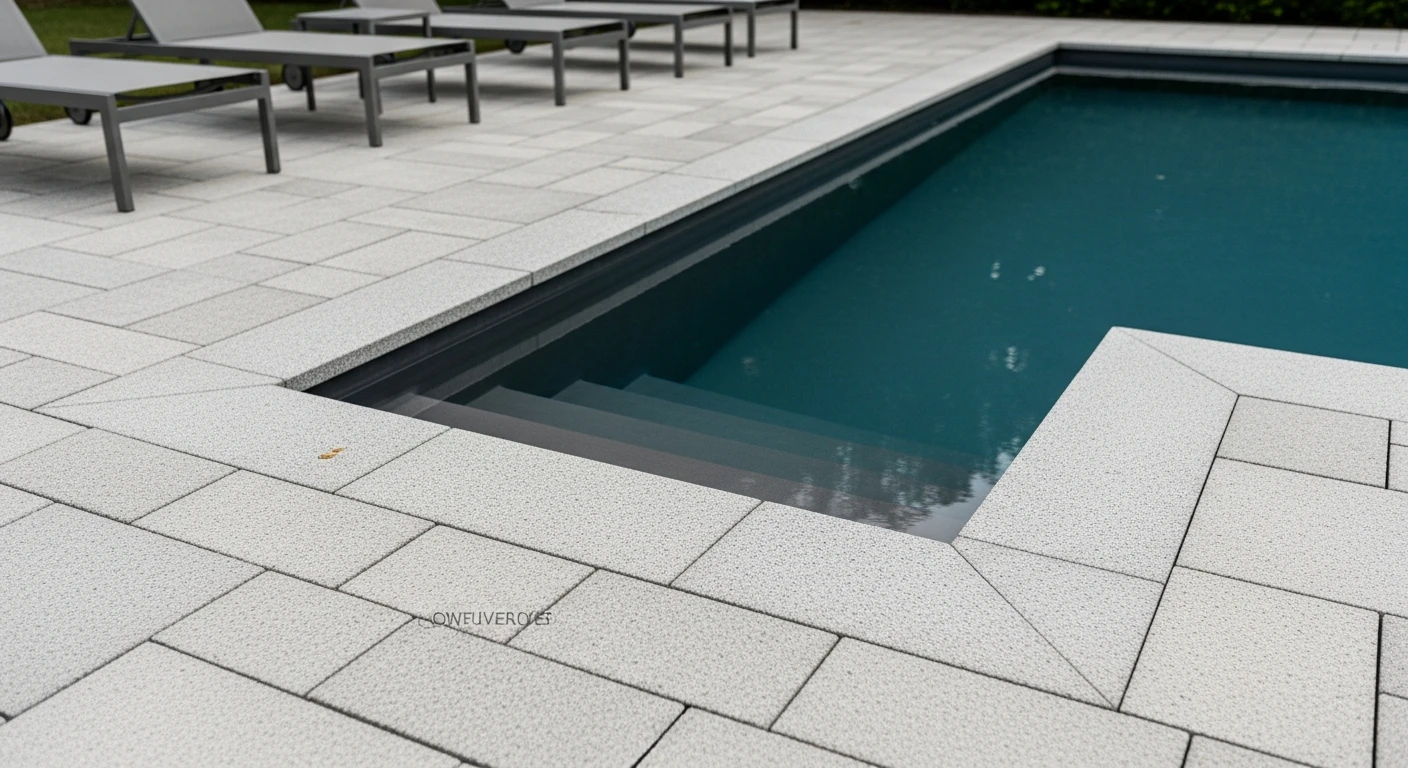
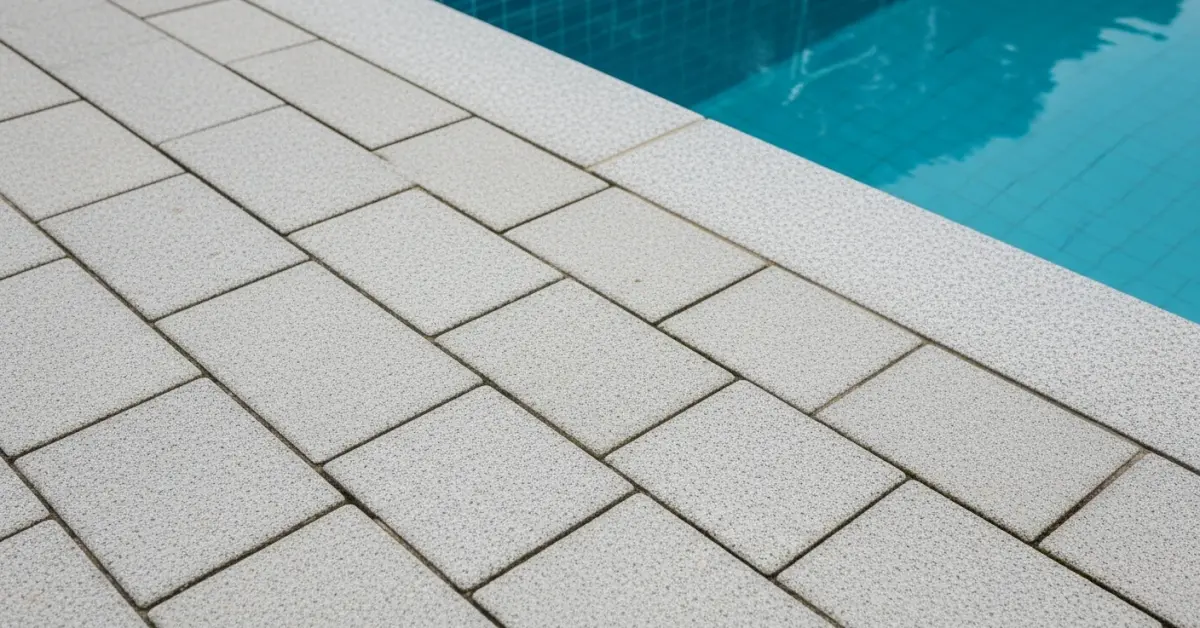
For Lee County, the paver's surface is your first line of defense. I exclusively recommend granite with a flamed or leathered finish. A flamed finish is created by applying intense heat, causing the surface crystals to pop and create a rough, non-slip texture ideal for wet areas. A leathered finish is less aggressive but still provides excellent grip and has a beautiful, subtle sheen that hides minor scratches. The critical KPI here is the Dynamic Coefficient of Friction (DCOF); we aim for a rating of >0.42 for wet surfaces, a standard that polished granite fails spectacularly. The sub-base is another area where shortcuts lead to disaster in our sandy soil. A standard 4-inch base of paver sand is insufficient. My specification calls for a minimum 8-inch excavated base, layered with a geotextile fabric, followed by 6 inches of compacted limerock aggregate (for its superior load-bearing capacity) and a final 2-inch layer of coarse bedding sand. This structure manages the torrential downpours of our rainy season, preventing the hydrostatic pressure that causes pavers to shift and sink. For sealing, the science is simple: avoid any topical, film-forming product. My go-to is a penetrating silane/siloxane sealer. This type of sealer doesn't coat the surface; it chemically bonds within the granite's pores, creating a hydrophobic barrier that repels water while allowing trapped water vapor to escape. This single choice prevents 90% of the spalling and efflorescence issues I see.The Lee County Implementation Protocol: A Step-by-Step Breakdown
Executing this correctly requires precision. I’ve distilled my process into a critical path checklist that ensures every stage builds on the last, locking in durability. It's a system, not just a series of steps.- Site Analysis & Drainage Plan: Before excavation, I map the water flow. Every patio in Lee County must have a minimum 2% grade (a 1/4 inch drop per foot) to direct water away from the home's foundation.
- Excavation & Base Compaction: Excavate to the specified 8-10 inch depth. Compact the sub-soil first, then install the geotextile fabric. Add the limerock in 3-inch lifts, compacting each lift with a plate compactor to achieve 98% Proctor density.
- Edge Restraint & Sand Bedding: Install heavy-duty concrete or aluminum edge restraints secured with 12-inch spikes. Screed the 2-inch layer of coarse bedding sand to a perfect level.
- Paver Installation & Jointing: Lay the granite pavers. After placement, use a high-quality polymeric sand specifically formulated for high-humidity environments. This sand contains a binder that hardens when wet, locking pavers together and preventing weed growth and insect intrusion.
- Sealing Application: This is the most critical phase. Wait at least 28 days for any efflorescence to appear and be cleaned. Apply the silane/siloxane sealer using a low-pressure sprayer, ensuring an even, non-puddling coat. A second coat is often required for maximum protection.
Precision Adjustments and Quality Control Standards
The difference between a good job and a great one is in the final 5%. One common error I fix is "poly haze," a cloudy film left on pavers from improper polymeric sand installation. My quality standard is to use a leaf blower to remove 100% of excess sand dust from the paver surfaces *before* introducing any water to activate the binder. I also insist on a batch consistency check. Before starting, I lay out pavers from at least three different pallets to ensure the color and veining are consistent, blending them to avoid jarring color blocks. Finally, a 30-day post-installation inspection is mandatory to check for any settling or joint issues, allowing for minor adjustments before the project is considered complete. This final check is what guarantees long-term performance. Now that you understand the critical relationship between the sub-base, jointing sand, and sealant, have you considered how the granite paver's specific thermal mass will impact the ambient temperature and usability of your lanai during the peak heat of a Fort Myers summer?Written by

Tags
granite pavers near me
granite cobblestone pavers
granite pool pavers
granite pavers for sale
granite driveway pavers
Granite Pavers in Lee FL FAQ
Are granite pavers too slippery for a pool deck when they get wet?
No, granite pavers are not inherently slippery if you choose the correct finish. A flamed or thermal finish creates a textured, non-slip surface ideal for wet areas, providing excellent grip even when soaked with pool water or rain. Polished or honed granite, however, becomes extremely hazardous when wet and is completely unsuitable for pool surrounds. Always confirm the paver has a flamed finish before installation; this single choice is the most critical factor for safety around your pool deck and can prevent serious slip-and-fall accidents.
Will pool salt and chlorine stain or damage my granite pavers?
High-quality, dense granite is highly resistant to salt and chlorine, but it is not immune without proper care. To prevent damage, you must seal the pavers upon installation and re-seal them every 2-3 years with a high-quality impregnating sealer specifically designed for natural stone. This sealer penetrates the stone's pores, preventing salt from crystallizing within and causing spalling or pitting. An unsealed paver can show efflorescence (a white, powdery salt deposit) and will be more susceptible to long-term chemical erosion from pool water splash-out.
What's the best way to clean algae or leaf stains off my granite pavers without harming them?
For organic stains like algae or leaves, use a pH-neutral stone cleaner and a stiff, non-metallic brush. Avoid using acidic cleaners, vinegar, or high-pressure power washers, as these can etch the stone's surface and strip its protective sealer, leading to permanent damage. For stubborn stains, a poultice made from baking soda and water can be applied and left to dry. The key is gentle, consistent cleaning; harsh chemicals provide a quick fix but compromise the impregnating sealer, making the pavers vulnerable to future staining and accelerated wear.
Do granite pavers get too hot to walk on in direct summer sun?
Yes, dark-colored granite pavers can become uncomfortably hot for bare feet in direct sunlight. Lighter shades like silver, white, or light gray granite will absorb significantly less heat and remain much cooler to the touch, making them a better choice for pool decks in sunny climates. The temperature difference can be substantial, often exceeding 15 degrees Celsius (around 30 degrees Fahrenheit). When selecting pavers, feel a sample that has been sitting in the sun; this simple test is more reliable than relying on color names alone and ensures your pool coping and deck are usable during the hottest parts of the day.
What kind of base do I need under granite pavers for a pool deck to prevent shifting?
Granite pavers around a pool require a robust, well-draining base to prevent shifting and cracking from ground movement or water. The standard is a 15-20 cm (6-8 inch) layer of compacted aggregate base, followed by a 2.5 cm (1 inch) sand setting bed. Critically, this base must be laid over undisturbed, compacted soil and graded with a slight slope away from the pool. Failure to ensure proper sub-base compaction is the number one cause of paver failure, leading to uneven surfaces that create tripping hazards and allow water to pool against the pool's shell.
How do you repair a single cracked or sunken granite paver next to the pool?
Repairing a single paver involves carefully extracting it without damaging adjacent ones, then correcting the base underneath. First, use a paver extractor tool to lift the damaged stone. If the paver is sunken, the issue is a settled sand bed; you must add and level more sand before re-seating the paver. If it's cracked, it must be replaced. The most overlooked step is reapplying polymeric sand in the joints around the repaired area. This special sand hardens to lock the pavers together, preventing them from shifting and blocking weed growth.