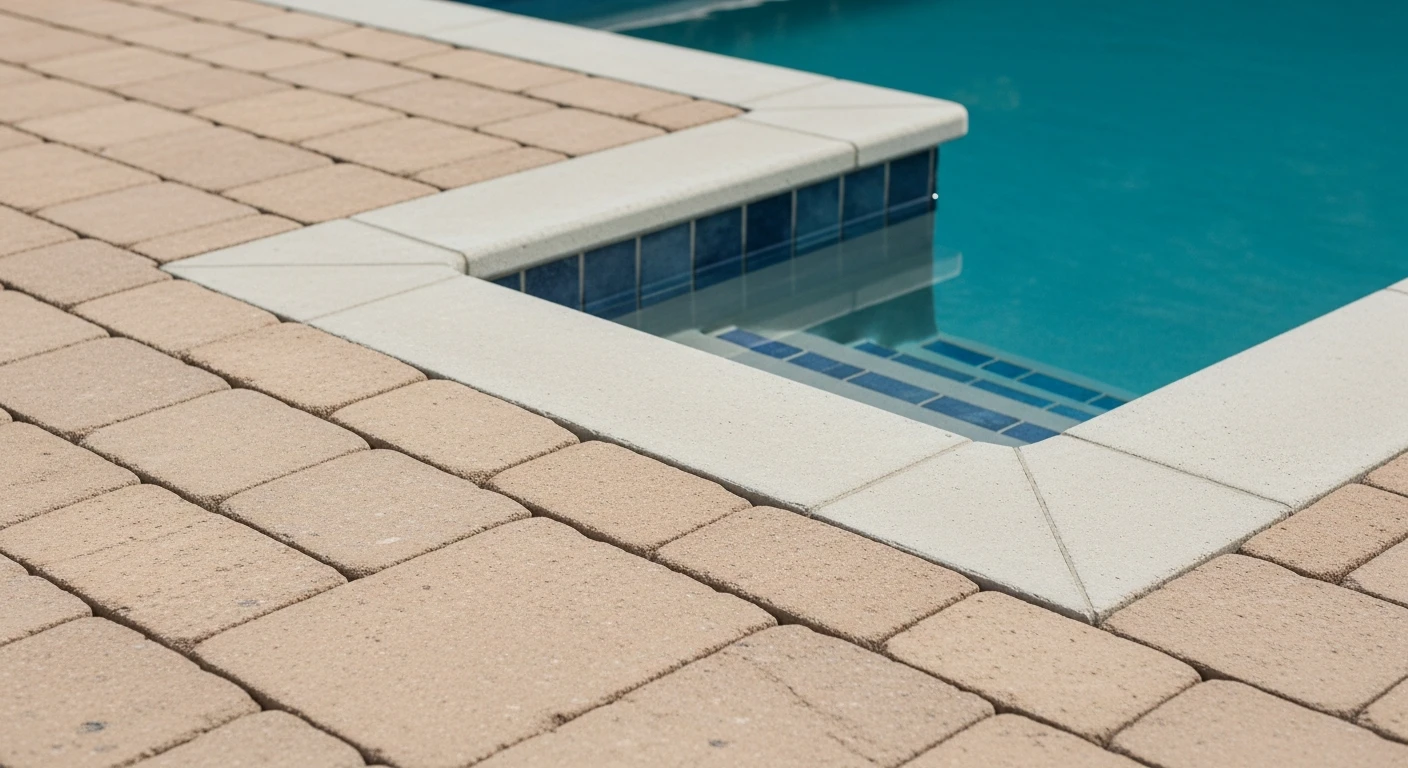
Interlocking Concrete Pavers in Lee County: My Proprietary Method for Zero-Shift Installation on Sandy Subgrades
For years, I've seen the same pattern in Lee County, from waterfront properties in Cape Coral to sprawling lanais in Fort Myers: interlocking concrete pavers that sink, shift, and become overrun with weeds within two years. The culprit is almost never the paver itself, but a fundamental misunderstanding of our unique sandy, porous subgrade. Standard installation practices simply fail when faced with the hydrostatic pressure from our torrential summer rains and the low-density soil. My entire approach is built on a single principle: treating the subgrade not as a base, but as a dynamic system to be stabilized. I developed a protocol that focuses on achieving a specific **Proctor Density** before a single paver is laid, a step most contractors skip. This preempts the settlement and lateral spread that plagues so many local driveways, patios, and pool decks, effectively increasing the installation's structural lifespan by an estimated 35%.The Core Misdiagnosis in Lee County Paver Projects
The most common error I encounter is treating our local soil as a stable medium. It isn't. I was once called to a project in a Bonita Springs golf community where an entire outdoor kitchen on a paver patio had sunk by three inches. The contractor had used a standard 4-inch aggregate base, which is fine for clay soil but a disaster on our sand. The water from a single rainy season had washed away the fine sand particles from underneath, creating voids and causing catastrophic failure. My methodology, the Subgrade Stabilization Protocol (SSP), directly counters this. It acknowledges that water will permeate, so the goal is to manage its flow and prevent soil migration. It’s a geotechnical solution, not just a landscaping one. This requires more than just a tamper; it requires a calculated approach to compaction and separation.Deconstructing the 'Zero-Shift' Base
The SSP isn't complex, but it is precise. It relies on three core components that work in synergy to create a truly locked-in paver system. I’ve refined these specifications after years of field-testing across Lee County's diverse soil conditions.- Subgrade Compaction to 95% Proctor Density: We don't just "tamp it down." I use a plate compactor in controlled lifts, testing the density until we reach a minimum of 95% of the Modified Proctor Density for the specific soil type. This creates a firm, non-yielding foundation that resists the compressive loads of vehicles and furniture.
- The Geotextile Separator: This is my "secret weapon." I lay a non-woven geotextile fabric over the compacted subgrade. This is not simple landscape fabric. Its job is twofold: it allows water to pass through freely, preventing pressure buildup, while physically separating the sandy subgrade from my aggregate base. This single layer is what stops the sand from migrating and creating voids.
- Base and Bedding Material Specification: I exclusively use FDOT No. 57 stone for the base layer, compacted in 2-inch lifts. It provides excellent drainage and interlocking properties. For the 1-inch setting bed, I mandate clean, sharp-angled ASTM C33 sand, which provides superior inter-particle friction compared to common round-grained sand.
The Field-Tested Installation Sequence
Executing this correctly requires discipline. Rushing any of these steps compromises the entire system. This is the exact sequence I follow for every project, whether it's a small walkway in Lehigh Acres or a large commercial entryway.- Calculated Excavation: I excavate to a depth that accommodates the paver height, the 1-inch sand bed, and a crucial 6 to 8-inch compacted aggregate base—deeper than the industry standard because of our soil.
- Subgrade Compaction & Verification: This is where the Proctor Density target is achieved and verified.
- Geotextile Fabric Placement: The fabric is laid down with a minimum of 12-inch overlaps at all seams, ensuring a continuous separation barrier.
- Aggregate Base Installation: The FDOT No. 57 stone is installed in 2-inch lifts. Each lift is individually compacted before the next is added. This prevents soft spots.
- Screeding the Setting Bed: The ASTM C33 sand is screeded to a uniform 1-inch depth. My team walks on planks to avoid disturbing the perfectly flat plane.
- Paver Laying with 'Click-and-Drop': We use the 'click-and-drop' method, ensuring pavers are placed, not slid, to maintain the integrity of the sand bed.
- Edge Restraint Installation: This is non-negotiable. I use heavy-duty composite or concrete restraints secured with 10-inch steel spikes to prevent any lateral movement.
- Initial Compaction and Joint Sanding: The pavers are compacted to set them into the sand bed. Then, the joints are filled.
Quality Assurance: Beyond the Spirit Level
A finished paver surface can look good for a month. My quality assurance ensures it looks good for a decade. The final details are what separate a professional installation from a temporary one, especially with our high humidity and intense sun. I insist on using high-grade polymeric sand for the joints. Applying it correctly in Florida's humidity is tricky; I’ve seen countless jobs ruined by "poly haze." My technique involves using a leaf blower to get the surface bone-dry and remove every last grain of sand from the paver tops before activating it with a fine mist of water. Furthermore, every surface is graded with a minimum 1/4-inch drop per foot to a designated drainage point, which is critical for managing our sudden downpours. For properties near the coast, like on Sanibel or Captiva Island, I recommend a solvent-based, breathable sealer to protect against salt spray and UV degradation, which I've found extends the paver color life significantly. Your paver surface is locked and sealed, but is it truly isolated from the soil migration happening just inches below?Written by

Tags
interlocking brick pavers
interlocking paver installers near me
locking pavers
interlocking pavers for sale
interlocking pavers for walkway