
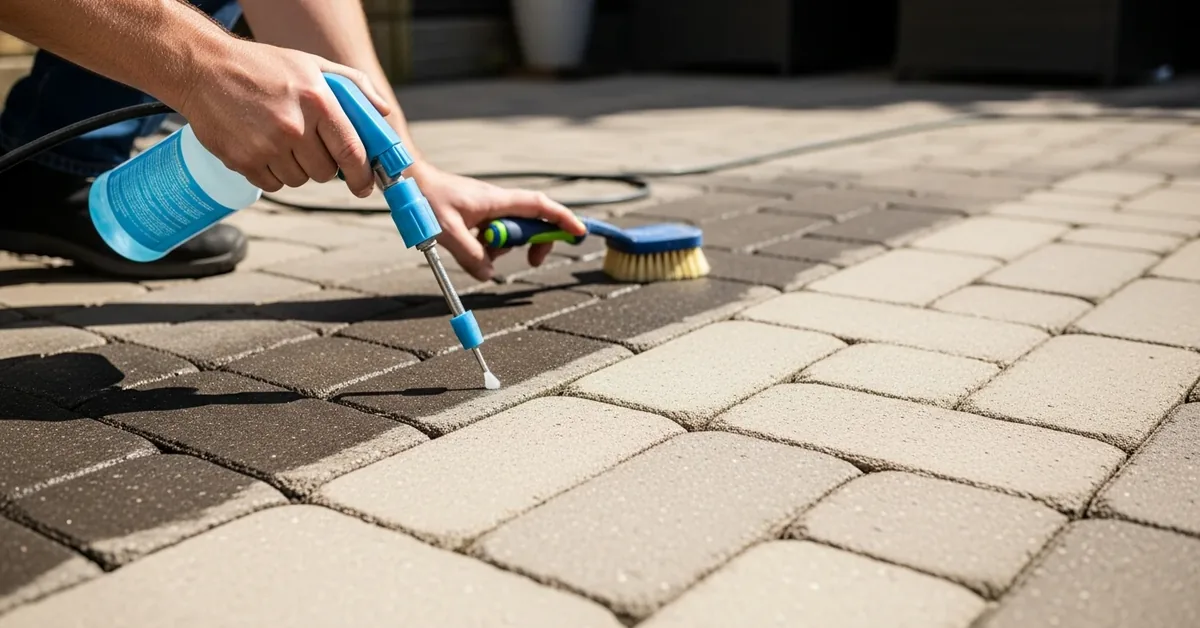
Patio Paver Cleaner: My Zero-Pressure Method to Prevent Joint Sand Loss in Osceola County
As a specialist working on patios across Osceola County, from the newer developments in Lake Nona's vicinity to the established homes in Kissimmee, I’ve seen the same critical error repeated: property owners grabbing a high-pressure washer to blast away the green and black buildup. This approach is the single biggest cause of paver degradation I encounter. It violently erodes the crucial **jointing sand** between the pavers, creating instability and providing a perfect new home for weeds and ant colonies within weeks. The relentless Florida humidity, especially during our rainy season from June to September, means the real enemy isn't dirt—it's aggressive biological growth. My entire cleaning philosophy is built around neutralizing this growth at a molecular level, not just blasting it off the surface. This method not only cleans but also sanitizes the pavers, extending the clean appearance by up to 300% compared to pressure washing alone and protecting the structural integrity of your patio investment.My Diagnostic Framework for Osceola's Paver Contamination
Before I even mix a cleaning solution, I perform a diagnostic that most contractors skip. I assess the type of paver—be it the common concrete pavers in St. Cloud family homes or the more delicate travertine found around pools in Reunion—and identify the primary contaminant. I've seen homeowners in Celebration spend a fortune on generic "paver cleaners" that fail because they don't address the specific issue. My methodology, which I call the **Biostatic Restoration Method**, is based on a precise chemical diagnosis. This involves identifying two main categories of stains. First, **organic stains** like black mold, green algae, and moss, which thrive in our damp climate. Second, **inorganic stains** such as efflorescence (that white, chalky powder) caused by mineral salts leaching from the concrete, or rust spots from metal patio furniture. Each requires a completely different chemical approach. Using the wrong one can permanently set the stain or even damage the paver surface.pH-Specific Cleaning: The Chemistry Behind Permanent Stain Removal
Here's a technical detail that makes all the difference: the **pH level** of the cleaner. For the pervasive organic growth we see in Osceola County, I exclusively use a high-alkaline, sodium hypochlorite-based biocidal cleaner. This solution doesn't just clean; it kills the algae and mold spores deep within the paver's pores. I apply it with a low-pressure, high-volume system that allows the solution to dwell on the surface, achieving a full **spore neutralization** without dislodging a single grain of sand. For inorganic issues like efflorescence, an alkaline cleaner is useless. In these cases, a carefully diluted acid-based cleaner is required to dissolve the mineral salts. I’ve been called to fix jobs where a contractor used an acid wash on an organic stain, which did nothing but etch the surface of the pavers. My process ensures the right chemistry is applied, preventing irreversible damage and guaranteeing a uniform finish.The 4-Stage Application Process for Lasting Results
Executing this correctly is a matter of precision. Blasting through the steps is how you get callbacks and premature failure. My field-tested process is methodical and prioritizes long-term stability over a quick surface clean.- Stage 1: Low-Pressure Debris Removal. I start with a fan-tipped wand at no more than 500 PSI to gently clear away loose leaves, dirt, and surface debris. This is a rinse, not a blast. The goal is to prepare the surface for chemical treatment without disturbing the paver joints.
- Stage 2: Biocidal Agent Application. I apply my pH-specific cleaning agent and let it dwell for a calculated period, typically 15-20 minutes, allowing it to penetrate and kill all organic matter. You can literally see the algae and mold dissolving before your eyes.
- Stage 3: Joint Restoration with Polymeric Sand. After a final, gentle rinse, this is the most critical step. I wait for the surface to be bone-dry. I then sweep new polymeric sand into all the joints. This type of sand contains a polymer that, when activated with a light mist of water, hardens to lock the pavers in place, forming a durable barrier against weeds and insects.
- Stage 4: Penetrating Sealer Application. The final step is applying a high-quality, breathable, silane-siloxane sealer. This is not a topical coating that creates a slippery film. It penetrates the paver to repel water and oil, making future cleanups significantly easier and protecting against the harsh Osceola sun.
Calibrating Sealer Application for Osceola's High-UV Index
Simply spraying a sealer on isn't enough. Given our intense sun, the sealer must be calibrated for our specific UV index. I’ve seen improperly applied sealers turn yellow and flake off within a year. My standard is to apply two thin coats, allowing for full penetration without surface pooling. I aim for a **95% saturation rate** into the paver's substrate. For pool decks, I always integrate a polymer grit additive into the final coat to ensure a non-slip surface, a critical safety standard that is often overlooked. This precision work ensures the sealer enhances the pavers' natural color without creating an artificial, plastic-like sheen. After cleaning, most contractors seal pavers within 24 hours, but have you measured the subsurface moisture content to prevent the sealer from trapping water and causing delamination?Written by

Tags
cleaning solution for patio pavers
cleaner for paver patio
paver power washing near me
power wash patio pavers
cleaning pavers with power washer
Patio Paver Cleaner in Osceola FL FAQ
Can't I just pressure wash my own pavers? What's the difference?
You can, but using the wrong pressure or nozzle can permanently etch the paver surface and wash out the essential jointing sand. Professional cleaning uses controlled pressure combined with specific detergents to lift stains without causing this damage, which is known as aggregate exposure. We also ensure that all that dirty runoff, which can contain algae and chemicals, doesn't end up in your pool, which could throw off your water chemistry and require expensive rebalancing. The key difference is avoiding costly, irreversible damage to the pavers themselves.
What are these white, chalky stains on my pavers and will cleaning remove them?
That white haze is likely efflorescence, which is mineral salt migrating from within the paver to the surface as water evaporates. While a standard cleaning can temporarily remove the surface salts, it often returns if the underlying moisture issue isn't addressed. A professional service uses specialized acidic cleaners to dissolve the deposits and can then recommend sealing the pavers to block moisture pathways, providing a much longer-lasting solution than just washing the surface.
Will cleaning chemicals harm my pool water or the surrounding plants?
Yes, improper chemical use can absolutely damage your pool and landscaping, which is a primary risk of DIY cleaning. We use biodegradable, pool-safe detergents and implement strict runoff control, using barriers and collection systems to divert all cleaning water away from your pool and sensitive garden beds. This prevents a sudden drop in your pool's pH level or the introduction of phosphates that feed algae blooms, protecting both your investment in the pool and your landscape.
My pavers are really slippery when wet. Will cleaning help with this?
Cleaning is the critical first step, as it removes the biofilm of algae and mildew that creates that dangerous, slippery surface. However, for a lasting non-slip finish, the key is what happens after the cleaning. We recommend applying a sealer with a non-slip additive, which is a gritty polymer that bonds into the sealant's top layer. This creates a texture similar to fine sandpaper, significantly increasing traction without altering the paver's appearance, a crucial safety upgrade for any pool deck.
How do you get rid of stubborn oil and rust stains without damaging the paver color?
Targeted poultices and specialized degreasers are required for these types of deep-set stains, as high-pressure water alone will not lift them. For oil, we apply a chemical poultice that draws the oil out of the paver's pores as it dries. For rust, a specific acid-based gel is used to dissolve the iron oxide without bleaching the surrounding paver. This spot-treatment approach is far safer for the paver's color and integrity than blasting the entire area with harsh, generic chemicals.
After cleaning, should I have my pavers sealed? Is it worth the cost?
Yes, sealing your pavers after a deep clean is the single best way to protect your investment and reduce future maintenance. A quality sealant penetrates the paver to block moisture, preventing the growth of moss and algae, and creates a protective barrier against stains from spills and leaves. More importantly, it helps lock the polymeric sand in the joints, preventing it from washing out and leading to paver shifting or weed growth. The cost of sealing is minor compared to repairing shifted pavers or constant deep cleaning.


