
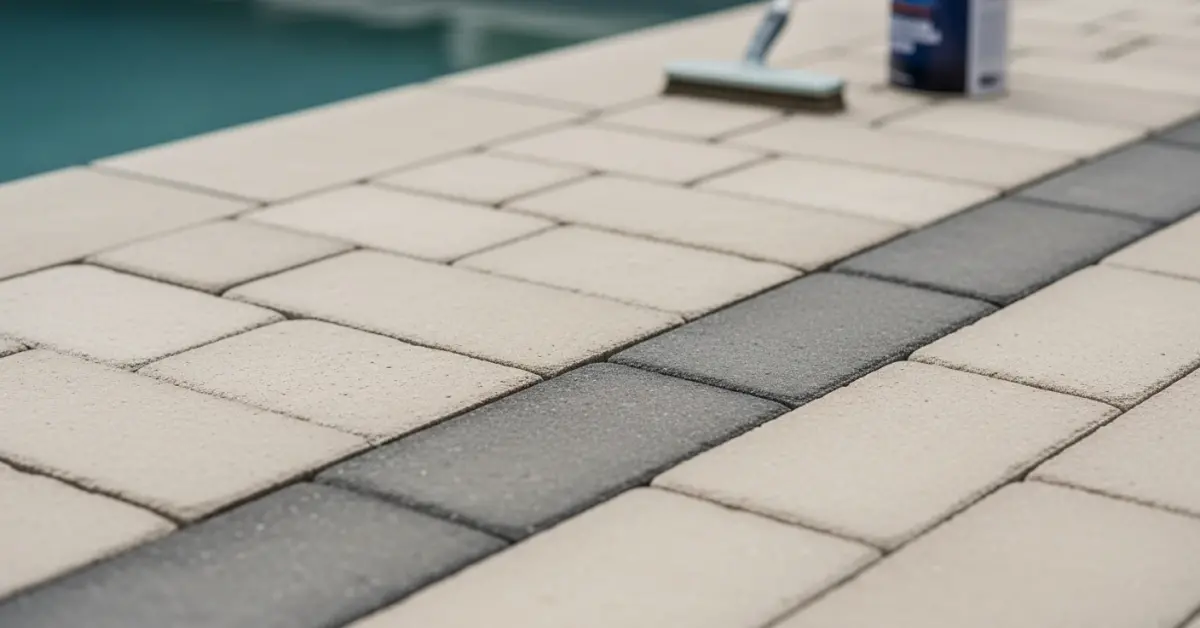
Patio Paver Restoration in Lee County: My Protocol for Eliminating Subtropical Algae Growth and Salt-Induced Efflorescence
As a paver restoration specialist operating across Lee County, I’ve seen firsthand how our unique subtropical climate wages a relentless war on outdoor surfaces. The combination of intense UV exposure, high humidity, and salt spray from the Gulf creates a perfect storm for paver degradation. A simple pressure washing job, the go-to for many, often just scratches the surface and can even cause permanent damage by etching the pavers or blowing out the joint sand. The real solution lies in a systematic restoration process that addresses the root causes of decay specific to our coastal environment. My work, from waterfront properties in Cape Coral to sprawling lanais in Fort Myers, has taught me that a successful restoration isn't just about cleaning; it's about re-engineering the paver system's defenses. It involves a precise diagnosis of organic growth, mineral deposits, and joint stability, followed by a multi-step treatment that can increase the functional lifespan of a paver patio by over 35%. This is the methodology I’ve refined over years of practice, moving beyond aesthetics to deliver long-term structural integrity.My Diagnostic Framework for Florida Paver Degradation
Before any equipment is turned on, I perform a mandatory Site-Specific Degradation Analysis. This isn't a simple visual glance. On a recent project on Sanibel Island, the client complained about a "white haze" on their travertine pool deck. A less experienced contractor might immediately try an acid wash. My analysis, however, identified it not as simple efflorescence, but as a combination of salt deposit from the air and failing, non-breathable sealer trapping moisture. Applying the wrong chemical would have permanently clouded the stone. My framework isolates three primary failure points.Deep Dive: Chemical Ratios and Surface Porosity Analysis
The secret to a flawless restoration is in the details the average company misses. The first is understanding the paver’s surface porosity. I conduct a simple water drop test: if water beads up, a topical sealer is present; if it soaks in quickly, the pores are open and vulnerable. This dictates my entire chemical and sealing strategy. For the porous, sun-bleached pavers common in Lehigh Acres, a penetrating sealer is required to stabilize the color from within. For dense, sealed surfaces, the first step is chemical stripping, not blasting. The second detail is the chemical cleaning solution. I don't use a generic "all-purpose" cleaner. My primary tool is a carefully calibrated soft wash solution using sodium hypochlorite. For heavy algae, I might use a 4% SH concentration, but for delicate travertine near saltwater canals, I’ll buffer the solution and drop it to 2.5% to prevent any risk of etching while still achieving a 100% kill rate on organic growth. This level of precision is non-negotiable.The Coastal Climate-Lock Restoration Process: Step-by-Step
My proprietary restoration process is designed to counter the specific threats of Lee County's climate. I’ve seen projects fail in six months because a step was skipped or rushed. Following this sequence is critical for durability.- Phase 1: Controlled Surface Decontamination. I begin with the aforementioned soft wash. Unlike high-pressure washing that can scar the paver face, this method uses low pressure (under 150 PSI) to apply the cleaning solution. It lifts organic stains and sanitizes the surface without eroding the paver itself. This is particularly crucial for older, more fragile pavers.
- Phase 2: Joint Excavation and Stabilization. This is the most commonly overlooked step. I use a specialized power washer tip to surgically remove old, contaminated sand, mold, and weeds from the joints. We are aiming to clear at least 1 to 1.5 inches of depth to ensure a solid foundation for the new sand.
- Phase 3: Polymeric Sand Application. Once the surface is bone-dry—a real challenge during our summer rainy season—I apply high-grade polymeric sand. This is not just filler; it's a structural component. When activated with a precise amount of water, it hardens to form a durable, flexible mortar. This locks the pavers together, prevents weed growth, and resists washout from heavy rains. A common error I fix is "poly-haze," a residue left from improper activation or application on a damp surface.
- Phase 4: High-Solids Sealer Application. The final protective layer. I exclusively use commercial-grade, breathable, acrylic-based sealers with high solids content and a UV inhibitor. This is critical to prevent color fade from the intense Florida sun.
Precision Sealing and Curing Protocols for High-Humidity Environments
The final sealing phase is where many projects succeed or fail. For pool decks and lanais, I always integrate a polymer non-slip additive directly into the final coat of sealer. It creates a texture that is virtually invisible but dramatically increases the surface's coefficient of friction when wet. This isn't an upsell; it's a safety standard. Application is done with a battery-powered sprayer to ensure an even, consistent coat without roller marks. I apply two thin coats. The first is a "flood coat" that soaks into the paver and sand, and the second is a "top coat" that provides the surface sheen and protection. Curing is also critical. In Lee County's humidity, I advise clients to allow for a 50% longer curing time than the manufacturer suggests. This means absolutely no foot traffic for at least 24 hours and no heavy furniture or vehicle traffic for a full 72 hours to ensure a complete molecular bond. Is your current paver sealer trapping moisture and accelerating spalling, or is it a microporous coating engineered to withstand Florida's hydrostatic pressure?Written by

Tags
paver patio restoration cost
paving stone repair
refinishing paver patio
paver patio restoration near me
paver patio cleaning and sealing near me
Patio Paver Restoration in Lee FL FAQ
My pavers are sinking in spots. Does this mean I have a serious leak from my pool plumbing?
Sunken pavers often indicate a washout of the base material, which can be caused by a plumbing leak or simply poor drainage. A leak as small as 3 mm can displace a significant amount of the sand and gravel base over time, creating voids that lead to paver settlement. Before any paver leveling, we perform a pressure test on the pool's underground lines to rule out a leak as the root cause. Fixing the pavers without addressing an active leak is a costly mistake, as the problem will quickly return and potentially damage the pool's structure.
What is this white, chalky film on my pavers, and will restoration get rid of it?
That white film is likely efflorescence, which is a natural salt deposit left behind as moisture evaporates from within or beneath the paver. Our restoration process addresses this by deep cleaning the pavers with a specialized acidic cleaner designed to dissolve these mineral salts without damaging the paver's surface. However, the non-obvious issue is that efflorescence points to an underlying moisture problem. Applying a high-quality, breathable penetrating sealer after cleaning is critical to minimize water absorption and prevent the white film from returning.
Can't I just pressure wash my patio myself and save money?
You can, but improper pressure washing is a primary cause of paver damage we see. Using a tip that is too narrow or holding the wand too close can permanently etch the paver surface, a mistake called 'striping' that cannot be reversed. More critically, a DIY pressure washer will blast out the stabilizing joint sand, leaving the pavers loose and prone to shifting. Our process uses controlled-pressure surface cleaners and we always finish by installing new polymeric sand, which hardens to lock pavers in place and inhibit weed growth.
What exactly is polymeric sand, and why is it so important for paver restoration?
Polymeric sand is a fine sand mixed with a polymer binding agent that is activated by water. After we sweep it into the joints, a light misting causes it to harden into a firm, flexible mortar that locks the pavers together, preventing movement and weed growth. The critical detail many installers miss is proper compaction; we use a plate compactor to vibrate the sand deep into the joints before activation. Without this step, the sand only forms a thin, weak crust on top that will crack and fail within a year.
My pavers look faded and old. Will sealing them actually bring the color back?
Yes, sealing pavers can dramatically restore and enhance their original color. We use high-quality sealers that contain acrylic resins which deepen the tones, creating a rich, 'wet look' that makes old pavers look new again. The key is proper surface preparation; sealing over dirt or efflorescence will trap it, creating a cloudy, blotchy finish. A crucial, often-skipped step is ensuring the pavers are perfectly dry, with a moisture content below a specific threshold, to prevent the sealer from failing and turning white.
How long will a professional paver restoration and sealing last?
A properly executed restoration, including deep cleaning, re-sanding, and sealing, should maintain its structural integrity and appearance for 3 to 5 years. The longevity depends heavily on the quality of the sealer used and the amount of foot traffic and sun exposure the patio receives. Be wary of any company offering a warranty longer than this without a scheduled maintenance plan. The most common failure point is the breakdown of the joint sand, which is why we recommend a light cleaning and a maintenance coat of sealer every 2-3 years to protect the joints and keep the surface pristine.


