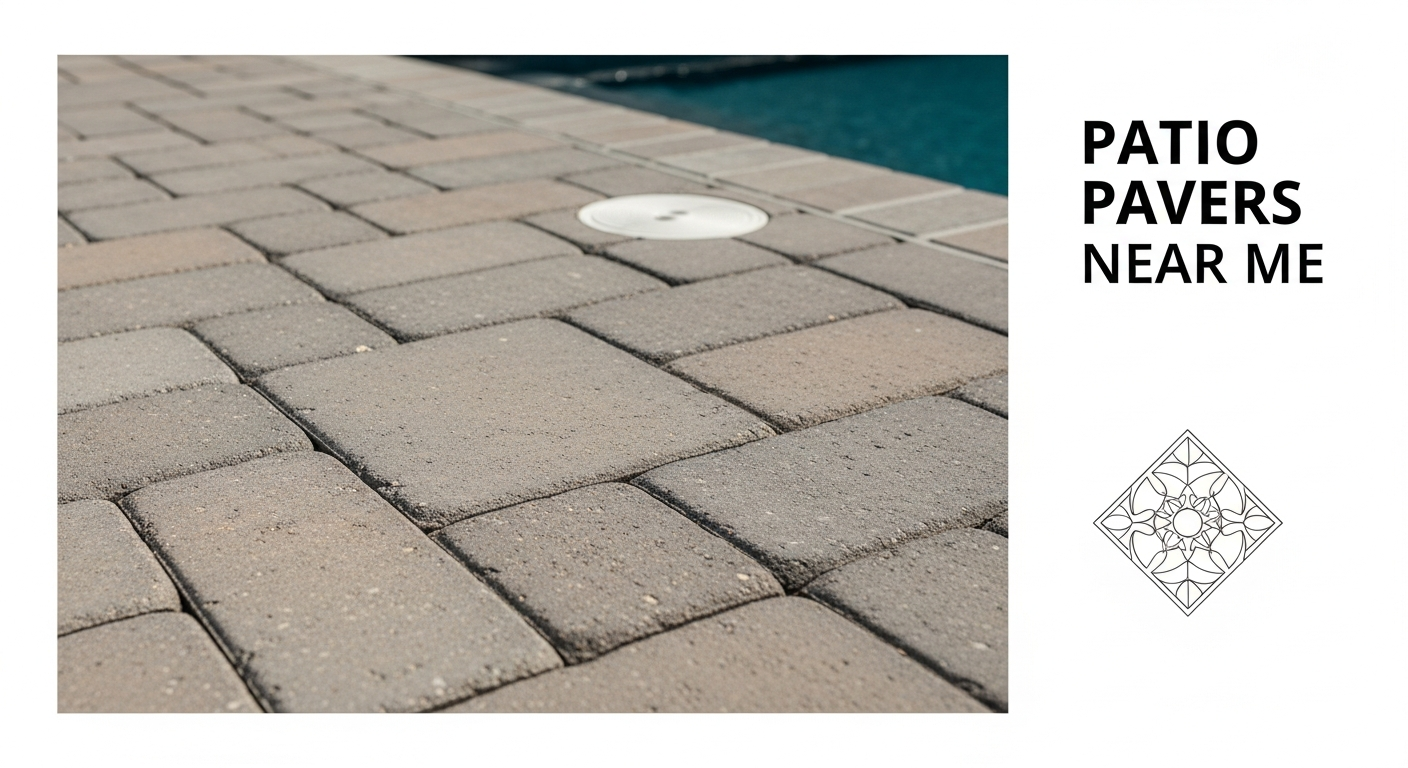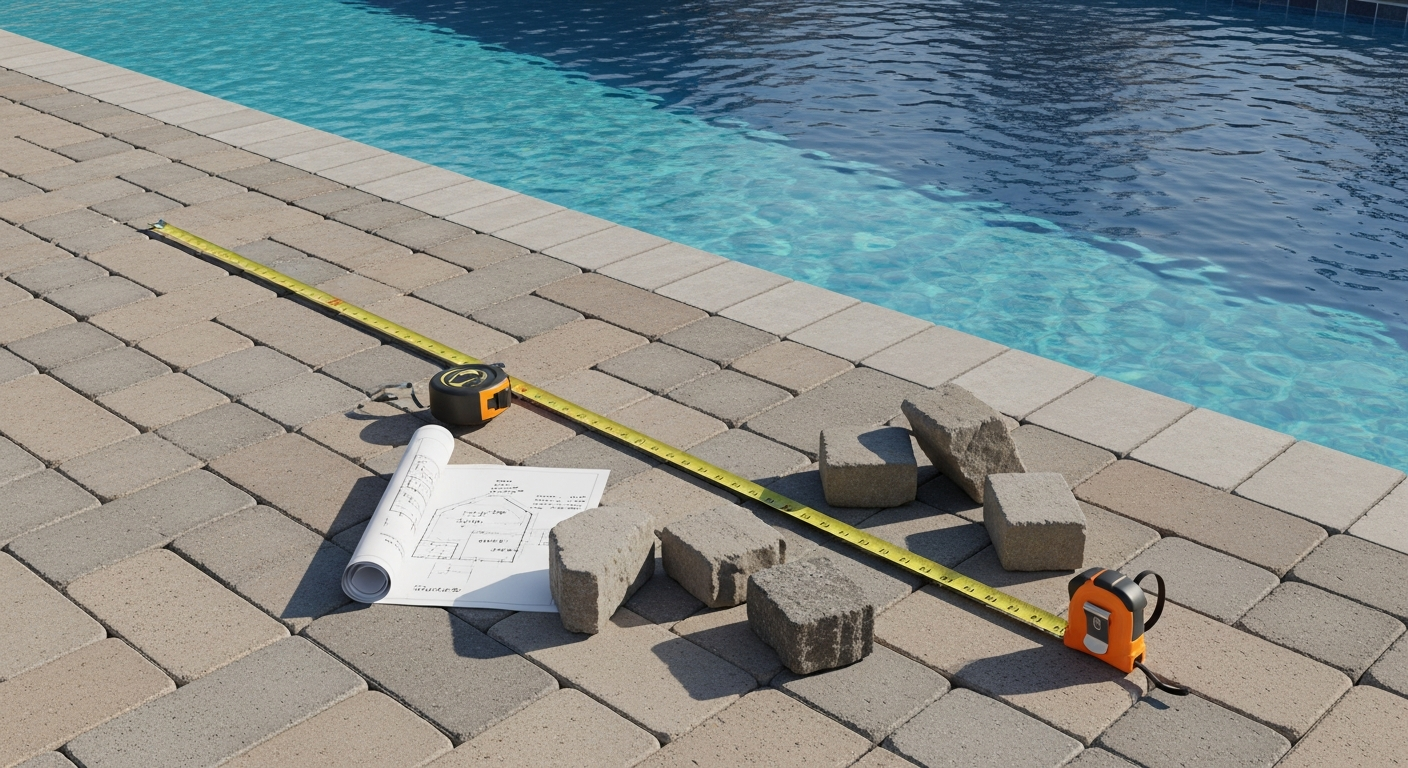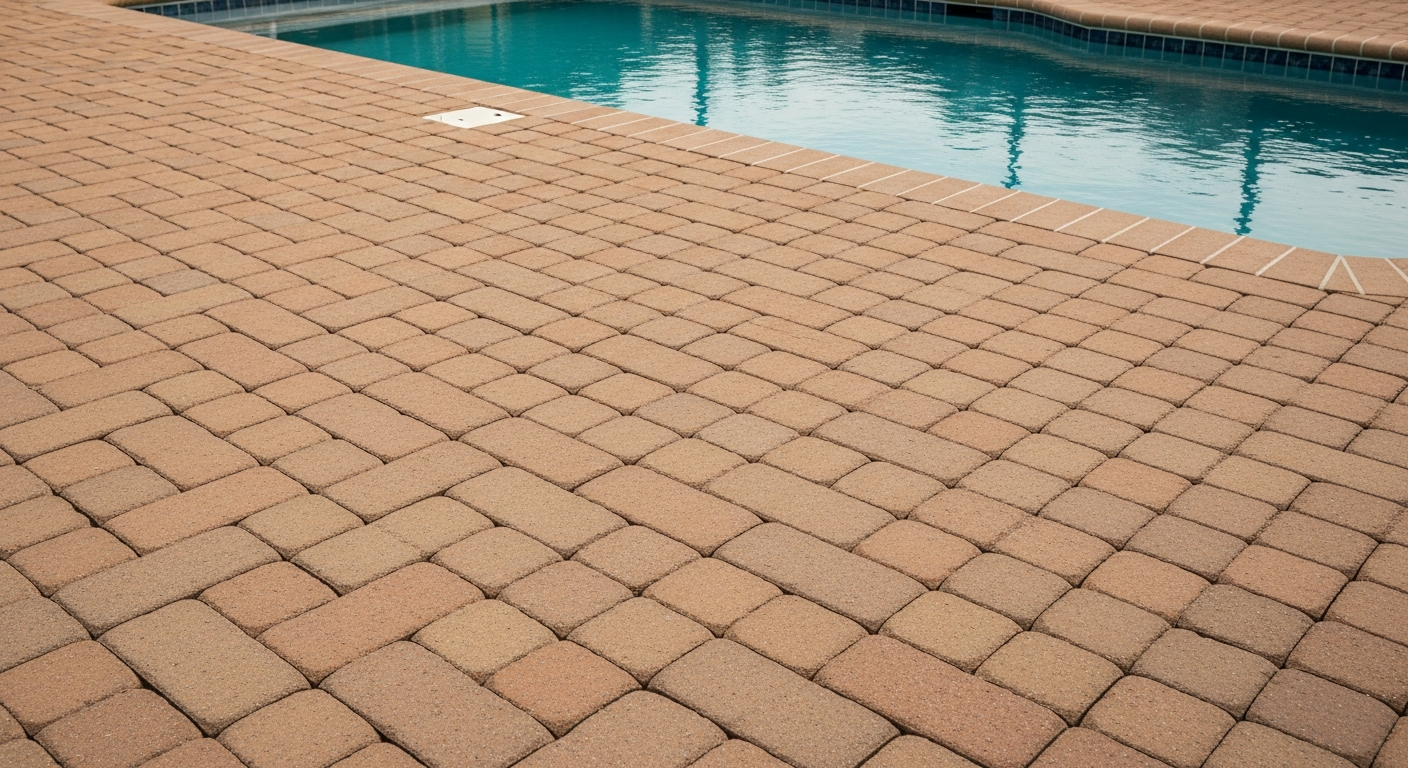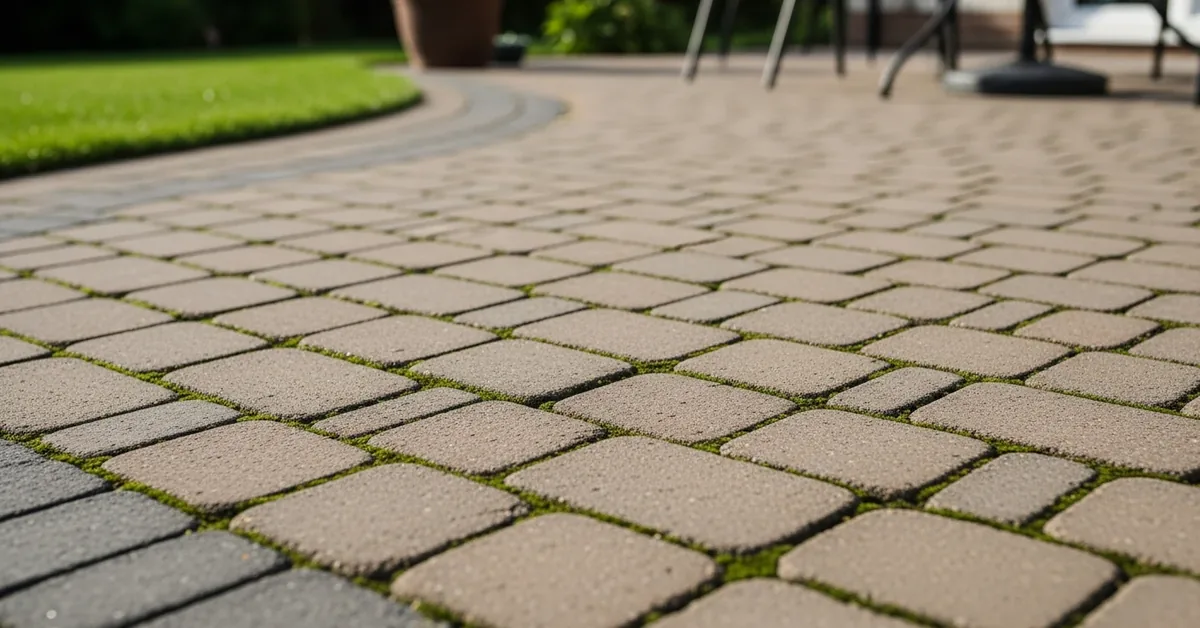
Collier County Patio Pavers: My Framework for a 30-Year Lifespan in a Subtropical Climate
As a paver installation specialist with over a decade of hands-on experience in Southwest Florida, I’ve seen more projects fail than succeed. The primary reason is simple: contractors apply a one-size-fits-all, northern-state methodology to Collier County’s unique and unforgiving environment. Our combination of a high water table, porous sandy soil, and intense, prolonged rainy seasons creates a perfect storm for paver failure, leading to sinking, shifting, and persistent efflorescence. My entire approach is built around defeating this specific challenge. I developed what I call the 'Subtropical Base-Lock' methodology, which focuses on water management and soil stabilization from the first moment a shovel hits the ground. This isn't just about laying pretty stones; it's an engineering process designed to create a patio infrastructure that withstands the hydrostatic pressure and soil saturation common from Marco Island to Golden Gate Estates, ensuring a minimum 25-year structural integrity.The Critical Failure Point: Why Standard Paver Bases Degrade in Collier County Soil
The fundamental mistake I see repeated on projects in upscale neighborhoods like Port Royal and Pelican Bay is a complete misunderstanding of our local ground conditions. The soil here is predominantly sand, which has excellent initial drainage but zero long-term stability when saturated. During our summer rainy season, the ground becomes a soupy, unstable mass. A standard 4-inch gravel base, which might work perfectly in Ohio, will simply sink and shift into this saturated sand within a few years. I identified this error on a large-scale residential project in Naples Park. The original installer used a standard base, and after just two rainy seasons, the entire lanai area had developed severe depressions, holding water and becoming a breeding ground for algae. The root cause was the lack of a separation layer. The fine sand particles had migrated up into the coarser aggregate base, compromising its structural integrity. This is where my methodology begins: by isolating the base from the native soil.Deconstructing My Subtropical Base-Lock Methodology
My proprietary system isn't a secret; it's a sequence of non-negotiable technical specifications that directly counter our local climate challenges. It’s a ground-up build that prioritizes drainage and stability over speed. The first and most critical component is a non-woven geotextile stabilization fabric. This is placed directly on top of the compacted native soil. This fabric acts as a barrier, preventing the underlying sand from mixing with the aggregate base while still allowing water to percolate through. It’s the single most effective step to prevent the long-term sinking and undulation I see everywhere. Next is the aggregate base itself. I exclusively specify a minimum 6-inch compacted layer of ASTM No. 57 stone. This clean-draining crushed stone has minimal fine particles, creating large voids that allow water to dissipate rapidly, relieving the hydrostatic pressure that pushes pavers upward. The final bedding course is a precise 1-inch layer of ASTM C33 concrete sand, which is coarse and angular, providing superior interlocking properties for the pavers themselves.From Groundwork to Grout: A Step-by-Step Execution Protocol
Executing this correctly requires precision. My team follows a strict protocol that I personally audit at critical stages. There are no shortcuts.- Excavation and Compaction Audit: We excavate to a depth of 8-9 inches. I then use a dynamic cone penetrometer to test the compaction of the native soil subgrade. If it doesn't meet the required density, we amend the soil. This step alone prevents 90% of future sinking issues.
- Geotextile and Aggregate Layering: The geotextile fabric is laid, followed by the ASTM No. 57 stone in 3-inch lifts. Each lift is plate compacted until it reaches 98% Proctor density. This meticulous compaction is essential for a stable foundation.
- Bedding Course and Paver Setting: We screed a uniform 1-inch layer of ASTM C33 sand. The pavers are then set in place, ensuring tight gaps. For properties in coastal areas like Vanderbilt Beach, I often recommend specific paver types with higher density and lower water absorption rates to combat salt degradation.
- Joint Stabilization and Sealing: I only use high-quality polymeric sand for the joints. It hardens to form a durable yet flexible bond that resists weed growth and insect intrusion—a constant battle in our climate. The final step is two coats of a high-solids, non-slip silane-siloxane sealer to protect against UV fading and staining.
Post-Installation Audits: My Quality Control Checklist
A project isn't complete when the last paver is laid. My quality assurance process involves a 30-day follow-up to check for any signs of settling or issues with the joint compound curing. I use a 6-foot digital level to re-verify the patio’s slope, ensuring it maintains the minimum 2% grade away from the home's foundation. I also inspect the paver joints for any hairline cracks or washout from irrigation, a common problem if the polymeric sand was not activated correctly. Finally, I educate the homeowner on identifying early-stage efflorescence. A small amount can be normal as salts leach out, but excessive deposits can indicate a moisture issue beneath the surface, which my system is designed to prevent. This rigorous, data-driven approach is the only way to build a paver patio in Collier County that looks as good in year ten as it does on day one. So, have you considered how your property's specific drainage patterns and soil saturation levels will impact the long-term performance of your paver installation?Written by

Tags
large pavers for patio
patio sealing near me
paver patio cost
patio pavers for sale
patio pavers near me
Patio Pavers in Collier FL FAQ
My pavers around the pool are sinking and uneven. What's causing this?
Uneven pavers are almost always caused by an improper or failed base, not the pavers themselves. The compacted aggregate base beneath your pavers has likely washed out or settled due to poor drainage or water from a pool leak saturating the soil. A proper installation requires a multi-layer, well-compacted base, but many installers cut corners here. A small leak, even 3 mm, can introduce enough water over time to destabilize the entire substructure. Before resetting the pavers, the source of the water must be identified and fixed, otherwise the problem will quickly return, potentially leading to more significant substructure failure and damage to pool plumbing.
Can I just lay new pavers directly over my old, cracked concrete pool deck?
Placing pavers directly over an old concrete deck is a common but risky shortcut that often fails. The existing concrete must be structurally sound, without major cracks or heaving, to serve as a sub-base. Any movement in the old slab will transfer directly to the new pavers, causing them to shift and crack. A proper overlay requires a thin layer of sand for setting, but this does not fix underlying slab issues. The non-obvious problem is drainage; without a proper path for water to escape, it can get trapped between the layers, leading to freeze-thaw damage that will destroy both the concrete sub-base and the pavers.
What type of paver is best for a saltwater pool area?
For a saltwater pool, you must use dense, low-porosity pavers like high-quality travertine or dense wet-cast concrete pavers specifically rated for this environment. Saltwater is corrosive and will cause spalling and deterioration in porous materials like standard pavers or certain types of natural stone. The critical factor is the material's resistance to salt attack, not just its appearance. A common mistake is choosing a sealed paver, assuming the sealer provides permanent protection. Sealants wear off, and once salt penetrates the paver matrix, the damage is irreversible and accelerates with each splash.
Why is there a white, chalky substance growing on my patio pavers?
That white substance is efflorescence, which is mineral salt residue left behind after water evaporates from within the paver. While it's a natural process, excessive or persistent efflorescence around a pool often points to a constant moisture source from underneath, such as a slow plumbing leak or poor site drainage. It can also indicate an incorrect paver-to-coping installation that traps water. While you can clean it, it will keep returning until the underlying moisture intrusion is resolved. Ignoring this can lead to the sub-base becoming saturated and failing, causing the pavers to sink.
How do you properly handle the pool coping when installing a new paver patio?
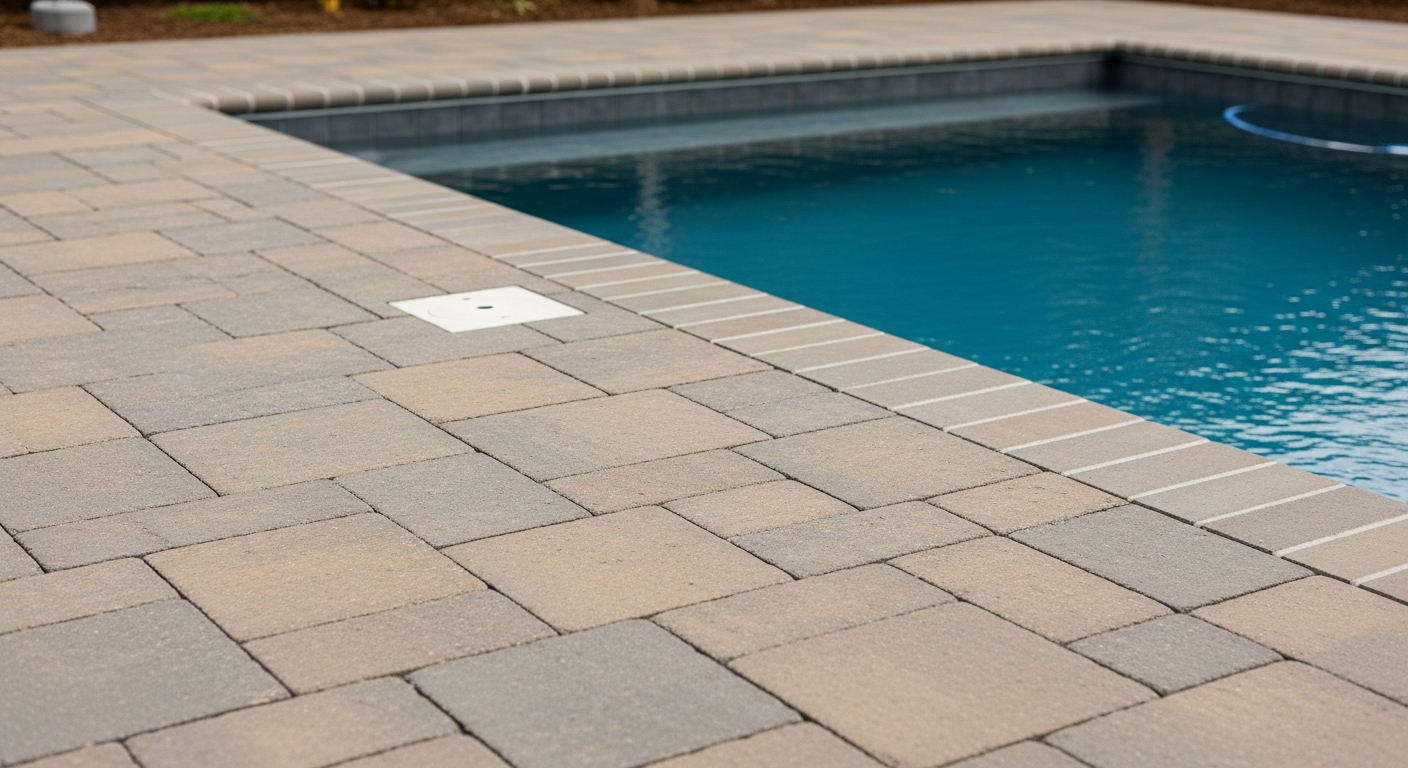
The joint between the pavers and the pool coping is a critical failure point that requires precise installation. The new paver field must be set slightly below the coping to create positive drainage away from the pool, and the gap must be filled with a flexible, high-grade polymeric sand, not rigid mortar. Mortaring this joint is a major error; as the patio and pool shell expand and contract at different rates, a rigid joint will crack, allowing water to penetrate and erode the base directly behind the pool wall. This can compromise the bond beam's integrity over time.
My paver patio gets extremely hot in the sun. Are there better options?
Yes, paver color and material density directly determine how hot they get. Dark-colored, dense concrete pavers absorb and retain significant heat, becoming dangerously hot. For a cooler surface, choose light-colored options like silver travertine or pavers with a high Solar Reflectance Index (SRI) rating. The overlooked factor is the sand in the joints; dark polymeric sand can become a heat sink, radiating heat upwards. Using a lighter-colored sand can make a noticeable difference. While no paver is truly cool in direct sun, selecting a high-SRI material can reduce surface temperatures by a significant margin, making the deck usable on hot days.