
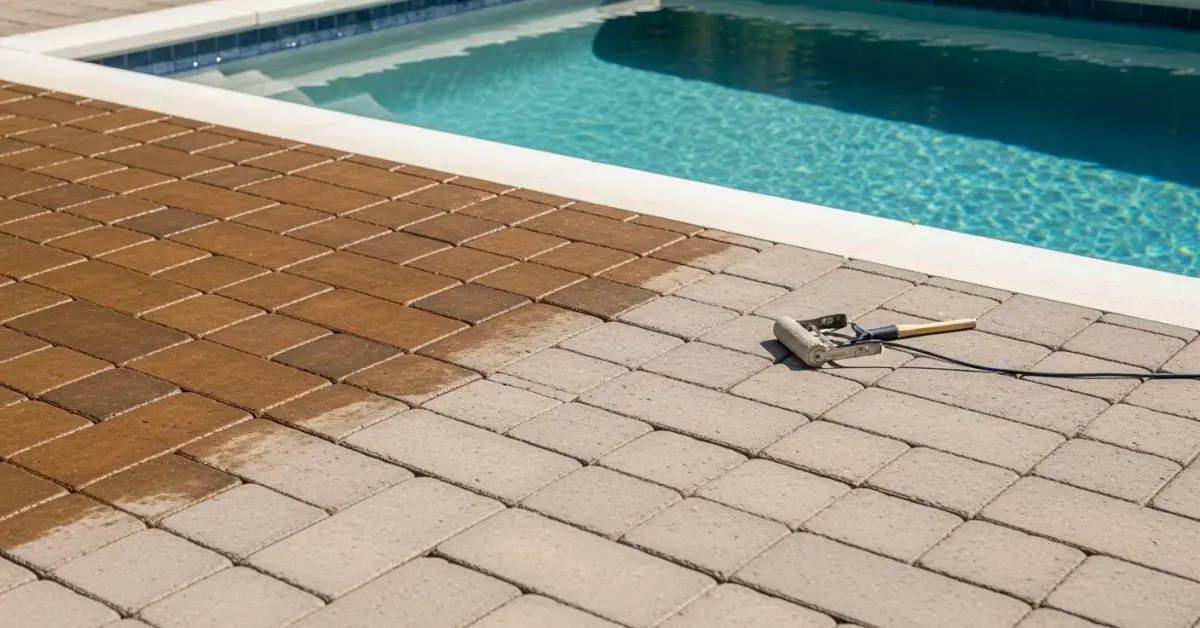
Paver Driveway Sealing Lee County: The Salt-Air Protocol for 30% Longer Paver Lifespan
My years sealing pavers in Lee County have taught me one brutal lesson: the combination of our subtropical sun, high humidity, and coastal salt air is a recipe for catastrophic sealer failure. I’ve seen countless driveways in Fort Myers and Cape Coral turn hazy, peel, or become dangerously slick because the wrong product or, more often, the wrong process was used. Standard "spray and pray" applications that might work up north are guaranteed to fail here. That’s why I don’t just offer a service; I implement a specific methodology designed to combat our unique environmental pressures. The biggest mistake I see is a failure to properly prepare the paver substrate and manage moisture before a single drop of sealer is applied. The porous nature of concrete pavers, especially older ones found in historic Fort Myers districts, acts like a sponge for the ambient moisture and salt. Sealing over this trapped moisture creates a white, cloudy film known as blushing, effectively ruining the project. My entire approach is built around defeating this specific issue, which I call the Salt-Air Protocol. It’s not just about sealing the top; it’s about creating a hydrophobic barrier from within the paver itself.My Diagnostic Framework: The Substrate Integrity Audit
Before I even consider which sealer to use, I perform what I call a Substrate Integrity Audit. This isn't just a visual inspection. I’ve been called to fix "failed" sealer jobs on beautiful canal-front homes in Cape Coral only to discover the sealer wasn't the primary problem. The issue was efflorescence—salt deposits being pushed up through the paver by hydrostatic pressure from our high water table—or a complete breakdown of the joint sand. Sealing over these issues is like painting over rust; it’s a temporary fix for a fundamental flaw.The Technical Deep Dive: Moisture Metering and Sealer Chemistry
My audit centers on two critical data points. First, I use a professional-grade concrete moisture meter to get a reading. For a sealer to properly bond and cure without blushing in our humid climate, the paver surface must measure below 15% relative humidity. I’ve had to postpone jobs for days, waiting for that perfect window after a classic Lee County afternoon rain shower. Second is the chemical analysis of any existing sealer. If I detect a cheap, high-gloss acrylic (often called a "wet look" sealer), a simple pressure wash won't suffice. It requires a full chemical strip using a soy-based stripper, as aggressive solvent-based products can damage the pavers' surface texture. For Lee County's high UV index, I almost exclusively recommend a two-part, water-based aliphatic urethane sealer or a deep-penetrating silane-siloxane sealer. These chemistries offer superior UV resistance and breathability, allowing trapped vapor to escape without breaking the seal.Implementation: The 5-Step Sealing Protocol
Executing the job correctly is about process, not speed. Rushing any of these steps is the single fastest way to guarantee a callback in six months. My methodology is precise and repeatable.- Step 1: Aggressive Surface Decontamination. This goes beyond pressure washing. I use a commercial-grade degreaser and a low-pH efflorescence remover to pull out oils, salts, and organic stains. The surface must be surgically clean.
- Step 2: Joint Sand Stabilization. I never seal without first stabilizing the joints. After cleaning, I install a high-quality polymeric sand, sweep it into the joints, and then use a plate compactor to ensure it’s fully settled. This prevents paver shifting and weed growth, which is a constant battle in our year-round growing season.
- Step 3: The Saturating Flood Coat. My application technique is different. The first coat isn't a thin layer; it's a "flood coat" applied with a low-pressure sprayer. The goal is to have the paver absorb the sealer until it’s fully saturated. This is what creates that deep hydrophobic barrier.
- Step 4: The Uniform Finish Coat. After the first coat has soaked in, a second, lighter coat is applied in a cross-hatch pattern. This ensures there are no roller or spray lines and provides the final layer of surface protection against abrasion and UV rays.
- Step 5: Controlled Curing. The driveway is roped off. I’m adamant about this: zero foot traffic for 24 hours and zero vehicle traffic for a full 72 hours. Driving on it too soon can cause tire marks that are nearly impossible to remove.
Precision Adjustments for Lee County Conditions
Here’s where true expertise comes in. For pool decks and lanais, especially in waterfront communities on Sanibel or Fort Myers Beach where surfaces are always wet, I insist on adding a polymer grip additive to the final coat. It’s a non-negotiable safety feature that creates a texture similar to fine-grit sandpaper, dramatically increasing the surface's coefficient of friction without altering its appearance. Furthermore, I constantly monitor the dew point. If the surface temperature is not at least 5 degrees Fahrenheit above the dew point, I will not apply the sealer. Applying sealer in high humidity when the temperature is dropping will trap condensation, guaranteeing a cloudy finish. Ignoring this one meteorological detail is the most common error I see from inexperienced crews. How are you measuring the solids content of your sealer to guarantee performance against hydrostatic pressure from Lee County's high water table?Written by

Tags
driveway paver sealing near me
paver sealing near me
paver patio cleaning and sealing near me
patio paver cleaning and sealing near me
patio paver cleaning and sealing
Paver Driveway Sealing in Lee FL FAQ
My new paver driveway is only a year old. Do I really need to seal it already?
Yes, sealing your paver driveway within the first year of installation is the best practice for long-term protection. While the pavers themselves are durable, the crucial element you are protecting is the polymeric sand in the joints, which prevents weed growth and shifting. Sealing locks this sand in place and provides a barrier against oil stains, salt damage, and color fading from UV rays. Waiting until you see visible wear, such as weeds or loose pavers, means you are already addressing a problem rather than preventing it, which often requires more extensive joint restoration before sealing can even begin.
Will sealing my driveway make the pavers slippery, especially when it rains?
No, a professionally applied sealer should not make your pavers dangerously slippery if the correct product and technique are used. The key is to avoid over-application, which can create a thick, glossy film on the surface. We use sealers with a non-slip additive, a fine aggregate mixed into the sealant, which creates a textured, high-traction finish that maintains grip even in wet conditions. This is especially critical on sloped driveways where water runoff and ice can pose a significant hazard. DIY applications often fail here, creating a slick surface that's difficult and costly to strip and correct.
Can I just power wash my driveway and apply a sealer from a big-box store myself?
While it seems straightforward, improper surface preparation is the number one cause of sealer failure, leading to a hazy, white appearance called efflorescence bloom. A professional cleaning involves more than just a power wash; it requires specific cleaners to remove ground-in dirt, oil, and any existing, failing sealer. More importantly, the pavers must be completely dry before sealing, which can take 24-48 hours. Sealing over even slight dampness traps moisture, which will turn the acrylic sealer cloudy and require a full chemical stripping to fix, costing far more than a professional job.
What's the difference between a water-based and a solvent-based sealer for my driveway?
The primary difference is in appearance and environmental impact, with solvent-based sealers offering a richer, 'wet look' enhancement and water-based ones providing a more natural, matte finish. Solvent-based sealers penetrate deeper into the paver pores, providing excellent color enhancement and stain protection, but they have a strong odor during application due to higher volatile organic compounds. Water-based sealers are low-odor, eco-friendlier, and still offer great protection, making them a popular choice. The right one depends on your desired aesthetic and local regulations.
How often do I need to reseal my paver driveway, and what are the signs it's time?
Typically, a high-quality paver driveway sealing will last between 3 to 5 years, depending on traffic and weather exposure. The most reliable sign that it's time to reseal is when water no longer beads up on the surface and instead soaks in quickly, darkening the pavers. You may also notice the color of the pavers beginning to fade or the joint sand starting to wash out during heavy rain. Waiting until you see significant weed growth between the pavers is a clear indicator that the protective barrier has completely failed and immediate attention is needed to prevent shifting.
My driveway has some white, chalky stains. Can you just seal over them?
No, sealing over those white stains will permanently trap them, making them impossible to remove later. That chalky substance is called efflorescence, which is a natural salt deposit that migrates out of the concrete pavers as moisture evaporates. Before any sealing can occur, these deposits must be completely removed with a specialized efflorescence cleaner and a light acid wash. Sealing a driveway without properly treating this issue is a common mistake that results in a cloudy, blotchy finish that magnifies the original problem.


