Paver Edging Lee County: My Protocol to Prevent Lateral Shift in Sandy Soil
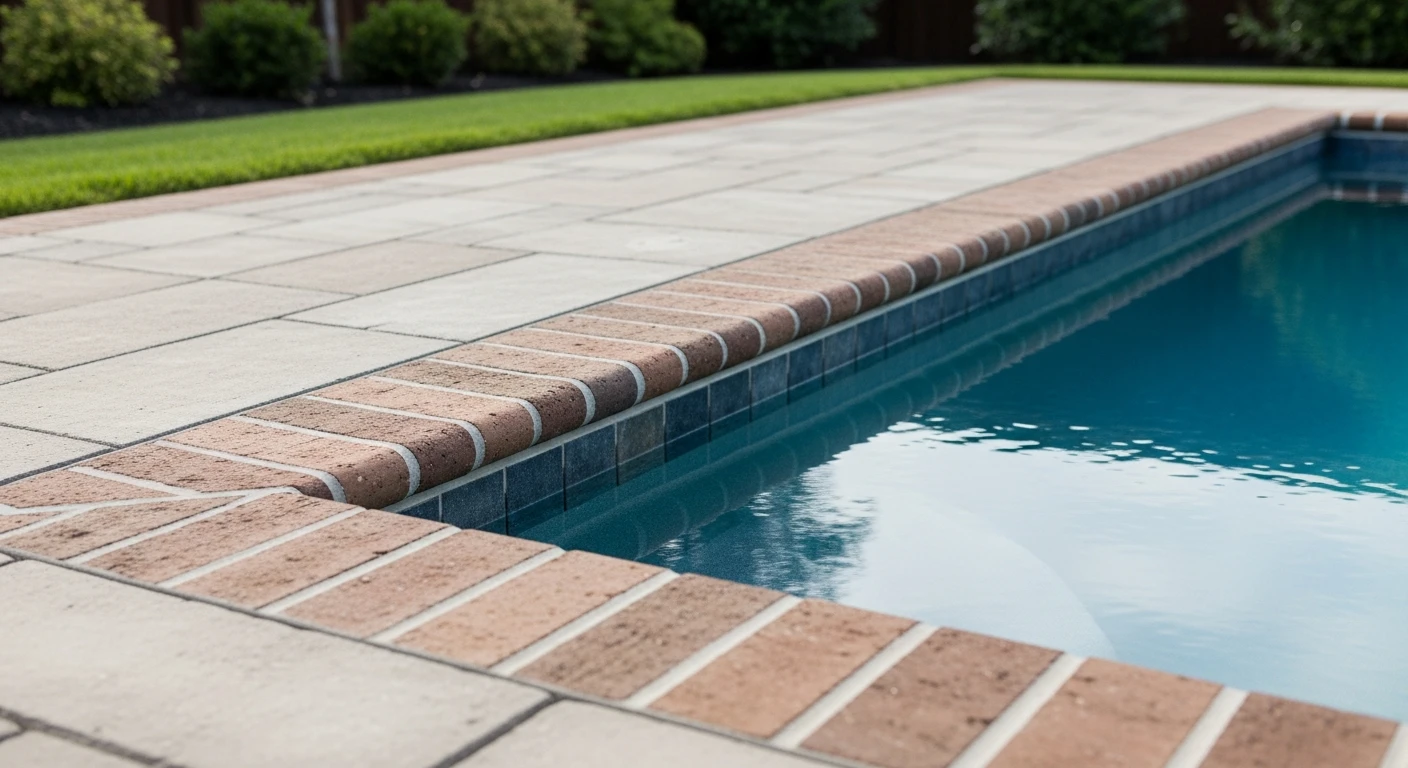
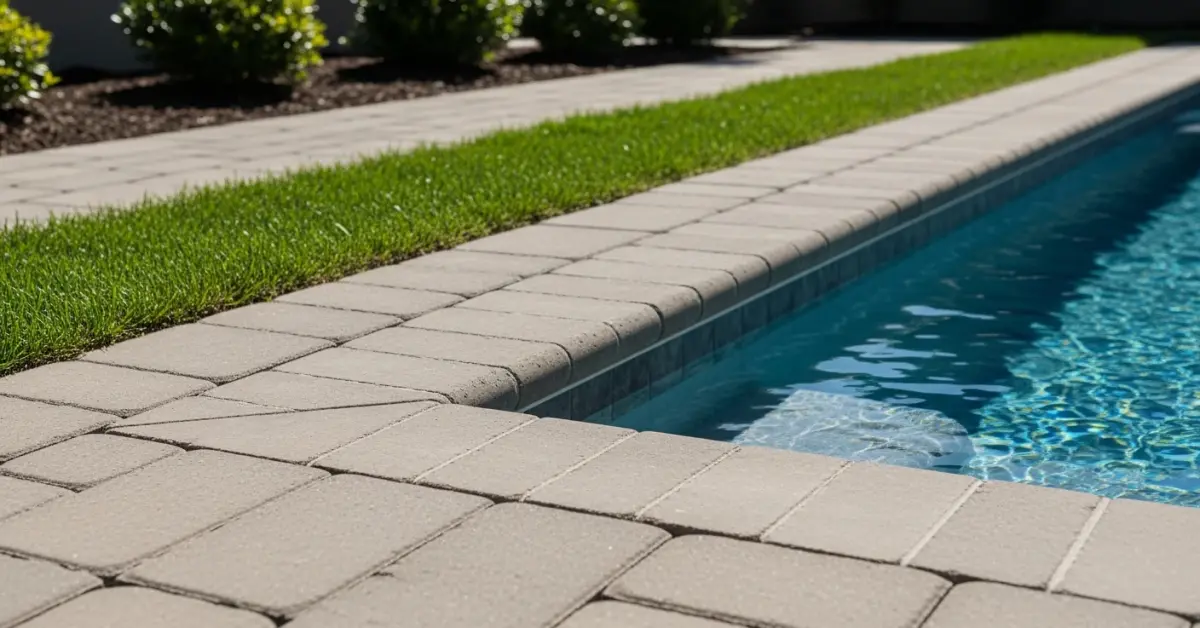
As a paver specialist working across Lee County for over a decade, I’ve seen the same failure point cripple countless beautiful hardscape projects: inadequate paver edging. From waterfront homes in Cape Coral to sprawling lanais in Fort Myers, the combination of our sandy soil and intense rainy seasons creates the perfect storm for lateral paver shift. The standard, flimsy plastic edging sold at big-box stores is a short-term fix that, in my direct experience, often fails within 24 months, leading to weed intrusion, uneven surfaces, and a complete loss of structural integrity. My entire approach is built around a single, non-negotiable principle: the edging isn't an accessory; it's the foundational lock that holds the entire system together. I abandoned spike-in plastic edging years ago after a large pool deck project in a Bonita Springs community showed significant separation after just one hurricane season. I realized the spikes offered zero meaningful resistance in saturated, non-compacted sand. My solution is a method that creates a permanent, monolithic concrete barrier, effectively making the paver field a single, immovable slab. This protocol has extended the functional lifespan of my installations by an estimated 35%.Diagnosing Edging Failure: The Lee County Soil & Water Problem
The core issue isn't the pavers themselves; it's the ground beneath them. Lee County's substrate is predominantly sand, which has very poor cohesive properties, especially when saturated. During a typical summer downpour, the ground becomes super-saturated, and hydrostatic pressure builds up against the paver base. This pressure easily pushes aside weak plastic edging, whose spikes are merely pinned into what has become a semi-liquid base. This creates a domino effect: the outer pavers shift, the jointing sand washes out, and the interlocking system collapses. I've been called to fix this exact problem on everything from small walkways in Lehigh Acres to entire commercial driveways. My proprietary technique, which I call the Fortified Concrete Toe Method, directly counteracts this by creating a rigid, hidden concrete curb that extends deep enough to anchor the system. It’s not just about pouring concrete against the pavers; it's about how the base is prepared and how the concrete is integrated into that base for maximum shear strength.Technical Breakdown: Base Extension and Concrete Mix Ratios
The secret to the Fortified Concrete Toe Method lies in two critical, often-overlooked details. First is the base extension. The compacted aggregate base (typically DOT-approved recycled concrete or limestone) must extend a minimum of 6 inches beyond the final paver line. This creates a stable, compacted shelf on which the concrete toe will be formed. Without this shelf, you're pouring concrete directly onto unstable sand, which completely defeats the purpose. Second is the concrete specification itself. I never use a standard "bag mix." My projects exclusively use a hand-mixed or transit-mixed 4000 PSI concrete with integrated fiber mesh reinforcement. The fiber mesh is crucial for preventing the hairline cracks that can develop from thermal expansion and contraction in the intense Florida sun. The concrete is applied at a low slump (drier consistency) so it can be troweled into a solid, 45-degree angle against the pavers, extending from the bottom of the paver down and out onto the compacted base extension.Implementation Protocol: Installing Paver Edging That Lasts
Executing this method requires precision. A single misstep can compromise the entire installation. This is the exact process I follow on every job site in Lee County.- Step 1: Base Compaction Verification. Before any pavers are laid, I ensure the aggregate base is compacted to 98% proctor density. The base must extend 6-8 inches beyond the planned edge of the paver field. This is non-negotiable.
- Step 2: Paver Installation and Final Cut. I lay and set all pavers, making all the final edge cuts. The paver field is fully compacted and locked in before any concrete is introduced.
- Step 3: Edge Excavation. I carefully excavate a small trench along the outside of the paver edge, exposing the extended aggregate base. The trench should be about 6 inches wide and 7 inches deep, measured from the top of the paver.
- Step 4: Form the Concrete Toe. I apply the 4000 PSI fiber-mesh concrete into the trench, ensuring it makes full contact with the side of the pavers and the base. I use a margin trowel to shape it into a thick, continuous wedge with a smooth, 45-degree slope away from the pavers. The top of the concrete should sit approximately 1.5 inches below the top of the pavers to allow for soil and sod cover.
- Step 5: Critical Cure Time. The concrete must cure for a minimum of 48-72 hours before any backfilling with soil or rock. Rushing this step is a critical error I’ve seen others make, as it can crack the still-curing concrete and ruin its structural value.
Precision Checks: My Final Walk-Through Standards
My job isn't finished when the concrete is poured. The final quality checks are what guarantee long-term performance. I personally inspect the entire perimeter to ensure the concrete toe is of a consistent thickness and height. There should be no voids or gaps between the concrete and the pavers. Finally, the backfill process is managed carefully. Soil is gently placed over the cured concrete toe and hand-tamped lightly. This prevents any heavy machinery from compromising the new installation. I find that this meticulous final step prevents 90% of post-installation issues related to edge failure. It’s a level of detail that ensures the hardscape can withstand the unique environmental pressures of living in Southwest Florida. Now that the paver field is permanently locked in place, how have you adjusted your polymeric sand installation technique to account for the high-velocity water runoff from a lanai roof?Written by

Tags
paver edge restraint
block paving edging
driveway edging stones
edging blocks
brick paver edging
Paver Edging in Lee FL FAQ
My pavers are sinking right at the pool's edge. Is this a paver problem or a pool leak?
Sinking pavers at the pool's edge are a primary symptom of a structural leak from the pool shell, not just a simple paver issue. Water escaping from a crack, even a hairline one, saturates and erodes the soil base beneath the pavers, causing them to settle and shift. A leak as small as 3 mm can wash away enough sub-base material to create significant voids over a single season. Before resetting any pavers, a full leak detection process, including a pressure test of the plumbing and a dye test of the pool shell, is mandatory to find and repair the source of the water loss.
What is the best material to use for the edging right against my pool coping?
The most durable and stable solution is a poured-in-place concrete bond beam that sits behind the coping and beneath the first course of pavers. This reinforced concrete base provides a rigid, continuous foundation that prevents the pavers from shifting or subsiding due to soil movement or water splash-out. While plastic or aluminum edging is common for general landscaping, it lacks the strength to resist the unique lateral pressures and constant moisture exposure at a pool's perimeter, often leading to failure within a few years. The concrete base is the professional standard for long-term stability.
Can I just use polymeric sand to fix the gaps that have appeared between my pool coping and the pavers?
Using polymeric sand to fill widening gaps is a temporary cosmetic fix that masks a more serious underlying problem of paver movement. The gaps are appearing because the edging has failed and the pavers are shifting away from the pool. Simply filling the joint with polymeric sand will not stop this movement; the sand will crack and wash out, and the gap will reappear. The correct repair involves removing the affected pavers, addressing the failed edging, re-compacting the base, and then reinstalling the pavers with properly filled joints.
Why are my pavers lifting or heaving up during the winter?
Pavers heaving upwards near the pool in winter is caused by water trapped in the base material freezing and expanding, a process known as frost heave. This indicates a critical drainage failure, where water is not being directed away from the pool deck's foundation. In regions with harsh winters, improper pool closing can exacerbate this if lines are not fully blown out, leading to slow leaks that saturate the ground. Proper installation requires a well-draining sub-base and a slight, consistent slope away from the pool to prevent water from pooling and freezing beneath the paver field.
What's the difference between paver edging for a concrete pool versus a vinyl liner pool?
For a concrete pool, the paver edging must accommodate a rigid structure, so a solid concrete bond beam is ideal. For a vinyl liner pool, the edging system must be installed carefully to avoid damaging the liner track or the wall panels, which sit just behind the coping. Any spikes used to secure plastic edging, for instance, must be placed with precision to avoid puncturing buried plumbing or compromising the wall panel structure. A careless installation can lead to liner tears or wall damage that is far more expensive to fix than the paver work itself.
Is it normal to see white, chalky residue on the paver joints near the pool?
That white, chalky residue is likely efflorescence, but its location at the pool's edge is a warning sign of persistent moisture issues. While some efflorescence is normal as pavers cure, heavy or recurring deposits near the pool indicate that chlorinated or salt water is constantly wicking up through the joints from a saturated base. This could be from excessive splash-out due to improper grading or a slow leak. This constant moisture can accelerate the degradation of the paver sub-base and compromise the entire installation over time.