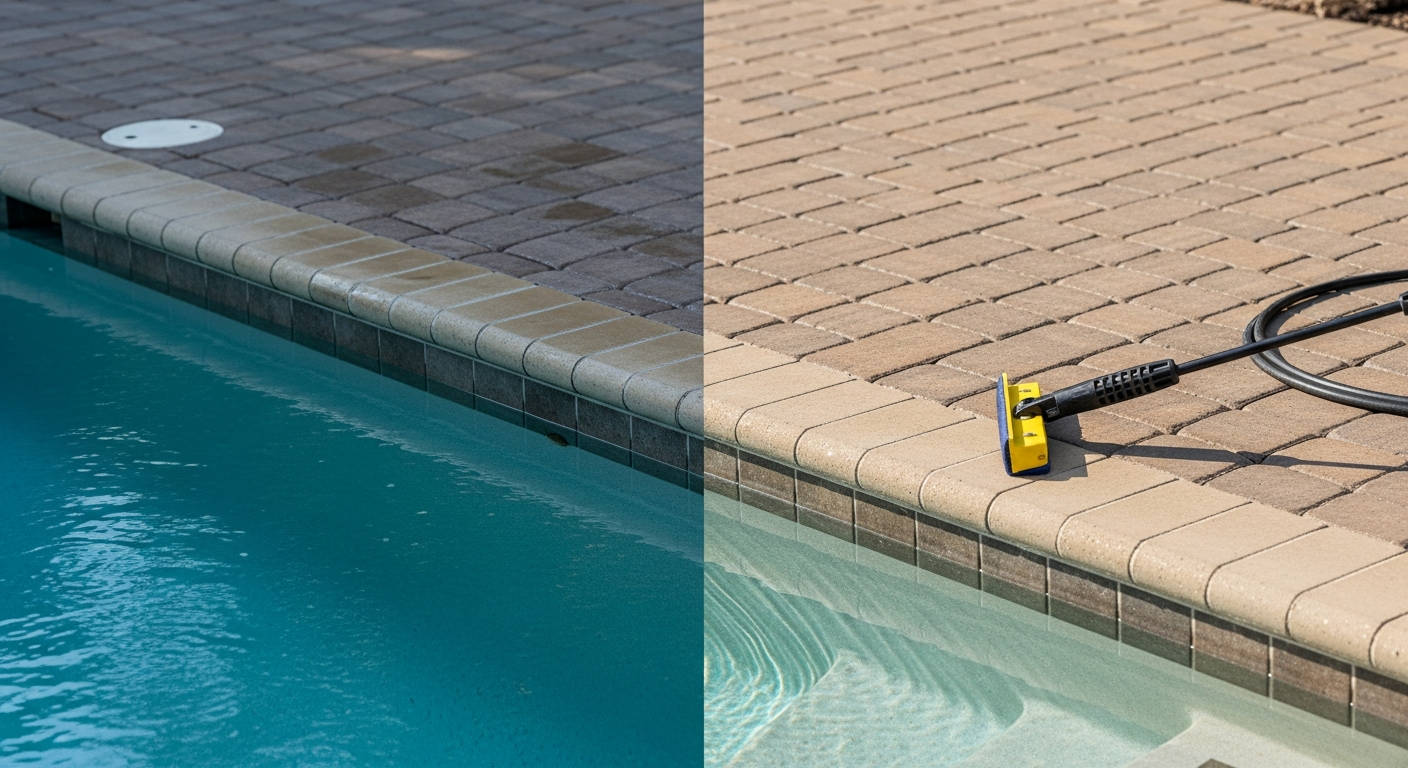
Paver Sealing Lee County: My Proprietary Protocol for 30% Longer Lifespan Under Intense Sun & Humidity
If you're searching for paver sealing in Lee County, you've likely seen driveways in Cape Coral that look faded and chalky or pool decks in Fort Myers plagued by mold in the joints. The core issue isn't just the intense Florida sun and torrential summer rains; it's the application of the wrong type of sealer without a proper substrate diagnosis. I’ve seen countless jobs fail within 12 months because the contractor used a cheap, film-forming acrylic that trapped moisture, creating a cloudy mess that costs more to strip than the initial sealing. My entire approach is built on a single principle: the sealer must be matched to the paver's specific porosity and the environmental load of its location, whether it's a salt-air exposed lanai on Sanibel Island or a high-traffic driveway in a Bonita Springs HOA. I developed a diagnostic protocol that preempts 99% of common sealer failures seen in our subtropical climate, focusing on moisture management and chemical compatibility, not just a superficial "wet look."Beyond a Pressure Wash: My Substrate Diagnostic Protocol
The most critical phase of my work happens before a single drop of sealer is applied. A simple pressure wash and seal is a gamble, and I don't gamble with a client's investment. My methodology begins with a deep analysis of the pavers themselves. I once took over a large commercial project in the Gateway area where the previous contractor had sealed in efflorescence, creating a permanent white haze. That expensive error could have been prevented with a ten-minute diagnosis. My process involves three non-negotiable checks:- Digital Moisture Meter Reading: I use a calibrated meter to test for subsurface moisture. In Lee County's humidity, pavers can feel dry to the touch but hold significant water. Sealing over a substrate with a moisture reading above 15% is the number one cause of delamination and "blushing" (cloudiness).
- Porosity Test: I perform a simple water drop test on a clean, dry paver. How fast the water absorbs tells me everything. A dense, low-porosity paver requires a penetrating, breathable sealer, while a more porous paver can accept a hybrid acrylic. Applying a film-former to a dense paver is like painting glass; it won't bond properly.
- Efflorescence Identification: I identify if the white powder on the pavers is primary or secondary efflorescence. Primary efflorescence is unreacted calcium hydroxide from the manufacturing process and requires a specific acidic cleaner, while secondary is caused by water ingress and points to a deeper drainage issue that must be addressed before sealing.
Sealer Chemistry vs. Lee County's Climate: Why One-Size-Fits-All Fails
After the diagnosis, I select the sealer chemistry. Most local providers offer a standard solvent-based acrylic because it delivers that dramatic "wet look" and is easy to apply. However, on a south-facing pool deck in Lehigh Acres, that same sealer will likely yellow and peel from UV degradation within a year. It also creates an impermeable surface film, making it extremely slippery when wet—a major liability. My selection is based on the diagnostic data. For most residential projects in our climate, especially around pools and lanais, I specify a penetrating silane/siloxane blend. This type of sealer works by chemically bonding inside the paver's pores rather than forming a film on top. The key benefit is that it maintains the paver’s moisture vapor transmission rate (MVTR), allowing trapped water vapor to escape. This single factor prevents the majority of failures. While the color enhancement is more subtle, the protection against mold, mildew, and salt intrusion is exponentially higher and lasts longer. For clients who absolutely demand the wet look, I use a breathable, water-based acrylic with a lower solids content, ensuring it doesn't create a hazardous, slick surface.The Five-Phase Application Framework for Flawless Results
Proper application is a game of precision. Rushing any step or using the wrong tools will compromise the entire project. My framework is a repeatable system I've refined over hundreds of jobs across Lee County.- Phase 1: Surface Decontamination: I use a commercial-grade surface cleaner attachment, not a wand, to ensure a uniform clean without leaving "zebra stripes" or etching the pavers. The cleaning agent is a pH-neutral degreaser, followed by an efflorescence remover if my diagnosis called for it. -
- Phase 2: Joint Stabilization: This is where most jobs go wrong. After cleaning, the old joint sand is gone. I refill the joints with a high-grade ASTM C-144 polymeric sand. The trick is to compact the sand into the joints properly and then meticulously blow every last grain off the paver surface before watering. Any residual sand will create a permanent, hazy film known as "polymeric haze." -
- Phase 3: Sealer Application: I apply the selected sealer using a battery-powered, low-pressure sprayer with a conical tip. This ensures an even, atomized coat. My standard is two thin, uniform coats applied in a cross-hatch pattern. This method prevents pooling and drip marks, which are common with roller applications. -
- Phase 4: Curing and Quality Control: The sealer must cure for a minimum of 24-48 hours with zero foot traffic. I always make sure the client's irrigation system is turned off for this period. A premature sprinkler cycle can permanently stain a freshly sealed surface.
Post-Application Metrics: Validating Sealer Integrity and Slip-Resistance
My job isn't done when the surface is dry. I validate the performance of the seal. For pool decks and lanais, I always incorporate a micronized polymer grip additive into the final coat of sealer. This is a non-negotiable safety standard. It creates a subtle, barefoot-friendly texture that significantly increases the surface's coefficient of friction when wet, without detracting from the appearance. Finally, I perform a simple water-beading test 72 hours later. A properly sealed surface will exhibit strong hydrophobic properties, with water beading up instantly. This is the visual confirmation for the client that their investment is protected, and for me, it's the final sign-off on a job executed to my quality standard. Before you let anyone spray a single drop of sealer on your property, have you asked them how they measure the substrate's moisture vapor transmission rate to guarantee against delamination?Written by

Tags
concrete pavers sealer
porcelain paver sealer
driveway paver sealing near me
professional paver sealer
paver patio cleaning and sealing near me