Lee County Pool Deck Pavers: My Proprietary Method for a 30% Cooler Surface and Zero-Shift Installation
Forget the cracked concrete and scorching hot pool decks I see all over Fort Myers and Cape Coral. After years of replacing failed installations, I developed a specific methodology for Lee County's unique climate. The goal isn't just aesthetics; it's about engineering a surface that is cooler underfoot, provides superior drainage during our heavy summer rains, and won't shift during a tropical storm. The biggest mistake homeowners make is focusing only on the paver's appearance. The real long-term value comes from the system beneath it. My process focuses on a meticulously prepared base and the right material selection to combat the intense UV radiation and humidity we face from Bonita Springs to North Fort Myers. This is how I ensure a deck's integrity for decades, not just a few seasons.Diagnosing Common Paver Failures in Southwest Florida: My 3-Point Pre-Installation Audit
Before I even think about laying a single paver, I perform a critical audit. I once took over a project in a new construction in the Gateway area where the previous contractor's work was already failing after six months. The cause was a complete disregard for soil conditions and water management, a classic and costly error here. My audit prevents this. It consists of three core checks. First, a soil composition test. Lee County is predominantly sandy soil, which has terrible load-bearing capacity without proper amendment and compaction. Second, a gradient and drainage analysis. Water must be channeled away from the pool and the home's foundation, a non-negotiable step to prevent sub-base erosion. Third, an exposure assessment to determine the level of sun and salt air (critical for homes on the canals in Cape Coral) the deck will face, which dictates the type of paver and sealant I'll specify.The Unskippable Truth About Paver Base Compaction in Sandy Lee County Soil
This is where most projects go wrong and where my proprietary technique makes the difference. Standard compaction methods are not enough for our local soil. Simply laying down a few inches of paver base and running a plate compactor over it is a recipe for sinking and shifting pavers. I’ve seen it happen time and again. My method involves a multi-layer system. I begin with a geotextile fabric directly over the excavated and graded subgrade. This is a crucial step that separates the sandy soil from the base material, preventing them from mixing over time and compromising the foundation. Then, I install a 6-inch layer of crushed concrete base, compacted in 2-inch lifts. Compacting the entire 6-inch layer at once creates a hard crust with a soft, unstable layer underneath. Each 2-inch lift is compacted to a minimum of 98% Proctor Density, a standard I insist on, ensuring a rock-solid foundation that will not settle.Step-by-Step Execution: From Coping Selection to Polymeric Sand Application
With a bulletproof base, the installation can begin. Precision here is key to a flawless finish and long-term durability. Every step has a purpose, from creating a secure edge to locking the pavers together.- Edge Restraint Installation: I install a concrete bond beam or heavy-duty plastic edging secured with 12-inch steel spikes. This is the frame that holds the entire system together and prevents the pavers from spreading outwards.
- Bedding Sand Screeding: A 1-inch layer of clean, coarse sand is meticulously screeded to create a perfectly level setting bed. I never use limestone screenings in Lee County due to the risk of it breaking down in our wet environment.
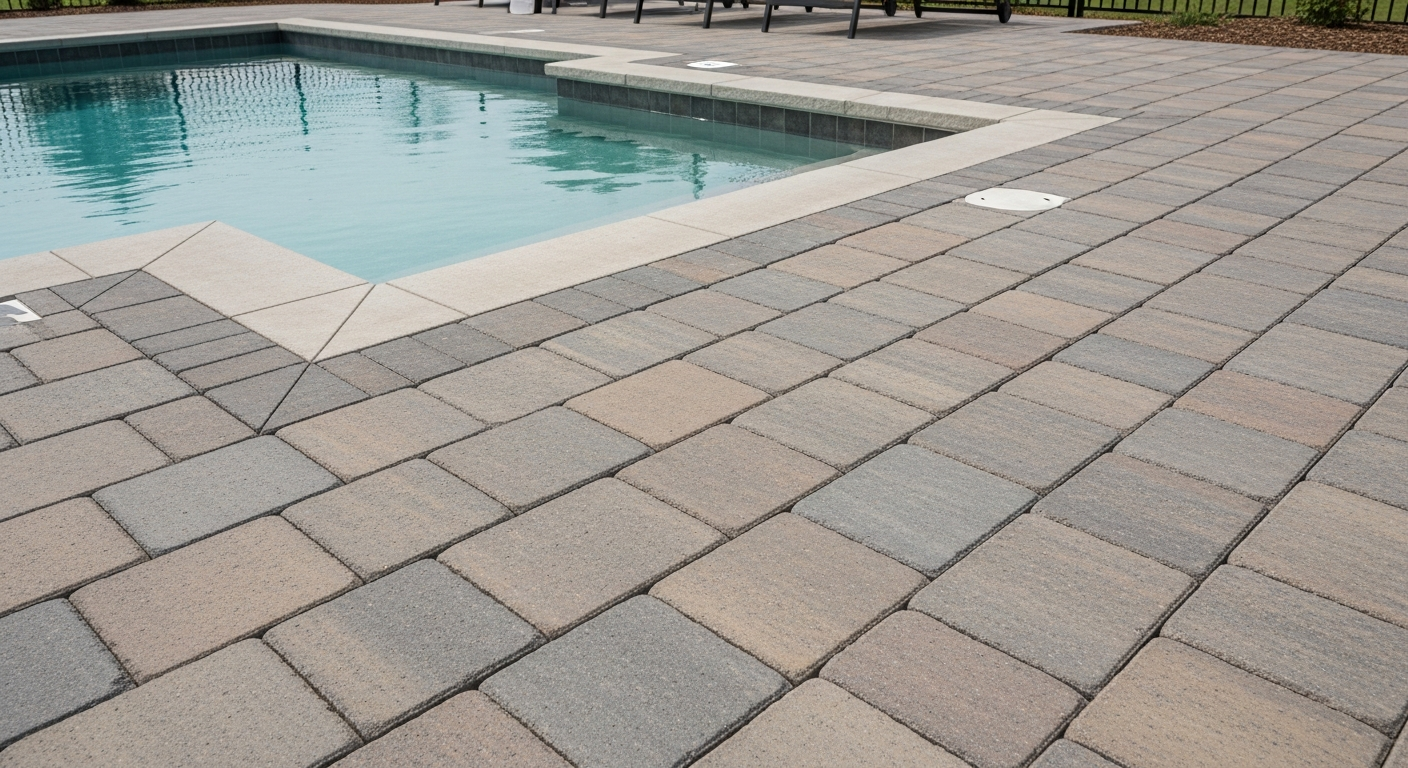
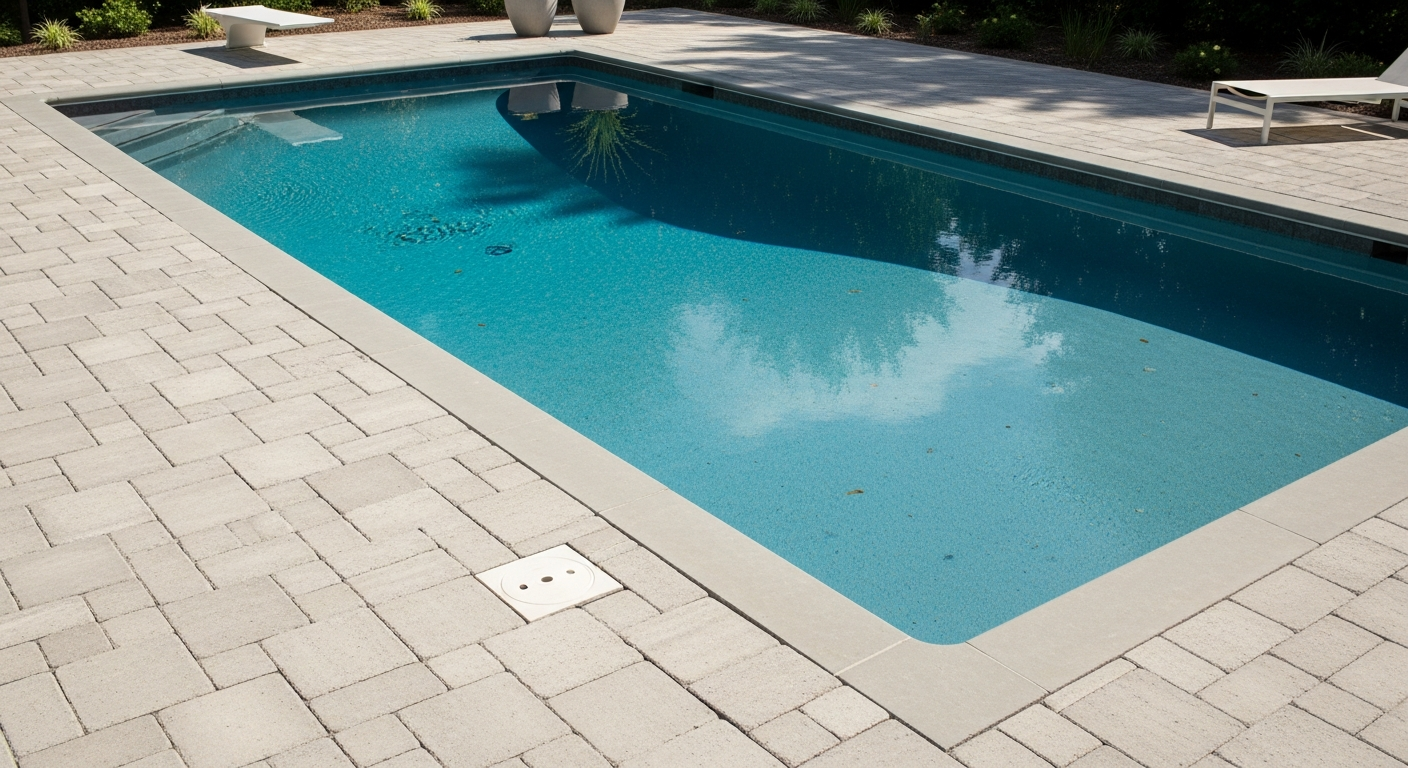
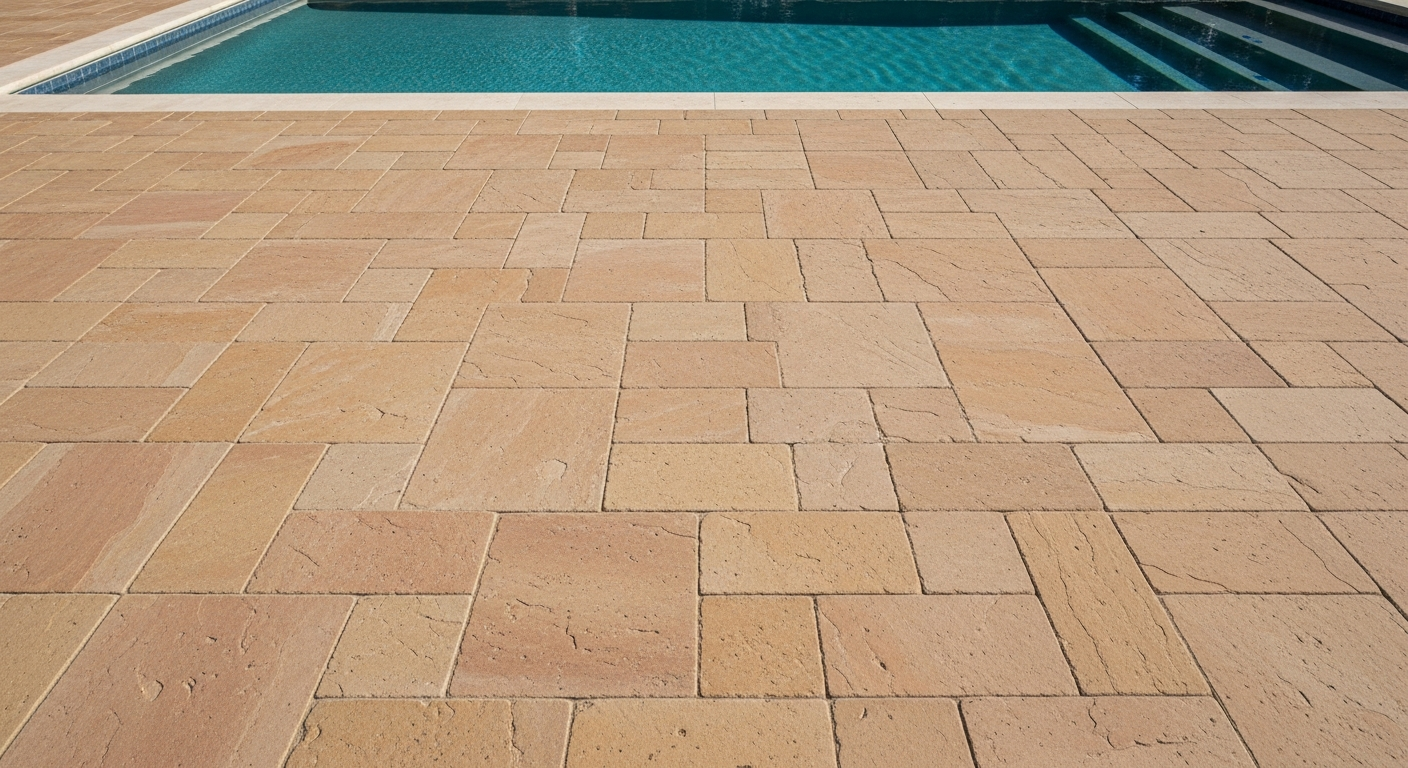
- Paver Laying and Coping: I start with the pool coping, ensuring it has the proper overhang and is perfectly level. Then, I lay the field pavers in the chosen pattern, using string lines to maintain perfectly straight joints. My go-to recommendation for this area is often a light-colored travertine paver for its heat-dissipating properties, which can result in a surface up to 30% cooler than dark concrete pavers.
- Initial Compaction and Joint Sanding: Once laid, I run a plate compactor over the pavers to set them into the bedding sand. Then, I sweep in a high-grade polymeric sand into the joints. This type of sand contains a polymer that, when activated with water, hardens to lock the pavers in place, resist weed growth, and prevent sand washout from our torrential downpours.
Precision Sealing: Achieving a Non-Slip, UV-Resistant Finish
The final step is often rushed or done improperly. Sealing isn't just for looks; it's a protective shield. In our climate, an unsealed paver deck is vulnerable to staining from foliage, mold, and fading from the relentless sun. I wait at least 48 hours after the polymeric sand has cured before applying a sealant. My preference is a water-based, silane-siloxane penetrating sealer. Unlike heavy, film-forming acrylics that can become slippery and peel, this type of sealer soaks into the paver itself. It provides excellent water repellency and UV protection without altering the natural texture or slip resistance of the surface. This single choice can increase the paver's color life by an estimated 50% in the Florida sun. Are you accounting for hydrostatic pressure in your paver base design, or are you just waiting for the next tropical storm to test your work?Written by

Tags
pool pavers and coping
concrete pool pavers
best pavers for pool deck
porcelain pavers pool deck
porcelain pool pavers