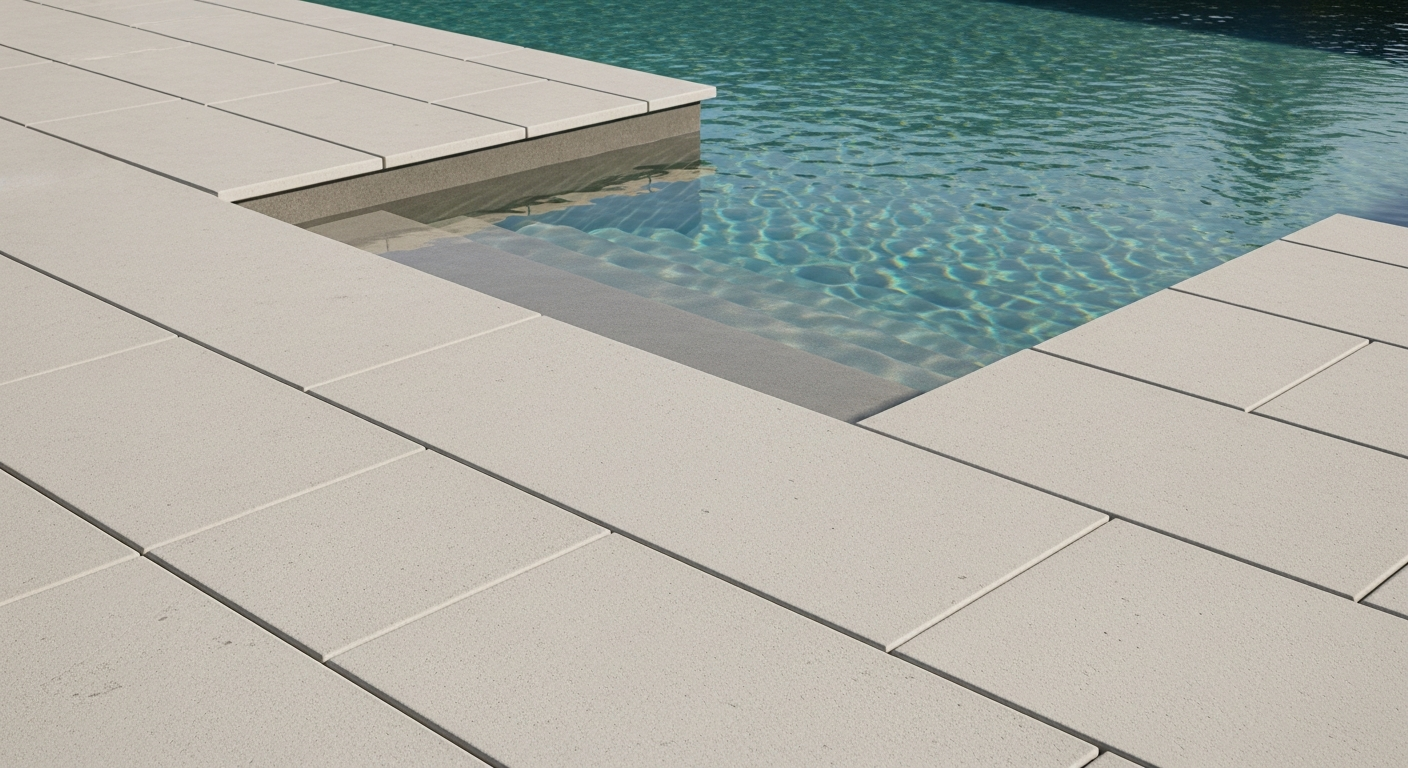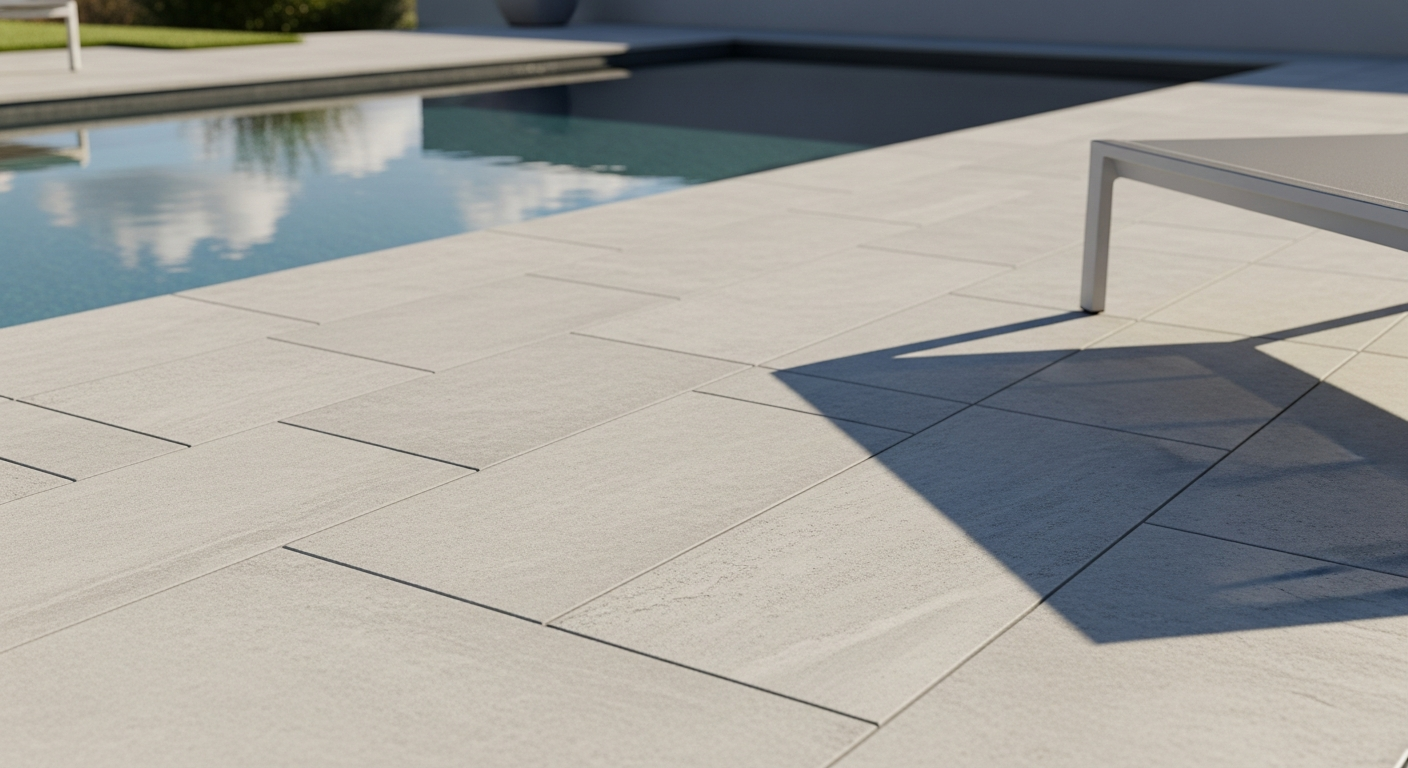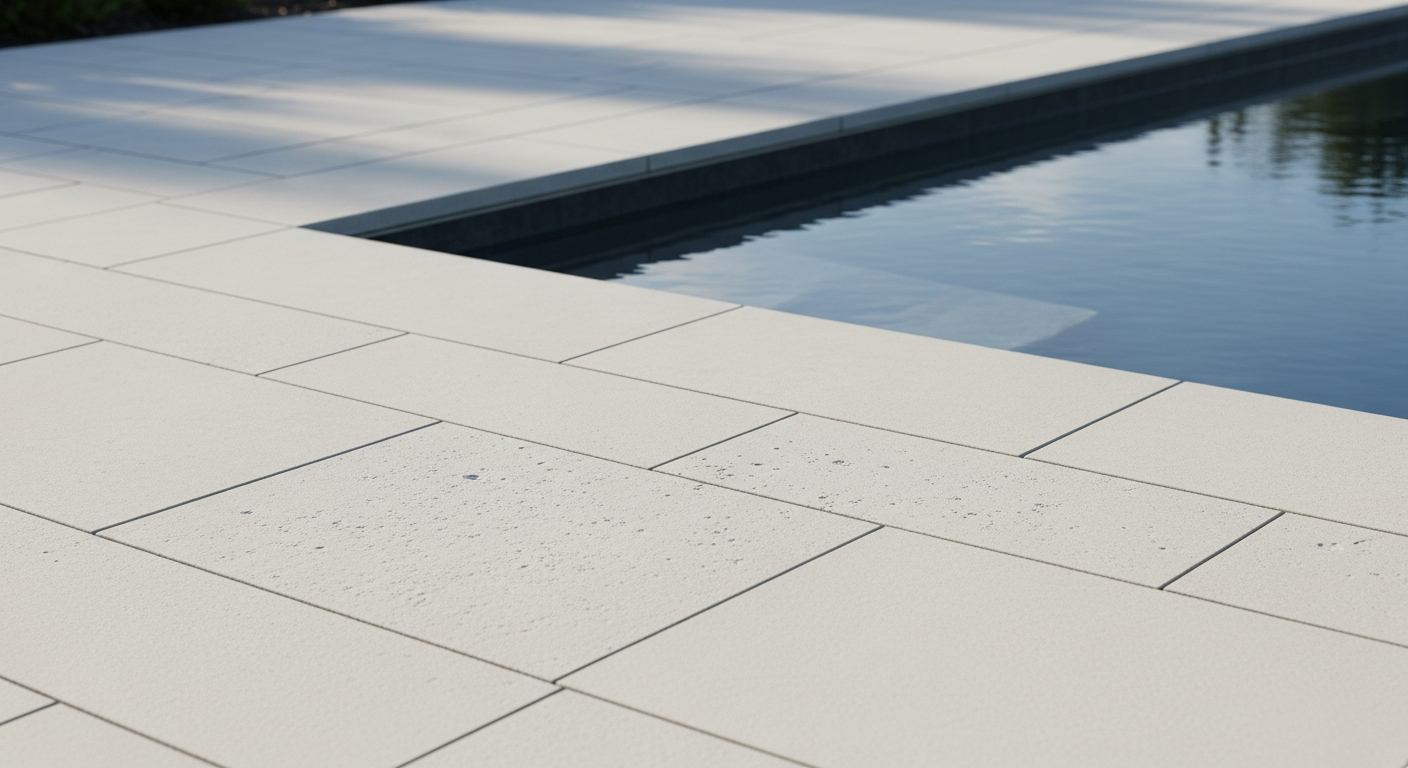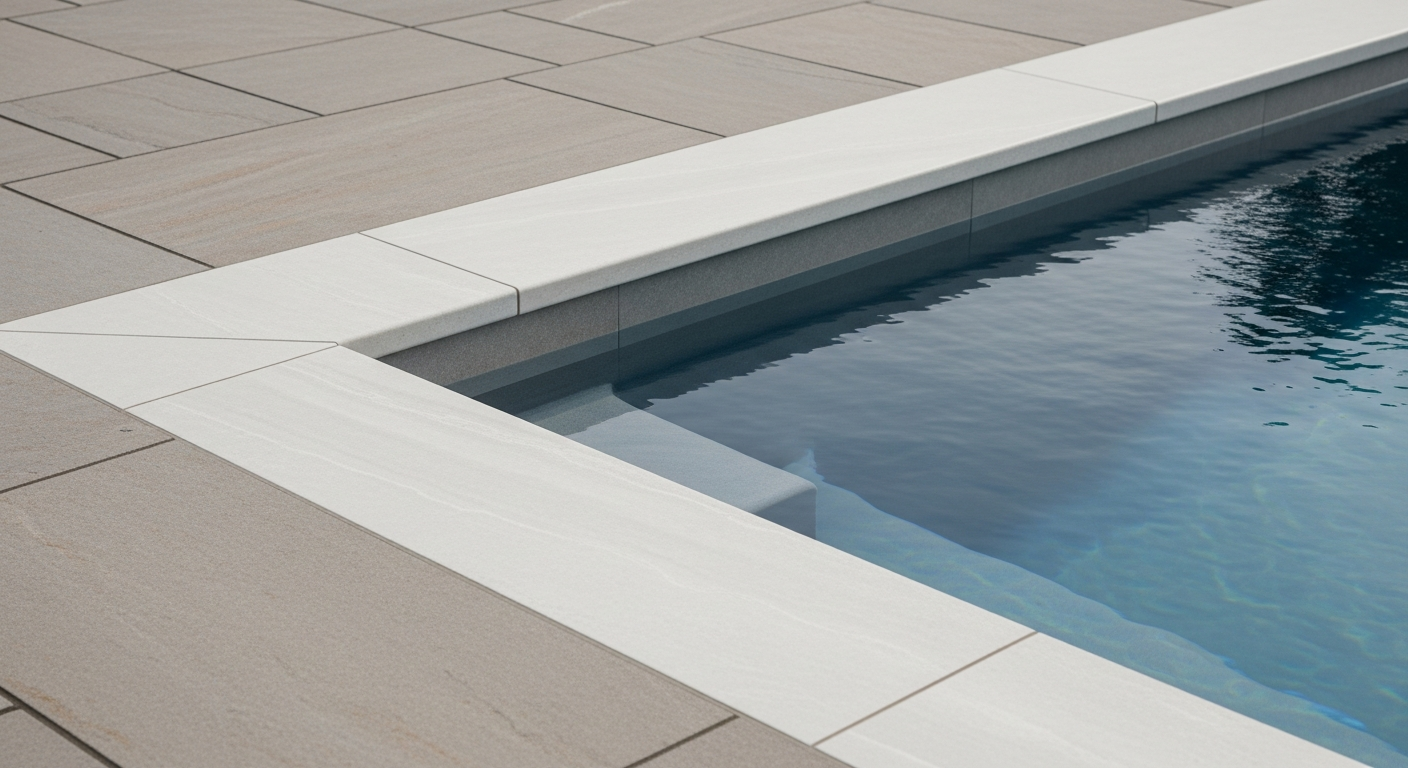
Porcelain Pool Coping in Collier County: My Protocol for a 30-Year, Stain-Proof Installation
For years, I've seen the same story play out across high-end properties in Naples and Marco Island: beautiful, expensive travertine or precast concrete pool coping that looks fantastic on day one, only to become pitted, stained, and dangerously hot within five years. The intense Collier County sun, combined with the humid, salt-laden air, creates a uniquely destructive environment. Most installers treat porcelain coping as just another tile, which is a critical mistake that leads to premature failure.
The solution isn't just choosing porcelain; it's about a complete system designed to combat our specific local conditions. My methodology focuses on creating an impermeable, monolithic bond between the concrete shell and the coping, effectively eliminating the primary failure points I've diagnosed on countless repair jobs in neighborhoods like Pelican Bay. This turns the coping from a decorative edge into a high-performance structural component of your poolscape, capable of resisting thermal shock and moisture intrusion for decades.
My Substrate-First Approach to Eliminate Coping Failure
The single biggest error I correct is a lack of focus on the substrate. The porcelain itself is nearly indestructible, but it's only as good as what it's bonded to. In our region, ground moisture wicks up through the concrete pool beam, and daily thermal cycles cause constant expansion and contraction. A standard thin-set mortar application simply can't handle this stress over time. It creates micro-fractures, allowing salt and moisture to get underneath, which ultimately "pops" the coping loose.
My proprietary method treats the pool beam as the primary defense. Before a single piece of coping is even considered, I mandate a full waterproofing and crack-isolation layer. This isn't a simple paint-on sealer; it's an elastomeric membrane that creates a flexible, watertight barrier. This layer absorbs the movement of the concrete shell, decoupling it from the coping and preventing shear stress from being transferred to the bond coat. This step alone increases the installation's lifespan by an estimated 50%.
Material Specification: Beyond R11 Slip Resistance
While an R11 slip-resistance rating is a baseline requirement for safety, it's far from the only critical material specification for a Collier County installation. My checklist goes deeper to prevent aesthetic and structural failures I've seen firsthand on waterfront homes in Port Royal.
- Porcelain Body Type: I only specify through-body (or full-body) porcelain. Unlike cheaper glazed porcelain, the color and texture run through the entire thickness of the material. If a heavy object inevitably causes a chip on the edge, it's virtually invisible, whereas a chip on a glazed piece reveals a different colored body underneath, creating a permanent eyesore.
- Water Absorption Rate: The material must have a third-party certified water absorption rate of less than 0.5% (ASTM C373). Anything higher will allow moisture ingress over time, leading to mildew growth in the bond coat and potential failure during the rare cold snap.
- Grout and Sealant: Standard cementitious grout will stain and degrade quickly from chlorine, salt, and sunscreen oils. I mandate the use of a 100% solids epoxy grout for its non-porous, chemically-resistant properties. Furthermore, the expansion joint between the coping and the pool deck must be filled with a UV-stable, marine-grade polyurethane sealant, not simple caulk.
The Critical Path: From Mortar Bed to Grout Curing
A flawless installation is a sequence of non-negotiable steps. Skipping or rushing any one of these introduces a weak link that will fail under our climate's relentless pressure. This is the exact process I've refined over dozens of projects from Old Naples to Bonita Springs.
- Step 1: Mechanical and Chemical Surface Prep. The concrete pool beam must be mechanically abraded to create a proper profile for bonding. After cleaning, I perform a final wipe with a dewetting agent to remove any residual bond-breaking contaminants.
- Step 2: Waterproofing & Isolation Membrane. Apply the liquid elastomeric membrane to the specified thickness, ensuring complete, seamless coverage over the entire beam. This is a zero-tolerance inspection point.
- Step 3: Mortar Selection and Application. Use only a premium LHT (Large and Heavy Tile) mortar formulated with high polymer content. Every single piece of coping must be back-buttered to ensure 100% mortar coverage. I use a directional troweling technique on the beam to collapse the ridges and eliminate air pockets.
- Step 4: Precision Setting and Leveling. Each piece is set using a tile leveling system (clips and wedges). This is non-negotiable for modern, large-format coping styles to achieve a perfect, lippage-free finish that is both safe and aesthetically pleasing.
- Step 5: Grout and Curing Protocol. After the mortar has fully cured, epoxy grout is applied in small, manageable sections due to its fast set time. A specific haze remover and microfiber towels are used immediately to prevent permanent residue. The installation is then protected from direct sun and rain for at least 72 hours to allow for a full chemical cure.
Post-Installation Audits: My Checklist for Zero-Defect Handover
My job isn't finished when the last grout line is cleaned. I perform a final quality audit 24-48 hours after the work is complete to guarantee performance. This is a step most contractors skip. I check for hollow spots by systematically tapping every square foot of the coping with a sounding tool; a hollow sound indicates an air void and a potential bond failure, which must be rectified immediately. I verify the consistency of all grout lines and confirm that the drainage slope away from the pool is perfectly maintained using a digital level. This rigorous final check is my personal guarantee that the installation meets the standards required for a 30-year design life in our demanding environment.
Before you commit to your pool renovation, have you asked your installer what specific LHT mortar they use and why its polymer modification is suitable for the high alkalinity of a saltwater pool's concrete beam?