Red Brick Pavers in Collier County: My Protocol for Eliminating Sun-Fade and Joint Washout
For any red brick paver project in Collier County, from a luxury lanai in Pelican Bay to a commercial walkway in Naples, the success isn't in the bricks themselves. It's in preventing the two failures I see constantly: rapid color fade from our intense Florida sun and joint sand washout during torrential summer rains. I’ve been called to fix million-dollar projects where the base was sound, but the aesthetic was ruined within 24 months because the installer ignored these two environmental factors. My entire approach is built around creating a sealed, UV-protected, and hydro-resistant surface from the sub-base up. This isn’t about just laying bricks; it's about engineering a system that actively combats the specific subtropical challenges of our region. A standard installation method that works up north will fail catastrophically here. I learned this the hard way on an early Marco Island project where an entire driveway's polymeric sand failed, leading to paver shift and weed growth in a single rainy season.Why Standard Paver Installations Fail in Naples and Marco Island
The core problem is twofold: our sandy, porous soil and the sheer volume of water it's forced to handle. A typical paver installation relies on a compacted aggregate base and a layer of sand. In Collier County, intense rain creates immense hydrostatic pressure from below, while the deluge from above scours the joints. This combination is lethal. I’ve seen edge restraints bow outwards and entire patios develop low spots because the bedding sand was literally washed out from underneath. My proprietary methodology, which I call the "Sealed Substrate System," focuses on locking everything in place. It treats the paver surface, joints, and base as a single, semi-rigid unit, not as separate layers. This is critical for high-end residential areas where visual perfection and longevity are non-negotiable. The goal is to create a system where water sheets off the top surface efficiently and any minimal moisture that does penetrate is managed by a superior sub-base, preventing erosion and upward pressure.Deconstructing the Collier County Paver Base: Beyond Simple Sand
The secret to a paver installation that lasts decades here is what you can't see. Forget the standard 4-inch base of "crusher run" gravel. For our soil conditions, that's simply not enough to ensure stability. My specification starts with a non-woven geotextile fabric laid directly over the compacted native sandy soil. This is the single most-skipped step I encounter, and it's the most critical. This fabric separates the soil from your expensive aggregate base, preventing the sand from migrating upwards and the stone from sinking downwards over time. It stabilizes the entire foundation. Above the fabric, I mandate a minimum 6-inch base of clean, angular #57 stone aggregate, compacted in 2-inch lifts. Each lift must be precisely moistened and compacted to achieve a 98% Proctor density. This creates a highly stable and permeable foundation that can handle massive water flow without shifting. The bedding layer on top is never stone dust or fine sand; I use a washed, coarse C-33 spec concrete sand, screeded to a uniform 1-inch depth. It provides superior interlock and drainage.The 5 Critical Steps for a Weatherproof Red Brick Paver Installation
Executing this correctly is a matter of precision. Cutting corners on any of these steps will compromise the entire system, especially under the duress of a Collier County summer storm.- Calculate Excavation Depth for Drainage: The base of your excavation must be sloped at a minimum of 1/4 inch per foot away from any structures. My rule is a total excavation depth of 8 inches for patios and 12 inches for driveways to accommodate the thicker, more robust base.
- Mandate Multi-Pass Compaction: A single pass with a plate compactor is not enough. I require a minimum of three passes on each 2-inch lift of the #57 stone base. This ensures there are zero voids and the base acts as a solid plate.
- Install a Poured Concrete Edge Restraint: Plastic or aluminum edging will fail. The heat and ground movement will cause it to warp and lift. I only specify a poured concrete toe (bond beam) around the perimeter, reinforced with rebar, to permanently lock the entire paver field in place.
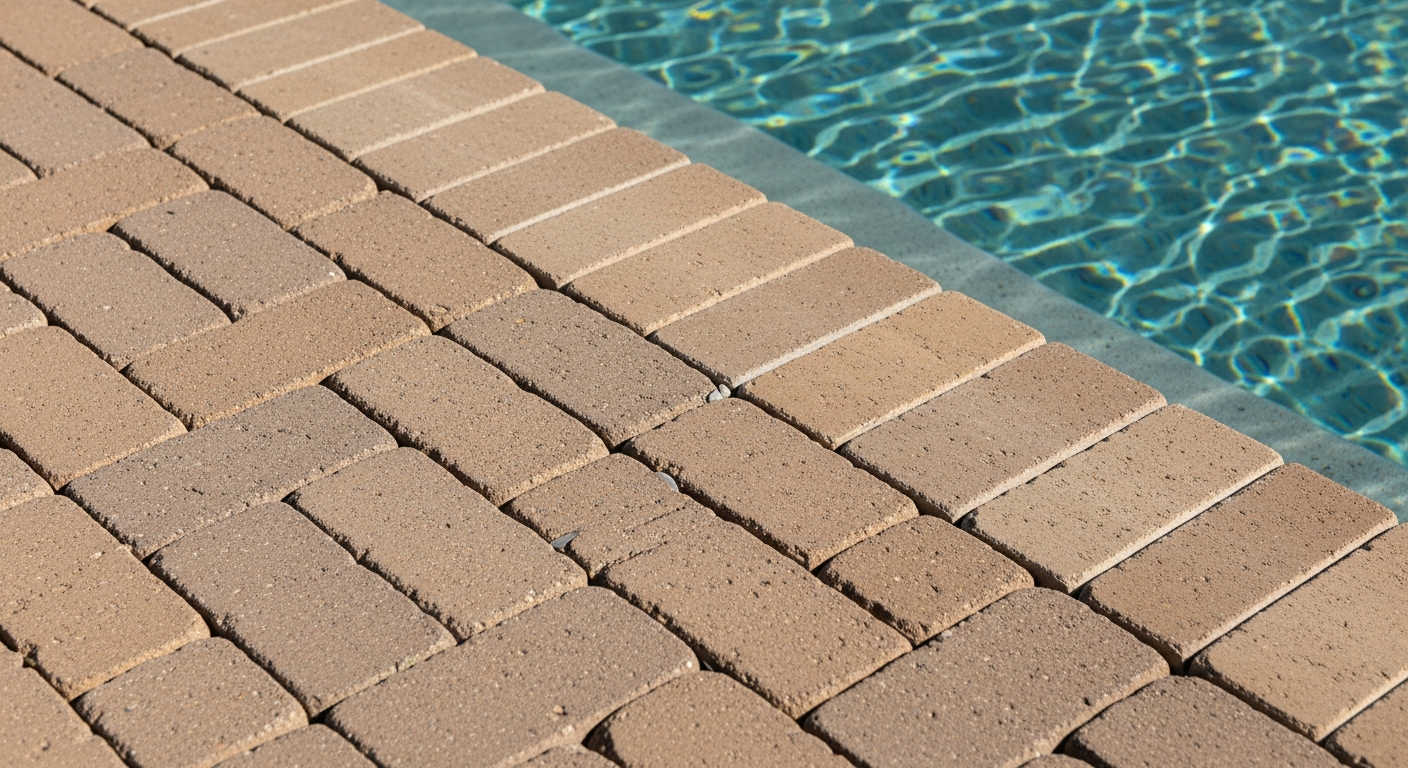
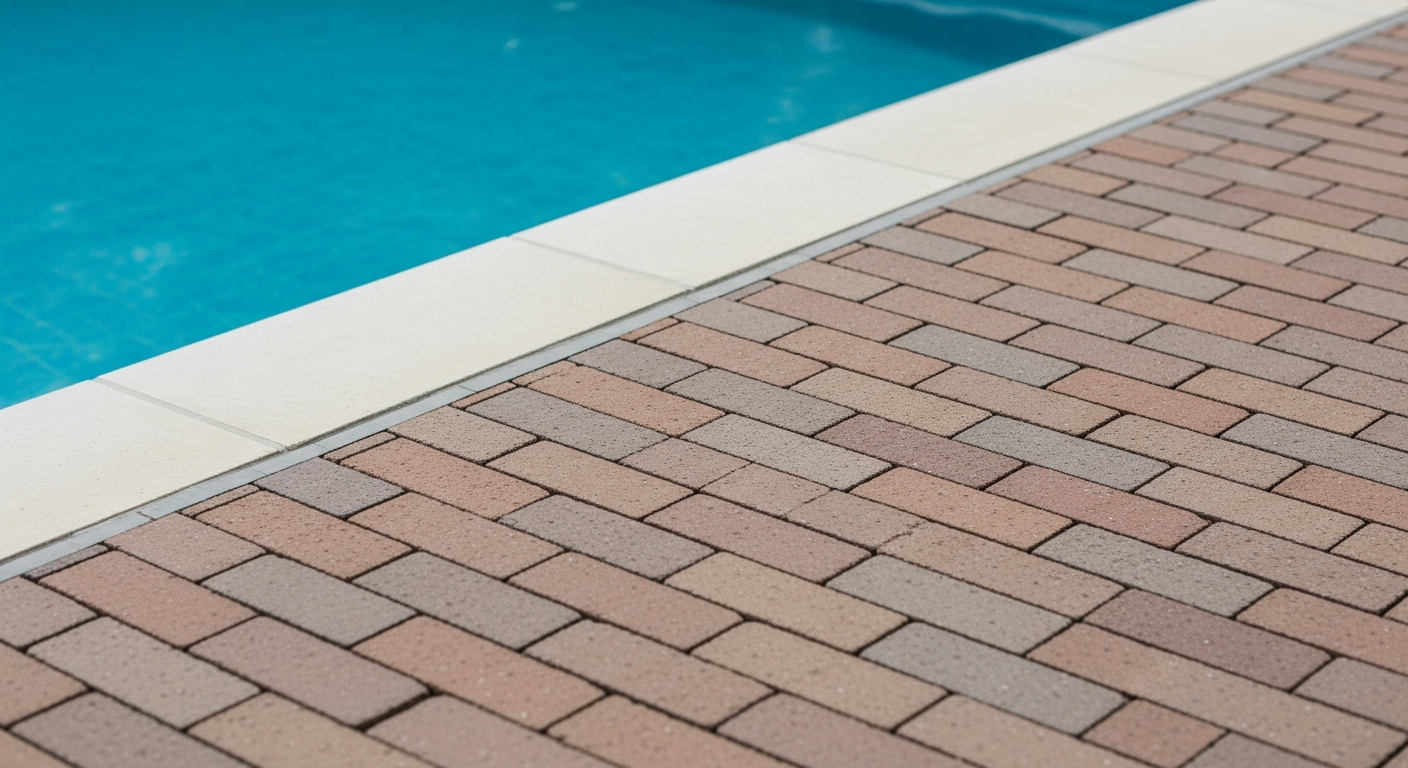
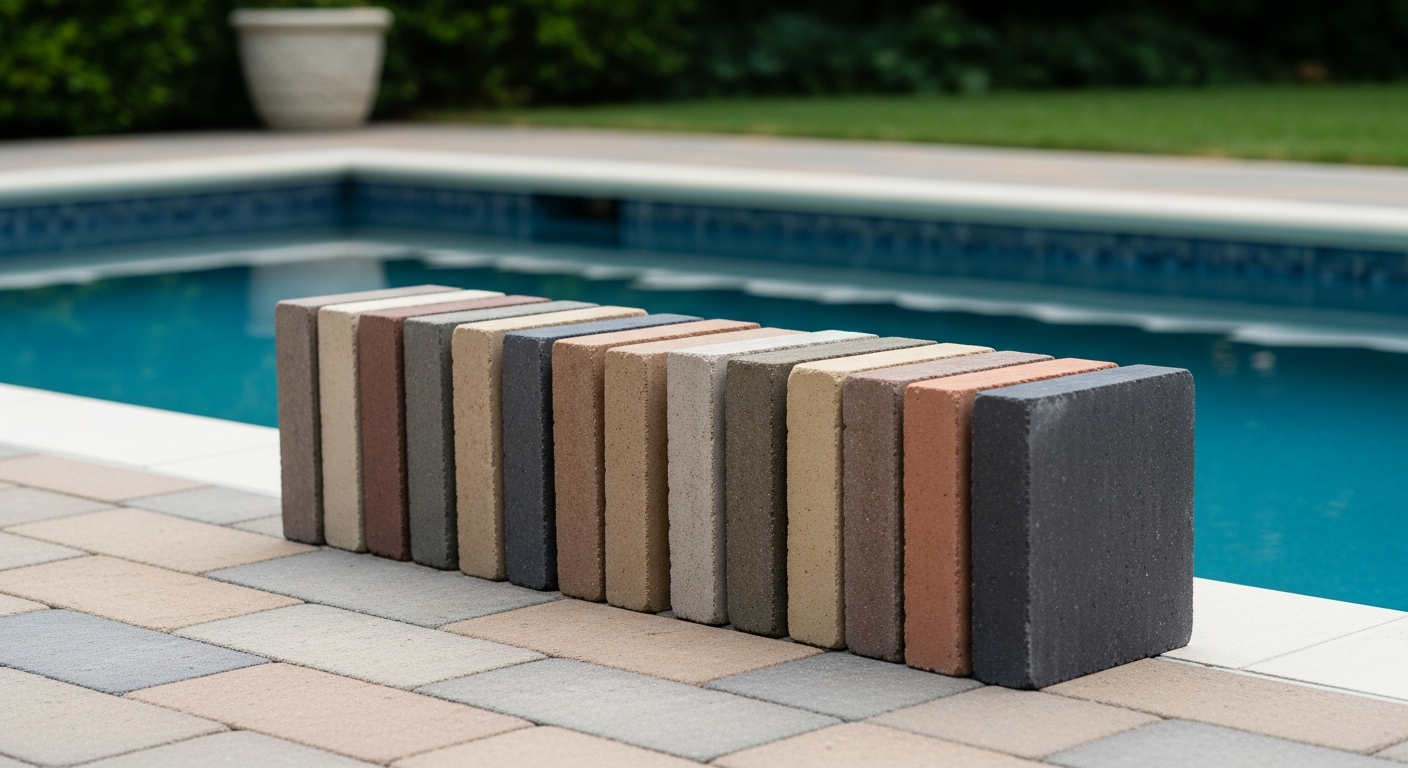
- Use High-Density Clay Pavers: Not all red brick pavers are the same. For our climate, it's essential to use a paver rated for low water absorption and high density. This prevents them from becoming saturated, which can lead to surface spalling and mold growth.
- Apply Polymeric Sand and Sealer Correctly: The final lock-in step. After sweeping in the polymeric sand, I use a leaf blower to get the dust off the paver surface before misting with water. Trapped dust is what causes the dreaded "poly-haze." The final step is two coats of a high-solids, UV-blocking, non-slip silane/siloxane sealer.
Final Touches: Sealing Against UV Damage and Salt Air Corrosion
The sealer is not an upsell; it's a structural component of my system. A cheap acrylic sealer will yellow and flake off in our sun within a year. The silane/siloxane sealer I use penetrates the paver and the hardened polymeric sand, chemically bonding with them. This process achieves two things: it creates a hydrophobic barrier that repels water and prevents mildew, and its UV inhibitors can result in a 30% increase in color retention over a five-year period. For properties west of US-41, especially along the coast, this sealer also provides a crucial barrier against salt air degradation. The application must be done when no rain is forecast for at least 24 hours to allow for a full, uninterrupted cure. Rushing this final step is a common error that drastically reduces the sealer's lifespan and effectiveness. Have you accounted for the coefficient of thermal expansion in your paver joint spacing, or are you assuming the polymeric sand will handle the intense heat-induced movement?Written by

Tags
patio bricks for sale
thin brick pavers for flooring
brick pavers for sale near me
pavement bricks
paving bricks prices