Energy-Efficient Pool Equipment in Lee County: My Framework for Slashing FPL Bills by 60%
As a pool systems specialist in Lee County, the most common issue I encounter isn't green water or faulty heaters; it's the shock homeowners feel when they see their monthly Florida Power & Light bill. For years, the standard was to install a single-speed pump and run it for 8-10 hours, a brute-force approach that is incredibly wasteful. My entire focus has shifted to designing systems that achieve superior water clarity while dramatically cutting energy consumption, and the core of this strategy is the proper implementation of a variable-speed pump (VSP). It’s not about just swapping the hardware; it's about a holistic system calibration that most installers overlook.
The truth is, a poorly configured VSP can be almost as inefficient as the old pump it replaced. I've seen this firsthand on properties in Cape Coral where a brand new, expensive pump was programmed to run at high speeds for far too long, completely negating the potential savings. My methodology is built on calculating the precise flow rate needed for effective sanitation and filtration, and nothing more. This audit ensures the equipment isn't just energy-efficient by brand name, but by its actual, real-world performance in our unique Southwest Florida climate.
My Diagnostic Protocol: The Total System Hydraulic Audit
Before I even consider a piece of equipment, I perform what I call a "Total System Hydraulic Audit." It's a non-negotiable first step. The goal is to understand the total amount of resistance the pump will have to overcome to circulate the water effectively. This resistance, measured as Total Dynamic Head (TDH), is the single most critical factor in sizing and programming a new pump. A common error I see in newer homes in the Fort Myers and Bonita Springs areas is the use of 1.5-inch plumbing on larger pools, which dramatically increases TDH and forces any pump to work harder than necessary.
My audit analyzes the entire plumbing loop. I measure the distance from the equipment pad to the pool, count every 90-degree and 45-degree elbow, and factor in the type of filter, heater, and any water features. Each component adds to the TDH. Ignoring these variables is like trying to choose a car engine without knowing the weight of the car it will power. This meticulous diagnosis allows me to create a hydraulic "map" of the system, which then dictates the ideal pump and its precise programming.
Deep Dive into Pump and Filter Synergy
With the hydraulic map complete, I focus on the synergy between the pump and the filter. A VSP’s efficiency plummets if it's paired with an undersized or perpetually dirty filter. In Lee County, with our high pollen counts in the spring and fine sand, cartridge filters require diligent maintenance. I often find that a client's high energy usage is partially due to the pump running at a higher RPM to force water through a clogged filter. This is a critical performance leak.
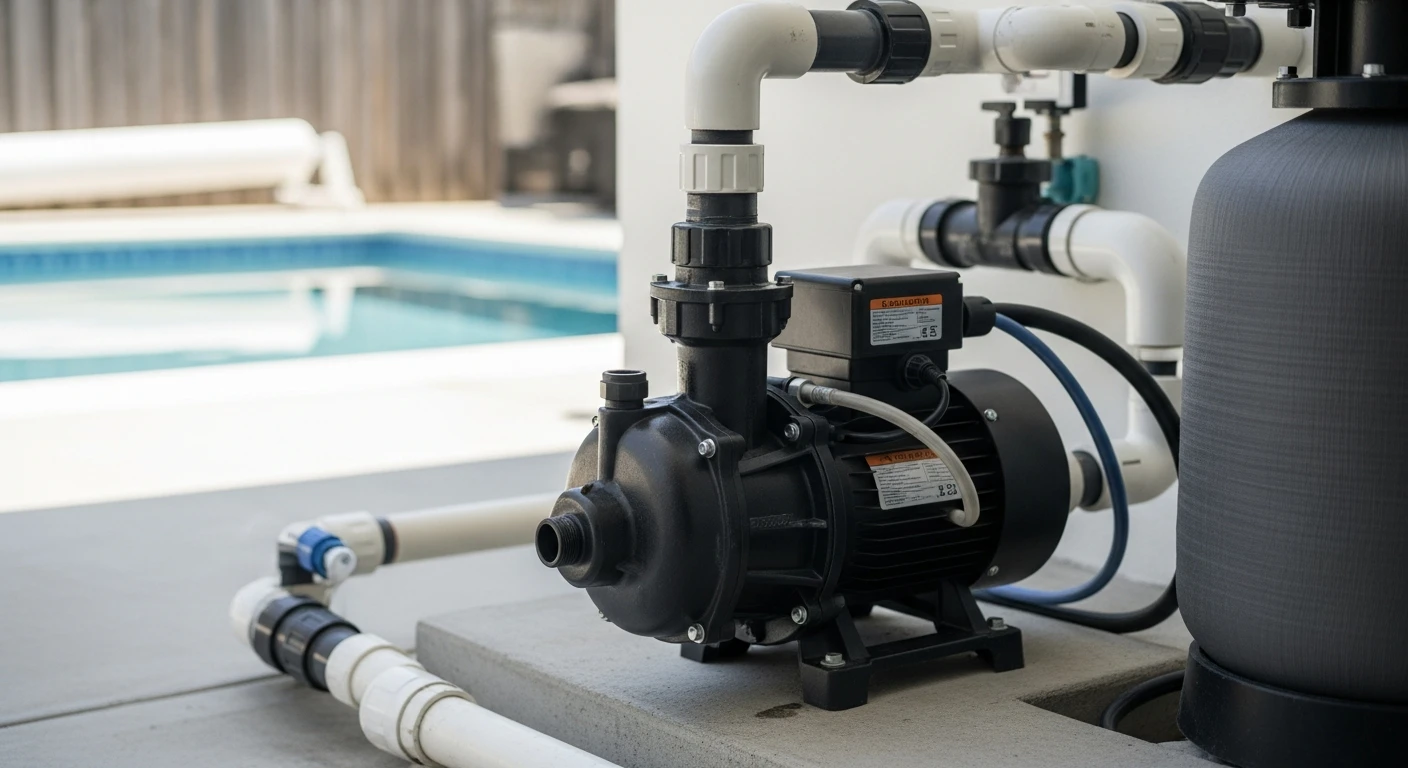
My specification process involves matching the filter's design flow rate with the pump's operational sweet spot. For instance, a Pentair IntelliFlo VSF pump is brilliant at maintaining a precise flow rate, but if it's connected to a filter that's too small, it will have to ramp up its speed (and energy use) to hit that target. My rule is to select a filter with a surface area at least 25% larger than the minimum requirement for the pool's volume. This provides a buffer, reduces the frequency of cleaning, and allows the VSP to operate at a lower, more energy-efficient RPM for longer periods.
The Implementation Blueprint for Maximum Efficiency
Once the audit is done and the equipment is selected, the installation and programming phase is where the savings are locked in. This is my step-by-step process for ensuring peak performance from day one.
- Plumbing and Electrical Foundation: I always recommend using 2-inch PVC pipe for all accessible plumbing lines during a new install or major renovation. This simple upsizing can reduce the system's TDH significantly. I also verify the electrical service is adequate and that the pump is correctly bonded, a critical safety step in our lightning-prone region.
- Hardware Installation: The pump must be installed on a sturdy, level equipment pad. A crucial detail I always include is a set of union connectors on the intake and output ports. This small addition makes future servicing or removal of the pump a simple, glue-free task, saving hours of labor down the line.
- Initial Programming and Calibration: This is my proprietary step. I don't use the factory presets. My initial programming is based on achieving one full pool turnover in a 24-hour period at the lowest possible RPM. For an average 15,000-gallon pool in Lee County, this often means running the pump around 1,500 RPM for 10-12 hours, consuming just a few hundred watts.
- Feature-Specific Speed Settings: I then program higher speeds for specific tasks. For example:
- Skimming/Cleaning Cycle: A 2-hour cycle at 2,200 RPM to clear surface debris.
- Spa/Heater Mode: A higher speed (e.g., 2,800 RPM) to meet the heater's minimum flow rate requirement, activated only when needed.
- Vacuuming Mode: A temporary, manual override to 3,000 RPM for maximum suction during cleaning.
Fine-Tuning for Lee County's Seasons
A "set it and forget it" approach doesn't work here. Our pools have different demands in August than they do in January. My final step is providing a seasonal adjustment schedule. During the hot, rainy summer months, I recommend increasing the primary filtration runtime by about 20% to handle the increased bather load and organic debris. Conversely, during the cooler, drier winter "season," we can often dial back the runtime, saving even more on the kWh usage that FPL charges for.
This process of auditing, correctly sizing, and intelligently programming pool equipment consistently results in energy savings of 50-70% for my clients. The equipment pays for itself far faster than homeowners expect, all while maintaining a healthier and clearer pool. The key is moving beyond a simple hardware swap to a complete system optimization.
Now that your pump is perfectly calibrated for your pool's specific hydraulic needs, have you considered how that optimized flow rate impacts the dissolution and effectiveness of your chemical sanitizer?