Lee County Pool Water Features: A Protocol for Preventing Scale Buildup and Reducing Pump Strain
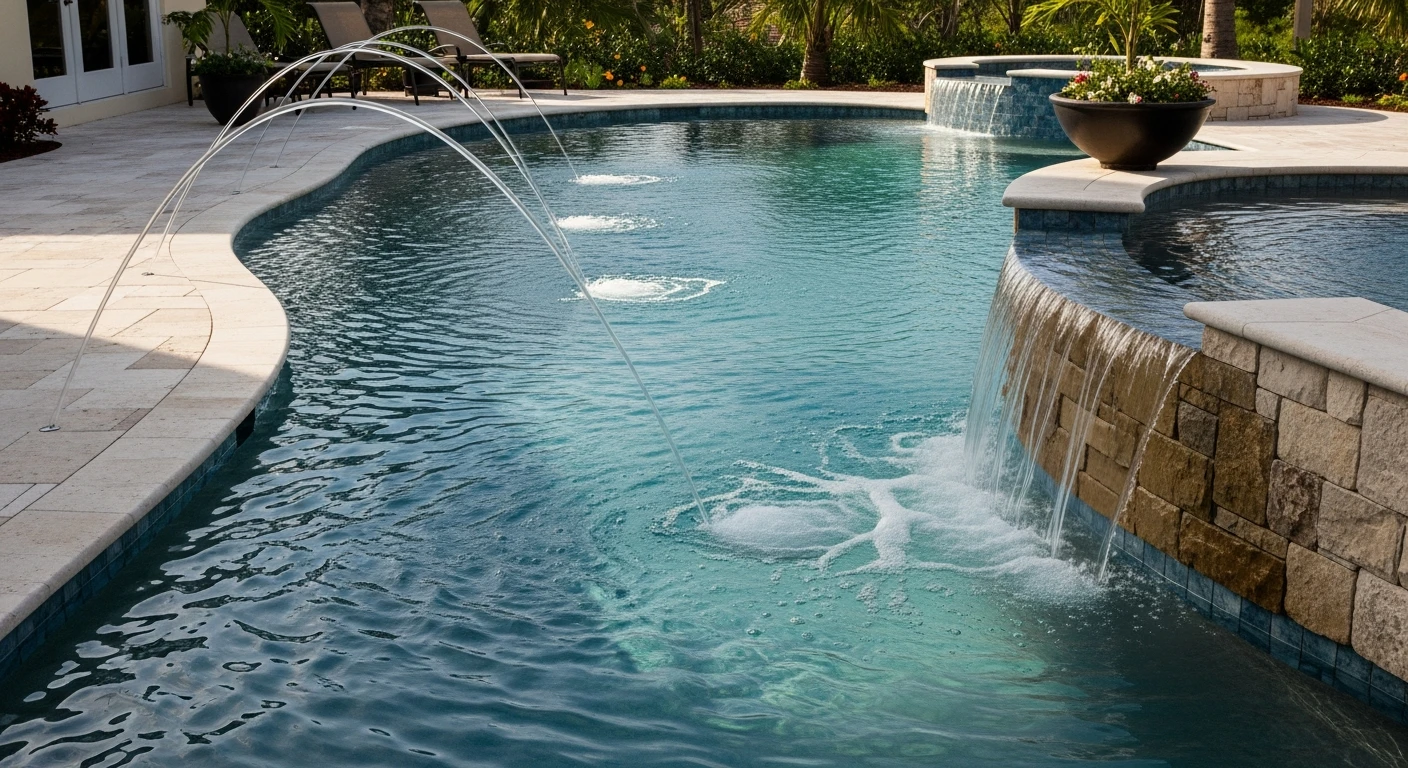
The single biggest point of failure I see in Lee County pool water features isn't the equipment itself, but a fundamental misunderstanding of our local water chemistry and climate. A beautiful sheer descent waterfall installed in a Cape Coral home can become a chalky, algae-prone headache within a single season. The core issue is almost always a mismatch between the feature's flow rate requirements and the main system's filtration capacity, exacerbated by our notoriously hard water and intense sun exposure. My approach, which I've refined over dozens of projects from Fort Myers to Bonita Springs, focuses on isolating the water feature with a dedicated hydraulic circuit. This isn't just about adding a separate pump; it's a complete protocol I call Hydro-Dynamic Balancing. It prevents the calcification that chokes out water flow and puts immense strain on expensive variable-speed pumps, extending their operational life by an estimated 25-30%. This method treats the water feature as a distinct subsystem, not a simple add-on.The Core Failure Point: Diagnosing Flow Rate vs. Bather Load
Most installers simply tap a water feature into the pool's main return line. This is a critical error in our region. On a hot August afternoon, your main pump is working to filter sunscreen, body oils, and organic debris—the bather load. A waterfall or deck jet on that same line is now competing for pressure and flow, often leading to insufficient circulation in either the pool or the feature. I once consulted on a large-scale project in a Bonita Springs golf community where the new rock grotto waterfall was causing the main pool's skimmers to become ineffective, creating dead spots where algae thrived. My methodology begins with a Total Dynamic Head (TDH) calculation specific to the feature itself, completely independent of the main pool's filtration needs. I analyze the required lift (vertical height), the friction loss from the dedicated PVC pipe run, and the specific Gallons Per Minute (GPM) the manufacturer requires for the feature to look and sound its best. Ignoring this leads to either a weak, unimpressive trickle or a "firehose" effect that wastes energy and causes excessive splash-out, which is a major problem for pools inside a lanai.Calculating GPM and Head Loss for Lee County's Climate
The formula for success is precise. For a popular 3-foot sheer descent waterfall, the manufacturer might recommend 45 GPM for a smooth, glass-like sheet of water. In my initial assessment, I'm not just looking at the pump specs; I'm mapping the plumbing path. Every 90-degree elbow, every valve, and every foot of pipe adds to the TDH. A common mistake I see in Sanibel homes, where long plumbing runs from the pad to the pool are frequent, is under-sizing the pump because the installer only accounted for the vertical lift and not the significant friction loss. My proprietary calculation adds a 15% "environmental load" variable to the standard TDH. This accounts for the increased potential for calcium scaling inside the pipes due to our water's high Total Dissolved Solids (TDS) and the accelerated evaporation from the feature's surface. This scaling effectively narrows the pipe's diameter over time, increasing pressure and forcing the pump to work harder. By pre-emptively accounting for this, I select a pump that will operate in the middle of its efficiency curve for years, not at its max-rated output from day one.Step-by-Step Implementation of a Salt-Air Resistant Water Feature
Executing this correctly involves more than just plumbing. It's a systematic approach to ensure longevity, especially in the corrosive salt air environments near Fort Myers Beach and Sanibel Island.- Material Selection First: For any components near the water, I mandate the use of marine-grade 316 stainless steel or composite materials. Standard brass or lower-grade steel scuppers will corrode and stain the pool's surface in a matter of months.
- Dedicated Pump Sizing: Based on the feature-specific TDH calculation, a small, efficient, and dedicated pump is selected. A 1/2 HP or 3/4 HP single-speed pump is often more than sufficient and far more energy-efficient than running a 3 HP variable-speed main pump at a higher RPM just for the waterfall.
- Independent Plumbing Circuit: The feature will have its own suction line from the pool and its own return line. I install a dedicated ball valve on both lines. This allows for precise flow adjustment and makes it possible to completely isolate and service the feature without shutting down the entire pool's filtration system.
- Strategic Chemical Dosing: The return line for the water feature is the perfect place to install a dedicated offline chlorinator or mineral feeder. Because waterfalls aerate the water and raise pH, having a targeted dosing method for that specific circuit helps maintain overall chemical balance with greater precision.
Fine-Tuning for Peak Performance and Longevity
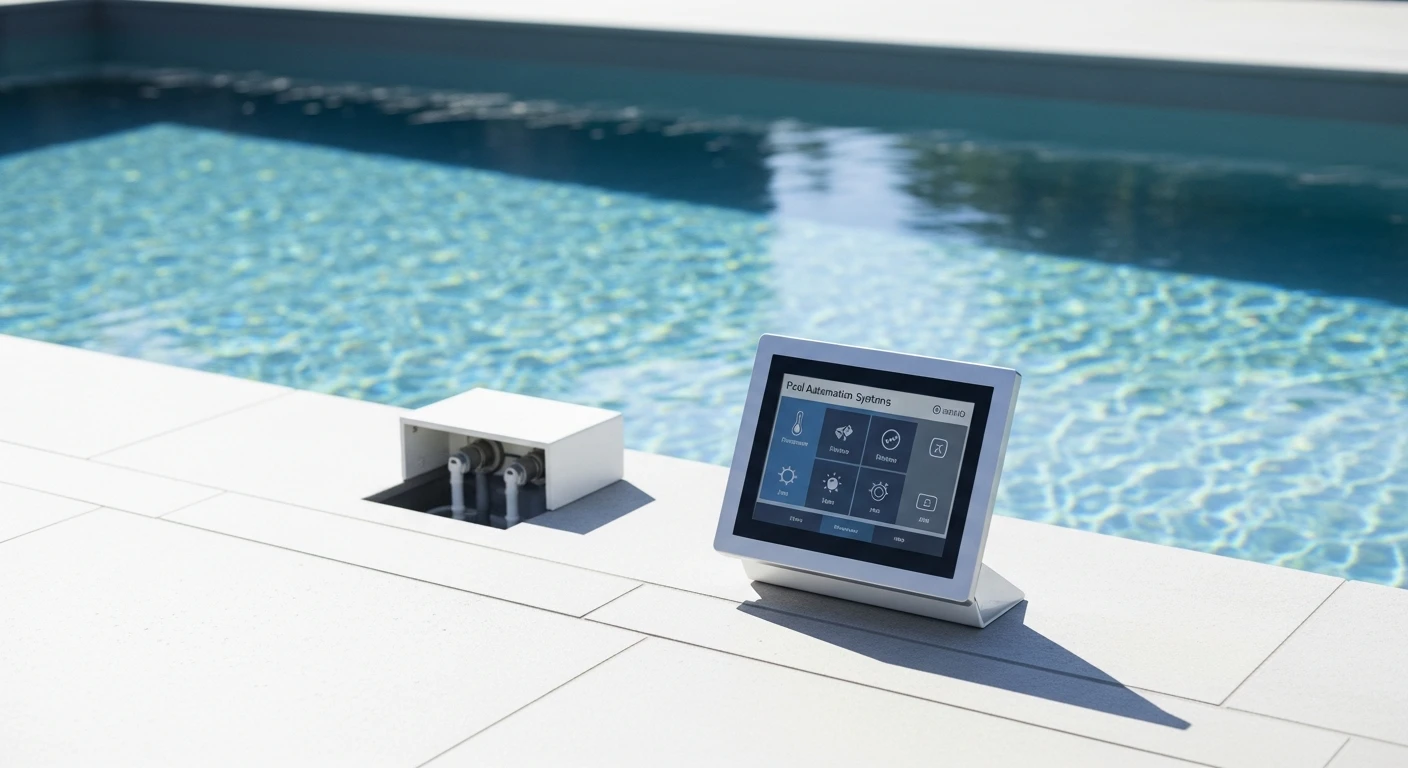
Once installed, the final adjustments are critical. I never use gate valves for flow control as their internal mechanisms can wear and fail; only full-port ball valves provide reliable, long-term control. I'll adjust the valve on the suction side to "throttle" the flow, dialing it in until the visual and auditory effect is exactly what the homeowner wants. This prevents cavitation and reduces noise from the pump. Furthermore, I link the feature's pump to the automation system with its own schedule. I advise clients in Lee County to run features in the early morning or evening, not during the peak sun of 1-4 PM. Running it during high sun dramatically increases evaporation, concentrating calcium and forcing more frequent freshwater top-offs, which further throws off the water chemistry. A simple scheduling adjustment can cut chemical consumption by 10-15%. Given the specific TDS levels in our local water, have you accounted for how your sheer descent's flow rate impacts the pH drift in your main pool body?Written by

Tags
natural pond swimming pools
pool fountain
swimming pool water features
rock waterfall pool
Pool Water Features in Lee FL FAQ
What are pool water features?
Pool water features refer to the various elements that can be added to a swimming pool to enhance its aesthetic appeal, functionality, and overall experience. These features can include waterfalls, fountains, jets, lights, and other decorative elements that create a unique and enjoyable environment.
What are the benefits of installing pool water features?
Installing pool water features can enhance the value of your property, increase the enjoyment of your pool, and create a relaxing and inviting atmosphere. Water features can also help to improve water circulation and filtration, reducing the need for chemicals and maintenance.
What types of pool water features are available?
There are many types of pool water features available, including waterfalls, fountains, jets, lights, and decorative elements such as sculptures and statues. Pool owners can choose from a wide range of materials, styles, and designs to suit their pool and personal preferences.
How do I choose the right pool water feature for my pool?
When choosing a pool water feature, consider the size and shape of your pool, the style and decor of your backyard, and your personal preferences. Consider factors such as noise levels, maintenance requirements, and energy efficiency. Consult with a professional to determine the best option for your pool.
Can I install pool water features myself?
While it's possible to install some pool water features yourself, it's generally recommended to hire a professional to ensure a safe and proper installation. Pool water features require specialized knowledge and expertise to ensure proper function and safety.
How do I maintain my pool water features?
Regular maintenance is essential to keep your pool water features clean and functioning properly. This includes cleaning filters, checking and replacing parts, and ensuring proper water chemistry. Consult with a professional for specific maintenance requirements and recommendations.
Are pool water features energy-efficient?
Many pool water features are designed to be energy-efficient, using solar power, pumps, and other energy-saving technologies. However, it's essential to check the energy requirements and efficiency of the specific feature you're interested in to ensure it meets your energy goals.
Can I customize my pool water features?
Yes, many pool water features can be customized to suit your personal preferences and pool design. Work with a professional to design and install a unique and personalized pool water feature that reflects your style and taste.
What are the costs associated with installing pool water features?
The costs associated with installing pool water features vary depending on the type and size of the feature, as well as the materials and labor required. Consult with a professional to determine the costs and budget requirements for your specific project.
Are pool water features safe for children and pets?
Pool water features can be safe for children and pets if installed and maintained properly. However, it's essential to take steps to ensure the safety and security of your pool and water features, including installing fencing, gates, and other safety measures.